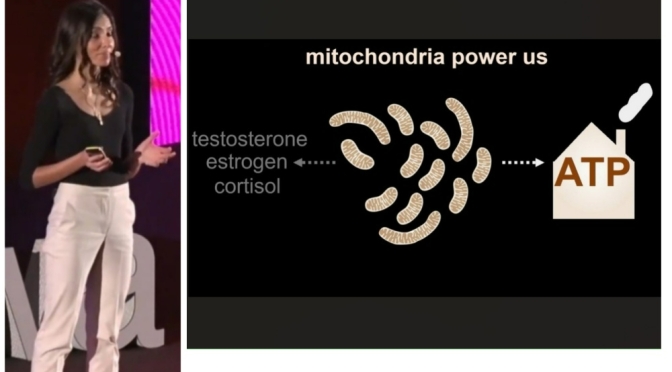
TEDx Talks (November 4, 2023) – Approximately 1.5 billion years ago, a lone bacterium found its way into a larger cell. The exchanges that transpired between the two are considered to have driven the evolution of this bacterium into the organelle we now call the mitochondrion.
Emerging research suggests that mitochondria are not simply the ‘powerhouses’ of the cell, but also function as cellular guardians against microbial intruders. Consequently, maintaining mitochondrial health is not only vital for our well-being, but may serve to protect us against infectious disease.
Dr. Lena Pernas started as a Max Planck Research Group Leader at the MPI Biology for Ageing (Cologne, Germany) in late 2018, where her lab investigates the organelle and metabolic dynamics of the host-pathogen interaction. Her lab will open its doors at UCLA in the Metabolism Research Theme in 2023.
World Economic Forum (August 12, 2023) – This week’s top stories of the week include:
0:15Scientists discover self healing metals – They have the ability to weld tiny cracks back together again without human intervention. Scientists were studying how microscopic cracks spread through platinum using a machine that repeatedly pulled on the ends of the metal. But after 40 minutes, the damage began to heal itself. The scientists said it was ‘absolutely stunning’ to watch first-hand. The finding revises some of our basic theories about metals.
1:42Who owns a song written by AI – Music made with artificial intelligence has made headlines this year. In April, an AI-generated track cloned the voices of Drake and The Weeknd. Heart on My Sleeve racked up 20 million streams on Spotify, Tiktok and Twitter before copyright claims by Universal Music Group saw it pulled from platforms. The pop star Grimes has taken a different route, offering to split royalties with anyone who uses her voice on an AI track. The limits of creative copyright were once clear but AI has introduced uncertainty.
4:50These special microbes kill harmful bacteria – The food industry struggles with persistent pathogens, such as Salmonella which causes fever, diarrhoea and stomach pain. In 2021, 96,000 cases of salmonellosis were reported in the EU. The illness costs up to €3 billion a year in health bills and lost productivity. These phage food safety solutions have been created by Phageguard. Phages are the most abundant organisms in nature and a natural solution to bacteria which they infect and dissipate. As well as being natural and safe, phages are specific to each target pathogen and unlike antibiotics, they don’t lead to side-effects or antimicrobial resistance (AMR)
6:24 Prescribing fruit and veg could save millions of lives – In the US, fruit and veg prescriptions would prevent almost 300,000 heart attacks and strokes and give people an extra 260,000 years of good health if they were offered to people with diabetes aged 40-79.
_____________________________________________
The World Economic Forum is the International Organization for Public-Private Cooperation. The Forum engages the foremost political, business, cultural and other leaders of society to shape global, regional and industry agendas. We believe that progress happens by bringing together people from all walks of life who have the drive and the influence to make positive change.
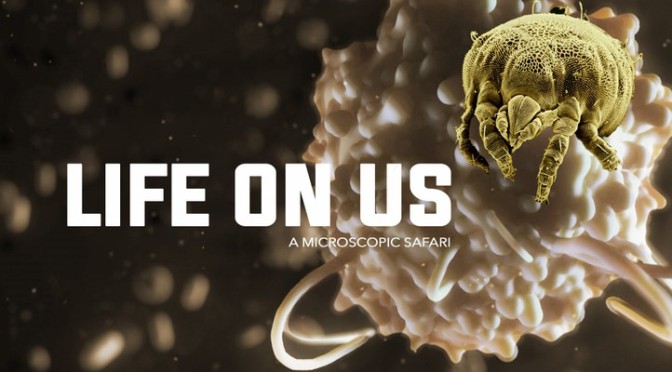
Among the unknown worlds in the universe, we can count our very own bodies. Like planet earth, each of us is made up of fascinating landscapes that are home to all kinds of wildlife.
The film takes the viewer on a unique microscopic safari, where we encounter some of the myriad creatures that live, thrive, compete, feed, are born and die on or inside our bodies. In fact, microscopic creatures play a more powerful role than we know: These life forms impact our health, our life expectancy, our physique and even our behavior.
The film renders these hidden worlds visible with the help of special effects: Combining cinematic electron microscopy with a super macro film technique. The documentary explains cutting-edge scientific findings, by turns surprising, enlightening and amazing. It raises questions about who we are, and how we exist in the unexplored, complex ecosystems that help constitute us.
We are born 100% human, but will die 90% microbial. Between these two points in our lives lies the unexplored terrain of ‘Life on Us’.
As more of the world’s forests are destroyed, it makes you wonder: what’s going to absorb CO2 in their place?! In an ironic twist of fate, one of Earth’s “deadest” habitats might be our best hope for an ongoing supply of breathable air.
Called peatlands, these wetland environments are named for their tendency to accumulate decayed plant matter. Unlike most other ecosystems, like forests, where branches and leaves typically decompose in a matter of months… in peatlands, that plant material can stay intact for millenia. You see, peatlands mostly exist in high altitude places where temps are low and there’s not much water flow. This results in their having extremely low oxygen and high acidity levels.
These harsh conditions aren’t very hospitable to microbes and fungi, which are instrumental to the whole decomposition process. So without them around, the plant material sort of… just sits. Over time, that it globs together to form peat, a thick, spongy material that can soak up 20x its weight in water. Peat also soaks up loads of carbon. Through a process known as the Calvin cycle, living plants absorb CO2 from the air and convert it into organic molecules that they can then use as energy to grow.
Through decomposition, the carbon that’s “fixed” in a plant’s structure gets released but since peat doesn’t decompose, that carbon can stay put! It’s estimated that peatlands contain 550 gigatonnes of organic carbon, which is twice as much organic carbon as all the world’s forests combined. That’s absolutely wild, considering that forests cover about 30% of the world’s land area… and peatlands only account for 3%! Like most of the world’s habitats, peatlands aren’t immune to the threats of human development and exploitation.
Peat is also are a very in-demand resource. Its incredible water holding capacity makes it a favorite amongst horticulturists; If you’ve ever picked up a bag of soil amendment, chances are it’s full of the stuff. Since peat is also a fossil fuel with a long burn, it’s used in some parts of the world. Peatlands are also often drained to accommodate other land use activities, like agriculture.
We kick off our first episode of 2021 by looking at future trends in policy and research with host Meagan Cantwell and several Science news writers. Ann Gibbons talks about upcoming studies that elucidate social ties among ancient humans, Jeffrey Mervis discusses relations between the United States and China, and Paul Voosen gives a rundown of two Mars rover landings.
In research news, Meagan Cantwell talks with Leda Kobziar, an associate professor of wildland fire science at the University of Idaho, Moscow, about the living component of wildfire smoke—microbes. The bacteria and fungi that hitch a ride on smoke can impact both human health and ecosystems—but Kobziar says much more research is needed.
These days, about half of the protein the world’s population eats is from seafood. Staff Writer Erik Stokstad joins host Sarah Crespi to talk about how brand-new biotech and old-fashioned breeding programs are helping keep up with demand, by expanding where we can farm fish and how fast we can grow them.
Sarah also spoke with Jan Claesen, an assistant professor at the Cleveland Clinic’s Lerner Research Institute, about skin microbes that use their own antibiotic to fight off harmful bacteria. Understanding the microbes native to our skin and the molecules they produce could lead to treatments for skin disorders such as atopic dermatitis and acne. Finally, in a segment sponsored by MilliporeSigma, Science’s Custom Publishing Director and Senior Editor Sean Sanders talks with Timothy Cernak, an assistant professor of medicinal chemistry and chemistry at the University of Michigan, Ann Arbor, about retrosynthesis—the process of starting with a known chemical final product and figuring out how to make that molecule efficiently from available pieces.
\This video from Harvard Medical School’s HMX Fundamentals Immunology online course offers a high-level overview of the immune system at work in the context of daily life.
Hear the latest science news, brought to you by Shamini Bundell and Nick Howe. This week, a newly discovered bird species from the time of the dinosaurs, and microbes hundreds of metres below the ocean floor.
Dental hygiene in the time of the Vikings, and wildebeest bones feed an African ecosystem. Research Article: Bertilsson et al; Research Article: Subalusky et al.
10:21 Deep sea life
Scientists have uncovered traces of life 750m below the ocean’s surface. Research article: Li et al.








 Hear the latest science news, brought to you by Shamini Bundell and Nick Howe. This week, a newly discovered bird species from the time of the dinosaurs, and microbes hundreds of metres below the ocean floor.
 Boomers Daily