Tag Archives: Medicine

Medicine Lectures: 2019 Nobel Laureates Sir Peter Ratcliffe And Professor William Kaelin (Oxford)

Sir Peter and Prof. Kaelin were awarded the Nobel Prize in Physiology and Medicine last year by the Nobel Assembly at Karolinska Institutet, in recognition of their discoveries of how cells sense and adapt to oxygen availability, an essential adaptive process central to many significant diseases. The professors respectively work for the University of Oxford and Harvard University, and shared the Nobel Prize with Prof. Gregg Semenza, a fellow researcher.

Health Talk: “Colorectal Cancer” & Importance Of Screening (Mayo Clinic)


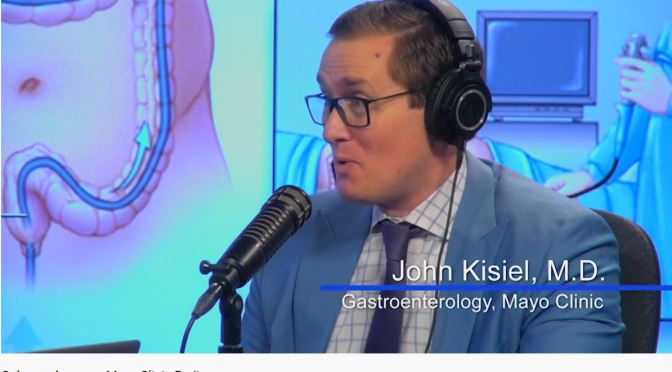
On the Mayo Clinic Radio program, Dr. John Kisiel, a Mayo Clinic gastroenterologist, discusses colorectal cancer and the importance of recommended screening tests.

This interview originally aired March 7, 2020. Disclaimer: Mayo Clinic has a financial interest in Exact Sciences.

Among cancers that affect men and women, colorectal cancer is the second leading cause of cancer deaths in the U.S., according to the Centers for Disease Control and Prevention. Most cases of colorectal cancer begin as small, noncancerous (benign) clumps of cells called polyps. Over time, some polyps become colon cancer. Because these polyps may be small and produce few, if any, symptoms, health care providers recommend regular screening tests to prevent colon cancer. These screenings identify and remove polyps before they become cancerous. March is Colorectal Cancer Awareness month, a time to educate the public about the importance of colorectal cancer screening.

Heart Health Video: “Beta Blockers” Lower CVD Risks Of Harmful Gut Microbes

Hazen and colleagues find that gut bacteria play a central role in the conversion of dietary proteins into a compound, phenylacetylglutamine ( PAGln), which not only is associated with future cardiovascular disease risk in humans but also promotes platelet responsiveness and blood clotting potentially via adrenergic receptors, according to mouse models.

Read study

Coronavirus / Covid -19: “What Happens When It Enters Your Body” (Video)

The Telegraph LogoWhat happens when you catch coronavirus? The Telegraph’s Global Health Security Editor Paul Nuki explains all the ways in which you could become infected with COVID-19 and how your body reacts to this virus.

What happens when the virus enters the body?

When the virus enters your body it binds to two cells in the lungs – goblet cells that produce mucus and cilia cells which have hairs on them and normally prevent your lungs filling up with debris and fluid such as virus and bacteria and particles of dust and pollen.

The virus attacks these cells and starts to kill them – so your lungs begin to fill with fluid making it hard for you to breathe. This phase of the disease is thought to last about a week.

At this point your immune system will start to kick in and fight off the invaders. You will develop a fever and your high body temperature will create a hostile environment for the virus. You will start to get rid of the mucus in the form of coughing and a runny nose.

But in some people – particularly the elderly and those with other health conditions – the immune system can go into overdrive. As well as killing the virus it also starts to kill healthy cells.

This heightened immune response can trigger a “cytokine storm” – white blood cells activate a variety of chemicals that can leak into the lungs, which along with the attack on the cells damages them even further. Scans of the lungs show “ground-glass” opacity and then “crazy paving” patterns, as they fill with mucus making it harder and harder to breathe.

Read more about Coronavirus 

Health: All Adults 18-79 Should Be Screened For Hepatitis C Virus (HCV)

From a Stanford University online article (March 2, 2020):
Health Policy Stanford“The opioid epidemic has added fuel to the HCV fire, substantially increasing transmission,” said Owens. “HCV is now an enormous public health problem, affecting a much broader age range of people than before. Fortunately, we have the tools to identify people and treatment is now successful in the vast majority of patients, so screening can prevent the mortality and morbidity from HCV.”

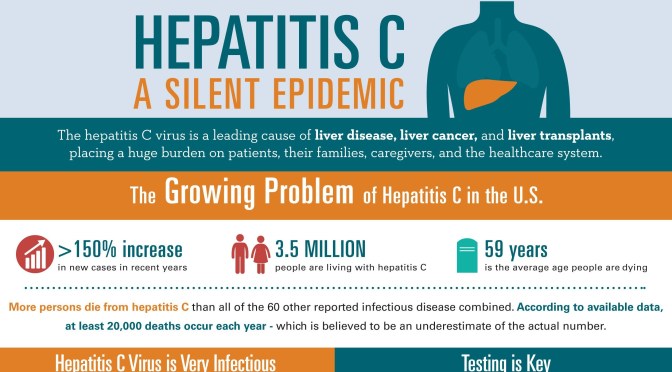
A task force of national health experts recommends clinicians screen all adults 18 to 79 for the hepatitis C virus (HCV), noting that the viral infection is now associated with more deaths in the United States than the top 60 reportable infectious diseases combined. Many people are unaware they are carrying the viral infection.
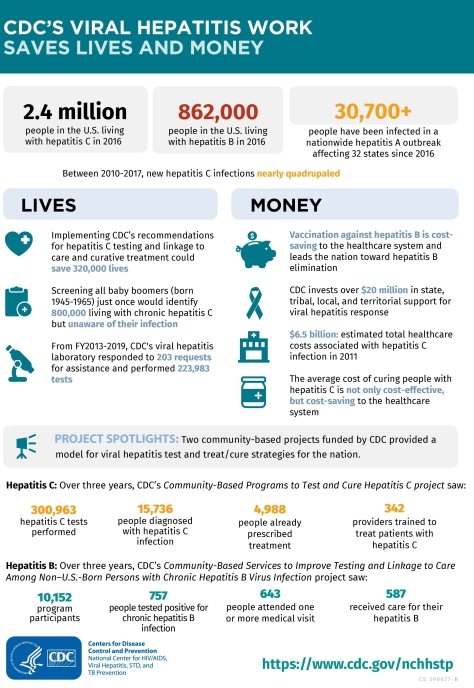
CDC-viral-hepatitis-work-P-page-0

“People with hepatitis C do not always feel sick and may not know they have it,” says chair of the U.S. Preventive Services Task Force Douglas K. Owens, M.D, M.S. “Screening is key to finding this infection early, when it’s easier to treat and cure, helping reduce illnesses and deaths.”

Owens, who is the director of Stanford Health Policy and the Henry J. Kaiser, Jr., Professor of Medicine, said the opioid epidemic now plays an important role in the prevalence of HCV. There are more than three times the number of acute HCV cases than a decade ago, particularly among young, white, injection drug users who live in rural areas. Women aged 15 to 44 have also been hit hard by the virus that is spread through contaminated blood.

Read full Article

Medicine: “Relentless Prescription Drug Price Increases” (JAMA Podcast)

JAMA Network NewsDrug Pricing Theme Issue: Is Pharma Earning Too Much?, R&D Costs Required to Bring a New Drug to Market, Probiotic Safety, and more
One in 4 people in the US has difficulty paying the cost of their prescription medications. This stark fact was recently reported in a 2019 Kaiser Family Foundation public opinion poll among a nationally representative random sample of 1205 adults.1 Persons who reported having the greatest difficulty affording their prescription drugs were those who most needed them, including those who took 4 or more prescription drugs, spent $100 or more per month on their drugs, and reported being in fair or poor health.

Website

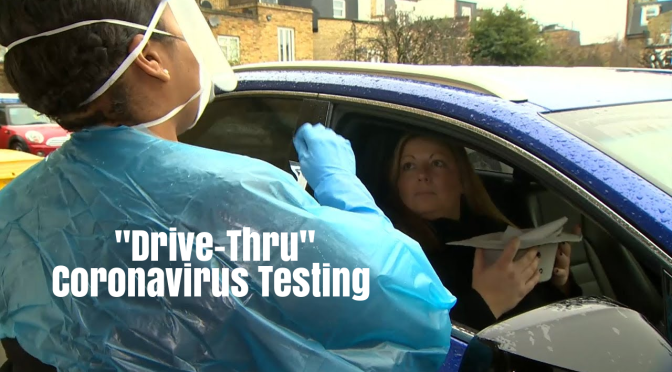
Health News: England Offers “Drive-Thru” Coronavirus Testing

“Drive-thru” coronavirus testing is to be introduced on the NHS – with suspected cases swabbed in their own cars.

The new scheme is part of efforts to relieve pressure on ambulance and hospital services, amid concern they could soon be overwhelmed by the number of tests they are carrying out.

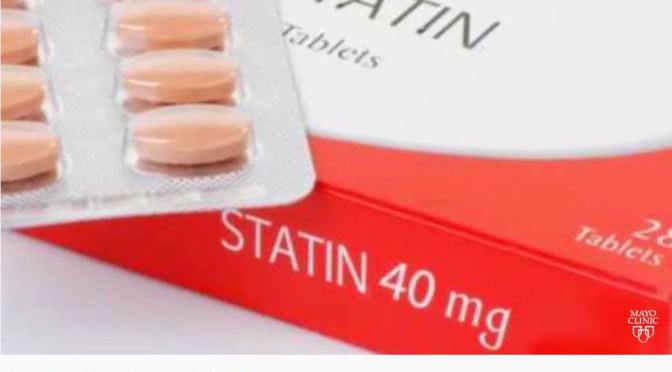
Heart Health: “Statins” Are Beneficial Only With Healthy Diets & Lifestyle

Taking a statin helps keep your cholesterol levels in check. How can that be?

Mayo Clinic LogoDr. Stephen Kopecky explains that some people ask to be put on a statin. That’s because statins, while important and effective, are just one part of the whole heart-healthy picture. When you combine a statin with regular exercise, maintaining a healthy weight, controlling stress, not smoking and eating foods based on the Mediterranean diet, you can improve your heart health.

Dr. Kopecky says if you work in lifestyle changes slowly over time, you’ll be on your way to better heart health.

Statins are drugs that can lower your cholesterol. They work by blocking a substance your body needs to make cholesterol. Statins may also help your body reabsorb cholesterol that has built up in plaques on your artery walls, preventing further blockage in your blood vessels and heart attacks.

Several statins are available for use in the United States. They include:

  • atorvastatin (Lipitor)
  • lovastatin (Altoprev)
  • pitavastatin (Livalo)
  • pravastatin (Pravachol)
  • rosuvastatin (Crestor)
  • simvastatin (Zocor)

Sometimes, a statin is combined with another heart health medication. Examples are atorvastatin/amlodipine (Caduet) and simvastatin/ezetimibe (Vytorin).

Increasing evidence suggests that statins do more than just lower bad cholesterol. Research has found that the medicines can safely prevent heart disease in certain adults ages 40 to 75. But the benefits aren’t entirely clear for the elderly. And doctors still want to know more about the side effects of statins.