Monocle on Saturday (May 11, 2024): The Eurovision final is nearly here. Latika Bourke, Sîan Pattenden and Georgina Godwin discuss the latest news from Malmö as well as Sîan’s eleventh consecutive charity live draw.
Monocle’s resident Eurovision expert, Fernando Augusto Pacheco, speaks to the show’s production designer, Florian Wieder, and the lighting and screen-content designer, Fredrik Stormby, from the competition’s main stage. Plus: David Lammy in the US and the tourist crackdown in the Balearic Islands.
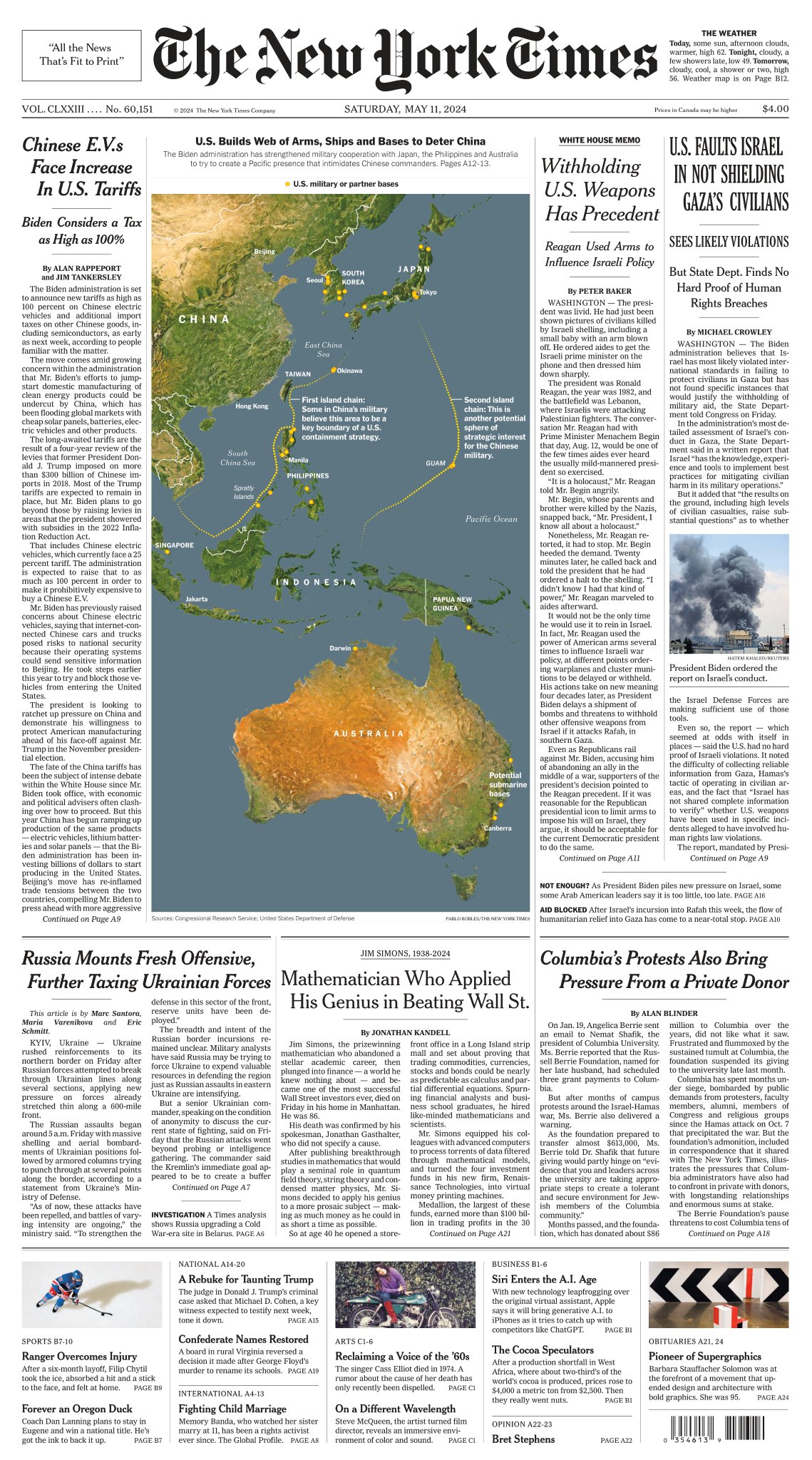
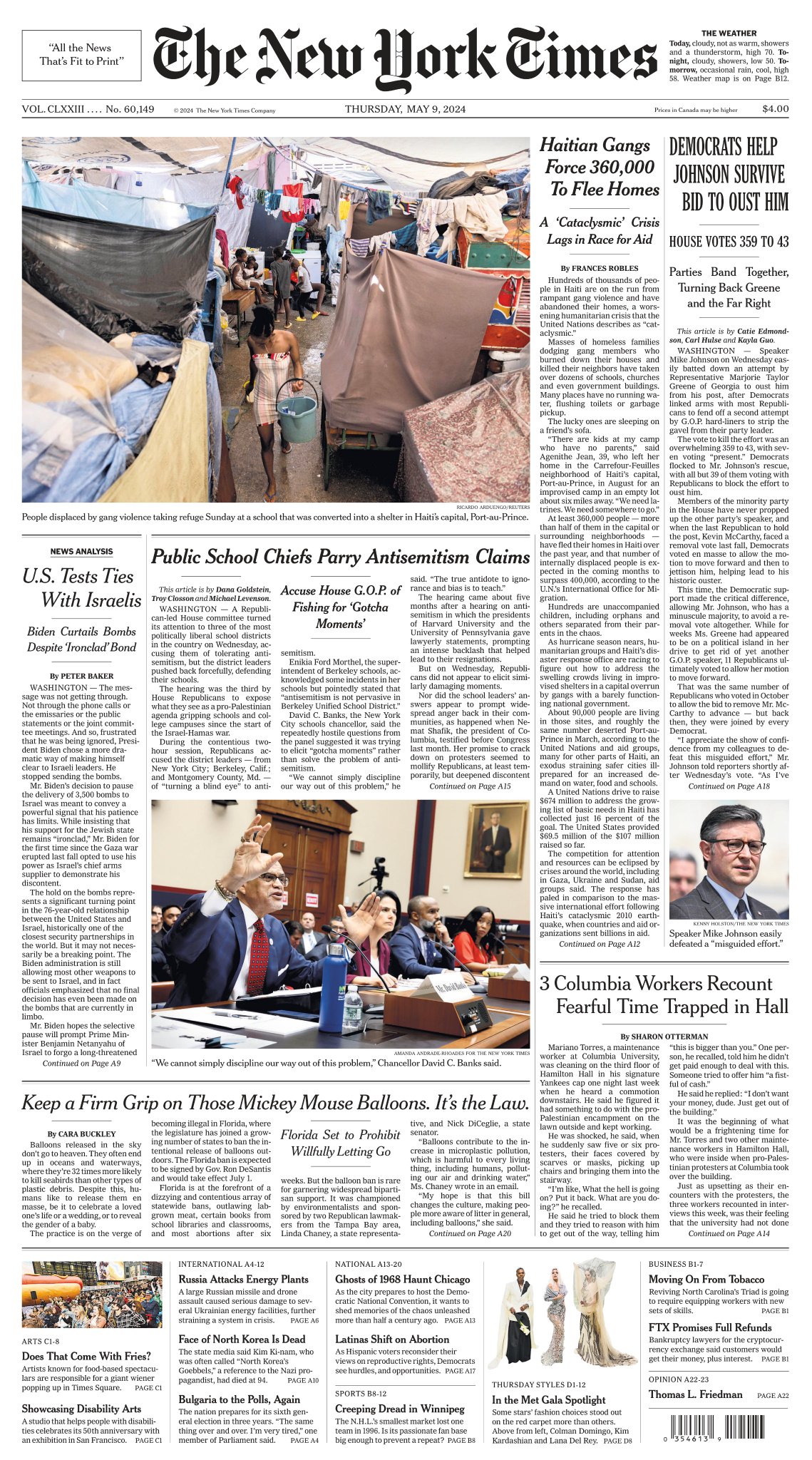
Other presidents, including, Ronald Reagan, used the power of American arms to influence Israeli war policy. But the comparisons underscore how much the politics of Israel have changed over the years.
Financial advisors who bring qualified children on board can set up their practices for long-term success and stability. Here’s what it means for clients.
The Week In Art Podcast (May 10, 2024): We talk to The Art Newspaper’s reporter Sarvy Geranpayeh about her conversations with six Palestinian artists about their daily lives amid Israel’s ongoing military offensive in Gaza.
Frank Stella, one of the key artists in the history of American abstraction, has died, aged 87. We speak to Bonnie Clearwater, the director and chief curator of the NSU Art Museum in Fort Lauderdale, Florida, who worked with Stella on two landmark shows. And as Spring finally arrives in London, this episode’s Work of the Week is, fittingly, Vanessa Bell’s View into a Garden (1926). It features in an exhibition opening next week at the Garden Museum in London, called Gardening Bohemia: Bloomsbury Women Outdoors. Emma House, the curator at the museum, tells me more.
Glory of the World: Color Field Painting (1950s to 1983), NSU Art Museum Fort Lauderdale, US, until 25 August. Frank Stella: Recent Sculpture, Deitch Projects, New York, until 24 May.
The Globalist (May 10 , 2024): Israeli build-up continues outside Rafah despite US warnings that it will withhold weapons if a major invasion is launched.
Then: disappointment for China as Nicaragua cancels a controversial canal linking the Atlantic and Pacific and Malaysia’s plan to offer orangutans to the biggest importers of its palm oil. Plus: we’re in Malmö, Sweden, with the latest from Eurovision.
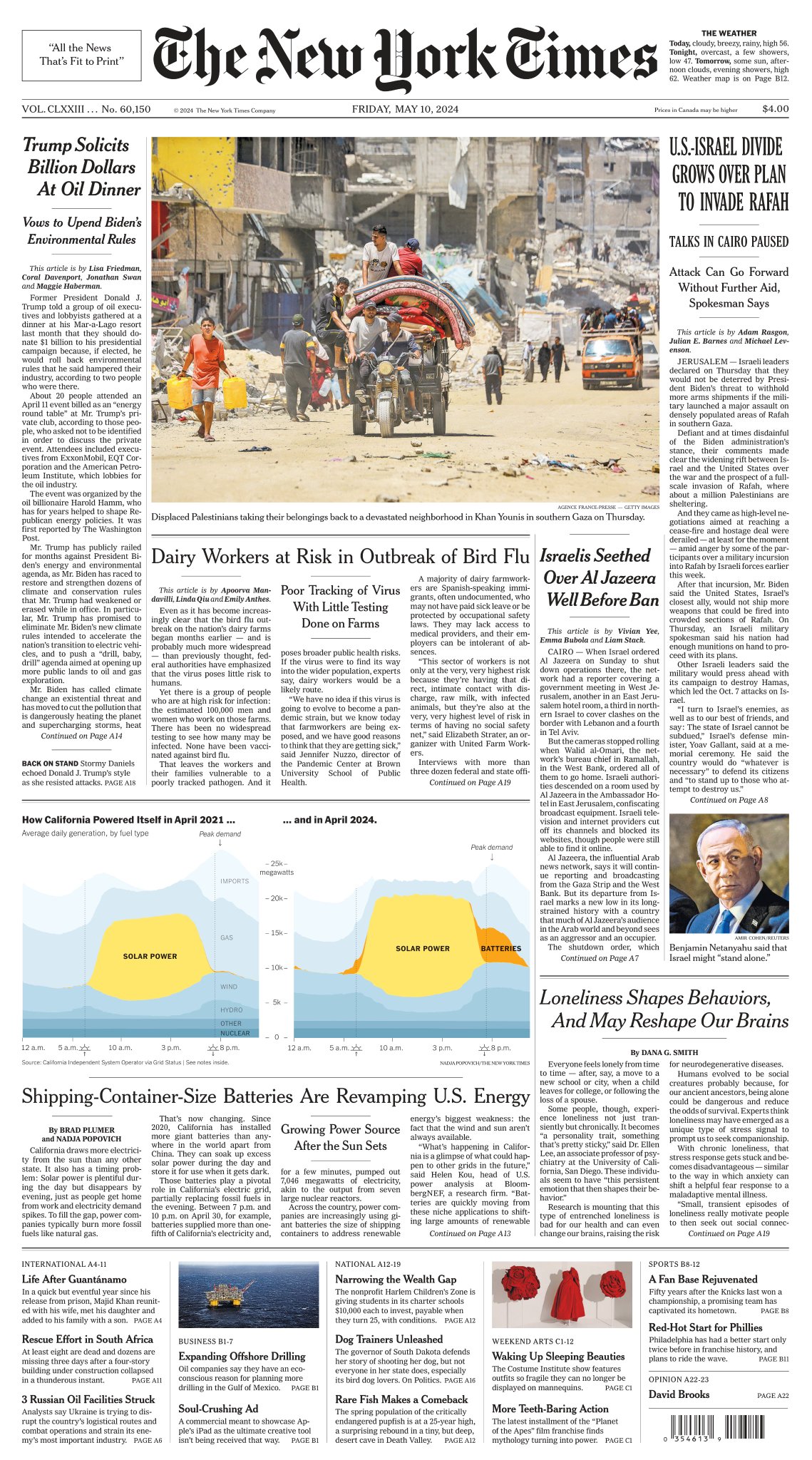
Farmworkers have been exposed to milk infected with the bird flu virus. But there has been virtually no testing on farms, and health officials know little about who may be infected.
Israel’s Shutdown of Al Jazeera Highlights Long-Running Tensions
The network will keep covering the war in Gaza, but it will be harder for Israelis to watch. Israel calls the network a security threat, while Al Jazeera says Israel wants to conceal its brutality.
At first glance, the world economy looks reassuringly resilient. America has boomed even as its trade war with China has escalated. Germany has withstood the loss of Russian gas supplies without suffering an economic disaster. War in the Middle East has brought no oil shock. Missile-firing Houthi rebels have barely touched the global flow of goods. As a share of global gdp, trade has bounced back from the pandemic and is forecast to grow healthily this year.
In a worsening humanitarian crisis, Haitians have been forced to flee their homes in the face of gang onslaughts, but the international response has failed to keep up.
President Biden hopes the decision to withhold the delivery of 3,500 bombs will prompt Israel to change course in its war in Gaza.
House Republicans Clash With Leaders of Public Schools Over Antisemitism Claims
Politicians said educators had not done enough. But the New York chancellor said members were trying to elicit “gotcha moments” rather than stop antisemitism.
Elections for the European parliament are less than a month away and far-right parties are predicted to make significant gains in many of the bloc’s 27 member states. The dire shortage of housing, leading to rising rents and property prices, is becoming a unifying focus for voters’ discontent with their current political leaders.
The issue has sparked protests from Amsterdam to Prague and Milan, as the Guardian’s Europe correspondent, Jon Henley, reports. The data is undeniably worrying as young Europeans spend up to 10 times an average salary on rent and mortgage payments, and big cities from the Baltic states to the Iberian peninsula have registered average property price rises of close to 50%. As a result more EU residents live with their parents for longer and put off life-decisions later into adulthood.
While housing does not fall within MEPs’ remit, it is a visible locus for the sense of social unease that has beset the whole bloc and has become a pivot for the far right to turn on racialised minorities. But as European community affairs correspondent Ashifa Kassam discovers, it is those communities that are doubly penalised through discrimination from landlords who, research has shown, turn away potential renters with “foreign” surnames. The political and social ramifications of the housing crisis in Europe is mirrored elsewhere across the globe and is a subject we will return to in the Guardian Weekly in this year of elections.
News, Views and Reviews For The Intellectually Curious














 Boomers Daily