Tag Archives: Louisiana Channel

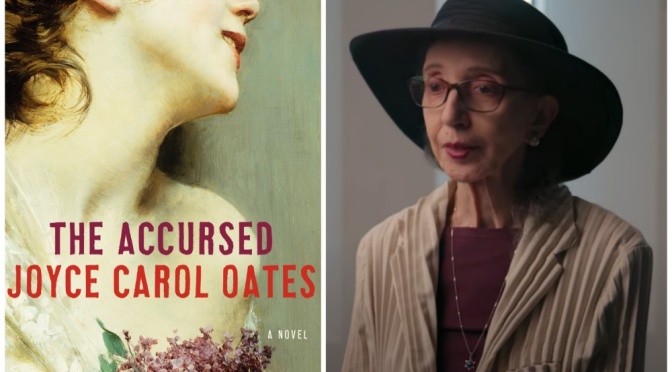
Interviews: Novelist Joyce Carol Oates ‘Storytelling’

Louisiana Channel (January 4, 2024) – When writing, Joyce Carol Oates writes about people, often about a family, because “the family unit to me is like the nexus of all emotion, and people derive their meaning from the position in families,” she says.

Video timeline: 0:00 On preferred subjects for writing 3:20 On Karen Blixen /Isak Dinesen 4:24 On families 6:54 On the mother figure 9:00 On the novel ‘Babysitter’ 17:27 On the novel ‘Night. Sleep. Death. And the Stars’ 22:48 How traveling resembles writing 28:47 On Donald Trump

“What is so exciting about the novel is that it mimics life and that you end up doing something you never thought you would do,” says Joyce Carol Oates, one of America’s greatest living novelists, when looking back on a life of writing.

It might be a violent event or something politically relevant, or it could be a racist experience that sets off a novel. In her storytelling, Oates finds it interesting to focus on girls at the beginning of puberty: “There’s a kind of wonderful neutrality of childhood that gets conditioned out when girls get to be 12 – 14 years old. And then, from that point on, when they’re so shaped by what we call the male gaze and the expectations of others that they grow into being someone who is this female image.”

But today, the family is very different and there are all kinds of families: “There are families of same-sex couples who got married and they may adopt a child or they may have a child of their own, but then there may be families that are like communes where people are living, sharing a house, but they are a family and they may have dogs and cats who know who they are. […] The so-called nuclear family – which is just a father, mother, and children – still exists, of course, but it’s not the only example of any longer, which is wonderful. It all begins with the emancipation of women”, Joyce Carol Oates concludes.

Oates feels attracted to writing because writing is storytelling and “what’s interesting about storytelling is that you have to have revelations. That you start off with a situation, and a little bit of a mystery evolves, and then you have to follow the tendrils and the roots of that mystery, like an investigator. And then there has to be a revelation.” This means that Oates focuses a lot in her writing on the pacing and the suspense and the movement, like “how long is a paragraph, how short is the dialogue, and how much dialogue is there in proportion to the exposition, and the craftsman side of writing is actually where many people write.“
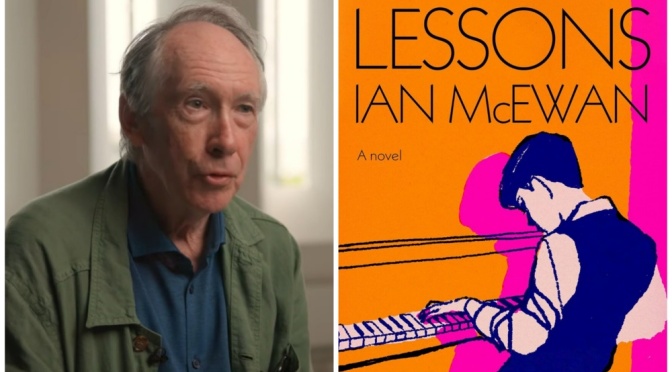
Interviews: British Writer Ian McEwan – ‘Life Stories’


Louisiana Channel (December 8, 2023) – “If I didn’t write, I’d go nuts because I wouldn’t have a single reason to exist. The pleasure of bringing something together is so intense,” says British Ian McEwan, who would love to live forever and discover how we’re doing in 10,000 years.

Ian McEwan is considered one of the most important British novelists alive today. When he writes, characters and plot are difficult to separate because “often characters arise out of plots, often plots drive characters into existence”, he says. What is crucial to McEwan when writing is that “circumstances make the character and the characters generate possibilities. That sense of possibility is always so important. So characters can create their own waves.” The novel Lessons (2022) is McEwan’s most personal novel. It was written in lockdown when he was entering his 70s and beginning to take a look back at his existence. People who know him well can always connect what he is writing with things in his own life, he says.

In Lessons, McEwan wanted to create “the emotional truth of certain rather sad, tragic, disturbing things that happened in my family”, he says. “And the reflective element was also the movement towards trying to understand the circumstances, not only of my life but my generation’s life.” Ian McEwan enjoys reading biographies, but “if you want to know everything it’s possible to know about a great poet, you’ll need to read three or four biographies written over maybe a century or two centuries”, he says. He admits that fiction does not influence him like it did when he was younger.

“We have very little sense of how to generate on the page an open-ended character until the writing of Jane Austen” and he adds that it was the great Russian writers who taught us how to write characters as if they were real people. By the turn of the 19th to the 20th century, there was a great artistic revolution; McEwan points out and emphasizes that it was especially James Joyce who taught us “to understand characters from the flow of consciousness, right from the very inside”.

Japan Views: Artist Mariko Mori – ‘Gods & The Future’

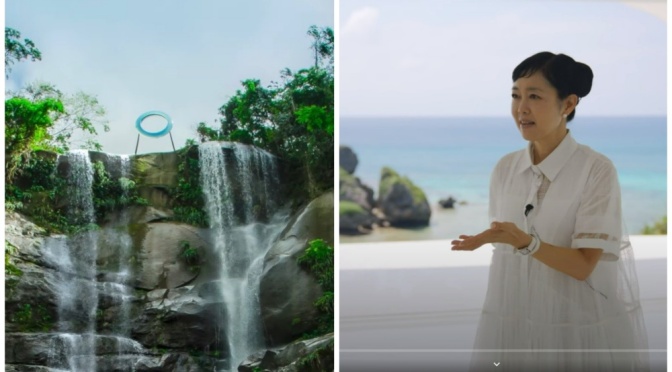
Louisiana Channel (November 7, 2023) – Japanese artist Mariko Mori shares a look into her studio and home as well as her own artistic practice. Mariko Mori was born in Tokyo, Japan, but has lived for several years in both New York and London. Her mother was an art historian, and the young Mori was introduced to art through her.

“It seems to me that a lot of our conceptual ideas are already carried out in the past. And we’re at a point to inherit those ideas to the future.”

“When I was nine years old, I was looking through her collection of postcards of all the Western art,” Mori remembers: “Somehow I found Jackson Pollock’s no. 13 painting. And I was so thrilled. I didn’t know what abstract painting was, but I really felt freedom.” Today, Mariko Mori works in various mediums, from photography and sculpture to installation and architecture. Her studio – and home – was the first architectural project she did. The house is located at Okinawa, a tropical island south of Japan.

Inspired by the surrounding nature Mori wanted “the house to be an extension of that. A part of nature.” The untraditional shape of the house is eye-catching: “Originally, I was thinking of just building an architecture building, but it became more like a sculpture or form,” she says and continues: “The shape tried to accommodate the wind coming from the north.” This explains why the building is smaller in one part and bigger in another.

Mariko Mori is a Japanese multidisciplinary artist. She is known for her photographs and videos of her hybridized future self, often presented in various guises and featuring traditional Japanese motifs. Her work often explores themes of technology, spirituality and transcendence.

Ukraine War Views: Danish Photographer Jan Grarup “Russians Are Terrorizing”

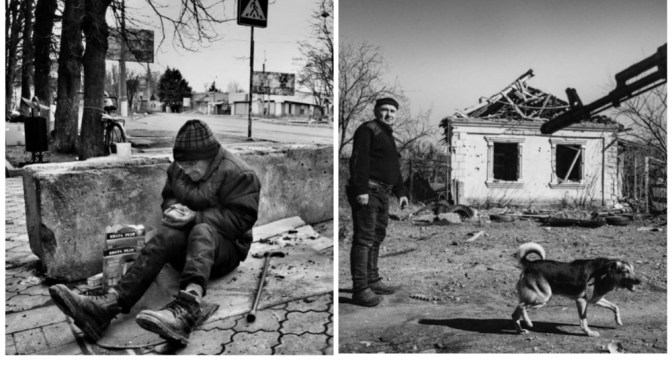
Louisiana Channel (March 21, 2023) – Meet the award-winning Danish photographer Jan Grarup, who has covered the Ukraine war from its beginning and has spent months on the frontline.

“This is going to change the world as we know it.”

“The pictures are a documentation of the brutality within the conflict itself. It’s about civilians and civilian casualties because they are the ones hit the hardest. “

“The Russians are terrorizing the civilian population. They are hitting civilian infrastructure, may it be water, electricity, or heating. That brutality is extremely important to show. For me, it is about getting as close to these people as possible.”

Grarup is convinced that the ongoing war in Ukraine will mark the beginning of a new area that will isolate Russia from the Western World for generations to come: “I have been covering wars and conflicts for the last 35 years – just about every conflict you can imagine. In many ways, the brutality of the genocide in Rwanda in 1994 is second to none. But the war in Ukraine comes really, really close. It’s basically a country which is desiring democracy and freedom and independence – and because of that, its people are killed.”

Grarups also reflects upon his feelings covering the war, such as his general discomfort with silence as “you can be sure that something is about to happen.” On the other hand, he sees the necessity to document the war for future generations and the possible prosecution of war crimes. “What I like about black-and-white photography is its timelessness. We think in our part of the world that the world has changed, developed, and moved far away from what we have seen historically.

But the fact is: It hasn’t. It’s still the same atrocities. It’s still the same victims.” Jan Grarup was born in Denmark in 1968 and is today regarded as one of the leading and most experienced war photographers globally. Already in 1991, the year of his graduation, he won the prestigious Danish Press Photographer of the Year Award, a prize he would receive on several further occasions. In 1993, he moved to Berlin for a year, working as a freelance photographer for Danish newspapers and magazines. Afterwards, Grarup covered many wars and conflicts worldwide, including the Gulf War, the Rwandan genocide, the siege of Sarajevo and the Palestinian uprising against Israel in 2000.

His coverage of the conflict between Palestine and Israel led to two series: The Boys of Ramallah, which earned him the Pictures of the Year International World Understanding Award in 2002, followed by The Boys from Hebron. His book, Shadowland (2006), presents his work during the 12 years he spent in Kashmir, Sierra Leone, Chechnya, Rwanda, Kosovo, Slovakia, Ramallah, Hebron, Iraq, Iran, and Darfur. In the words of Foto8’s review, it is “intensely personal, deeply felt, and immaculately composed.”

His second book, Darfur: A Silent Genocide, was published in 2009. In 2017 he released the prizewinning bestseller And Then There Was Silence. He is currently working on a follow-up called While We Bleed with Danish author Adam Holm about the war in Ukraine. Jan Grarup has won numerous prizes for his dedicated work, for example eight World Press Awards, the Pictures of the Year International World Understanding Award, the UNICEF Children Photo of the Year Award, Visa d’Or, Leica Oskar Barnack Award, to mention a few of the more prestigious ones. Jan Grarup was interviewed by Marc-Christoph Wagner in Copenhagen, Denmark.

The interview took place at the Danish War Museum in March 2023 on the occasion of Grarup’s exhibition One Year With War. Camera: Jakob Solbakken Edited by: Helle Pagter Produced by: Marc-Christoph Wagner

READ MORE AT LOUISIANA CHANNEL

INTERVIEW: Argentinian Artist Tomás Saraceno – “The Art of Noticing”

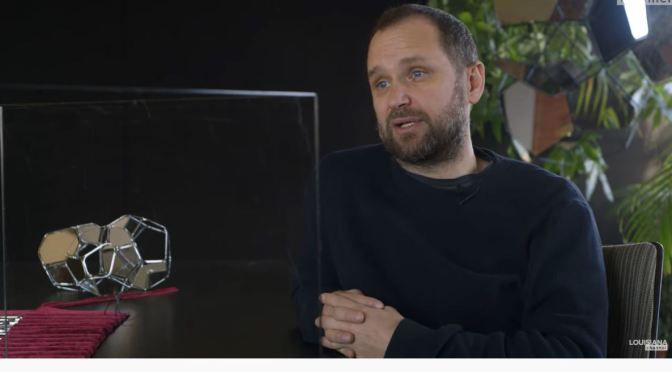
Join us – if you dare – as we follow the acclaimed Argentinian artist Tomás Saraceno into his installations of intricate spider webs inhabited by solitary, social and semi-social spiders, bridging the architectures of each other’s webs.

In the video, Saraceno talks about how spiders mirror human beings and help us understand ourselves and the way we live. “Every day, I try to enter territories, or thoughts, or ways of working, which might challenge ourselves and might challenge how we see the world.”

Observing a spider in its web for more than twenty minutes, Saraceno argues, can completely change your life and way of noticing things, revealing an unseen world. In connection to this, he feels that art and science – as well as other forms of knowledge – combined, can help us “form new alliances between disciplines and lose our comfort zone of operating and seeing and perceiving and being in the world. To try to find new ways to work and to be.”

Tomás Saraceno (b. 1973) is an Argentinian artist. Saraceno is particularly known for his large-scale, interactive installations and floating sculptures, as well as his interdisciplinary approach to art. With his practice, he explores new sustainable ways of inhabiting the environment.

His work has been exhibited at prominent venues all over the world, including the 58th La Biennale di Venezia in Venice, Palais de Tokyo in Paris, and Museo de Arte Moderno in Buenos Aires. Saraceno’s work is also part of international collection such as Bauhaus Museum in Weimar, Walker Art Center in Minneapolis, and SFMoMA in San Francisco.

In 2015, he launched the Aerocene Foundation – an open-source community project for artistic and scientific exploration of environmental issues. Relating to arachnology research, Saraceno is the first person to have scanned, reconstructed and re-imagined spiders’ woven spatial habitats.

For more see: https://studiotomassaraceno.org/about/ Tomás Saraceno was interviewed by Helle Fagralid at his studio in Berlin in November 2019. Camera: Rasmus Quistgaard Edited by Klaus Elmer Produced by Helle Fagralid Cover photo: Tomás Saraceno. ‘Social… Quasi Social… Solitary… Spiders… On Hybrid Cosmic Webs’, 2013. Installation view. Detail. Courtesy of the artist and Esther Schipper Gallery, Berlin Copyright: Louisiana Channel, Louisiana Museum of Modern Art, 2020

Video Interview: British Painter David Hockney – “The World is Beautiful”

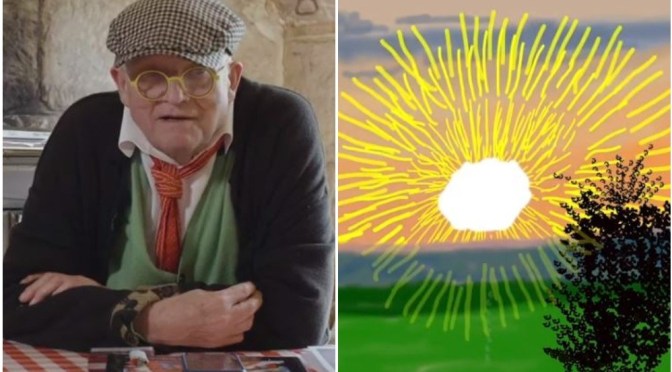
In this short and uplifting video, the influential British painter David Hockney talks about looking and painting for more than 60 years – and shares a story that made him reflect on our time.

“The world is very, very beautiful if you look at it. But most people don’t look very much. They scan the ground in front of them so they can walk, but they don’t really look at things incredibly well, with intensity. I do, and I’ve always known that.” In March 2020, Hockney sent out his iPad drawing ‘Do Remember They Can’t Cancel the Spring’ (2020) in response to the coronavirus outbreak. In this video, he shares the story of how a philosopher on a news program was asked how he could be optimistic with the current news: “And he said: Well, that’s television. Bad news sells.” The reporter then inquired what the good news was, to which the philosopher responded: “Well, the arrival of spring,” Hockney continues laughing.

Louisiana Channel logo

In the video, you also get to experience the world premiere of an animation technique, which Hockney himself calls “time-based brush painting.”

David Hockney (b.1937) is a British painter, printmaker, photographer and stage designer, who is considered among the most influential and versatile British artists of the 20th century. Hockney is a notable contributor to the pop art movement in Britain, both in its foundation and growth, beginning with his participation in an annual exhibition called ‘Young Contemporaries’ in 1960, which also marked the start of his recognition in the art world. Hockney is the recipient of several prestigious awards including the Praemium Imperiale for Painting (1989), and the Lifetime of Artistic Excellence Award (Pratt Institute) in 2018.

His work can be found in numerous collections worldwide, including National Gallery of Australia in Canberra, National Portrait Gallery and Tate Gallery in London, Museum of Modern Art and Metropolitan Museum of Art in New York, Centre Pompidou in Paris, De Young Museum in San Francisco, Louisiana Museum of Modern Art in Humlebæk, and Museum of Contemporary Art in Tokyo.

David Hockney was interviewed by Marc-Christoph Wagner at his home in France in March 2019.

Many thanks to David Hockney for providing the works and the animation shown in the video. Camera: Jakob Solbakken Edited by Roxanne Bagheshirin Lærkesen Produced by Marc-Christoph Wagner Copyright: Louisiana Channel, Louisiana Museum of Modern Art, 2020 Supported by Nordea-fonden

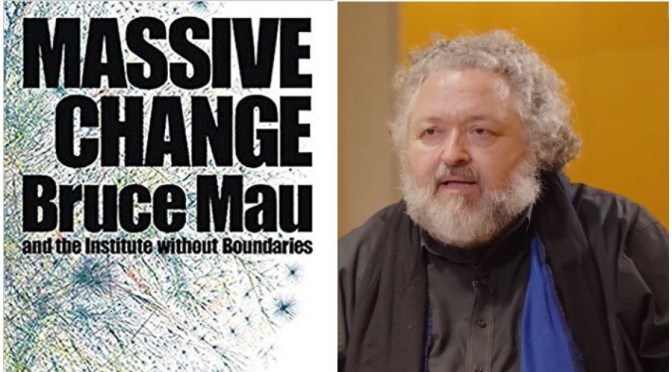
Video Profiles: 60-Year Old Canadian Designer Bruce Mau – “Beauty Of Books”

Meet the influential Canadian “design guru”, Bruce Mau, in this short video. Mau, who is the author of quintessential publications on architecture and design, shares his thoughts on how we can bring the book into the technological environment without losing its beauty and richness.

“I think it’s such a brilliant technology that if it didn’t exist today – if somehow we got to the present through technology and computers before the book – we would have to invent the book,” Maus says of the discussion surrounding the alleged ‘death of the book’. The book, he continues, is such a brilliant technology, that no computer can match: “It never crashes, it sequences narrative, which is one of the most important things we need to do to understand the world.”

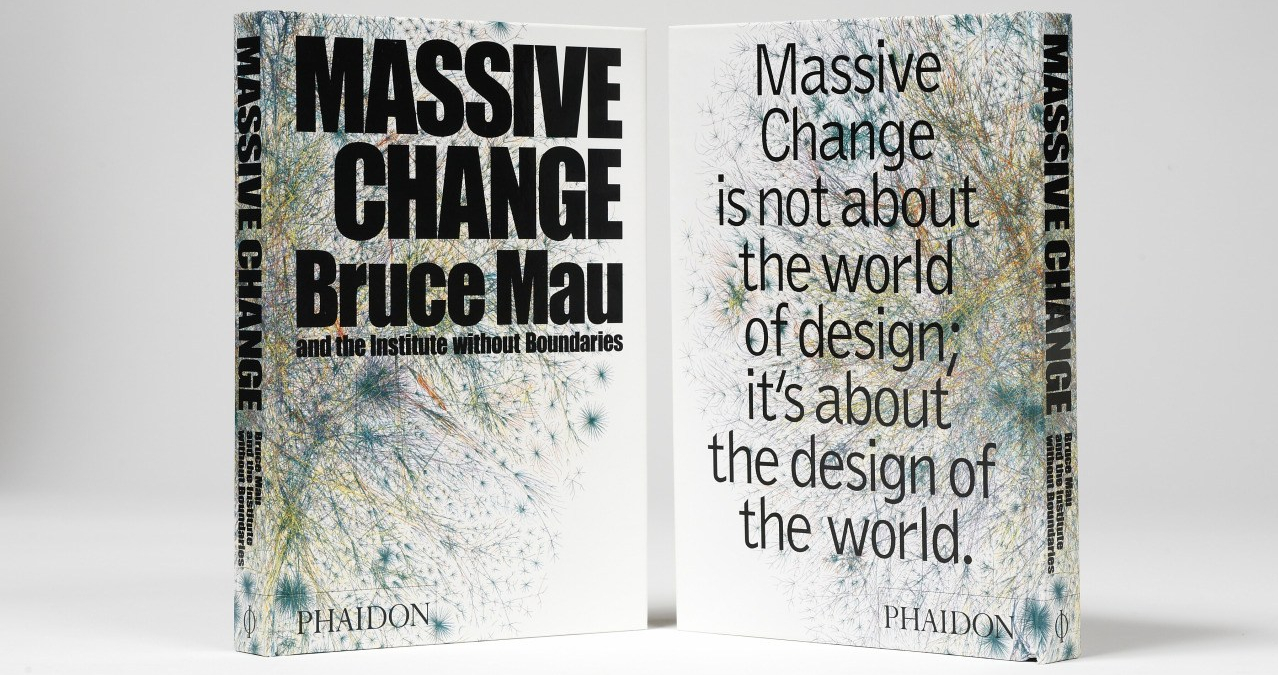
Massive Change Bruce Mau

Mau shares how he is working on a technology platform for books because he realized that “when we moved the book from the physical book to the digital book, we left behind the beauty of the book. We left behind the culture of the book and the experience of the book. We just took the text.” The true experience of the book, he feels, should be better incorporated into the technological environment, while adding the capacity and reach that technology offers.

Bruce Mau website

Bruce Mau (b. 1959) is a Canadian designer. Mau began as a graphic designer but has later extended his creative talent to the world of architecture, art, films, conceptual philosophy and eco-environmental design. From 1985-2010, Mau was the creative director of Bruce Mau Design (BMD), and in 2003 he founded the Institute Without Boundaries in collaboration with the School of Design. In 2010, he went on to co-found The Massive Change Network in Chicago. Mau is the recipient of prestigious awards including the Chrysler Award for Design Innovation in 1998, the American Institute of Graphic Arts Gold Medal in 2007, the Philadelphia Museum of Art’s Collab Design Excellence Award in 2015, and the Cooper Hewitt 2016 National Design Award for Design Mind – for his impact on design theory, design practice and public awareness. In 1998, Mau designed a widely circulated 43 point manifest called ‘The Incomplete Manifesto for Growth’, which assists its users in forming and assessing their design process. Mau is also the author of iconic books such as ‘S, M, L, XL’ (1995) with Rem Koolhaas: an architecture compendium that quickly became a requisite addition to the shelves of creatives. In June 2020, he will publish ‘MC24’, which features essays, observations, project documentation, and design work by Mau and other high-profile architects, designers, artists, scientists, environmentalists, and thinkers of our time.

Bruce Mau was interviewed by Marc-Christoph Wagner in connection with The World Around conference (https://theworldaround.com/) in New York City in January 2020.

Website

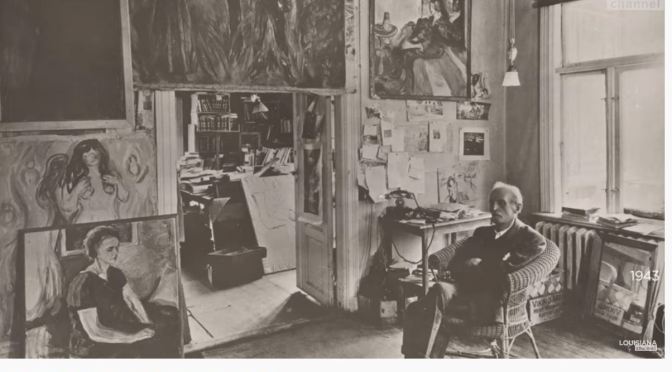
Art History: Peter Doig & Karl Ove Knausgård On Edvard Munch (Video)

Louisiana Channel logoEnjoy this engaging and far-reaching conversation between two giants of art and literature, Scottish artist Peter Doig and Norwegian author Karl Ove Knausgård about the legendary Norwegian painter Edvard Munch (1863-1944).

Peter Doig (b. 1959) is a Scottish artist, who is celebrated as one of the most important representational painters working today. He has held several solo exhibitions including at the Scottish National Gallery in Edinburgh, Faurschou Foundation in Beijing, Louisiana Museum of Modern Art in Humlebæk, Musée des Beaux-Arts de Montreal, Musée d’Art Moderne de la Ville de Paris, and Tate Britain in London. His works are held in the collections of the Art Institute of Chicago, the National Gallery of Art in Washington, D.C., and Schirn Kunsthalle in Frankfurt, among others. Doig has received several prestigious awards such as the Prix Eliette von Karajan (1994) and the Wolfgang Hahn Prize of the Society for Modern Art (2008).

Peter Doig & Karl Ove Knausgård On Edvard Munch Louisiana Channel January 6 2020 video

Karl Ove Knausgård (b. 1968) is a Norwegian author, internationally recognized for his prizewinning novel ‘My Struggle’. The novel, in which the author describes his own life, is in six volumes spanning over 3,000 pages. He is also the author of a four-volume series following the seasons – ‘On Spring’, ‘On Summer’, ‘On Fall’ and ‘On Winter’ (2015-16), ‘Inadvertent (Why I Write) (2018), and ‘So Much Longing in So Little Space: The Art of Edvard Munch’ (2019). Knausgård is the recipient of several prestigious prizes including the Austrian State Prize for European Literature.

Edvard Munch (1863-1944) is a Norwegian painter and one of the most important artists of the early 20th century. Munch was part of the Symbolist movement in the 1890s, and a pioneer of Expressionism. Among his most iconic paintings are ‘The Scream’ and ‘The Sick Child’.

Peter Doig and Karl Ove Knausgård were on stage with Christian Lund at Kunstsammlung Nordrhein-Westfalen in Düsseldorf in connection with the exhibition ‘Edvard Munch’, curated by Karl Ove Knausgård, in November 2019.

Camera: Jakob Solbakken

Edited by Klaus Elmer

Produced by Christian Lund

Website