
Tag Archives: Literature

The New York Times Magazine – March 24, 2024

Image

THE NEW YORK TIMES MAGAZINE (March 22, 2024):

A New Train Is Opening Up the Yucatán, for Better or Worse

When it’s a quick trip from the schlocky pleasures of Cancún to the remote cities of the Maya, is something lost along the way?

El Tren Maya, which links five states in southern Mexico, is one of the country’s most-debated infrastructure projects. Carved through the Yucatán Peninsula at great expense, the 966-mile loop pits the megaproject ambitions of Mexico’s departing president, Andrés Manuel López Obrador, against the will of environmentalists and Indigenous leaders seeking to preserve a pristine environment of jaguars, ancient ruins and sacred underwater caves.

An Arsenal of Mysteries: The Terrifying Allure of a Remote Caribbean Island

Why had immigrants, seekers and pilgrims been drawn for centuries to the treacherous shores of Mona Island? I set off to find out.

By Carina del Valle Schorske

Every year, I spend a month or two in Puerto Rico, where my mother’s family is from. Often I go in winter, with the other snowbirds, finding solace among palm trees. But I’m not a tourist, not really. I track the developers that privatize the shoreline; I follow the environmental reports that give our beaches a failing grade. I’m disenchanted with the Island of Enchantment, suspicious of an image that obscures the unglamorous conditions of daily life: frequent blackouts, meager public services, a rental market ravaged by Airbnb. Maybe that’s why I turned away from the sunshine and started to explore caves with my friends Ramón and Javier, seeking out wonders not yet packaged for the visitor economy. I’ve been learning to love stalactites and squeaking bats, black snakes and cloistered waterfalls — even, slowly, the darkness itself.
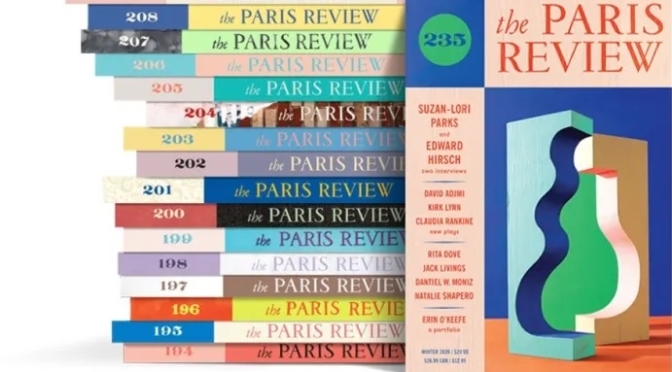
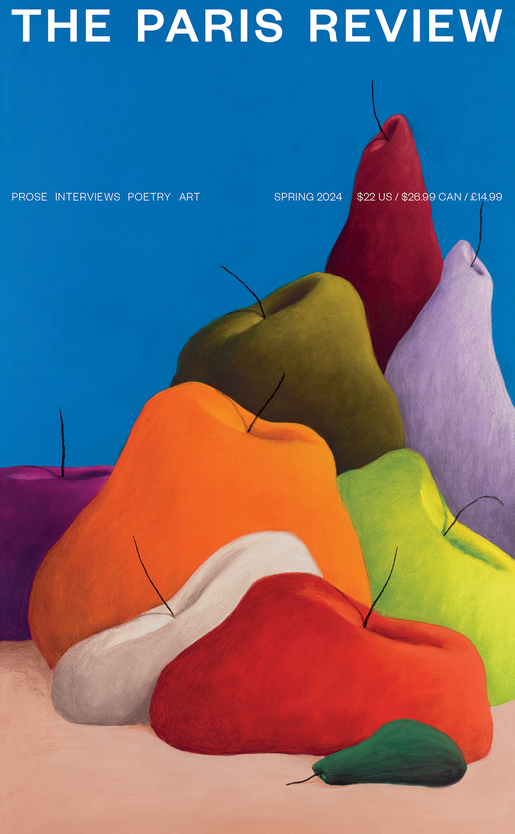
Literary Previews: The Paris Review – Spring 2024

The Paris Review No. 247, Spring 2024—Subscriber Cover

Paris Review Spring 2024 — The new issue features interviews with Jhumpa Lahiri and Alice Notley, prose by Joy Williams and Eliot Weinberger, poetry by Mary Ruefle and Jessica Laser, art by Chris Oh and Farah Al Qasimi, two covers by Nicolas Party, and more…

Jhumpa Lahiri on the Art of Fiction: “My question is, What makes a language yours, or mine?”

Alice Notley on the Art of Poetry: “Writing is not therapy. That’s the last thing it is. I still have my grief.”

Prose by Elijah Bailey, Julien Columeau, Joanna Kavenna, Samanta Schweblin, Eliot Weinberger, and Joy Williams.

Poetry by Gbenga Adesina, Elisa Gabbert, Jessica Laser, Maureen N. McLane, Mary Ruefle, Julian Talamantez Brolaski, and Matthew Zapruder.

Art by Farah Al Qasimi and Chris Oh.

TABLE OF CONTENTS

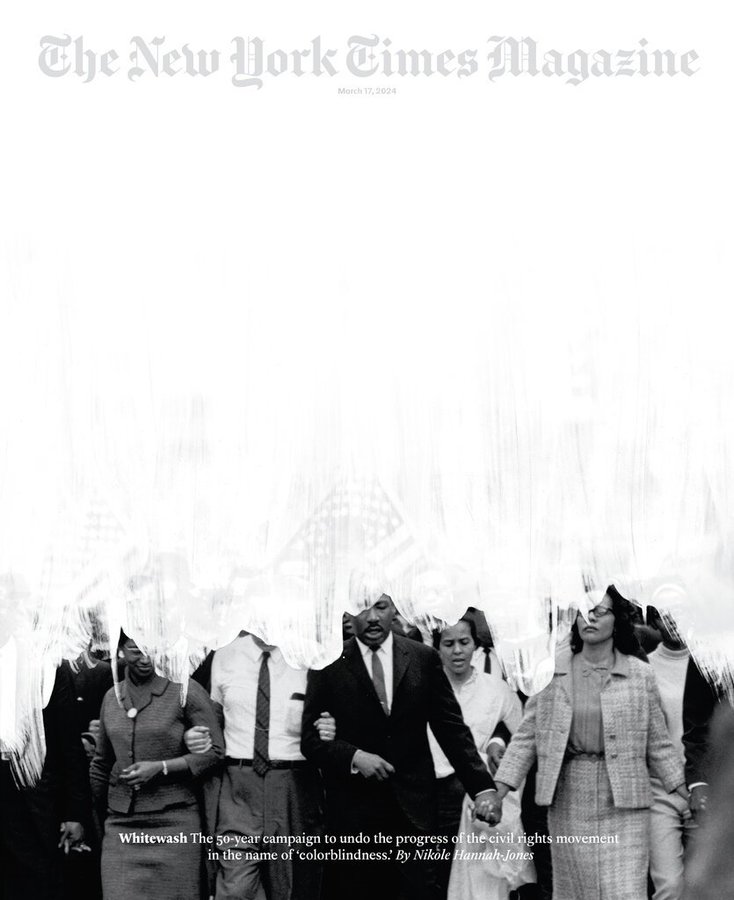
The New York Times Magazine – March 17, 2024

Image

THE NEW YORK TIMES MAGAZINE (March 16, 2024):

The ‘Colorblindness’ Trap: How a Civil Rights Ideal Got Hijacked

The fall of affirmative action is part of a 50-year campaign to roll back racial progress.

By Nikole Hannah

Anthony K. Wutoh, the provost of Howard University, was sitting at his desk last July when his phone rang. It was the new dean of the College of Medicine, and she was worried. She had received a letter from a conservative law group called the Liberty Justice Center. The letter warned that in the wake of the Supreme Court’s decision striking down affirmative action in college admissions, the school “must cease” any practices or policies that included a “racial component” and said it was notifying medical schools across the country that they must eliminate “racial discrimination” in their admissions. If Howard refused to comply, the letter threatened, the organization would sue.

What Deathbed Visions Teach Us About Living

A photo illustration of two peoples’ silhouettes.

Researchers are documenting a phenomenon that seems to help the dying, as well as those they leave behind.

By Phoebe Zerwick

Chris Kerr was 12 when he first observed a deathbed vision. His memory of that summer in 1974 is blurred, but not the sense of mystery he felt at the bedside of his dying father. Throughout Kerr’s childhood in Toronto, his father, a surgeon, was too busy to spend much time with his son, except for an annual fishing trip they took, just the two of them, to the Canadian wilderness. Gaunt and weakened by cancer at 42, his father reached for the buttons on Kerr’s shirt, fiddled with them and said something about getting ready to catch the plane to their cabin in the woods. “I knew intuitively, I knew wherever he was, must be a good place because we were going fishing,” Kerr told me.

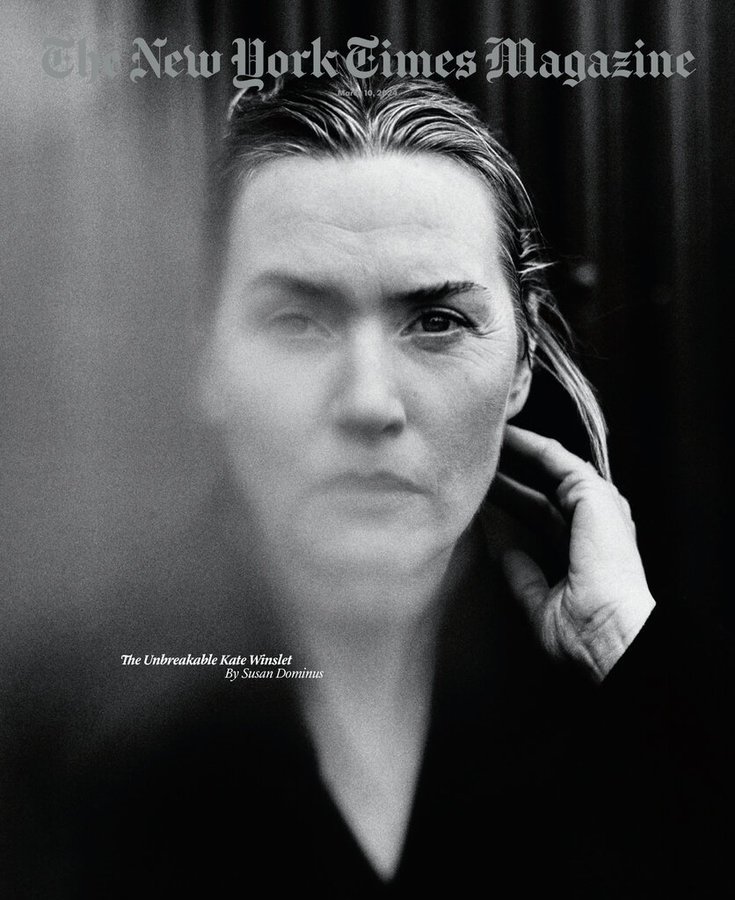
The New York Times Magazine – March 10, 2024

Image

THE NEW YORK TIMES MAGAZINE (March 9, 2024):

Kate Winslet Pushes Her Characters, and Herself, to the Edge

A black-and-white photograph of Kate Winslet.

As a young star, she endured Hollywood’s brutal treatment of women. Now she’s putting her resilience and grit on full display.

Kate Winslet was standing in front of a microphone, breathing hard. Sometimes she did it fast; sometimes she slowed it down. Sometimes the breathing sounded anxious; other times, it was clearly the gasping of someone who was winded. Before beginning a new take, Winslet stood stock still, hands opening and closing at her sides; she looked like a gymnast about to bound into a floor routine. Every breath seemed high-stakes, even though she was well into a long day of recording in a dim, windowless studio in London.

Why Power Eludes the French Left

A close-up photograph of Jean-Luc Mélenchon.

France has often been the vanguard of leftist politics — but support in the streets doesn’t always translate to votes at the ballot box.

By Elisabeth Zerofsky

The signs that a protest is happening in Paris are nearly always the same: the quiet of blocked-off streets; the neat rows of police vans containing the gendarmerie stretching down the boulevard; the sound of drumbeats and whistles and the neon red flares that spit smoke into the sky. For six months last year, those signs were constant and ubiquitous, as furious, sometimes violent marches and general strikes protesting President Emmanuel Macron’s pension reforms brought Paris to a standstill. Students and activists, public-transit operators, custodial staff, medics, mechanics, teachers, oil-rig workers, writers and celebrities all gathered to rail against Macron’s plan to raise the national retirement age by two years, to 64.

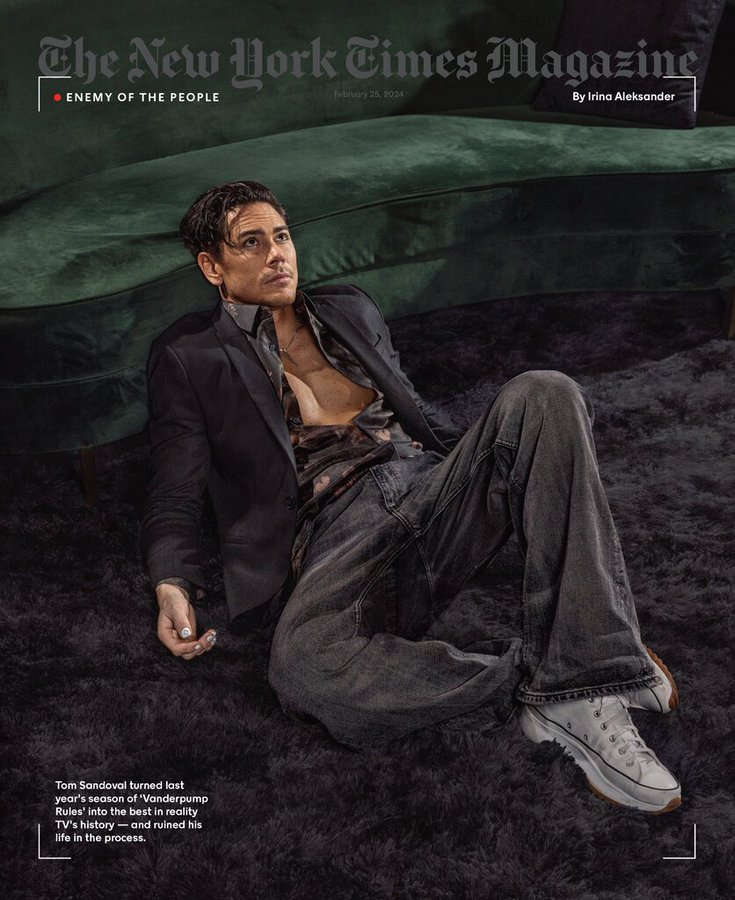
The New York Times Magazine – Feb 25, 2024

Image

THE NEW YORK TIMES MAGAZINE (February 23, 2024): The new issue features ‘Enemy of the People’ – Tom Sandoval turned last year’s season of ‘Vanderpump Rules’ into the best in reality TV’s history – and ruined his life in the process..

How Tom Sandoval Became the Most Hated Man in America

Tom Sandoval looking into a mirror.
Credit…Holly Andres for The New York Times

He turned last year’s season of ‘Vanderpump Rules’ into the best in reality TV’s history — and ruined his life in the proces

Want a Better Society? Try Better Buildings.

The Egg in front of an ice rink with families skating together.

An obsession with luxury is transforming cities into bland, isolating landscapes. Architecture should be for creating community.

The New York Times Magazine – Feb 19, 2024

THE NEW YORK TIMES MAGAZINE (February 17, 2024): The new issue features ‘Actors in the Wild’ – The best performers of the year, when they’re not on film….

Actors in the Wild

The best performers of the year — when they’re not on film.

James Nachtwey, an eminent photojournalist known for his intimate depictions of the front lines in places like Iraq, Afghanistan and Ukraine, had never photographed a movie star before. So for this year’s Great Performers issue, we asked him to capture a dozen of the world’s best actors away from the red carpets and awards ceremonies that often define how we see them. “My work has focused almost exclusively on conflicts and critical social issues, the polar opposite of what might be thought of as celebrity photography,” Nachtwey says. But he was intrigued by the challenge: “Art takes talent, but it’s also hard work, and exploring what actors practice in their daily lives to strengthen their art would be fascinating.”

Tubi Is Reviving a Lost Joy: Watching Really, Really Bad Movies

A photo illustration of Tubi scenes.

Their films have gone viral for their awful production values. But their success says fascinating things about what comes after prestige TV.

By Niela Orr

There’s a 2008 movie that offers an odd preview of today’s entertainment. In Michel Gondry’s “Be Kind Rewind,” a bizarre accident demagnetizes the entire inventory of a video rental store, so a clerk and his eccentric friend decide to remake all the films themselves, from “The Lion King” to “Driving Miss Daisy” to “2001: A Space Odyssey.” Their versions are 20 minutes long (at most), shot on an old hand-held video camera and produced in a delightfully quirky, ad hoc way: handcrafted props and sets, buddies working as extras, costumes from the local dry cleaner.

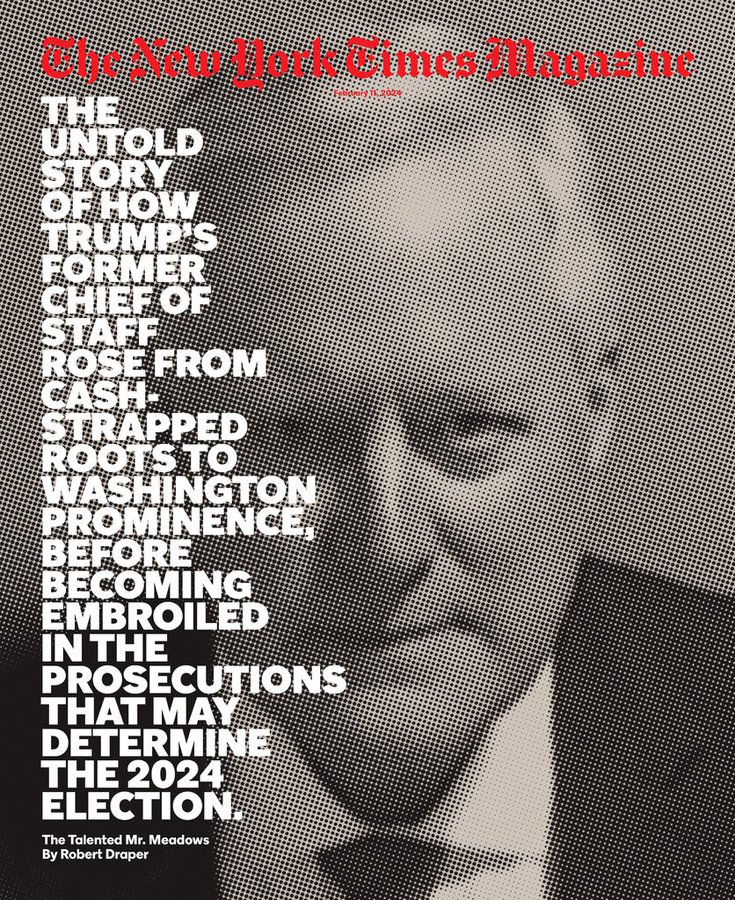
The New York Times Magazine – Feb 11, 2024

Image

THE NEW YORK TIMES MAGAZINE (February 9, 2024): The new issue features ‘The Untold Story Of How Trump’s Former Chief Of Staff Rose From Cash-Strapped Roots To Washington Prominence, Before Becoming Embroiled In The Prosecutions That May Determine The 2024 Election….

How Mark Meadows Became the Least Trusted Man in Washington

The untold story of the rise and fall of Trump’s former chief of staff — and his role in the prosecutions that may determine the 2024 election.

How Oct. 7 Drove a Wedge Into the Democratic Party

Members of Congress, and candidates for their seats, have been drawn into bitter political clashes over the Israeli-Palestinian conflict.

When George Santos, the indicted fabulist, was expelled from Congress in December, Nassau County Republicans scrambled to hunt up a new nominee. Santos was a catastrophe, but he had also flipped a New York Democratic stronghold, and party leaders wanted the best of him — the charisma, the conservatism and the history-making potential — with none of the debilitating drawbacks.

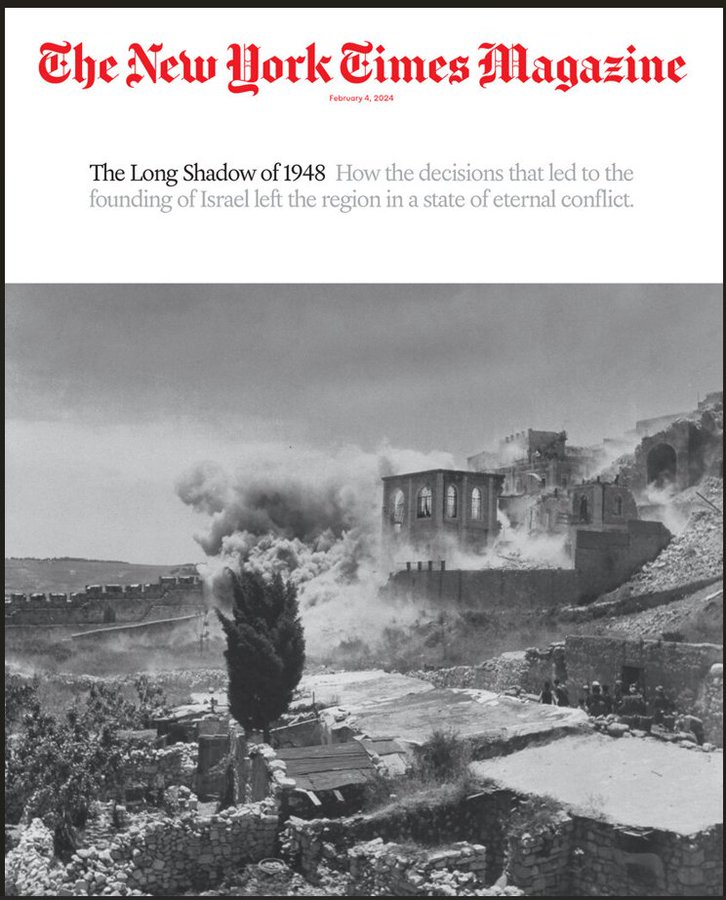
The New York Times Magazine-February 4, 2024

Image

THE NEW YORK TIMES MAGAZINE (February 2, 2024): The new issue features ‘The Long Shadow of 1948’ – How the decisions that led to the founding of Israel left the region in a state of eternal conflict…

The Road to 1948

How the decisions that led to the founding of Israel left the region in a state of eternal conflict.

A discussion moderated by Emily Bazelon

One year matters more than any other for understanding the Israeli-Palestinian conflict. In 1948, Jews realized their wildly improbable dream of a state, and Palestinians experienced the mass flight and expulsion called the Nakba, or catastrophe. The events are burned into the collective memories of these two peoples — often in diametrically opposed ways — and continue to shape their trajectories.

John Malkovich on (Really) Being John Malkovich

An illustration of John Malkovich.

By David Marchese 

There’s a scene in that modern classic of screwball existentialism, “Being John Malkovich,” from 1999, in which John Malkovich, playing a version of himself, enters a portal that others have been using to climb inside his mind. Suddenly, Malkovich is in a world populated solely by variations on himself: Malkovich as a flirtatious sexpot, a genteel waiter, a jazz chanteuse, a bemused child, everyone speaking only the word “Malkovich.” In a way, that scene is a microcosm of the actor’s decades-long, always-interesting career. 

The New York Times Magazine- January 28, 2024

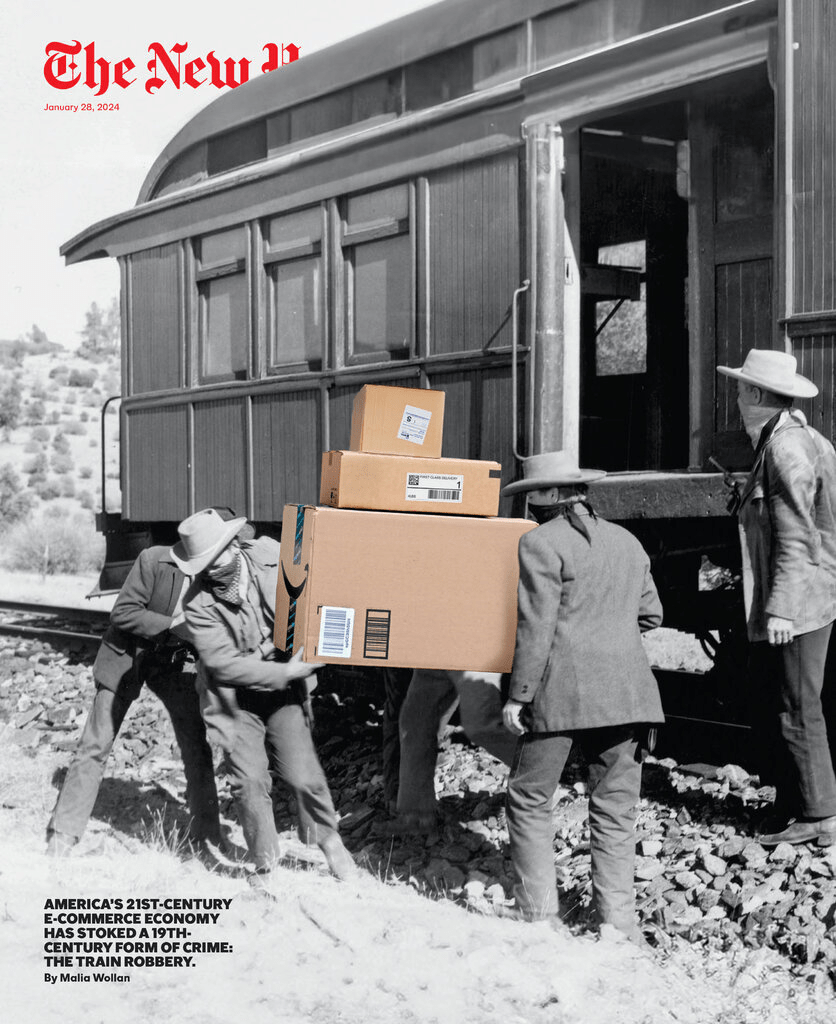
THE NEW YORK TIMES MAGAZINE (January 26, 2024): The new issue features ‘America’s 21st-Century E-Commerce Economy Has Stoked A 19th-Century Form of Crime: The Train Robbery’….

The Great Freight-Train Heists of the 21st Century

A photo illustration composed of an old black-and-white photograph of train robbers stealing amazon packages in color.

The explosion of the e-commerce economy has created an opportunity for thieves — and a conundrum for the railways.

College Is All About Curiosity. And That Requires Free Speech.

An illustration of a professor in front of a class that is shouting and picketing from the rafters.

True learning can only happen on campuses where academic freedom is paramount — within and outside the classroom.

Current Affairs: Prospect Magazine – March 2024

Image

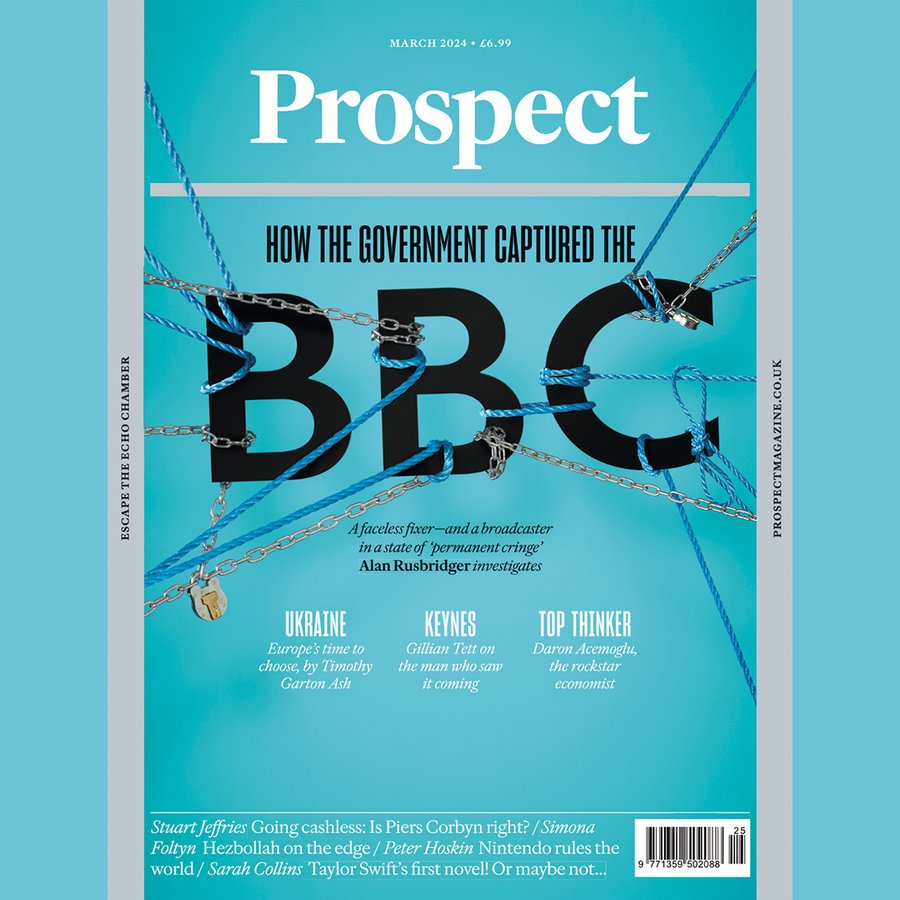
Prospect Magazine (March 2024) The latest issue features ‘How The Government Captured The BBC’ – A faceless fixer – and a broadcaster in a state of ‘permanent cringe’…

To whom do we owe shelter?

We do not choose where we are born. That creates rights—and obligations—that we should all seek to honour

Conflict, human rights abuses and climate change have led to a doubling of the global refugee population in the last seven years, and yet the response of many wealthy countries has become increasingly insular and myopic. Constant demands to slash international aid, along with punitive immigration policies and hateful rhetoric, mark a shift away from humanitarian values. The UK’s Rwanda scheme epitomises this trend: it would normalise the mass deportation of asylum seekers and undermine prohibitions on returning refugees to dangerous countries. At the same time, citizens of wealthy countries appear increasingly indifferent to the plight of those who perish in the Mediterranean or along other perilous routes.

How the government captured the BBC

© Photography by Sara Morris, post-production by the Retouching Shed

Ukraine’s fate, Europe’s choice

Friendly fire? Ukraine’s chief commander, Valeriy Zaluzhny, is said to have a frosty relationship with Zelensky © Ukraine President’s Office / Alamy