In her first extended interview after the election, the former House speaker was not interested in analyzing Democratic losses and was eager to put a sunny spin on the future. By Lulu Garcia-Navarro
He fled brutal repression — only to discover, as so many Uyghur refugees have, that China’s power stretches far beyond its borders.By Nyrola Elimä and Ben Mauk
Granta Magazine (November 7, 2024): The “China” issue feautures At a time when China has become a unifying spectre of menace for Western governments, this issue of Granta seeks to bring the country’s literary culture into focus.
Featuring fiction by Yu Hua, Zou Jingzhi, Yan Lianke, Jianan Qian, Shuang Xuetao, Mo Yan, Zhang Yueran, Ban Yu, Yang Zhihan and Wang Zhanhei.
Essays by Xiao Hai and Han Zhang, as well as a conversation between Wu Qi and Granta.
Photography from Feng Li, Haohui Liu and collaborators Li Jie and Zhang Jungang.
And poetry from Huang Fan, Lan Lan, Hu Xudong and Zheng Xiaoqiong.
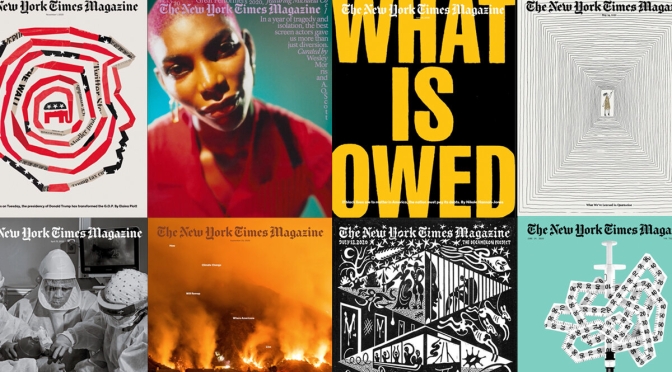
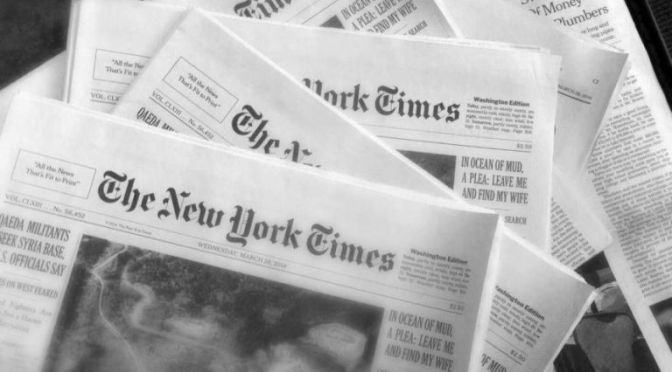
THE NEW YORK TIMES MAGAZINE (November 2, 2024): The 11.3.24 Issue In this issue, Jim Rutenberg on the potential for an election certification crisis in the weeks ahead; Amanda Taub on the game theory of democracy; Ariel Lown Lewiton on her grandparents’ protest pin collection; and more.Read this issue
Prospect Magazine (October 30, 2024)– The latest issue features Francis Fukuyama sets out what is at stake if Donald Trump wins, an investigation reveals how much councils spend on temporary accommodation and Sarah Manavis examines why some women are drawn to misogyny
Make no mistake: Donald Trump is a demagogue
The Republican candidate has already damaged American democracy and the wider liberal order. Worse is to come by Francis Fukuyama\
‘You wouldn’t let a dog suffer like this’: should assisted dying be legal?
THE NEW YORK TIMES MAGAZINE (October 27, 2024): The latest issue features David Gaubey Herbert on building a cheerleading empire; Elisabeth Zerofsky on the historian Robert Paxton; Jonathan Mahler on the tech billionaires who became major G.O.P. donors; and more.
For decades, the sport has been shaped in large part by one company — and one man.
Nikki Jennings started cheering when she was 4 years old. She was small and flexible and became a flyer, a human baton spinning and twisting through the air before being caught by teammates. Until sometimes she wasn’t: She got her first concussion in the third grade.
Is It Fascism? A Leading Historian Changes His Mind.
Robert Paxton thought the label was overused. But now he’s alarmed by what he sees in global politics — including Trumpism.
THE NEW YORK TIMES MAGAZINE (October 19, 2024): The latest issue features Undocumented labor quietly props up much of the American economy — nowhere more than on dairy farms. What would a crackdown mean for milk?
Al Pacino has been one of the world’s greatest, most influential actors for more than 50 years. He’s audacious. He’s outrageous. He’s Al Pacino, and I’m pretty sure you know what that entails.
Why France’s Most Controversial Novelist Is Also Its Most Celebrated
Reviled as much as he is lauded, Michel Houellebecq holds up a mirror to a world we would rather not see.
THE NEW YORK TIMES MAGAZINE (September 13, 2024): The latest issue featuresSasha Weiss on the Prince we never knew; Ben Hubbard on a U.N. agency for Palestinian refugees; Giles Harvey on the writer Tony Tulathimutte; and more.
James Schuyler on Frank O’Hara: “I still can see Frank, standing on that street corner outside a pastry shop, holding a neatly tied-up box of God knows what—éclairs, perhaps.”
James Schuyler was born in Chicago in 1923, grew up in Washington, D.C., and East Aurora, New York, and spent most of his adult years in New York City and Southampton, Long Island. Although he is perhaps less widely known than the fellow New York School poets with whom he is associated, John Ashbery, Frank O’Hara, Barbara Guest, and Kenneth Koch, he published six full-length books of poetry during his lifetime—beginning with Freely Espousing, published by Doubleday and Paris Review Editions in 1969—as well as two novels, and a third written in collaboration with Ashbery. In 1981 he won the Pulitzer Prize for his collection The Morning of the Poem (1980). Mental illness plagued him intermittently, and there were times when his life threatened to veer out of control, but friends repeatedly rallied around him, and the years before his death in 1991 were happy and productive.
Javier Cercas on the Art of Fiction: “Hell, to me, is a literary party.”
Prose by Josephine Baker, Caleb Crain, Marlene Morgan, Morgan Thomas, and Fumio Yamamoto.
Poetry by Hannah Arendt, Matt Broaddus, Sara Gilmore, Benjamin Krusling, Mark Leidner, James Richardson, and Margaret Ross.
Art by Ayé Aton and Ron Veasey, and cover by Sterling Ruby.
News, Views and Reviews For The Intellectually Curious