
The Globalist (February 8, 2024): We discuss German chancellor Olaf Scholz’s trip to Washington, as he tries to bolster US support for Ukraine.
Plus: Dutch coalition talks, fashion news and the UAE’s luxury property boom.

The Globalist (February 8, 2024): We discuss German chancellor Olaf Scholz’s trip to Washington, as he tries to bolster US support for Ukraine.
Plus: Dutch coalition talks, fashion news and the UAE’s luxury property boom.
The Globalist (February 7, 2024): We discuss the bill worth $118bn (€109bn), which will be debated by the US Senate today.
Plus: protests in Senegal after parliament delays the presidential election, Marine Le Pen meets with the Alternative for Germany party and we catch up with J A Bayona, director of ‘Society of the Snow’.
The Globalist Podcast (February 5, 2024) – The latest on the US response to the drone attacks in Jordan, assess how Azerbaijan’s presidential election will impact the wider region and review the day’s papers.
Plus: we meet designer Camille Jaillant of Olistic The Label and look at last night’s Grammy Awards.

Video timeline: 0:00 ‘Axis of Resistance’ 0:37 Iran’s allies 1:44 Iran’s history 3:22 U.S. in the Middle East 4:14 Attacks since Oct. 7
WSJ explains what to know about the alliance that includes Hamas in Gaza, Hezbollah in Lebanon and the Houthis in Yemen.


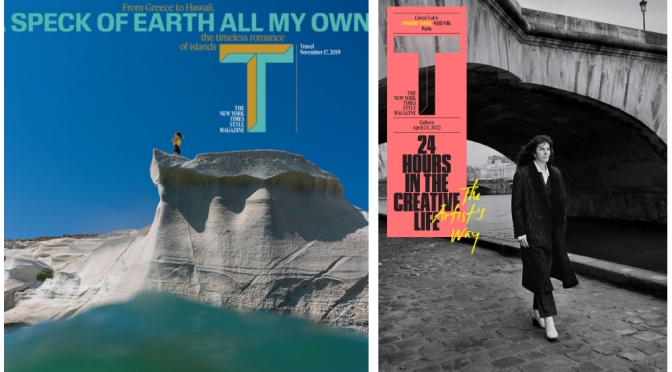
THE NEW YORK TIMES STYLE MAGAZINE (November 12, 2023) – T’S TRAVEL ISSUE features the writer Aatish Taseer embarked on an epic 40,000-mile journey through Bolivia, Mongolia and Iraq. What he learned was less a life-altering revelation and more a lesson in curiosity itself.

The writer Aatish Taseer embarked on a journey through Bolivia, Mongolia and Iraq. What he learned was less a life-altering revelation and more a lesson in curiosity itself.
Travel, the movement of people from one place to another, has always existed. But long before we thought to travel for pleasure, we traveled for purpose: for commerce, and for faith.
Even the most casual student of the Silk Road, that fearsome, wondrous network of routes that people began plying in the second century B.C. (and did so for approximately the next 1,600 years) knows that the two — business and God, whoever or whatever your god was — often intermingled. Merchants and adventurers returned with new kinds of goods, but also with new kinds of ideas: of art, of architecture, of ideology, of faith. The Silk Road brought Islam to India, and Buddhism to Japan. It’s why travel has always been both thrilling and dangerous. You never know how a new land is going to change you; it never knows how you’re going to change it.

The dozens of books that T writer Aatish Taseer read before his journey through Bolivia, Mongolia and Iraq, and what he learned from each pilgrimage.
Eighteen months ago, when the New York-based T writer at large Aatish Taseer began planning his reporting trips for this month’s three-part feature story — an exploration of religious travel in Bolivia, Mongolia and Iraq — he was already well acquainted with the idea of pilgrimage. His first book, the 2009 memoir “Stranger to History,” opens with what is arguably the world’s best-known faith-motivated journey, the hajj to Mecca, and ends with what he describes as a personal pilgrimage to meet his estranged father in Pakistan. In Delhi, India, where Taseer grew up, quick trips for the purpose of worship were commonplace. “People would do a pilgrimage on an ordinary Sunday,” he says, “instead of going to an amusement park.”


 Boomers Daily