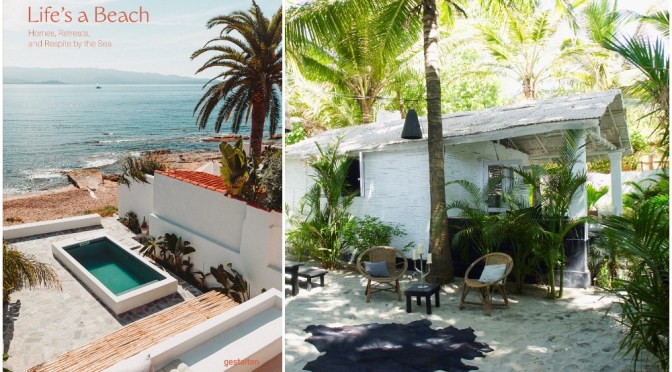
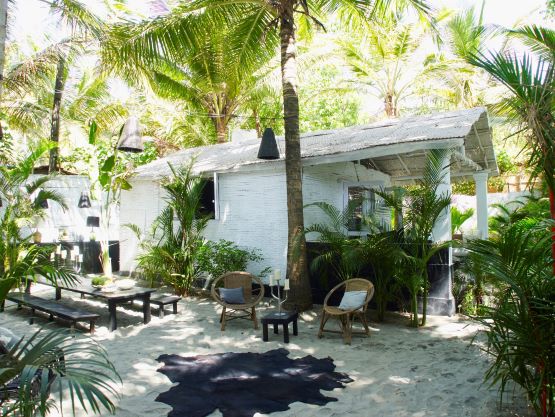
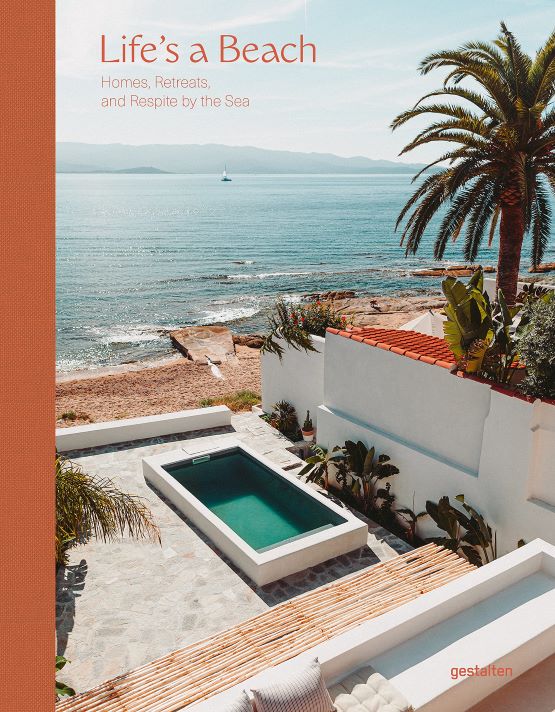
Life’s A Beach takes readers into beach homes around the world – from the hills of New Zealand to beaches of Brazil to the remote islands of the Aegean – exploring the many ways to decorate a cozy home by the sea.
Handmade touches, natural materials and eclectic interiors all imbue a sense of wellbeing, and are found throughout the homes in Life’s a Beach. From humble little beach cottages to extraordinary modern bungalows, these spaces are designed for respite and relaxation, and for enjoying the beachy surrounds.
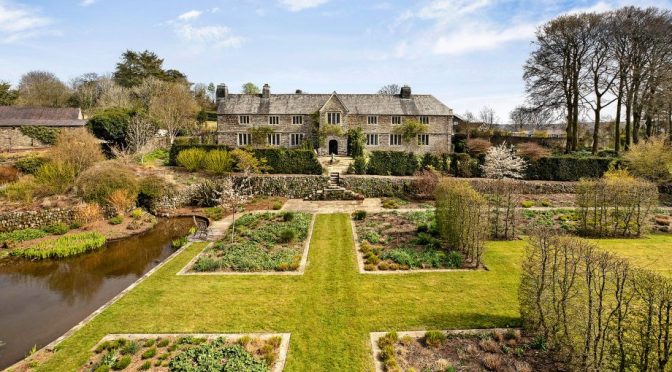
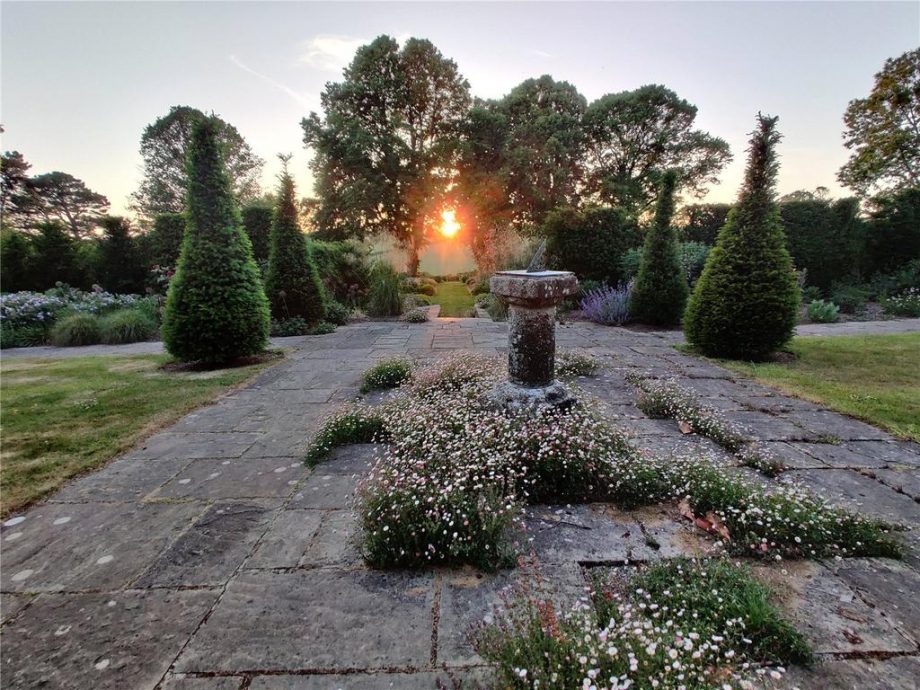
Over in West Devon, the village of Horrabridge in the Dartmoor National Park, four miles south of Tavistock, grew up around an ancient crossing over the fast-flowing River Walkham, a famous salmon river, its 15th-century bridge one of the oldest in Devon.
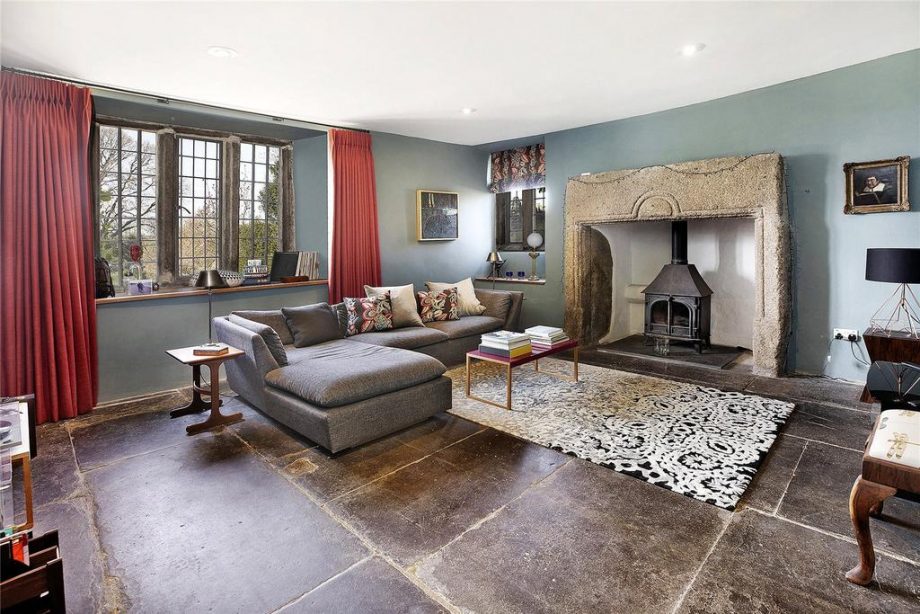
In the late 1800s/early 1900s, the south wing of the original Elizabethan building was rebuilt after ‘three successive fires’ destroyed ‘the hall and one wing’.
In the late 1800s, three sisters sold the 400-acre Sortridge estate to a Plymouth stockbroker who immediately sold it again in lots, thereby doubling his money.
The manor and 140 acres of land were bought by Col Marwood Tucker, whose widow sold the property to George Porter Rogers in 1955. In November 1961, Mr Rogers sold the manor with three acres of grounds for £5,500 to Cmdr C. R. Smythe, who sold it in turn to Cmdr Stubley.
“We wanted the interior to act as a canvas for natural light and convey an overall appearance of lightness…”
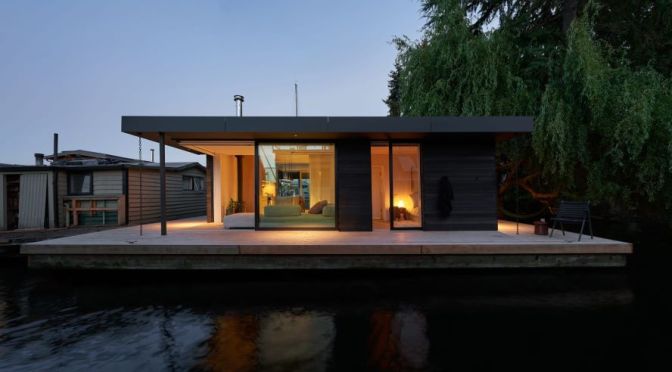
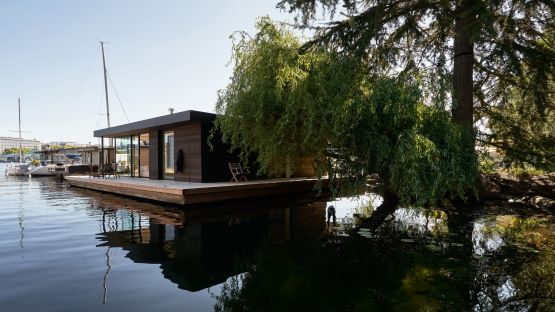
Stainless steel counters, aluminum lightwells, and whitewashed pine walls and ceilings help create a feeling of lightness—perfectly suited for a floating home on water.
Following a long tradition of floating homes in Seattle, the dwelling is located on the north end of Lake Union, in a spot called Portage Bay.
It was built on top of a log-float foundation dating to the early 1900s. The home sits close to the shore and has access to a garden.
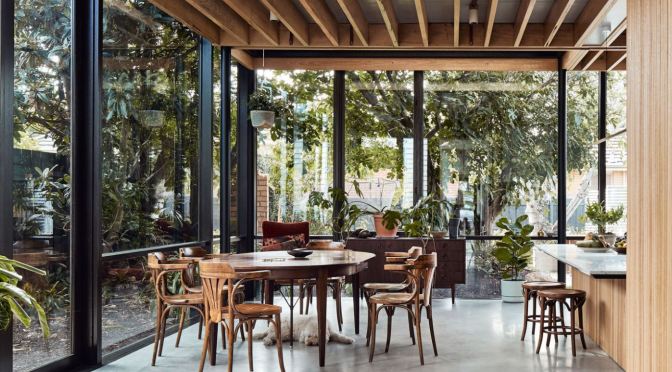
Nestled in the northern suburb of Coburg, Harry House by Archier is a Japanese-inspired home that radiates familiarity and comfort. As per the clients’ brief,
Harry House is a Japanese-inspired home, with Archier incorporating Japanese design into many aspects of the architecture. Originally, the site was a double-fronted pre-war weatherboard cottage; the clients wanted to retain the entry’s warmth but reorientate the living space to frame the green foliage. This allowed the space to be maximised, combining the old and new aspects of the building. Named after the family dog ‘Harry’,
Harry House experiments with interior design, space and usability. The materials were chosen with care, making sure that each element ages well and is robust for family life. The textures celebrate honest carpentry, with materials that are unpolished yet full of life, adding to the atmosphere of the home. Harry House is centred around family, with bespoke living areas that connect multiple aspects of the home. This includes the soft netted areas located in the voids, allowing the residents to occupy spaces without needing furniture. Archier’s extension adds new elements of play, specifically in its design references to a childhood treehouse. The client’s Japanese heritage inspired the house, including how the space interplays with natural light and connection to the lush gardens. Located 10 minutes from the Archier Studio, the house has access to the Merri Creek, as well as restaurants on Lygon Street and Sydney Road. As a Japanese-inspired home, the layout of the bathrooms was important for functionality and design. With separate spaces for the toilet, basin and bathing, it is easy to see how the architecture was influenced by the client’s heritage, honouring the traditional ways Japanese bathrooms are configured. Having exceeded the clients’ expectations, and taking design inspiration from the client’s Japanese heritage, Harry House by Archier is a sustainable home, ready to raise a young family. Architecture and Interior Design by Archier. Filmed and Edited by Dan Preston. Production by The Local Project.
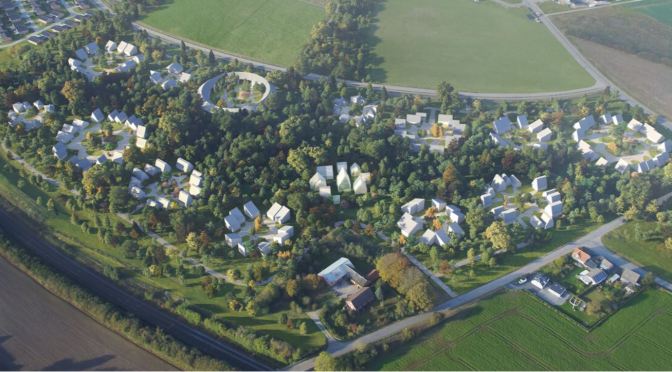
Copenhagen-based studio EFFEKT has presented plans for a residential development that forms part of its contribution to the upcoming venice architecture biennale. titled ‘naturbyen’, a name that translates as ‘nature village’, the project will see a field in denmark transformed into a completely new forest-neighborhood district comprising more than 200 homes. the development seeks to demonstrate how sustainable housing development can be combined with ambitious afforestation, increased biodiversity, and circular resource thinking. ‘as humanity is facing its greatest challenge ever with the imminent threat of climate change, habitat loss and depletion of natural resources — not to mention the ongoing pandemic — we need to rethink the way we live together on this planet. not only as humans, but across all species and ecosystems,’ EFFEKT tells designboom, discussing how the project responds to the biennale’s theme — ‘how will we live together?’. Responding to denmark’s goal of covering 20% of its landmass with forest by 2100, EFFEKT developed the project in collaboration with the town of middelfart. the site, currently an agricultural field, will be densely planted with a mix of native tree seedlings — an approach based on interviews and insight from industry experts, anders busse nielsen and björn wiström. ‘with a project like ‘naturbyen’ we try to address the growing need for more housing while also restoring natural habitats in close proximity to our cities, increasing biodiversity and through afforestation sequester carbon over time,’ EFFEKT explains.
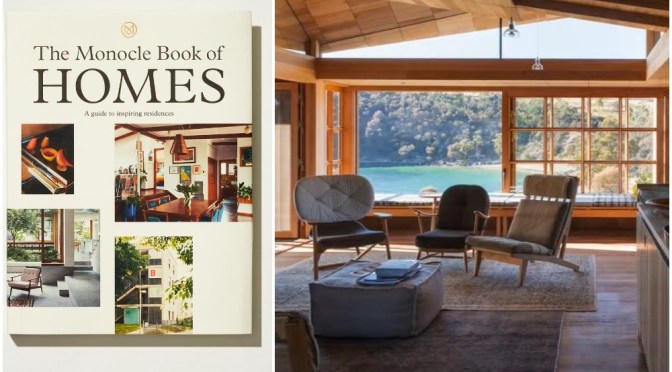
Allow us to introduce you to our new publication, The Monocle Book of Homes. A guide to exceptional residences, the title is packed with beautiful photography, inspiring stories and few tips on making the most of your living space. So what are you waiting for? Come on in. Available at The Monocle Shop: https://monocle.com/shop/product/1961…
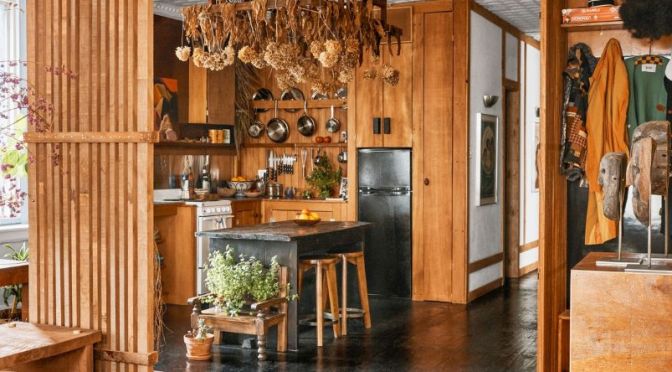
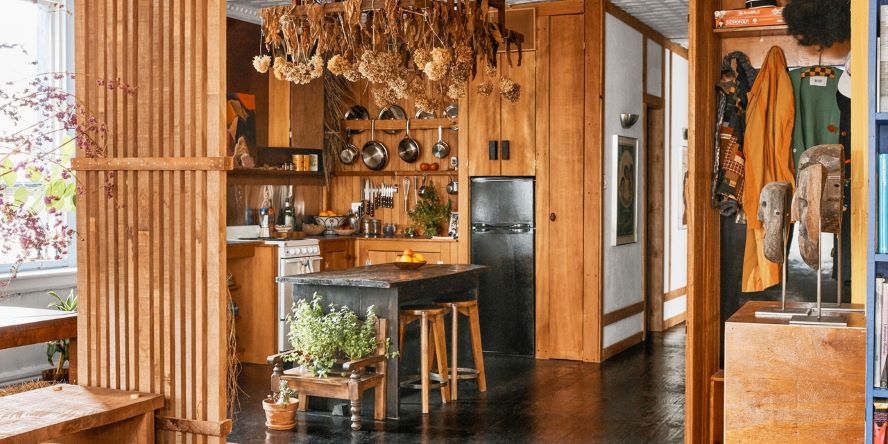
“During moments of crisis people return to natural materials.” And indeed, after a year in which most of us have clocked more time than ever in our home kitchens, the tide has turned toward materials that feel rustic, rough-hewn, and intensely comforting.
“We try to use as much wood as clients will let us,” admits Aujla of the material that has been fundamental to the Green River Project ethos from the jump. The firm recently outfitted a kitchen in New York’s Rockaway, Queens, neighborhood, with coffee-stained lauan and mahogany. “The rougher the wood, the harder it is to clean, but it has a much warmer feel and a softer touch,” explains Bloomstein, who paired the natural material with stainless steel in heavier-use areas to make cleaning easier. The look, he admits, requires a rather adventurous client.
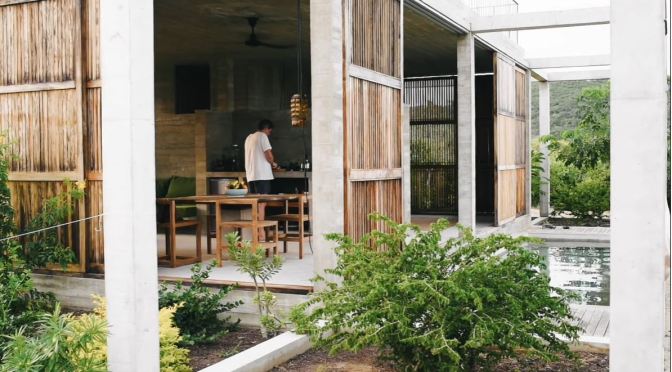
When Aranza de Arino and Caludio Sodi hired S-AR architects, the ground rules were, The house could not exceed 1,075 sq. ft. and Aranza and Claudio could specify the number of bedrooms, beyond that, it was carte blanche. Watch how this young firm for Monterrey answers the question, “What does it mean to design a vacation home for Mexico today?”
Puerto Escondido is a port town and resort on Mexico’s Pacific coast in the state of Oaxaca. It’s known for its many beaches and buzzing nightlife. The town’s central Principal Beach is lined with palm trees and thatch-roofed bars. Busy Zicatela Beach is renowned for its Mexican Pipeline surf break. Neighboring La Punta Beach has smaller waves. Carrizalillo Beach is set in a cove backed by steep cliffs.
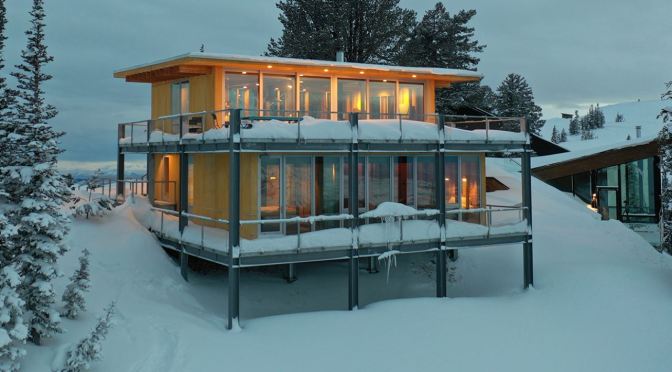
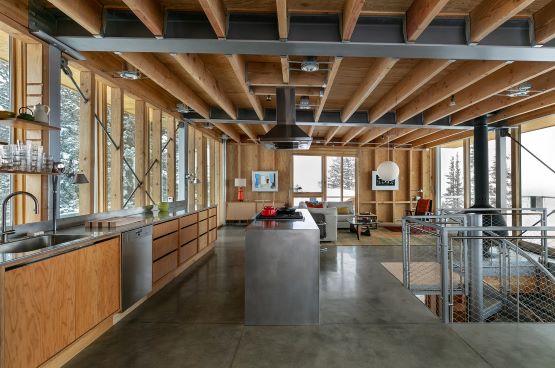
This chalet is located just slightly north of the top of a gentle slope that stretches from north to south in the natural park in Powder Mountain, Utah, USA. It sits at the northern end of a cluster of chalets spread out to the south, and one can enjoy the view to the south from the second floor. It is a great place to access both the town and the ski resort, and enjoy the magnificent view to the north.
After skiing, they would step off the ski slope and approach the chalet from the south side of the site to take a break. They would go into the mud room, take off ski clothes and skis, hang them there to dry, take a shower on the same floor, change in on of the bedrooms, and go upstairs. The upper floor where one can enjoy the magnificent view on the north side has a spacious balcony resulted from the setback regulation, kitchen, dining room, and living room where they would enjoy the view, delicious food and drinks, light the fire and have a good time together after a long day of skiing. Since the building is located in a natural park, it is subject to very strict building regulations and the buildable area is small. This extremely compact building is designed to take up the maximum allowable volume. The compact size is perfect for experiencing the grandeur of nature, giving you a sense of being nestled in it.
Structurally, the lower floor is constructed with steel frames to maintain an appropriate distance between the slope and the building, and a highly insulated wooden structure is placed on top of the steel frames to protect the indoor environment. The expression of the wooden materials harmonizes and integrates with the surrounding land and stones in summer, and evokes the warmth of home against the white snow in winter.
Located in Manly, this modern house emphasises casual beachside living through a strong connection to the external environment. Sitting in one of the suburb’s leafiest streets, the modern house enjoys optimal views to the surrounding areas, maximising the cross-flow of natural breezes from its elevated position.
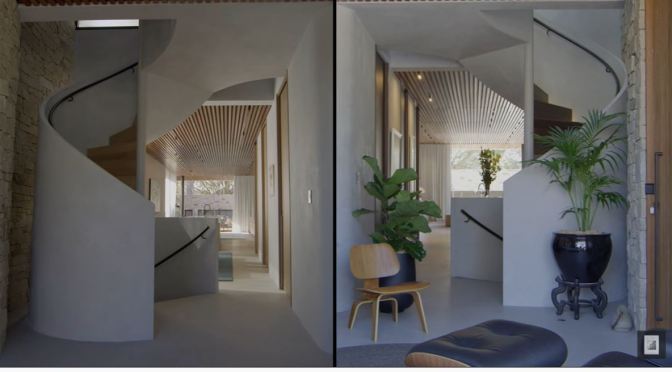
The modern house’s material palette draws inspiration from the history of the surrounding area, whilst raw materials provide a contemporary architectural form, blurring the lines between casual and formal life. A long horizontal concrete form with chamfered edges is clad in breeze-admitting passive timber shading devices and bands of glazing that invite views of the carefully curated greenery. Responding to its coastal location, this modern house is defined by a timber-lined ceiling extending to the soffit and polished concrete floors, creating a series of seamless spaces flowing onto each other, from open to closed, informal to formal, refined and robust all at the same time.
Open-plan living spaces spill out to the outdoor living and pool areas on the ground floor, blurring the line between outside and inside, emphasising the garden outlook, natural light-filled spaces and the modern house’s connection to its environment. A large oversized island bench is the meeting point of the modern home, with streamlined kitchen and living room joinery connecting the living spaces. Ancillary spaces are tucked away into the core of the building, allowing maximum natural light to the living spaces.
As a modern house, the concrete stair is a sculptural presence that sweeps upwards, binding the living spaces to the bedrooms and bathrooms on level one, where the external timber screens add ventilation and ever-changing shadows within. In the basement, a wine cellar, laundry, utility and theatre room provide technical support to the rest of the modern house.
Architecture and Interior Design by DKO Architecture. Development by Adjani. Photography by Tom Ferguson and Toby Peet. Filmed and Edited by Cheer Squad Film Co. Production by The Local Project.
News, Views and Reviews For The Intellectually Curious












 Boomers Daily