

 Melvyn Bragg and guests discuss the history and social impact of coffee. From its origins in Ethiopia, coffea arabica spread through the Ottoman Empire before reaching Western Europe where, in the 17th century, coffee houses were becoming established.
There, caffeinated customers stayed awake for longer and were more animated, and this helped to spread ideas and influence culture. Coffee became a colonial product, grown by slaves or indentured labour, with coffea robusta replacing arabica where disease had struck, and was traded extensively by the Dutch and French empires; by the 19th century, Brazil had developed into a major coffee producer, meeting demand in the USA that had grown on the waggon trails.
With
Judith Hawley
Professor of 18th Century Literature at Royal Holloway, University of London
Markman Ellis
Professor of 18th Century Studies at Queen Mary University of London
And
Jonathan Morris
Professor in Modern History at the University of Hertfordshire
Producer: Simon Tillotson

 An infinite number of things happen; we bring structure and meaning to the world by making art and telling stories about it. Every work of literature created by human beings comes out of an historical and cultural context, and drawing connections between art and its context can be illuminating for both. Today’s guest, Stephen Greenblatt, is one of the world’s most celebrated literary scholars, famous for helping to establish the New
 Historicism school of criticism, which he also refers to as “cultural poetics.” We talk about how art becomes entangled with the politics of its day, and how we can learn about ourselves and other cultures by engaging with stories and their milieu.
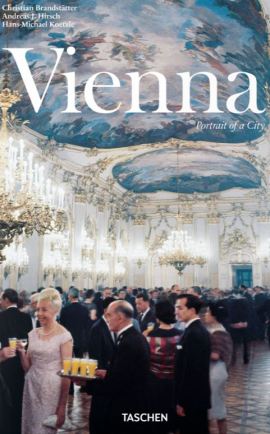 This volume is a treasure trove of photography from the last 175 years, following the evolution of Vienna from imperial capital to modern metropolis. Like a visual walk through time and cityscape, hundreds of carefully curated pictures trace the developments in Vienna’s built environment and the cultural and historical trends they reflect, whether the urban Gesamtkunstwerk of the 19th-century Ringstrasse or the experiments of “Red Vienna” in the 1920s, when the city had a social democrat government for the first time.
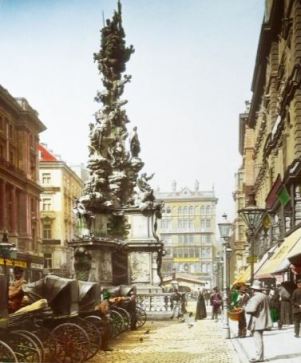 Vienna combines drama and elegance like no other. For centuries the heart of the Austro-Hungarian Empire, the stately city on the Danube, has been defined by vast palaces and imperial grandeur—but behind the Baroque opulence, Vienna is also a place of genteel coffee house culture, epicurean tradition, and a heritage of both delicate and daring music, art, and design, from Johann Strauss to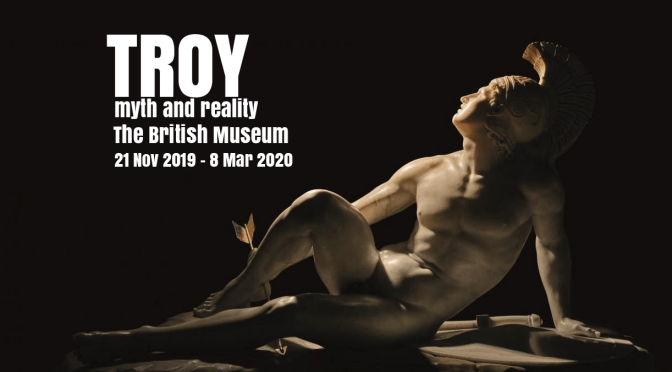
 From Helen of Troy’s abduction to the deception of the Trojan Horse and the fall of the city, tread the line between myth and reality in this phenomenal new exhibition.
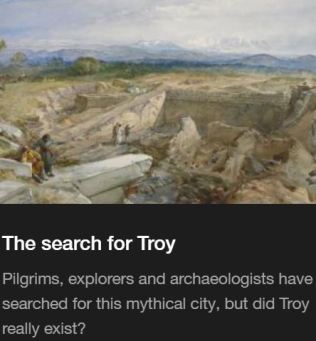 The story of the ancient city of Troy, and of the great war that was fought over it, has been told for some 3,000 years. Spread by travelling storytellers, it was cast into powerful words by the Greek poet Homer as early as the eighth to seventh century BC – and into powerful images by ancient Greek and Roman artists. Just as it enraptured audiences in the past, it still speaks to us today and it’s easy to see why. It’s a story that has it all – love and loss, courage and passion, violence and vengeance, triumph and tragedy – on a truly epic scale.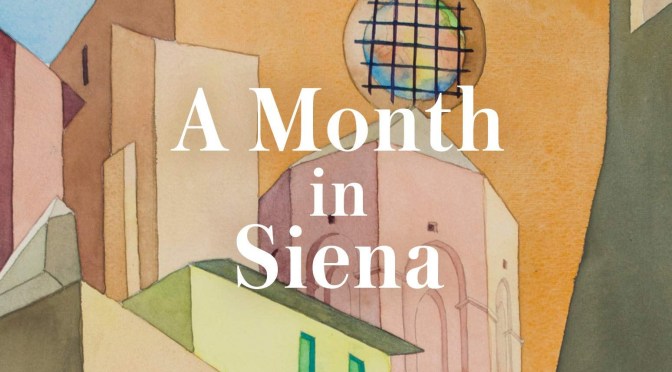
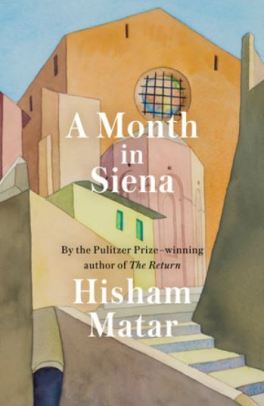 Including beautiful full-color reproductions of the artworks, A Month in Siena is about what occurred between Matar, those paintings, and the city. That month would be an extraordinary period in the writer’s life: an exploration of how art can console and disturb in equal measure, as well as an intimate encounter with a city and its inhabitants. This is a gorgeous meditation on how centuries-old art can illuminate our own inner landscape—current relationships, long-lasting love, grief, intimacy, and solitude—and shed further light on the present world around us.
 In its heyday, dynamite was a transformative tool; it could blast rock quarries, excavate tunnels, and demolish buildings with power and reliability never before seen. But it also proved to be useful in some surprising ways. In this special episode of Sidedoor, we team up with the history podcast Backstory to explore two less-typical applications of the explosive: the artistic blasting at Mount Rushmore, and how anarchists used dynamite to advance their political agenda in 1886.
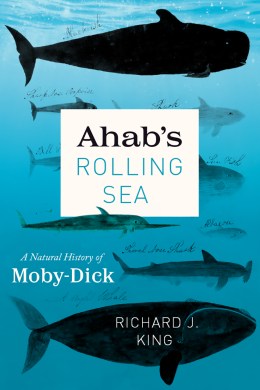 A revelation for Moby-Dick devotees and neophytes alike, Ahab’s Rolling Sea is a chronological journey through the natural history of Melville’s novel. From white whales to whale intelligence, giant squids, barnacles, albatross, and sharks, Richard J. King examines what Melville knew from his own experiences and the sources available to a reader in the mid-1800s, exploring how and why Melville might have twisted what was known to serve his fiction. King then climbs to the crow’s nest, setting Melville in the context of the American perception of the ocean in 1851—at the very start of the Industrial Revolution and just before the publication of On the Origin of Species.
 The so-called winning of the West is one of the fundamental dramas in American history, and Mr. Brands makes the most of his subject by quoting extensively from the participants’ own accounts. In his chapters on Lewis and Clark, he cites the explorers’ descriptions of the daunting cataracts on the Missouri and Columbia rivers and their reaction on reaching their goal.
  Boomers Daily