
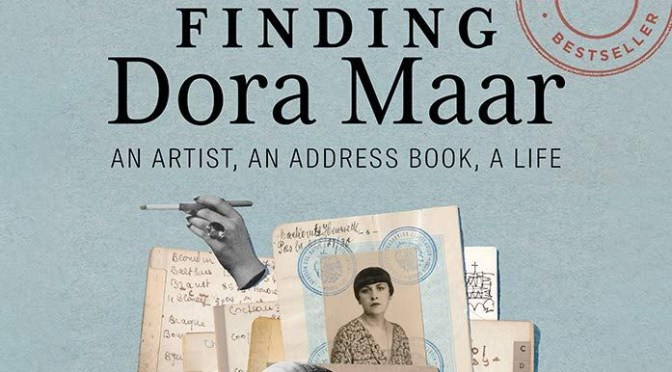
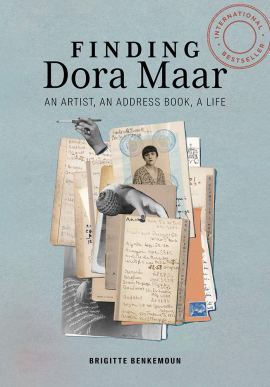
 In search of a replacement for his lost Hermès agenda, Brigitte Benkemoun’s husband buys a vintage diary on eBay. When it arrives, she opens it and finds inside private notes dating back to 1951—twenty pages of phone numbers and addresses for Balthus, Brassaï, André Breton, Jean Cocteau, Paul Éluard, Leonor Fini, Jacqueline Lamba, and other artistic luminaries of the European avant-garde.
After realizing that the address book belonged to Dora Maar—Picasso’s famous “Weeping Woman” and a brilliant artist in her own right—Benkemoun embarks on a two-year voyage of discovery to learn more about this provocative, passionate, and enigmatic woman, and the role that each of these figures played in her life.
Longlisted for the prestigious literary award Prix Renaudot, Finding Dora Maar is a fascinating and breathtaking portrait of the artist.
Brigitte Benkemoun is a journalist and writer. She is the author of La petite fille sur la photo (2012) and Albert le Magnifique (2016). Jody Gladding is a poet and translator. She has translated some thirty books from French, including, most recently, Roland Barthes’s Album: Unpublished Correspondence and Texts (2018), Michel Pastoureau’s Yellow: The History of a Color (2019), and Jean Giono’s Occupation Journal (2020).
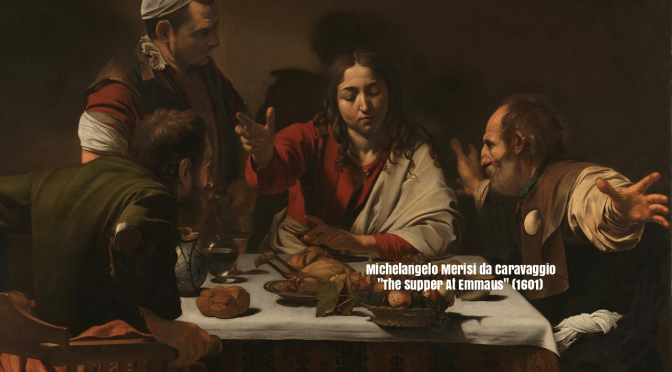
 Michelangelo Merisi da Caravaggio is one of the most admired painters of the late 16th and early 17th centuries. Known for his powerful, dramatically lit compositions, Caravaggio depicted violence and the human form with a degree of realism unprecedented at the time. He was among the most famous painters in Rome—but not only because of his skill as an artist.
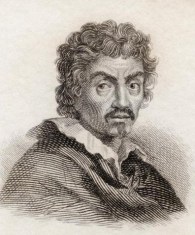 Caravaggio was also notorious for his wild life and shocking temper. After being sentenced to death for murder, he fled Rome and died in exile at age 38 . Three biographies written in the decades after his death constitute nearly all that is known about the enigmatic artist.
 In this two-part series, six US museum directors discuss the pandemic and its repercussions for their institutions. These candid, insightful conversations address wide-ranging topics, from the logistical challenges of when to close and how to reopen to philosophical exchanges about the role of museums in society.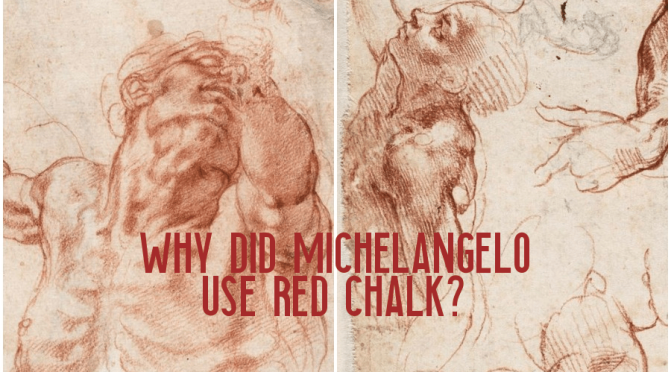
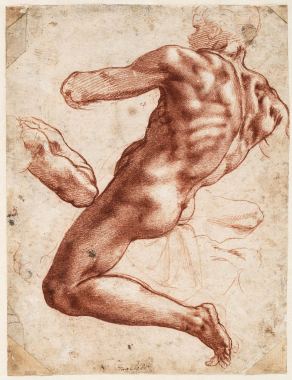 To work out the details of all the figures in pen and ink would have been extremely labor-intensive, and sharpening quills and mixing inks would’ve added an additional distraction. Drawing in chalk necessitated great skill, but it also allowed Michelangelo a flexibility. He could create subtle tonal variations by applying more or less pressure onto the chalk or by wetting it. The red chalk also provided an immediate mid-tone on the paper and could be easily blended when modeling and shading forms. Being a naturally occurring material that was available to artists in sticks that could be sharpened as desired, it was also convenient and portable.
 During his lifetime, Michelangelo likely produced tens of thousands of drawings. But being protective of his ideas, and to give an impression of effortless genius, he destroyed many of them. Today only about 600 drawings by the Renaissance artist survive.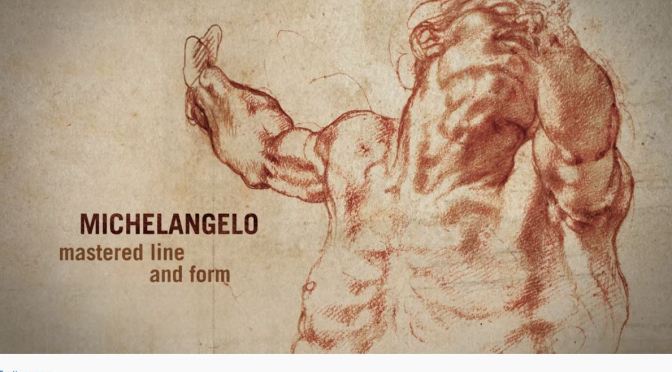
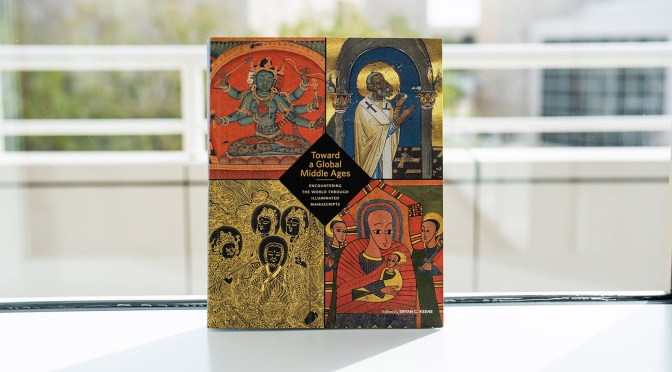
 What was the world like from 500 to 1500 CE? This period, often called medieval or the Middle Ages in European history, saw the rise and fall of empires and the expansion of cross-cultural exchange.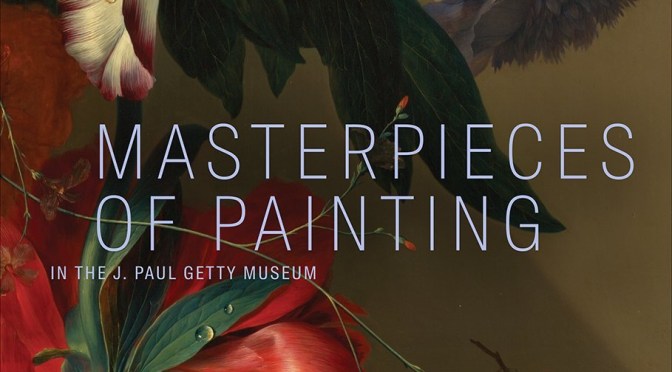
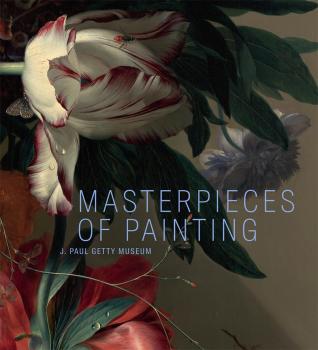 Masterpieces of Painting surveys more than one hundred of the most exquisite and significant paintings displayed in the museum’s famed, daylight-suffused galleries. Vibrant full-color illustrations and engaging descriptions of these masterworks reveal their fascinating histories and cultural, social, and religious meanings. Sure to enchant and edify all art lovers, this book is a spellbinding tour through the history of Western painting.
 Rooted in a passion for the Italian Renaissance as well as Dutch and Flemish Baroque works, the original collection of J. Paul Getty (1892–1976) has been transformed over four decades to include seminal pieces by celebrated masters such as Masaccio, Titian, Parmigianino, Cranach, El Greco, Rubens, van Dyck, Rembrandt, Poussin, Canaletto, Fragonard, Turner, Manet, Degas, Renoir, Monet, van Gogh, Cézanne, and Ensor.
 Boomers Daily