Getty Museum (May 17, 2023) – Imagine a menagerie of over 500 life-sized porcelain animals long gallery in a palace in Dresden. A Fox with a Chicken was a part of this new creation commissioned by Augustus II “The Strong” in the 18th century to share his love for Japanese porcelain with others.
Johann Gottlieb Kirchner produced the model for this life-size porcelain sculpture of a fox-looking a little guiltily around the chicken it is about to devour-as part of an extraordinary commission from Augustus the Strong, elector of Saxony and king of Poland, who envisioned a life-size porcelain menagerie for his Japanese Palace in Dresden. The Meissen Porcelain Manufactory had been operating for only twenty years when Augustus commissioned this series of porcelain animals to be rendered “in their natural sizes and colors.” The production of porcelain models of this size had never been attempted before in Europe.
“Bagan is actually a splendid site. You can imagine in only in this, like, fifty square kilometers, they have more than 3,000 monuments. And then all the monuments have different styles and different architecture”.
The ancient past of Bagan, Myanmar, is still visible today in the more than 3,000 temples, monasteries, and works of art and architecture that remain at the site. Beginning around 1000 CE, Bagan served as the capital city of the Pagan Kingdom. Many of the surviving monuments date from the 11th to 13th centuries. A number of these temples are still used by worshippers and pilgrims today. A 2016 earthquake, which damaged over 400 structures, brought renewed international attention to Bagan and its future.
In February 2020, a team from the Getty Conservation Institute (GCI) returned from doing intensive preparatory work with international and local colleagues in Bagan to launch a long-term conservation project there. Soon after, the worldwide outbreak of COVID-19 closed borders and halted travel. In February 2021, a coup d’état staged by the Burmese Military plunged the country into further uncertainty.
In this episode, Susan Macdonald, head of Buildings and Sites at the GCI, and Ohnmar Myo, the GCI’s consultant in Myanmar, discuss the history of Bagan, the demands and challenges of conservation there, and their hopes for the future of the site. Myo is a former project officer of the Cultural Unit, UNESCO, and was a principal preparator of the report that confirmed Bagan’s World Heritage Site status in 2019. This conversation was recorded in January 2021, under very different circumstances, but it captures the curiosity, ambitions, optimism, and collaborative spirit that guided the project at that time.
Prime is considered one of the most influential artists in the history of Los Angeles wall writing. He uses unorthodox methods for graffiti painting, incorporating rollers, brushes, and experimental materials while combining traditional graffiti and gang-styled writing with calligraphy.
Writing on walls has existed in many forms since ancient times, with examples of graffiti dating back to ancient Egypt, Greece, and Rome. Discover the work of Prime, one of Los Angeles’s most influential street artists, and explore the artist’s practice and his interplay of words and images, a tradition that began thousands of years ago.
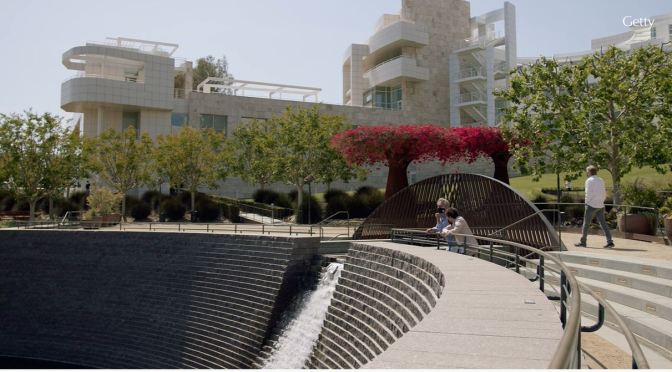
Welcome back to the Getty Center. There’s something for everyone! Come enjoy art, modern design, unique gardens, and spectacular city views.
The Getty Center, in Los Angeles, California, is a campus of the Getty Museum and other programs of the Getty Trust. The $1.3 billion Center opened to the public on December 16, 1997 and is well known for its architecture, gardens, and views overlooking Los Angeles.
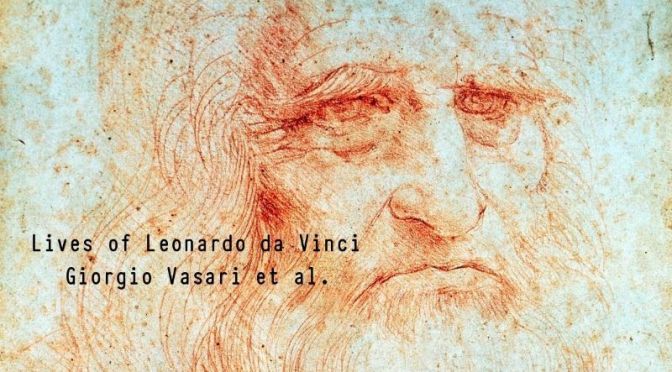
In this episode, Getty curator Davide Gasparotto discusses early accounts of Leonardo’s life and how they shaped our understanding of the artist. Passages from these biographies were recently collected in the Getty Publications book Lives of Leonardo da Vinci.
“He was a great artistic personality, crucial for the development, in some way, of what we think as the modern science. But he was not alone.”
Leonardo da Vinci died more than 500 years ago, but he is still revered as a genius polymath who painted beguiling compositions like the Mona Lisa, avidly studied the natural sciences, and created designs and inventions in thousands of journal pages. Even during Leonardo’s lifetime, contemporaries marveled at the artist’s great skill and wide-ranging pursuits, but many also noted his perfectionism and difficulty completing projects. Since his death, the legends surrounding his life and personality have continued to grow. Today Leonardo’s story inspires novels and his work brings record-breaking prices, demonstrating his enduring relevance and mystique.
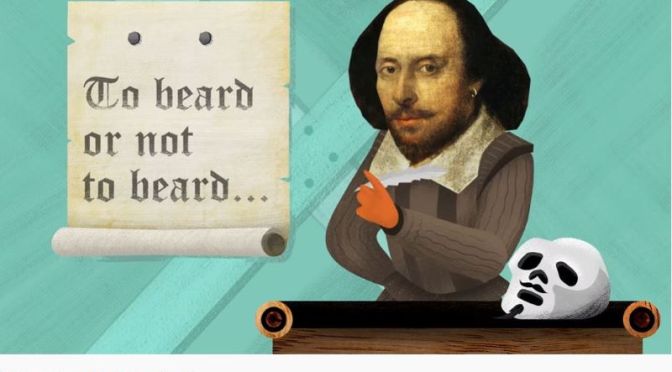
You know how scratchy and gross beards can be? Who would want one, anyway? Take a 2-minute ride in our time machine and jump way, way back, 3000 years ago. We’ll check out what’s up with beards and why men (and women!) might have wanted one.
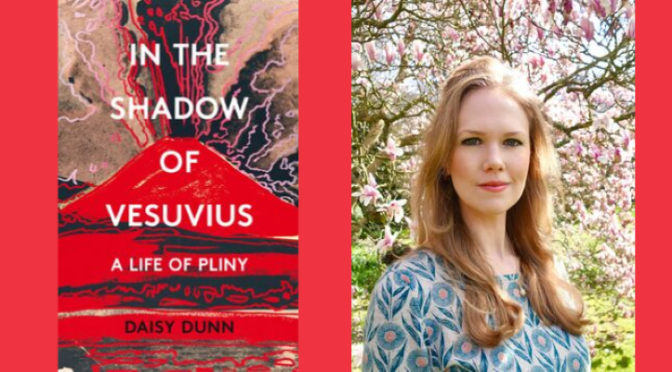
In the year 79 CE, Pliny the Elder set out to investigate a large cloud of ash rising in the sky above the Bay of Naples. It was the eruption of Vesuvius, and Pliny did not survive.
“I think we can all empathize with someone who’s like a son, or in this case, an adopted son, trying to kind of make his own mark and escape the shadow of his father, and leave something on the world of his own.”
A trailblazing naturalist, he is best remembered today for his multivolume encyclopedia of Natural History,and we are able to retrace his final hours thanks to a vivid account by his nephew, Pliny the Younger. Inspired by his beloved uncle, the young Pliny became a lawyer, senator, poet, and representative of the emperor. His published letters are fascinating reflections on life and politics in the Roman Empire.
In this episode, Daisy Dunn, classicist and author of The Shadow of Vesuvius: A Life of Pliny,and Kenneth Lapatin, curator of antiquities at the Getty Museum, discuss the two Plinys and their profound impact on our understanding of ancient Rome.
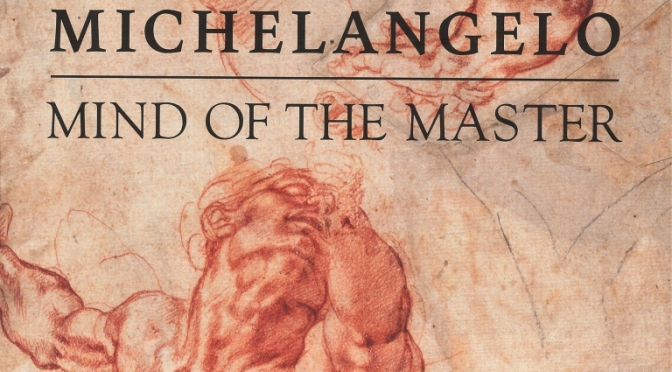
Michelangelo is among the most influential and impressive artists of the Italian High Renaissance. His lifelike sculptures and powerful paintings are some of the most recognizable works in Western art history. He also drew prolifically, making sketch after sketch of figures in slightly varying poses, focusing on form and gesture.
However, remarkably few of these drawings remain today, many of them burned by the artist himself, others lost or damaged over the centuries.
A recent exhibition at the J. Paul Getty Museum, Michelangelo: Mind of the Master, brought together more than two dozen of Michelangelo’s surviving drawings—including designs for the Sistine Chapel ceiling and The Last Judgment—to shed light on the artist’s creativity and working method. In this episode, co-curators of this exhibition, Julian Brooks and Edina Adam, discuss the master and what we can learn from his works on paper.
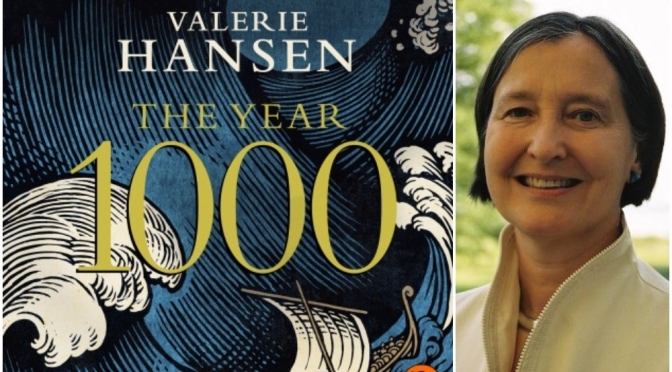
Valerie Hansen explores these early economic and cultural exchanges and their long-term impact in her new book “The Year 1000: When Explorers Connected the World―and Globalization Began”, which originated as a college course co-taught with Mary Miller, director of the Getty Research Institute. In this episode, Hansen and Miller discuss the state of the world around the year 1000.
From celebrated Yale professor Valerie Hansen, a groundbreaking work of history showing that bold explorations and daring trade missions connected all of the world’s great societies for the first time at the end of the first millennium.
People often believe that the years immediately prior to AD 1000 were, with just a few exceptions, lacking in any major cultural developments or geopolitical encounters, that the Europeans hadn’t yet reached North America, and that the farthest feat of sea travel was the Vikings’ invasion of Britain. But how, then, to explain the presence of blonde-haired people in Maya temple murals at Chichén Itzá, Mexico? Could it be possible that the Vikings had found their way to the Americas during the height of the Maya empire?
Valerie Hansen, an award-winning historian, argues that the year 1000 was the world’s first point of major cultural exchange and exploration. Drawing on nearly thirty years of research, she presents a compelling account of first encounters between disparate societies, which sparked conflict and collaboration eerily reminiscent of our contemporary moment.
For readers of Jared Diamond’s Guns, Germs, and Steel and Yuval Noah Harari’s Sapiens, The Year 1000 is an intellectually daring, provocative account that will make you rethink everything you thought you knew about how the modern world came to be. It will also hold up a mirror to the hopes and fears we experience today.
The Getty Villa is devoted to the study and display of art from the ancient world. Housed in a spectacular recreation of an ancient Roman villa, its collection celebrates the culture and artistry of ancient peoples and draws connections to our world today.
Located near the Pacific shore in Malibu, California, the Getty Villa serves a varied audience through exhibitions, conservation, scholarship, research, and public programs. The Villa houses approximately 44,000 works of art from the Museum’s extensive collection of Greek, Roman, and Etruscan antiquities, of which over 1,200 are on view.
News, Views and Reviews For The Intellectually Curious





 Valerie Hansen explores these early economic and cultural exchanges and their long-term impact in her new book “The Year 1000: When Explorers Connected the World―and Globalization Began”, which originated as a college course co-taught with Mary Miller, director of the Getty Research Institute. In this episode, Hansen and Miller discuss the state of the world around the year 1000.
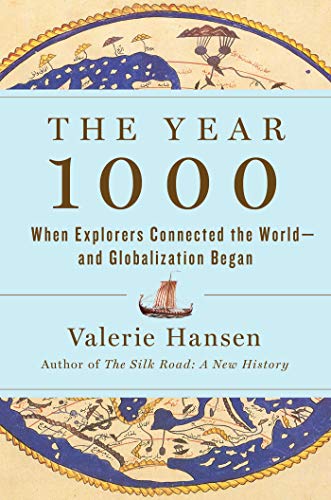 From celebrated Yale professor Valerie Hansen, a groundbreaking work of history showing that bold explorations and daring trade missions connected all of the world’s great societies for the first time at the end of the first millennium.
 Boomers Daily