No bloc of countries has, for the past 75 years, been as umbilically tied to the United States as Europe. First, its western half and, since the end of the Cold War, much of its eastern half have prospered under the world’s most extensive bonds in trade, finance, and investment. Europe could also depend on the U.S. military’s iron commitment—enshrined in the 75-year-old NATO alliance—to come to its defense. Together with a few other nations, the United States and Europe defined many of the institutions that comprise what we call the Western-led order. The U.S.-European alliance has arguably been the bedrock of the global system as we know it today.
Without Washington’s embrace, the continent could revert to an anarchic and illiberal past. By HAL BRANDS
Which is the real Europe? The mostly peaceful, democratic, and united continent of the past few decades? Or the fragmented, volatile, and conflict-ridden Europe that existed for centuries before that? If Donald Trump wins the U.S. presidential election in November, we may soon find out.
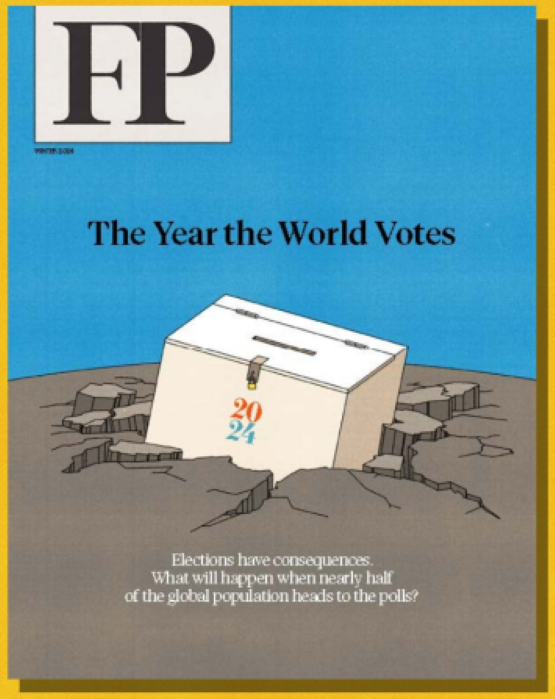
Foreign Policy Magazine – December 28, 2023: The new issue features ‘The Year The World Votes’ – Elections have consequences. What will happen when nearly half of the global population heads to the polls?
The world’s most dismal science could make Eurasia safe for illiberalism and predation—or protect it from those forces.
By Hal Brands, a professor of global affairs at the Johns Hopkins School of Advanced International Studies.
Alexander Dugin is a bit of a madman. The Russian intellectual made headlines in the West in 2022, when his daughter was killed, apparently by Ukrainian operatives, in a Moscow car bombing likely meant for Dugin himself. Dugin would have been targeted because of his unapologetic, yearslong advocacy for a genocidal war of conquest in Ukraine. “Kill! Kill! Kill!” he screeched after Russian President Vladimir Putin’s first invasion of that country in 2014, adding: “This is my opinion as a professor.” Even at his daughter’s funeral, Dugin stayed on message. Among her first words as an infant, he claimed, were “our empire.”
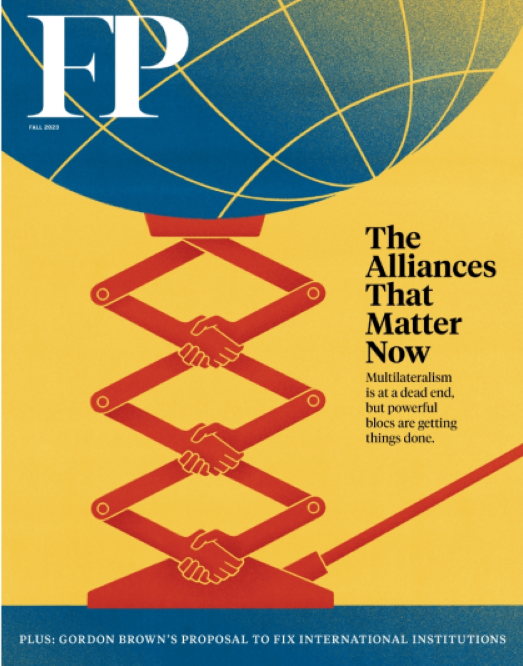
Foreign Policy Magazine – Fall 2023: The new issue features The G-7 Becomes a Power Player – Russia’s war and China’s rise are turning a talking shop into a fledgling alliance of democracies; Vivek Ramaswamy’s Foreign Policies Raise Eyebrows in Washington – The GOP’s rising star offers up a grab bag of ideas cribbed from Eminem to Richard Nixon and more…
Russia’s war and China’s rise are turning a talking shop into a fledgling alliance of democracies.
By G. John Ikenberry, a professor of politics and international affairs at Princeton University.
Time and again over the last century, the United States and the other liberal democracies in Europe, East Asia, and elsewhere have found themselves on the same side in grand struggles over the terms of the world order. This political grouping has been given various names: the West, the free world, the trilateral world, the community of democracies. In one sense, it is a geopolitical formation, uniting North America, Europe, and Japan, among others. It is an artifact of the Cold War and U.S. hegemony, anchored in NATO and Washington’s East Asian alliances.
End American dependence on Taiwan’s semiconductor factories. Declare economic independence from China. Give India an AUKUS-like submarine deal. And stage a dramatic visit to Moscow to broker a deal to end Russia’s full-scale invasion of Ukraine.
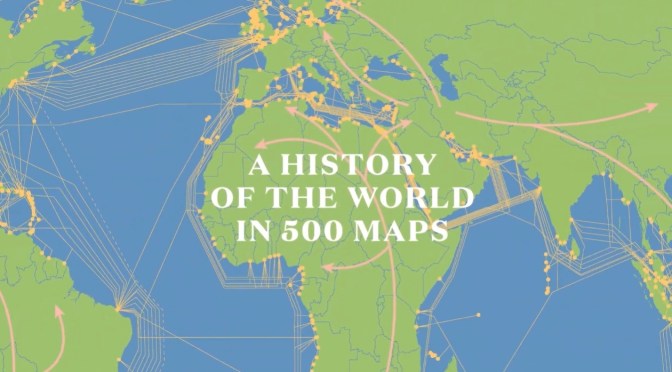
Thames & Hudson (July 11, 2023) – Organized chronologically, A History of the World in 500 Maps tells a clear, linear story, bringing together themes as diverse as religion, capitalism, warfare, geopolitics, popular culture and climate change.
Meticulously rendered maps chart the sequence of broad historical trends, from the dispersal of our species across the globe to the colonizing efforts of imperial European powers in the 18th century, as well as exploring moments of particular significance in rich detail.
• Visualizes 7 million years of human history. • Analyses cities and kingdoms as well as countries and continents. • Features major technical developments, from the invention of farming in the Fertile Crescent to the Industrial Revolution. • Charts the spread of major global religions, including Christianity and Islam. • Explores the increasing interconnectivity of our world through exploration and trade. • Investigates warfare and battles from across the ages, from Alexander the Great’s conquests to the D-Day offensive.
Foreign Policy Magazine – Summer 2023: Artificial intelligence is suddenly everywhere. It seems as though no conversation about jobs, education, health care, technology, or politics happens without an inevitable question about how AI could disrupt it all.
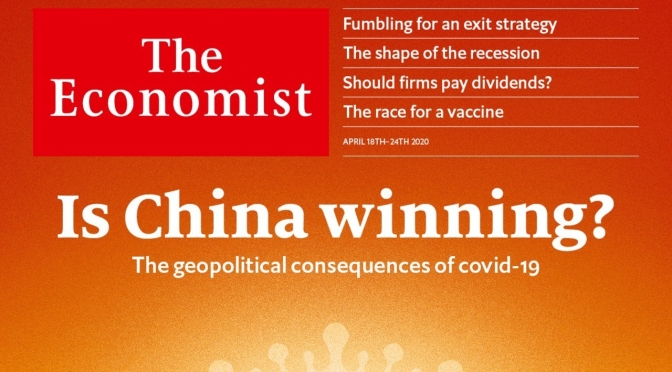
A selection of three essential articles read aloud from the latest issue of The Economist. This week, is China the pandemic’s big geopolitical winner? (8:30) Saudi Arabia has declared a ceasefire in Yemen, but the Houthis are fighting on. (14:13) And, how Britain’s glossy magazines are adjusting to a gloomy world.
News, Views and Reviews For The Intellectually Curious








 Thames & Hudson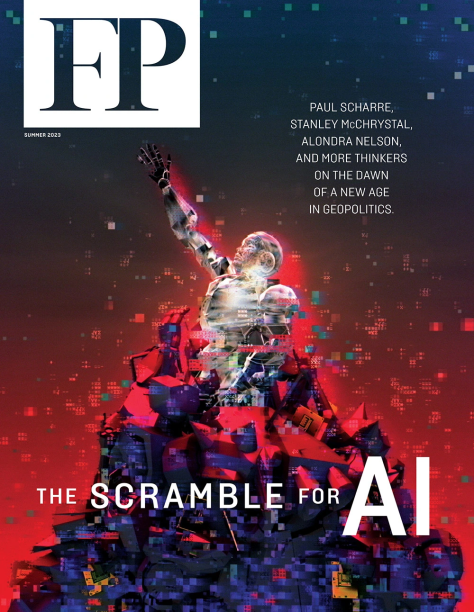

 A selection of three essential articles read aloud from the latest issue of The Economist. This week, is
  Boomers Daily