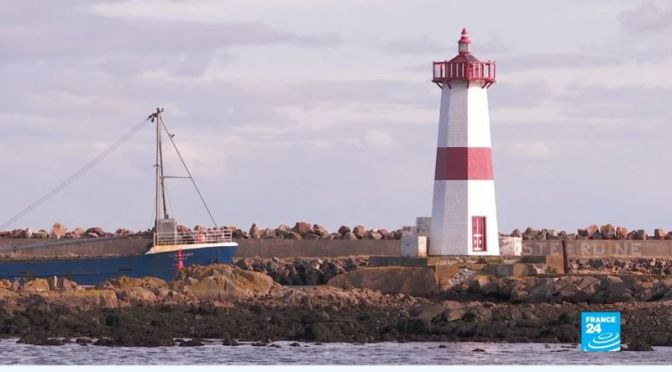
It’s a scattering of French soil off the coast of #Canada. For two centuries, the archipelago of Saint-Pierre and Miquelon, with its fish-rich waters, attracted people from Brittany, Normandy but above all from France’s Basque country. Their descendants still keep Basque heritage alive, such as pelota and traditional songs. FRANCE 24 takes you to discover these islands with their pretty seascapes and rich biodiversity. We also set sail with some fishermen to catch halibut.
Saint Pierre and Miquelon is a French archipelago south of the Canadian island of Newfoundland. Sparsely populated Miquelon-Langlade island contains the Grand Barachois lagoon, home to seabirds and seals. The busier Saint Pierre island has a distinct French atmosphere, with a cathedral and the Musée Heritage, which celebrates regional history. An island nearby, Île-aux-Marins, features an abandoned fishing village.
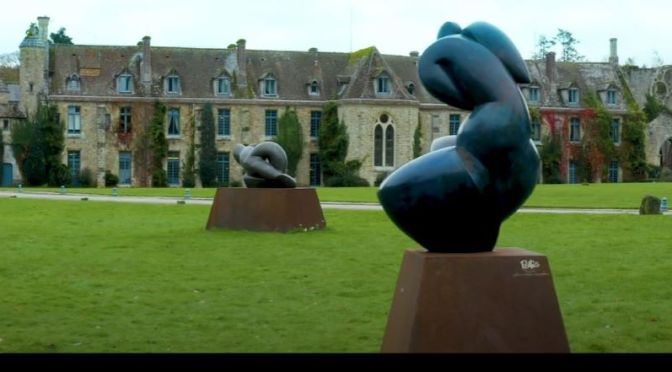
Dominique Pollès, called Pollès, is a French sculptor born in Paris in 1945. He is considered as the inventor of “organic cubism”.
Like Leonard de Vinci in an anatomical search of perfection, of representation of movement,with an almost scientifical or medical glance, Pollès holds the utmost passion of anatomy: he learns about the human body, the complicated hank of muscles, movements of members and all the bodily mechanics.
That’s why in 1964 he starts medicine school and along side goes to the Charpentier Academy where he follows art lessons. In 1966, he encountered sculpture in London where he was invited by his friend Enzo Plazota. This final step teaching him all the bases of sculpture. Pollès then decides to go to live in Italy, in Carrare, an important art place. He moved in 1970 and settled in Pietrasanta where he still lives.
His sculptures, by creating a vision of the moving being, polished and smoothed, break the pureness of aestheticism. He just knows one theme, one model: the female form. According to Pollès, this is the most beautiful one, the most harmonious one. “When we are looking at a feminine body, it is splendid, it is musical”.
His love of women, the sensuality, the complexity, the shapes and passions, brought him to explore the female form. Since the beginning he has created a singularly stylized cubist form; this becoming his signature form. All are cast in bronze by Pollès himself and made in a series of four with one artist’s proof. His masterliness of the patina is considered unparalleled. The world’s recognition of his craft is evidenced by the many awards he has won, the unique places he has shown and the prestigious private collections he is in, including that of Princess Caroline of Monaco.
Pollès was recently honored in an exhibition outside Paris, sponsored by the French Government, called “Sculptors From Rodin to The Present”. He was one of the few living sculptors to be so honored; the others include Abakanowicz, Arman, Saint-Phalle & Wesselmann. Maurice Rheims, a respected Art Critic, and a member of The French Academy, has said “I consider Pollès to be one of the outstanding sculptors of our time.”
His show in the Bagatelle Gardens in Paris in 1998 was a major honor as he was one of only two artists who have ever been allowed to present their work in the Bagatelle. The other artist is Henry Moore. – Galerie Philia is an internationally recognized contemporary design and modern fine arts gallery representing worldwide known designers and artists.
The Galerie Philia attempts in this way to build bridges between different artistic continents in order to enlighten artworks endowed with a marked artistic depth.
Paris is the capital and most populous city of France, with an estimated population of 2,148,271 residents as of 2020, in an area of 105 square kilometres (41 square miles).[1] Since the 17th century, Paris has been one of Europe’s major centres of finance, diplomacy, commerce, fashion, science and arts. The City of Paris is the centre and seat of government of the Île-de-France, or Paris Region, which has an estimated official 2020 population of 12,278,210, or about 18 percent of the population of France.
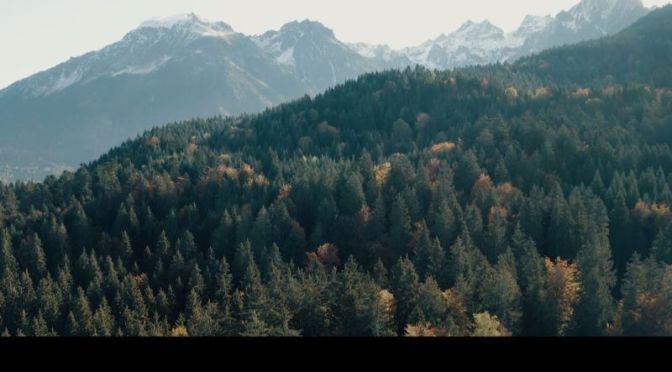
This is a true performance from both FPV Pilote (Feuillie Colas) and Wingsuiter (Vincent Cotte). A brief moment somewhere else, weightlessness.
Here some words of Colas “Quite some work to reach this goal… a lot of development on the machines, a lot of learning on how to fly with the amazing Vincent Cotte, one of the best wingsuiter out there, a lot of hiking… And a good dose of stress and focus 🙂 !!”
Belledonne is a mountain range in the Dauphiné Alps in southeast France. The southern end of the range forms the eastern wall of the mountains that surround the city of Grenoble.
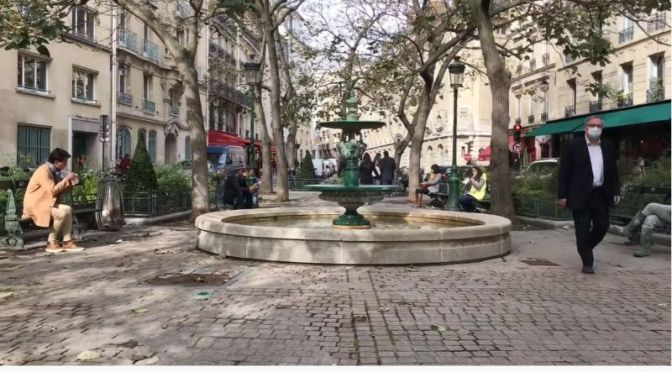
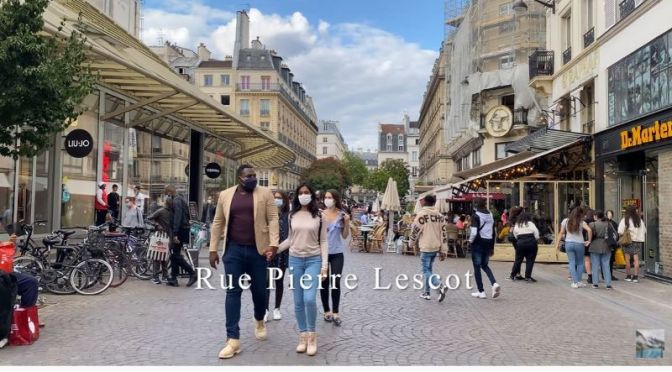
Video timeline: 00:00 Preview 00:24 Starting Point 00:32 Les halles 00:39 Westfield Forum des Halles 00:52 Rue Pierre Lescot 02:08 Rue Rambuteau 03:20 Rue Saint-Denise 05:04 Rue du Cygne 06:02 Boulevard de Sébastopol 09:01 Rue Rambuteau
Châtelet – Les Halles is a shopping district with chain stores along Rue de Rivoli, and the Canopée and underground Forum-des-Halles malls. Modern park Jardin Nelson-Mandela leads to specialty kitchen stores around Rue Montmartre, and the late-Gothic Église Saint-Eustache, where playwright Molière was baptized. The area is also famed for late-night eateries. The Seine-side Théâtre du Châtelet stages musicals.
We recorded this 4k ultra hd video during our trip to Strasbourg, France on August 2020.
Strasbourg is the capital and largest city of the Grand Est region of France and is the official seat of the European Parliament. Located at the border with Germany in the historic region of Alsace, it is the capital of the Bas-Rhin department. Our guided walking tour is about 4.35 miles (7 km) long, starts at Petite France, ends at Orangerie Park and covers most attractions and historic sites of Strasbourg.
Video Timeline Links: 00:00 – Strasbourg, France Walking Tour Intro 02:05 – Petite France 12:03 – Saint-Thomas Church 20:50 – Gutenberg Square 25:18 – Kammerzell House 25:39 – Notre-Dame Cathedral 33:25 – Prints and Drawings Museum 35:05 – Museum of Fine Arts 42:25 – Raven Bridge and Square 53:00 – St William’s Church 1:02:34 – Tomi Ungerer Museum 1:06:19 – Republic Garden Square 1:07:27 – Palace of the Rhine 1:16:04 – Saint Paul Church 1:19:39 – Kennedy Bridge 1:26:33 – Council of Europe 1:29:21 – Orangerie Park
Often called the Father of Impressionism, Claude Monet inspired the term that defined this movement. Born in Paris, Monet would later live in Giverny, where he purchased a property, planted sprawling gardens, and painted his famous water lilies. https://www.philamuseum.org/collectio…
Saint-Germain-des-Prés is one of the four administrative quarters of the 6th arrondissement of Paris, France, located around the church of the former Abbey of Saint-Germain-des-Prés.
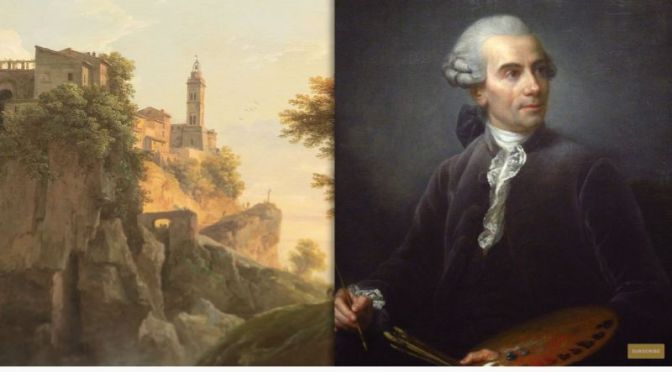
In the 18th century, Joseph Vernet was uncontestably the greatest landscape painter of his generation. In this episode of Anatomy of an Artwork, discover how the ambitious and poetic landscape of ‘View of Tivoli’ pays tribute to the Italy Vernet loved so dearly.
Claude-Joseph Vernet was the leading French landscape painter (with Hubert Robert) of the later 18th century. He achieved great celebrity with his topographical paintings and serene landscapes. He was also one of the century’s most accomplished painters of tempests and moonlight scenes.
Vernet was born at Avignon and trained there with his father, Antoine, and with the history painter Philippe Sauvan. He spent the years 1734 to 1752 in Rome, where he studied classical landscapes in the tradition of Claude and Gaspard Dughet, as well as the dramatic paintings of Salvator Rosa. In Rome he was influenced by the contemporary Roman topographical painter Giovanni Paolo Panini. He had many English clients and admirers in Rome, including Richard Wilson, whom Vernet is thought to have encouraged as a landscape painter.
News, Views and Reviews For The Intellectually Curious




 Boomers Daily