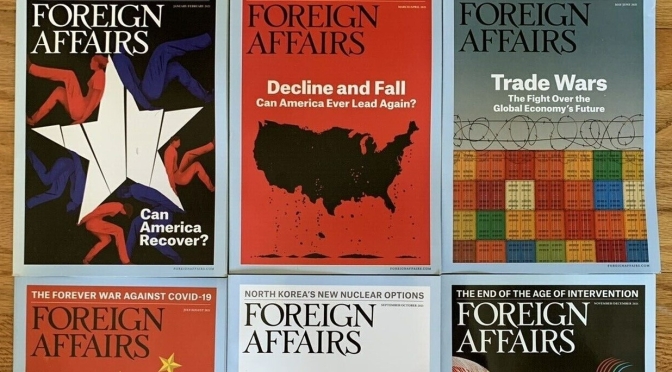
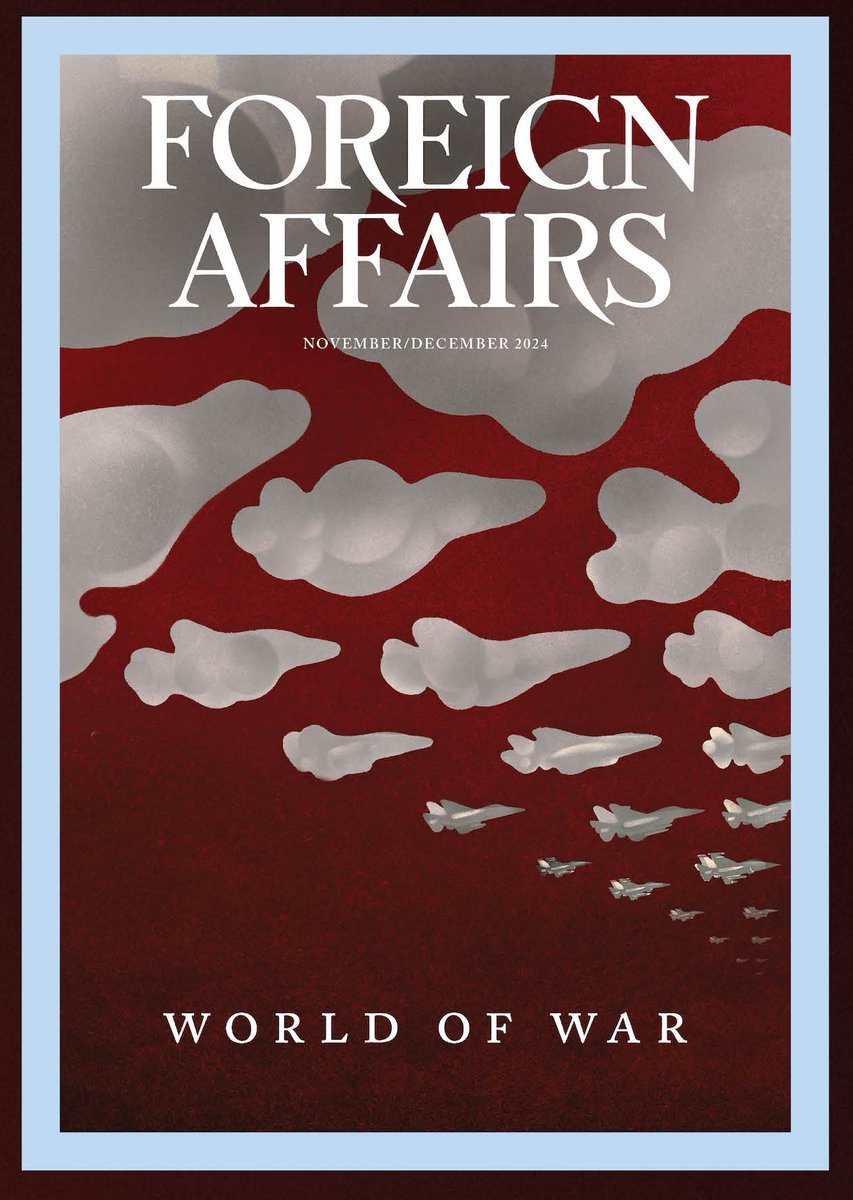

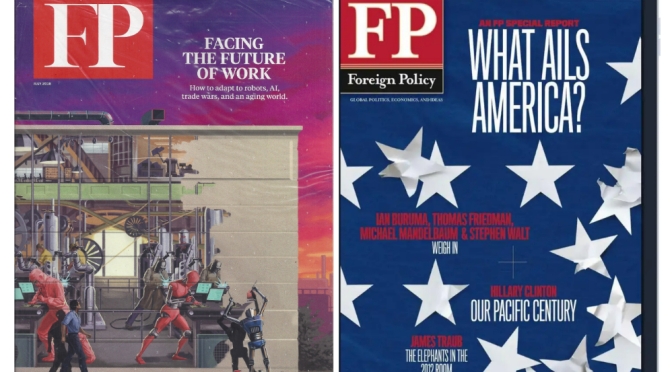
The Return of Total War
Understanding—and Preparing for—a New Era of Comprehensive Conflict
By Mara Karlin
Wars Are Not Accidents
Managing Risk in the Face of Escalation

Understanding—and Preparing for—a New Era of Comprehensive Conflict
By Mara Karlin
Managing Risk in the Face of Escalation
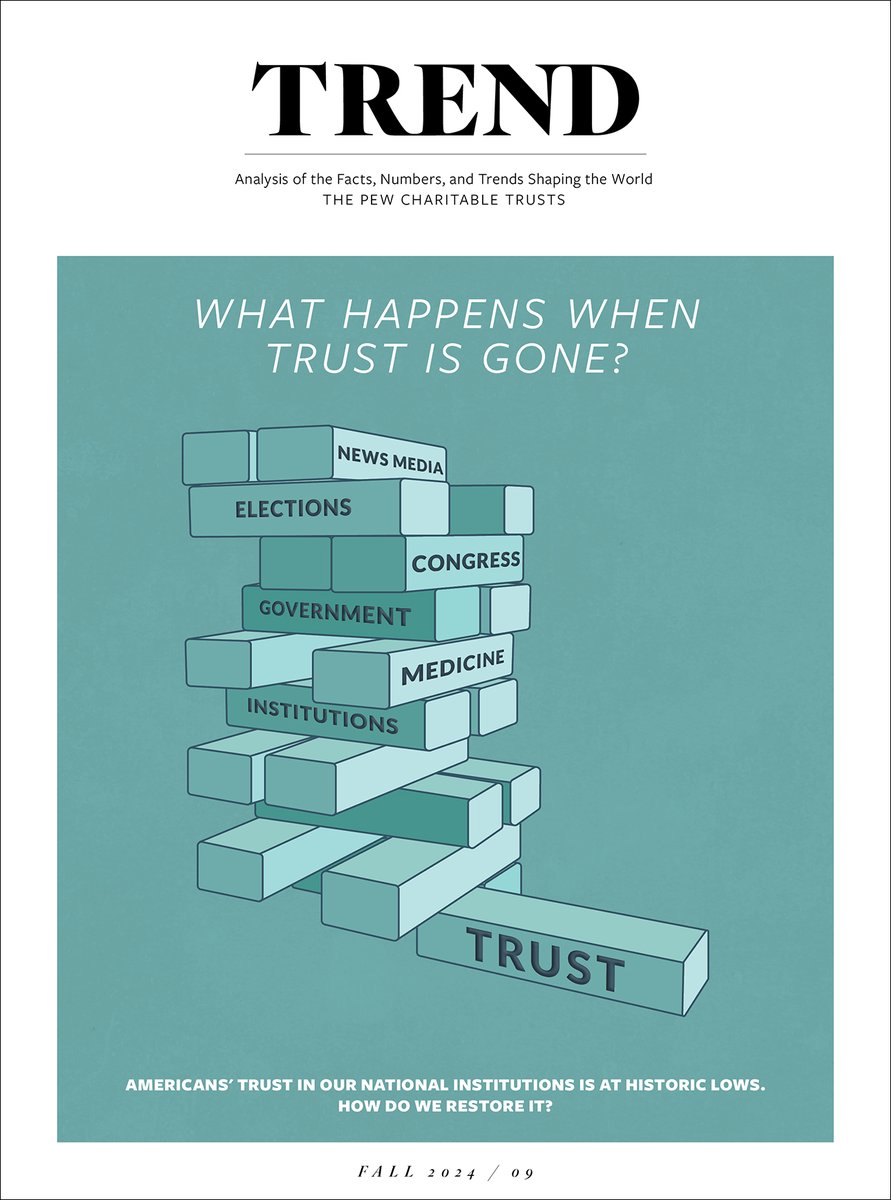
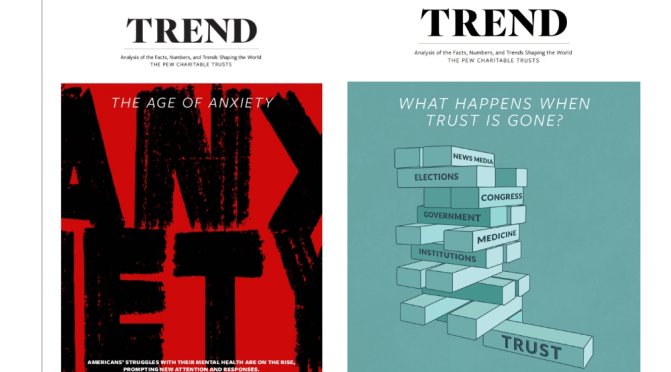
Trend Magazine (October 17, 2024) – How to Restore Trust in Elections, Media Mistrust Has Been Growing for Decades, Can Science and Health Care Gain What’s Missing?; How Better Policies Can Help Build Trust
Trust in our nation’s institutions has never been lower. And experts tend to blame our politically polarized society, which certainly contributes to the deep unease that is being felt by a majority of…
If mistrust were a disease, the United States would be facing an epidemic. Over the last half-century, trust in American institutions has steadily declined, and this mistrust has rapidly increased in…
As our nation grapples with growing mistrust of all institutions, including the federal government, it’s important to remember that this is not a new debate, but one that has been embedded in the American…
Only 1 in 5 Americans trust the federal government—so how do we restore public confidence? For more than two decades, the Partnership for Public Service has worked across presidential administrations to…
We root for David, the underdog facing impossible odds, who stands in contrast to Goliath, the big bully. So maybe it’s not surprising that Americans root for small business in contrast to big business.


No matter who wins the White House, these nine thinkers from around the world would like a word. Catherine Ashton, Jason Bordoff, Arancha González, Martin Kimani, Mark Malloch-Brown, Joseph S. Nye Jr., Danny Quah, Nirupama Rao, Joseph E. Stiglitz
A dramatic moment between Jimmy Carter and Gerald Ford showed the camera really is king.
Democracy—and the global system—might not be so easily dismantled.

The World Still Needs America—and America Still Needs the World by Condoleezza Rice
And They’re Already Here by Mark A. Milley and Eric Schmidt


Nine thinkers on the continent’s future without America’s embrace.
By Mark Leonard, Constanze Stelzenmüller, Nathalie Tocci, Carl Bildt, Robin Niblett, Radoslaw Sikorski, Guntram Wolff, Bilahari Kausikan, Ivan Krastev, and Stefan Theil
No bloc of countries has, for the past 75 years, been as umbilically tied to the United States as Europe. First, its western half and, since the end of the Cold War, much of its eastern half have prospered under the world’s most extensive bonds in trade, finance, and investment. Europe could also depend on the U.S. military’s iron commitment—enshrined in the 75-year-old NATO alliance—to come to its defense. Together with a few other nations, the United States and Europe defined many of the institutions that comprise what we call the Western-led order. The U.S.-European alliance has arguably been the bedrock of the global system as we know it today.

Without Washington’s embrace, the continent could revert to an anarchic and illiberal past. By HAL BRANDS
Which is the real Europe? The mostly peaceful, democratic, and united continent of the past few decades? Or the fragmented, volatile, and conflict-ridden Europe that existed for centuries before that? If Donald Trump wins the U.S. presidential election in November, we may soon find out.

Biden and the Search for a New American Strategy
“America is back.” In the early days of his presidency, Joe Biden repeated those words as a starting point for his foreign policy. The phrase offered a bumper-sticker slogan to pivot away from Donald Trump’s chaotic leadership. It also suggested that the United States could reclaim its self-conception as a virtuous hegemon, that it could make the rules-based international order great again. Yet even though a return to competent normalcy was in order, the Biden administration’s mindset of restoration has occasionally struggled against the currents of our disordered times. An updated conception of U.S. leadership—one tailored
Making the Case for Trump’s Foreign Policy
Si vis pacem, para bellum is a Latin phrase that emerged in the fourth century that means “If you want peace, prepare for war.” The concept’s origin dates back even further, to the second-century Roman emperor Hadrian, to whom is attributed the axiom, “Peace through strength—or, failing that, peace through threat.”
And China Is Reaping the Benefits

And What America Should Learn From It
By now, Chinese President Xi Jinping’s ambition to remake the world is undeniable. He wants to dissolve Washington’s network of alliances and purge what he dismisses as “Western” values from international bodies. He wants to knock the U.S. dollar off its pedestal and eliminate Washington’s chokehold over critical technology. In his new multipolar order, global institutions and norms will be underpinned by Chinese notions of common security and economic development, Chinese values of state-determined political rights, and Chinese technology. China will no longer have to fight for leadership. Its centrality will be guaranteed.
America’s Competition With China Must Be Won, Not Managed

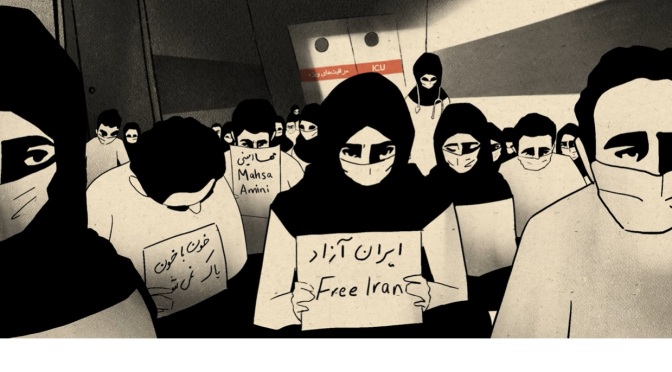
His father, Ali, was born a Shiite Muslim from Iran. They met in the library at the University of Alabama in Huntsville, married in 1978, and eventually settled in Russellville, Arkansas. “I grew up in the Ozarks, so I didn’t have a deep connection to my Iranian heritage,” Sarjahani told me. His family had Christmas trees and celebrated Easter but also marked Nowruz, the Persian New Year.

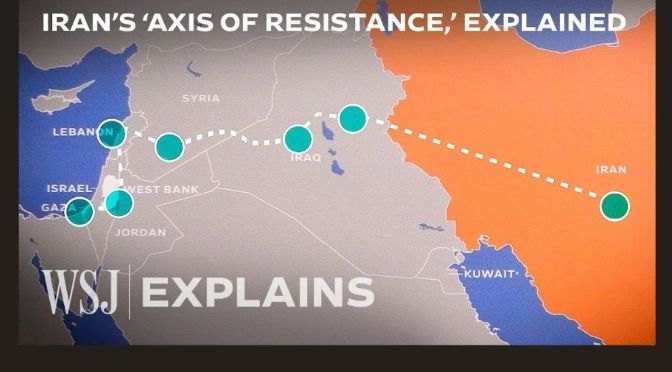
Video timeline: 0:00 ‘Axis of Resistance’ 0:37 Iran’s allies 1:44 Iran’s history 3:22 U.S. in the Middle East 4:14 Attacks since Oct. 7
WSJ explains what to know about the alliance that includes Hamas in Gaza, Hezbollah in Lebanon and the Houthis in Yemen.
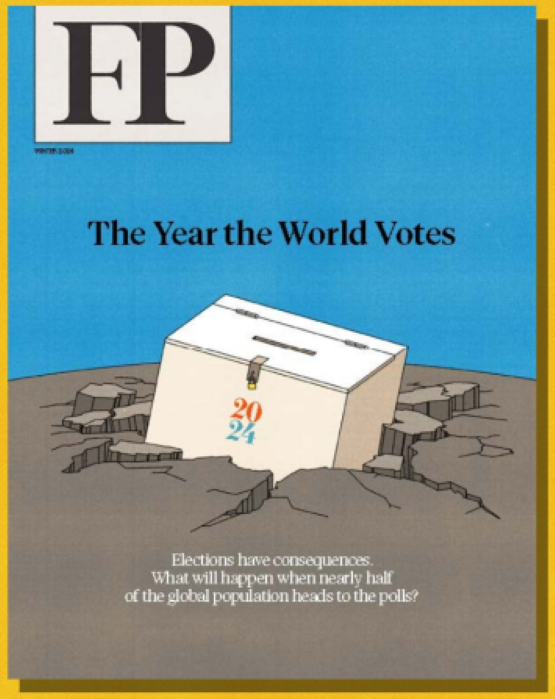
The world’s most dismal science could make Eurasia safe for illiberalism and predation—or protect it from those forces.
By Hal Brands, a professor of global affairs at the Johns Hopkins School of Advanced International Studies.

Alexander Dugin is a bit of a madman. The Russian intellectual made headlines in the West in 2022, when his daughter was killed, apparently by Ukrainian operatives, in a Moscow car bombing likely meant for Dugin himself. Dugin would have been targeted because of his unapologetic, yearslong advocacy for a genocidal war of conquest in Ukraine. “Kill! Kill! Kill!” he screeched after Russian President Vladimir Putin’s first invasion of that country in 2014, adding: “This is my opinion as a professor.” Even at his daughter’s funeral, Dugin stayed on message. Among her first words as an infant, he claimed, were “our empire.”
 Boomers Daily