

Take a moment to appreciate the breathtaking maneuvers of a hummingbird in flight pic.twitter.com/tviGXJMrw6
— National Geographic (@NatGeo) April 21, 2022
Tag Archives: Flight

Airships: The Decline And Comeback Of Blimps (Video)
Blimps were once at the forefront of aviation—at least before airplanes innovated past their lighter-than-air technology. Now, airships are often used for advertising or aerial broadcasting, which is exactly how Goodyear utilizes its fleet of airships. In fact, there are only 124 pilots with a rating to fly an airship, and there are a mere 39 registered airships in the U.S., according to the FAA. Now, a small handful of companies want to change that. Blimps are more carbon efficient than planes or boats, and they can be used for tourism and cargo transport, not to mention military purposes. What happened to the giants of the sky, and what’s being done to bring them back.

Wildlife: ‘Owls – Master Aerial Predators’ (Video)
With the ability to fly silently and detect prey with stunning accuracy, owls are master aerial predators. Enjoy this selection of owl moments taken from the BBC Earth library.
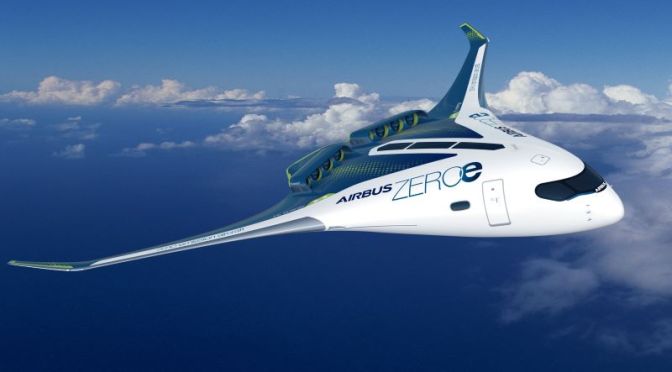
Future Of Air Travel: ‘Airbus ZEROe – Next-Gen Hydrogen Planes’ (Video)
Airbus has revealed three concepts for the world’s first zero-emission commercial aircraft which could enter service by 2035. These concepts each represent a different approach to achieving zero-emission flight, exploring various technology pathways and aerodynamic configurations in order to support the company’s ambition of leading the way in the decarbonisation of the entire aviation industry.
All of these concepts rely on hydrogen as a primary power source – an option which Airbus believes holds exceptional promise as a clean aviation fuel and is likely to be a solution for aerospace and many other industries to meet their climate-neutral targets.
The three concepts – all codenamed “ZEROe” – for a first climate neutral zero-emission commercial aircraft include:
•A turbofan design (120-200 passengers) with a range of 2,000+ nautical miles, capable of operating transcontinentally and powered by a modified gas-turbine engine running on hydrogen, rather than jet fuel, through combustion. The liquid hydrogen will be stored and distributed via tanks located behind the rear pressure bulkhead.
• A turboprop design (up to 100 passengers) using a turboprop engine instead of a turbofan and also powered by hydrogen combustion in modified gas-turbine engines, which would be capable of traveling more than 1,000 nautical miles, making it a perfect option for short-haul trips.
• A “blended-wing body” design (up to 200 passengers) concept in which the wings merge with the main body of the aircraft with a range similar to that of the turbofan concept. The exceptionally wide fuselage opens up multiple options for hydrogen storage and distribution, and for cabin layout.

Aircraft: ‘Science Of How Helicopters Fly’ (Video)
The science required for a helicopter to achieve flight is a lot more complicated than it might seem.

Future Of Flight: Rolls-Royce Unveils “Accel Aeroplane”, World’s Fastest Electric Plane
Rolls-Royce is leading a highly specialised challenge to build the world’s fastest all-electric aircraft
This zero-emissions plane is expected to make a run for the record books with a target speed of 300+ MPH (480+ KMH).
Rolls-Royce has rolled out to the public for the first time its Accel aeroplane which it hopes will earn the blue-chip engineer a place in history by smashing the current speed record for an electrically-powered aircraft. The battery-powered Accel is targeting a top speed in excess of 300mph over four 3,000-metre runs during a single flight when goes for the record off the Welsh coast in the summer.
To read more about Rolls-Royce’s electric plane: https://www.telegraph.co.uk/business/…

Future Of Avation: “Safe Return” Emergency Autolanding In A Cirrus G2 Vision Jet (Video)
From a New Atlas online review:
An important step towards autonomous aviation was taken today, as Cirrus Aviation announced “Safe Return” functionality for its G2 Vision jet, which will find the nearest airstrip, alert authorities and land itself in an emergency.
The Vision is a small private jet capable of seating seven people, cruising at over 300 knots at 31,000 feet. Small, quick and user-friendly, it’s good for those that wish to fly themselves, as well as being flown. It’s been a successful product for Cirrus, but its new functionality could represent something bigger. CEO Zean Nielsen calls it “a product that we believe is going to change personal aviation forever.”
Safe Return Autonomous Autoland, developed in conjunction with Garmin, manifests as a button on the roof of the Vision jet that is accessible to passengers. If something happens to the pilot, a passenger can hit the button and request an autoland.
To read more: https://newatlas.com/aircraft/cirrus-vision-g2-automatic-emergency-landing/
 Boomers Daily