
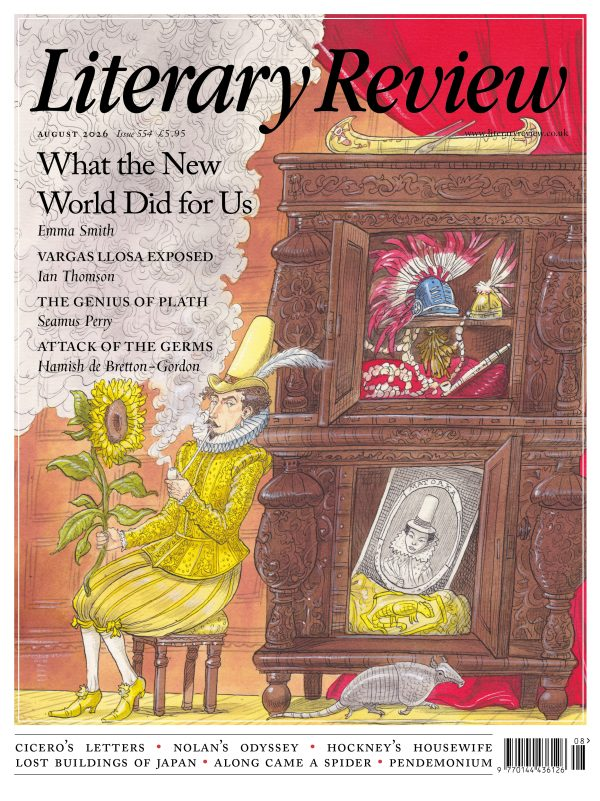
LITERARY REVIEW : The latest issue features ‘What the New World did for Us’
An Epic for the Ages
The Odyssey By Christopher Nolan (dir)

The Odyssey By Christopher Nolan (dir)

BARRON’S MAGAZINE: The latest issue features…GLP-1s aren’t just for obesity anymore, and sales are exploding. Sizing up the winners.
This blockbuster class of drugs is shattering all sales records. Which stock will do better—Eli Lilly or Novo Nordisk?
Despite Friday’s gains, the index wasn’t able to finish the month higher.
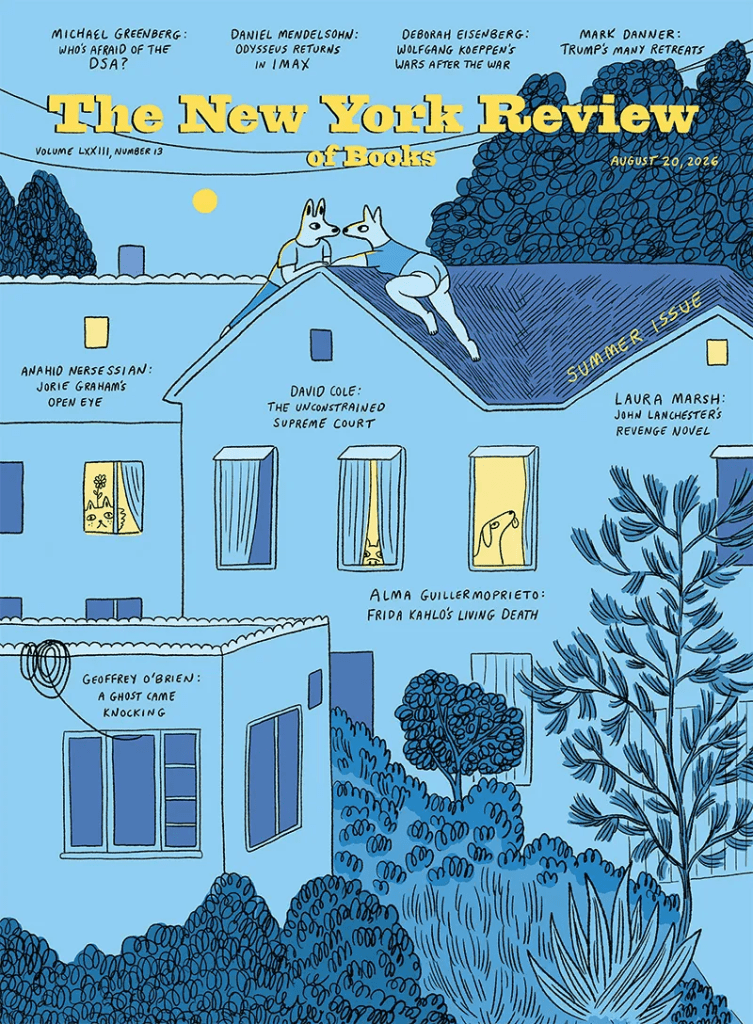
THE NEW YORK REVIEW OF BOOKS: The latest issue features…
The most authentic thing about Christopher Nolan’s Odyssey is its densely braided narrative, but its tormented hero sounds like the heroes of Christopher Nolan movies.
As Democratic Socialists rack up primary victories, the moderate wing of the Democratic Party looks increasingly out of touch.
Maggie Haberman and Jonathan Swan’s inside account of the Trump administration portrays a president with a vast appetite for power but who repeatedly backs down when the costs of his actions become too high.
Regime Change: Inside the Imperial Presidency of Donald Trump by Maggie Haberman and Jonathan Swan
In novels written immediately after World War II, Wolfgang Koeppen mined the conscience of Germany.
Pigeons on the Grass by Wolfgang Koeppen, translated from the German by Michael Hofmann
The Hothouse by Wolfgang Koeppen, translated from the German and with an afterword by Michael Hofmann, with an introduction by Pankaj Mishra
Death in Rome by Wolfgang Koeppen, translated from the German and with an afterword by Michael Hofmann, with an introduction by Joshua Cohen
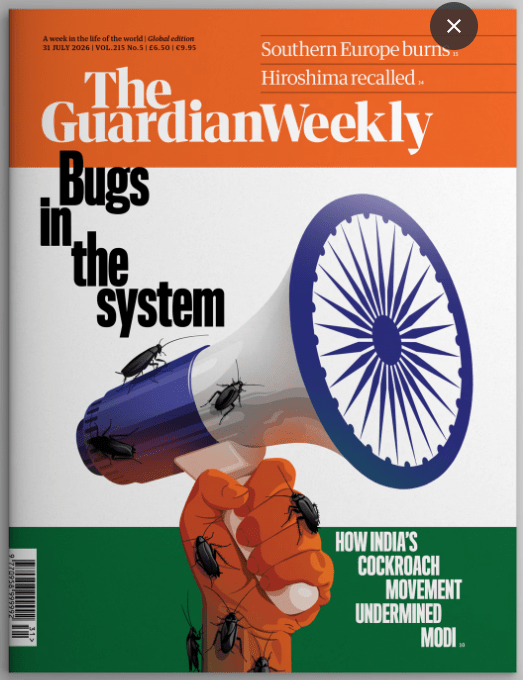
THE GUARDIAN WEEKLY: The latest issue features ‘Bugs in the System’ – How India’s Cockroach Movement Undermined Modi….
The news agenda has been so dominated for many months by a few big stories about perennial global hotspots and the biggest figures on the international stage, that one could accuse journalists of missing what was happening outside the US, Middle East or Ukraine. But as our south-east Asia correspondent, Hannah Ellis-Petersen, explains for this week’s big story, the rapid rise and sudden explosion on to the streets of India’s Cockroach Janta party took everyone – especially Narendra Modi’s government – by surprise.
What began as a satirical protest when the chief justice of India compared the country’s unemployed youth to cockroaches has damaged prime minister Modi’s image as a “strongman” leader and loosened his grip over the media. But as Hannah explains, it’s not just that the joke has “legs” and strong visuals; young people want a viable future and change.
Spotlight | ‘Smoke covered the sun’
Angelique Chrisafis hears from people evacuated from France’s Gironde region near Bordeaux as southern Europe battles wildfires, the spread and ferocity of which have shocked everyone
Spotlight | Blue horizons for Gaza’s children
Sea pools made out of sandbags and rubble are part of Amjed Tantesh’s project to give traumatised children a brief respite from war, reports his niece and our Gaza reporter Seham Tantesh
Feature | A Hiroshima journey from anger to peace
Simon Hattenstone meets Koko Kondo, who survived the dropping of the atom bomb on Hiroshima and hears about the publication of her father’s long-forgotten diary written in the aftermath of that horrific day in 1945
Opinion | Andy Burnham’s ticket to major change
The UK prime minister’s first policy announcement on cut-price bus fares signals more than a cheap gimmick, says Jonathan Freedland
Culture | John Carpenter interview
The uncompromising film director talks to Steve Rose about his shock and horror Hollywood career and his new music album

GRANTA MAGAZINE SUMMER 2026: The new issue features new writing from Mary Gaitskill, Tao Lin, Amie Barrodale, John Jeremiah Sullivan, William T. Vollmann, Antonia Hitchens, Patricia Lockwood, Kathryn Scanlan and many more.

BARRON’S MAGAZINE: The latest issue features ‘The Global Building Boom’ – Ports, bridges, factories, and more: A worldwide burst of construction is just getting started. Ten ways to invest.
Artificial intelligence and data centers are in the spotlight, but investors should pay attention to a less-noticed boom in global manufacturing. Ten ways to play the new wave.
Device makers with cash flow yields of 5% to 6% now trade at a 20% to 30% discount to the S&P 500 index.
Whether to buy or sell the stock has never been about fundamentals. It has always been a bet on the future and Musk’s ability to see it more clearly than anyone else.
Smith’s classic book helped unleash the market forces that took root first and deepest in America.

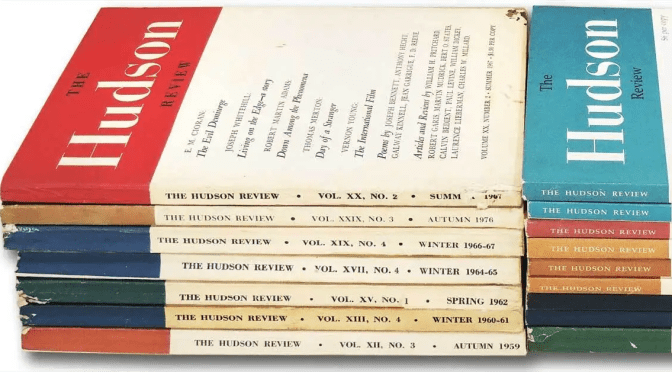
THE HUDSON REVIEW: The latest issue features….
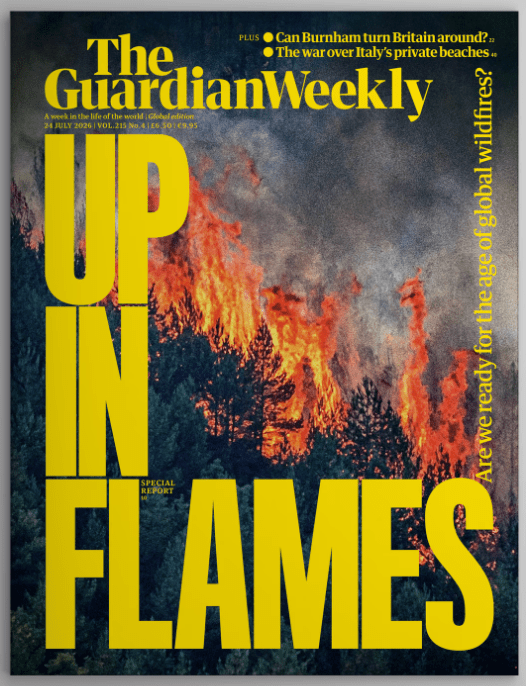
THE GUARDIAN WEEKLY: The latest issue features ‘Up In Flames’ – Are we ready for the age of global wildfires?
Across the globe, wildfires are on the move. Acrid smoke from huge Ontario fires choked major cities across Canada and the US last week, while in western Europe, France, Portugal and Spain have each been torched by a record-breaking number of blazes for this time of year.
In the UK, parched conditions after a hot dry summer have helped fuel blazes from national parks to cities. Last weekend, firefighters were tackling a blaze on Arthur’s Seat, the volcanic outcrop in the middle of Edinburgh. The week before, dozens of crews were confronted by a wildfire in north-east London.
Because of the climate crisis, fires are burning simultaneously in more places around the world – and they are often hotter, less predictable, and greater in number. For our big story, Ajit Niranjan surveys what seems to be a new normal and considers the impossible decisions specialist fire crews are making when multiple fires are burning in different parts of the world.
In Australia, bushfires have always been part of the country’s landscape. Graham Readfearn talks to some of those who have learned to live with the ever-present danger and asks what they can teach others in this rapidly changing world.
Spotlight | Trump is risking midterm disaster. Why?
Less than a month after hailing a ceasefire, Trump resumed strikes on Iran – a move experts warn could prolong the war and hurt Republicans in upcoming elections. Robert Tait asks what is going on
Science | Is the world facing a male reproductive crisis?
Reports of falling sperm counts and testosterone levels have fuelled fears over chemicals, pollution and modern lifestyles. Hannah Devlin investigates
Feature | The business of rewilding
Intensive farming has all but destroyed England’s ancient woodlands and freshwater wetlands. On a farm in Lincolnshire, a radical aristocrat hopes to show there’s money in protecting nature. Patrick Barkham went to find out
Opinion | What’s left after this World Cup? A kind of messy hope
Kazakhs cheering Uzbeks, Bengalis wild for Argentina … This tournament was once a playground for nationalism. Now it shows how flimsy that allegiance is, argues Jonathan Liew
Culture | All shook up: the return of Alabama Shakes
With Brittany Howard at the helm, the American three-piece band are back with a new album railing against the state of the US in 2026. Dave Simpson caught up with them

BARRON’S MAGAZINE: The latest issue features ‘Software’s Hart Truth’ – AI is eating away at software’s superpower: profit-rich recurring revenue. The good news? Companies – and investors- are starting to adapt.
AI is eating away at software’s superpower: profit-rich recurring revenue. The good news? Companies—and investors—are starting to adapt.
The blue chip’s biggest wipeout on record will force the company to reinvent itself—again.
Barron’s annual ranking of Top 100 Women Advisors shows that most leading female advisors work on teams. That could be a key to attracting more …
The alleged scam, organized by a 24-year-old from Philadelphia, offered athletes ownership of bogus websites as a place to park cash from their lucrative careers.
The biggest problems aren’t caused by what you don’t know, but what, as Mark Twain put it, “you know for sure that just ain’t so.” And that’s a massive problem for the stock market right now.
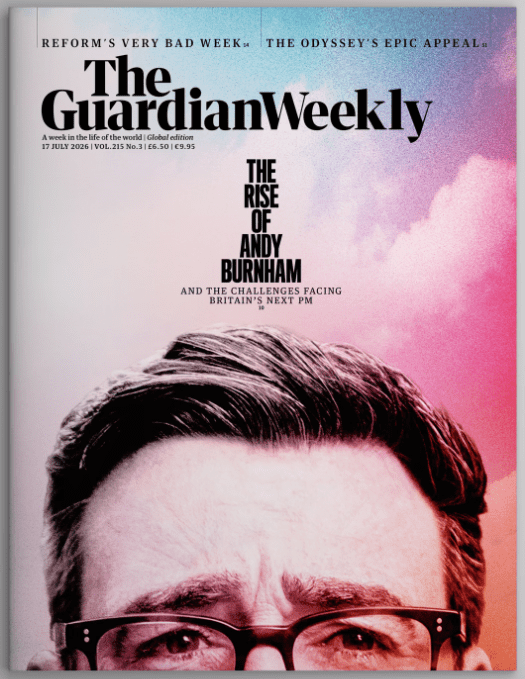
THE GUARDIAN WEEKLY: The latest issue features ‘Andy Burnham’s path to No 10″…
Andy Burnham is to become Britain’s seventh prime minister in a decade, having secured the Labour leadership with the landslide support of his party’s MPs.
The former Manchester mayor is now set to replace Starmer as Labour leader on Friday before walking through the doors of No 10 and becoming prime minister next Monday.
For our big story this week, Daniel Boffey looks at how Burnham charted the route from school politics to No 10, while Jessica Elgot runs through the bulging in-tray awaiting him when he steps into the new role. And Gaby Hinsliff examines how the PM-in-waiting might fare on the global stage, asking whether, unlike Keir Starmer, he has the skills to deal with Donald Trump.
Spotlight | A revolution in ruins
Discontent with Venezuela’s Trump-backed government is mounting as Chávez heirs struggle to respond to the earthquake disaster, writes Tom Phillips
Science | We’re going on a water bear hunt
Scientists hope DNA sequencing tardigrades – tiny yet virtually indestructible creatures – could help us understand the secrets of their superpowers. Patrick Barkham reports
Feature | The battle of the Bell hotel
Tim Burrows visits the town of Epping in Essex to hear from local people about the impact of last year’s far-right protests that centred on a hotel housing asylum seekers
Opinion | The real source of Trump’s power exposed
The Nato summit showed the US president’s willingness to violate all norms, rules and laws – and leave everyone else to pick up the pieces, argues Robert Reich
Culture | Never-ending story
With Christopher Nolan’s take on the Odyssey set to break box office records, Charlotte Higgins asks why a poem from 600BC holds a vice-like grip on pop culture


 Boomers Daily