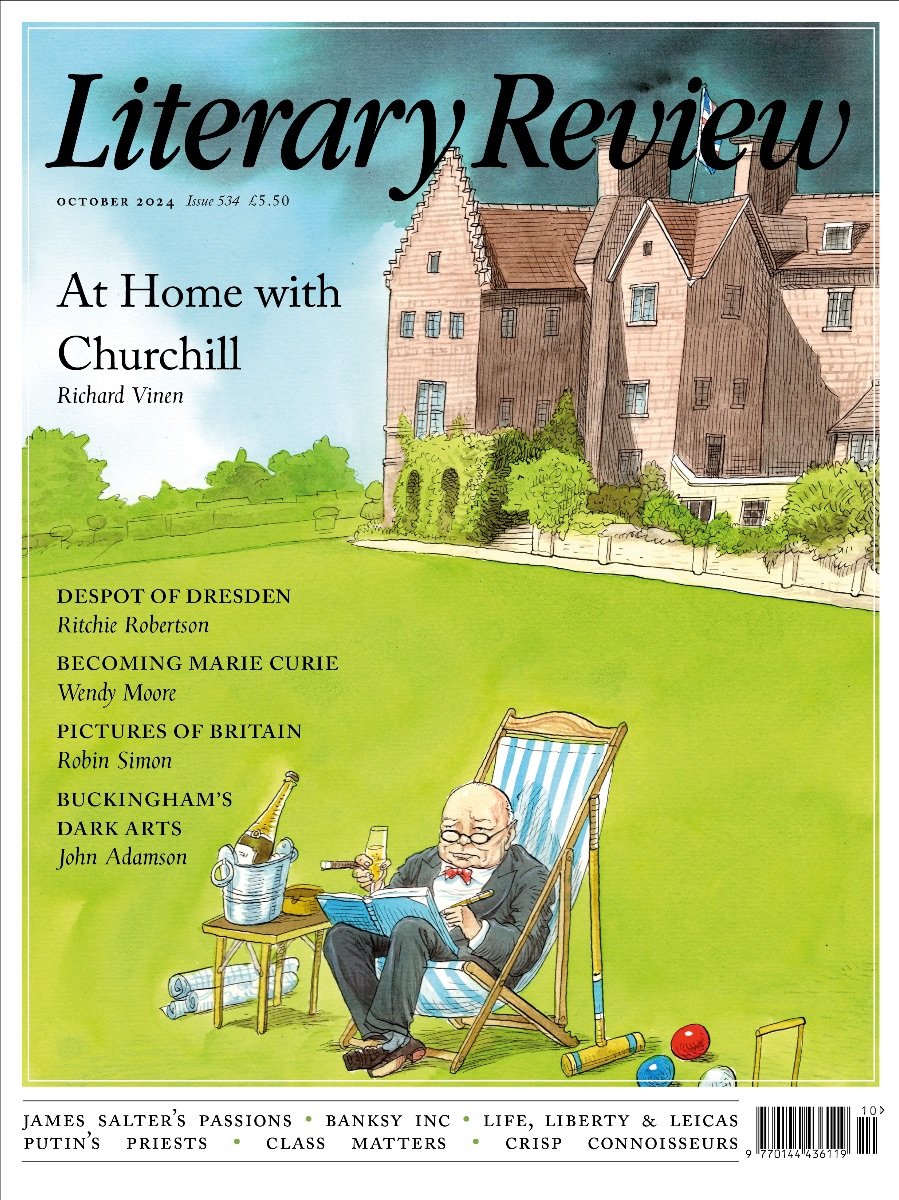


Literary Review – August 3, 2024: The latest issue features ‘Rise and Fall of the Cromwells’; Thom Gunn’s demons; Prams and paintbrushes; Children of Atatürk; Friedrich in nature…


Literary Review – August 3, 2024: The latest issue features ‘Rise and Fall of the Cromwells’; Thom Gunn’s demons; Prams and paintbrushes; Children of Atatürk; Friedrich in nature…


Literary Review – July 2, 2024: The latest issue features ‘A Tale of Two Fabulists’, North America Ablaze, Pascal Decoded, League of Dictators and Roffey’s Rage…
American Civil Wars: A Continental History, 1850–1873 By Alan Taylor
A mountain of historical studies testifies to enduring interest in the American Civil War, a conflict still politically relevant in a nation riven over how to remember it. Those doubting that there is anything fresh to say about the bloodiest event in the republic’s history should read Pulitzer Prize winner Alan Taylor’s brilliant, panoramic account of the conflict.
Travellers in the Golden Realm: How Mughal India Connected England to the World By Lubaaba Al-Azami
One contender for the title of centre of the civilised world in the early 17th century is the Mughal Empire. Lubaaba Al-Azami describes it as ‘a global capital and commercial hub’. The Mughal Empire reached its zenith between the reigns of Babur, the first emperor, who established the ‘golden realm’ in 1526, and his great-great-great-grandson the sixth emperor, Aurangzeb, who died in 1707. This was a time when the artists of the fabulously wealthy Mughal dynasty were building the Taj Mahal and writing and illuminating the Padshahnama.
Vertigo: The Rise and Fall of Weimar Germany 1918–1933 By Harald Jähner (Translated from German by Shaun Whiteside)
Takeover: Hitler’s Final Rise to Power By Timothy W Ryback
The Weimar Republic (so called as the parliament which drafted its constitution in 1919 sat in Weimar owing to unrest in Berlin) lasted for fourteen years and four months, two years longer than the Third Reich that succeeded it. Its history is beset with ironies. Its first president, Friedrich Ebert, a social democrat (and a former innkeeper), turned out to be the embodiment of petit-bourgeois conservatism. Having ditched the monarchy, he made a bargain with the army: they would defend the nascent republic in return for maintaining the old officer corps. This enabled the regime to survive five chaotic years marked by numerous violent attempts to overthrow it from both the Left and the Right.

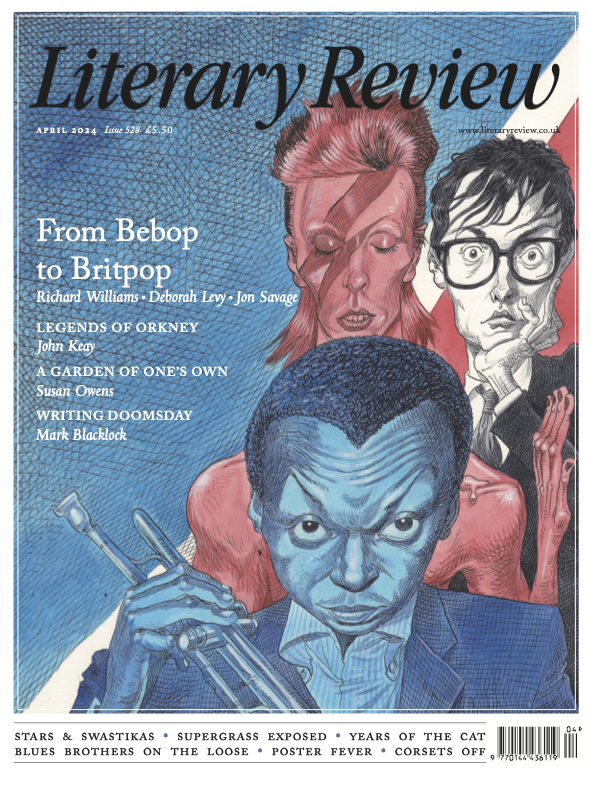
Literary Review – April 2, 2024: The latest issue features ‘From Bebop to Britpop’; Legends of Orkney; A Garden of One’s Own and Writing Doomsday…
By JOHN KEAY


Country Life Magazine – March 5, 2024: The latest issue features The Country Life Top 100 – Britain’s leading exponents of country-house architecture, interior design, gardens and specialist services…
Welcome to the eighth edition of our guide to Britain’s leading exponents of country-house architecture, interior design, gardens and specialist services

In the first of this new series, Kate Green celebrates Dame Miriam Rothschild’s remarkable contribution to the nation as a pioneer of wildflower gardening
Following in the slipstream of swimming cattle, Joe Gibbs enjoys safe passage to the Isle of Skye courtesy of the world’s last manual turntable ferry

Jack Watkins is in the saddle for a canter through 100 years of the Cheltenham National Hunt Festival’s Blue Riband event, the Gold Cup
Works by a whole host of great artists are more accessible than you might imagine. Carla Passino talks to leading art dealers about the Old Masters you could collect
The artistic director admires a religious fresco that encourages contemplation and reflection
Carla Carlisle reflects on the life of Karen Blixen after visiting the author’s former home in Kenya
The restoration of Boston Manor House in Greater London offers a fascinating insight into changing tastes, reveals Charles O’Brien

March can be the month of all weathers, warns Lia Leendertz
Jack Watkins goes in search of the elusive, enchanting woodlark
Marion Mako visits Stancombe Park, Gloucestershire — Waugh’s garden inspiration for Brideshead

Melanie Johnson harnesses the subtle depth of flavour of leeks
Hemlock is a pretty addition to riverbanks, but its charm ends there, says Deborah Nicholls-Lee
Simon Lester shares the thrill of an encounter with the secretive native white-clawed crayfish
Patterned or pastel? Hetty Lintell showcases the finest waistcoats

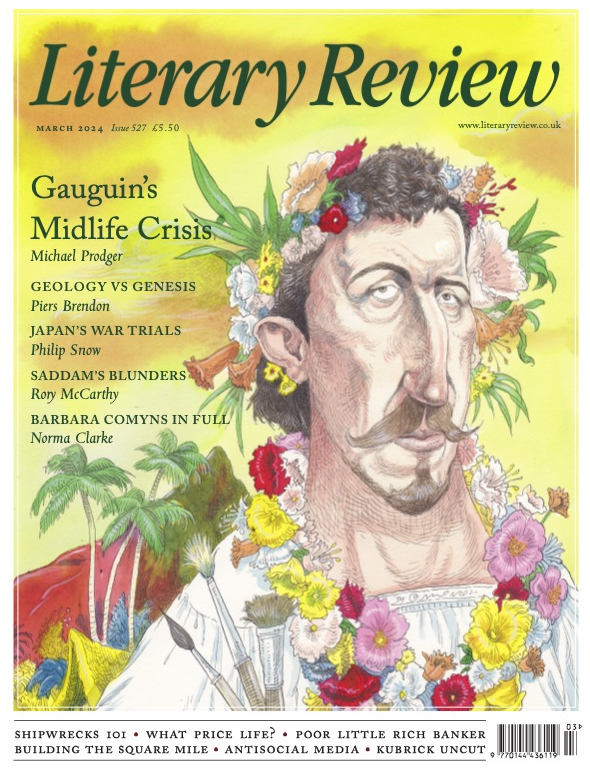
Literary Review – March 1, 2024: The latest issue features ‘Gaughin’s Midlife Crisis’; Geology vs Genesis; Japan’s War Trials; Saddam’s Blunderers and Barbara Comyns in Full…
“The Showman: The Inside Story of the Invasion That Shook the World and Made a Leader of Volodymyr Zelensky” By Simon Shuster
As someone who has to consume quite a lot of Russian media, I can tell you that if there is one common denominator, it’s that whether we’re talking about a shouty TV news programme (less Newsnight, more a kind of geopolitical Jeremy Kyle Show), a stodgy government newspaper of record or a racy tabloid, no one has a good word for Volodymyr Zelensky.
Kubrick: An Odyssey By Robert P Kolker
There are, I have long suspected, two types of cinephiles: those who think Stanley Kubrick’s 2001: A Space Odyssey (1968) is a masterpiece and those who think it’s a relentless bore. Early in their new biography of the film director, Kubrick: An Odyssey, Robert P Kolker and Nathan Abrams make clear which camp they belong to, describing the scene in which the astronaut Frank Poole jogs around (and around and around and around) the spaceship Discovery as ‘one of the most lyrical passages in film history’.


Country Life Magazine – February 27, 2024: The latest issue features ‘Britain’s Top Dogs’ – Our favorites, decade by decade…


Country Life Magazine – February 21, 2024: The ‘The Fine Arts Issue’ – Artists who say it with flowers and the AI debate; Wig law, daffodils and how does your hedgerow grow?….
With the technology powering artificial intelligence advancing so rapidly, what can artists do to protect their original work?
Michael Prodger examines how flowers have inspired artists for centuries, from the ancient Egyptians up to the present day

The periwigs that were a 17th-century status symbol are still a mainstay of our legal system, as Agnes Stamp discovers
They have long been used to contain cattle or define boundaries, but hedges can be beautiful, too, argues Charles Quest-Ritson

Alan Titchmarsh takes a wander with Wordsworth as he dreams of spring daffodils ‘fluttering and dancing in the breeze’
The architect falls under the spell of a gritty, but humorous work
Jamie Blackett is ready to man the barricades to scupper plans for an unwanted national park
John Goodall applauds the restoration of Leighton House in London, which formed the hub of a 19th-century celebrity circle

Mary Miers follows the globe-trotting Sir John Lavery from Ireland to Africa and beyond
An inspiring oil painting was at the centre of a heist with a happy ending, reveals Carla Passino
A protective force in China and Wales, but a symbol of greed and evil in England: Lucien de Guise delves into dragon lore

Hetty Lintell celebrates the best of the Art Deco era with earrings old and new, but always modern
The astonishing King’s Lodge suite at The Connaught is fit for a monarch, finds Rosie Paterson
Amelia Thorpe shares the very best of London Design Week
Tilly Ware meets the wild-seed pioneer ‘nurturing the future’
Ben Lerwill finds the salt of the earth on the coast of Scotland

Melanie Johnson on rhubarb
A real-life couple are in harmony on stage, finds Michael Billington


Country Life Magazine – February 13, 2024: The latest ‘How Do I Love Thee?’ – Let me count the ways; Rough collies, red roses and royal caviar; Glass acts – the coolest conservatories; Head start – why real gentlemen wear hats….
With its velvety, softly scented depths, the red rose has long beguiled lovers. Charles Quest-Ritson falls under its spell
Tom Parker Bowles savours the unctuous delights of caviar from the mother-daughter team at King’s Fine Foods, ethically farmed and utterly delicious

Famed for their loyalty, rough collies are happy finding hidden sheep, bounding up Munros or simply curling up with children. Katy Birchall meets Lassie
Time was when every gentleman of every background wore a hat. It’s time to fall back in love with bowler, beret and bonnet, recommends John F. Mueller
Amelia Thorpe admires the most stylish conservatories
The composer chooses an ethereal Italian scene that literally reflects his own music
Fiona Reynolds explores the environs of St Albans in Hertfordshire, from the longest nave in Europe to the River Ver
With imagination and style, late-18th-century Marlwood Grange in Gloucestershire has been transformed into a family home fit for the 21st century, discovers Jeremy Musson

Hetty Lintell gets a handle on the most colourful handbags
As the famous opera house at Glyndebourne, East Sussex, turns 90, the gardens are more glorious than ever. Tiffany Daneff admires a symphony of planting
Tom Parker Bowles tucks into the succulent, comforting suet pudding, an old favourite that deserves to return to our plates
Admired for his portrayal of dewy eyes and diaphanous fabrics, John Singer Sargent rose to the top of the portrait-painting world. Mary Miers follows his career from peripatetic childhood to Society favourite


Country Life Magazine – February 6, 2024: The latest features The Travel Issue – View the world from the very best hotels; The map-makers who broadened our horizons; Out of the ashes – Chillingham Castle rescued and Waxwing explosions and snowdrop heaven….

The history of Chillingham Castle in Northumberland is a turbulent and memorable one, peppered with family disputes, imprisonments and a live toad. John Goodall explores

The urge to chart our surroundings is centuries old. With map in hand, Matthew Dennison ventures forth in search of mammoth tusks and globes
Mark Cocker marvels at the exquisite plumage of this European songbird as it flocks to our shores to feed on a glut of its favoured winter berries
James Alexander-Sinclair joins the wandering throng as snow-drop lovers descend on Thenford in Northamptonshire to luxuriate in 900 varieties of Galanthus

The founder of Childs Farm chooses a rural scene to sum up ‘a picture of my England’
The shortest month can also feel like the longest, delaying the arrival of spring, but what can February tell us about the year ahead? Lia Leendertz reveals all
From the most dramatic plumes to the calmest cascades, we seek out the corners of the kingdom where water and gravity collide to magical effect

Hetty Lintell says green for go with a selection of stylish and useful khaki travel accessories
Sally Stephenson on the secrets of illuminating period houses and Amelia Thorpe’s lighting picks

Melanie Johnson harnesses the delicious flavours of rosemary

Literary Review – February 2, 2024: The latest issue features ‘We Are Free to Change the World: Hannah Arendt’s Lessons in Love and Disobedience’;
By STUART JEFFRIES
We Are Free to Change the World: Hannah Arendt’s Lessons in Love and Disobedience By Lyndsey Stonebridge
When Hannah Arendt looked at the man wearing an ill-fitting suit in the bulletproof dock inside a Jerusalem courtroom in 1961, she saw something different from everybody else. The prosecution, writes Lyndsey Stonebridge, ‘saw an ancient crime in modern garb, and portrayed Eichmann as the latest monster in the long history of anti-Semitism who had simply used novel methods to take hatred for Jews to a new level’. Arendt thought otherwise.
By Norma Clarke
Hardy Women: Mother, Sisters, Wives, Muses By Paula Byrne
The title of Paula Byrne’s Hardy Women is a pun on Thomas Hardy’s name and a gesture to the enthusiasm that greeted Hardy’s fictional women. Bathsheba Everdene in Far from the Madding Crowd, Tess Durbeyfield in Tess of the d’Urbervilles and Sue Bridehead in Jude the Obscure were new kinds of women, and Hardy’s fame, which was immense and began with the publication of Far from the Madding Crowd, rested to a large extent on the heroines he created. One young reader wrote to him of Tess, ‘I wonder at your complete understanding of a woman’s soul.’ Hardy’s discontented wife Emma wondered at it too. She observed, ‘He understands only the women he invents – the others not at all.’