
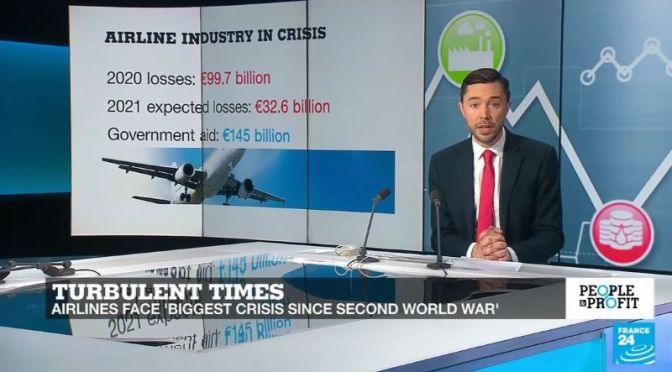
After losses of €100 billion in 2020, will next year see air travel take off again? We speak to Alexandre de Juniac, the head of industry body IATA.
Tag Archives: Economics

Oil & Climate Change: ‘The Economics Of Drilling In The Arctic’ (CNBC Video)
The Arctic is not a barren, frozen wasteland. It’s home to some of the most unique ecosystems in the world. More than this: it’s home to people. Those people are at the center of the controversy over drilling for oil in the Arctic. The Trump administration is now starting the formal process of selling leases in the Arctic National Wildlife Refuge to oil companies, according to the New York Times. The move comes after the Trump administration opened the refuge for oil drilling in August 2020. There are potentially billions of dollars in untapped oil and gas reserves in the Arctic. But, there is value in keeping the region untouched, too. The Arctic provides more than $281 billion per year in fishing, oil, mineral extraction, tourism and climate stabilization services, according to a preliminary assessment done in 2016 by environmental economist Tanya O’Garra, who worked at the Center for Research on Environmental Decisions at Columbia University at the time the research was conducted.
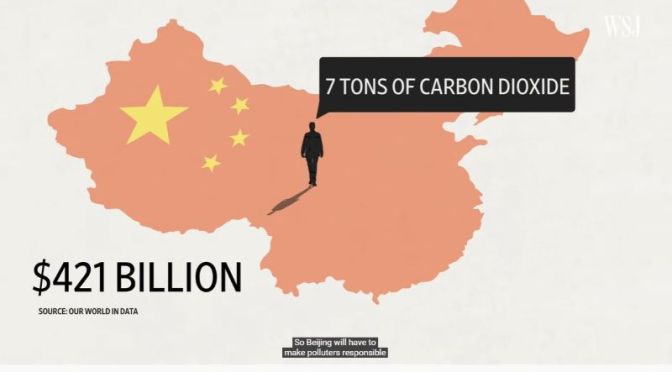
Energy Economics: How China Plans To Go Carbon Neutral By 2060 (Video)
In the biggest climate commitment made by any nation, China pledged to go carbon neutral by 2060. While it will be challenging for Beijing to achieve its goal, China’s plan to become a green superpower will have ripple effects around the world.
Illustration: Crystal Tai
Covid-19: How To Spark Economic Recovery
Governments will have to deal with the economic fallout from the pandemic for decades to come. If they get their response wrong, countries risk economic stagnation and political division.
Read more here: https://econ.st/3ojORKY
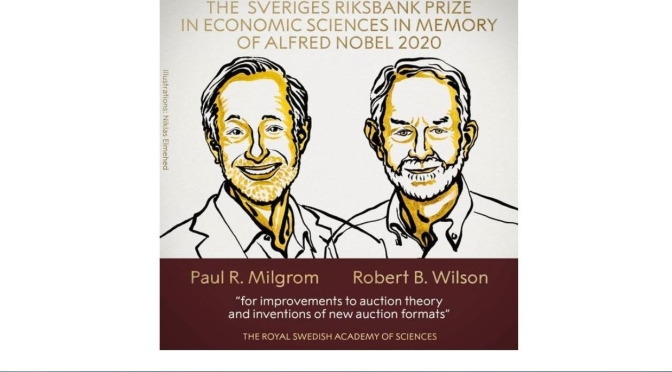
Top Interviews: Paul R. Milgrom & Robert B. Wilson, Nobel Prize In Economics For 2020
“He was the advisor everybody recommended you should have,” says Paul Milgrom of Robert Wilson, his PhD supervisor and now near neighbour in Palo Alto and co-Laureate in Economic Sciences. In this conversation with Adam Smith, recorded 20 minutes after Milgrom had learned of his prize, he describes how it was Wilson who actually delivered the news, in person: “He and his wife just walked over and rang the doorbell.”
Not only are the 2020 Economics Science Laureates long-time collaborators, they are also neighbours in Palo Alto, and so when Robert Wilson heard the news of his prize from Stockholm, he simply crossed the street and knocked on Paul Milgrom’s door to wake him! “It sounds like something from the nineteenth century,” says Wilson in this conversation with Adam Smith, recorded shortly after the news became public. He describes his pride at the fact that Milgrom is the third of his students, after Alvin Roth and Bengt Holmström, to be awarded the prize, a perfect combination of events that he calls his “trifecta”.

Economics: ‘Universal Basic Income Experiment In South Korea’ (WSJ Video)
To stimulate its pandemic-hit economy, a province in South Korea has been experimenting with universal basic income programs by regularly giving out cash, no questions asked. Now, some politicians want to go national with the concept.
Illustration: Crystal Tai/WSJ
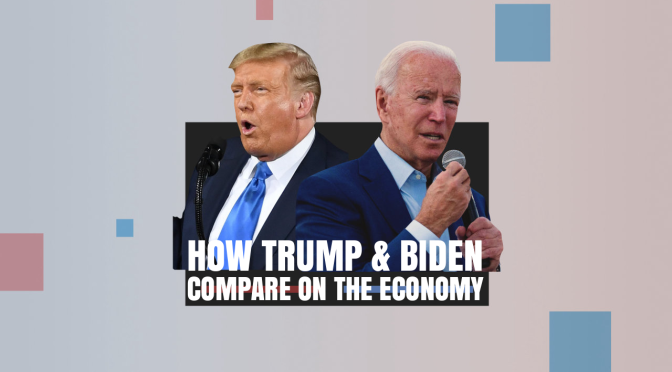
Election 2020: ‘How Trump And Biden Compare on The Economy’ (WSJ Video)
Voters will have a chance to help shape the American economy when they go to the polls in November. WSJ’s Jon Hilsenrath breaks down where President Donald Trump and Democratic presidential nominee Joe Biden stand on key economic issues.
Photo Illustration: Carlos Waters/WSJ
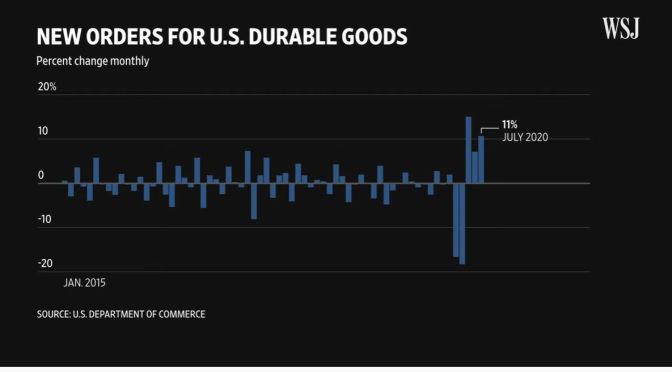
Economy: “Durable Goods Explained” (WSJ Videos)
The survey of new orders for long-lasting goods contains one of the most closely watched U.S. economic indicators. WSJ explains durable goods, and why investors look beyond the headline number for a better read on business activity.
Photo: Josie Norris/The San Antonio Express-News
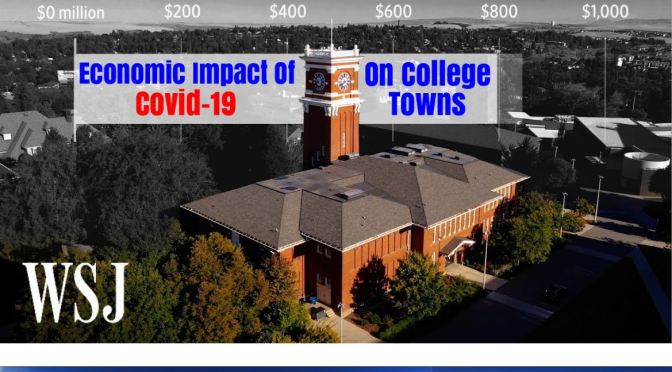
Videos: “College-Town Economies Brace for Covid-19 Blow” (WSJ)
The coronavirus has pushed nearly half of U.S. colleges and universities into some degree of remote learning, a change that’s sending shock waves through small college town economies. WSJ’s Carlos Waters explains.
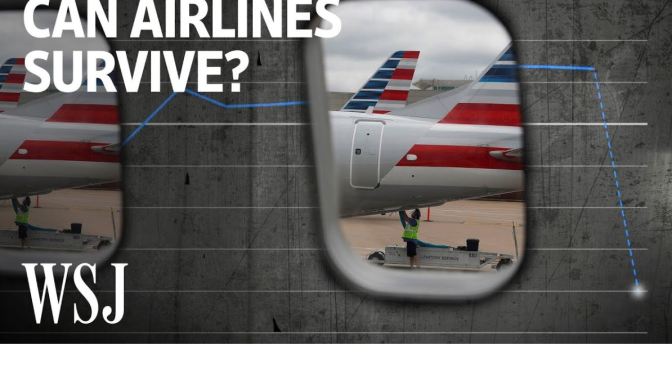
Travel Economics: “How Airlines Can Survive The Pandemic” (WSJ Video)
After an unprecedented drop in air travel due to the coronavirus, passenger airlines are being forced to make long-term, make-or-break decisions at a time of great uncertainty and minimal cash flow. So how are they planning to survive? WSJ finds out.
Composite: George Downs/The Wall Street Journal
 Boomers Daily