Tag Archives: DW Documentaries

Reviews: How Butterflies And Moths Inspire Science

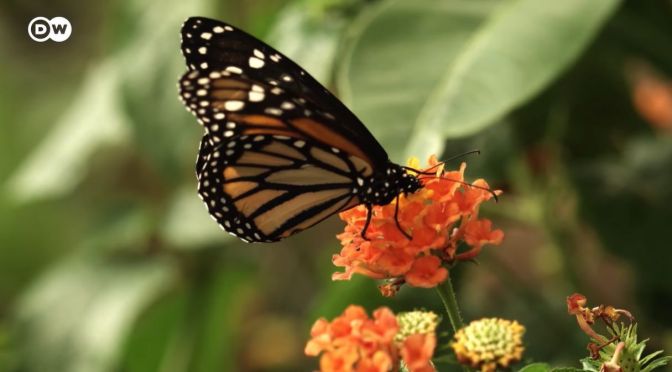
DW Documentary (October 18, 2023) – Butterflies and moths. Graceful and beautiful, they flit about our spring and summer skies. Their delicate choreographies and dazzling colors are among the most amazing in the animal kingdom. But beauty is not their only quality!

Through the lenses of powerful microscopes, scientists discover unexpected secrets about these fragile creatures that can be adapted and applied to make our world better and more sustainable. This film is a journey into the nano-dimensions of butterflies, taking viewers from high-tech labs to dense forests and lavender fields around the world. We take a close look at the iconic morpho butterfly and find out how its iridescent blue wings reveal a way to produce structural color, a discovery which allows researchers to control light.

Physicist Chunlei Guo, whose work involves reproducing butterfly structures, has created a material capable of absorbing all the colors of the spectrum, a discovery that might revolutionize the field of renewable energies. He is also investigating how the amazing hydrophobic properties of butterfly wings could be used to create an unsinkable metal, which could be useful for constructing floating cities if ocean levels continue to rise.

The blue morpho, the industrious silk moth, the transparent glasswing butterfly, the resistant Heliconius, the enigmatic monarch and the delicate white cabbage butterfly – all have inspired discoveries. These have taken place in many different scientific fields, including energy efficiency and medicine — and even in the detection of toxins, thereby helping save lives in the event of chemical or gas attacks. We take a look at the work of researchers, biologists and geneticists.

We also talk to experts, such as physicist and biomimicry expert Serge Berthier, as well as to Jessica Ware, an entomologist at the American Museum of Natural History, about butterflies’ incredible behaviors and capacities. Tiny as they are, butterflies and moths can inspire groundbreaking scientific progress. And they also serve as a warning about what’s at stake if we fail to protect our extraordinary natural environment.


#documentary #dwdocumentary

Documentary: Culture And Diversity In Taiwan

DW Documentary (August 11, 2023) – Taiwan is a place of incredible variety. The tiny island’s natural beauty is a concentration of some of Asia’s most spectacular features. To the east, there are sheer cliffs with mountain peaks, plateaus and hot springs. To the south, you’ll find sandy beaches, coral reefs and lagoons.

Although the Taiwanese live in a high-tech world, they are still firmly anchored by ancient traditions. During the course of his life, Lin Liang-tai has created many elaborately adorned wooden boats. But they’re not built to last, as they’re destined for Taiwan’s legendary Wang Ye Festival. As part of the temple ceremony to honor the goddess of the sea, a 10-meter boat is blessed, loaded with offerings and pulled through the village down to the beach.

There, it’s set alight, burning any evil spirits that might be lurking about the place. Shrimps are all the rage in Taiwan. In large halls across the entire island, shrimps can be fished out of huge tanks and put straight on the barbecue. Zhan Jia-ming runs one of these popular shrimp halls, and tips bucketloads of fresh shrimps into the tanks every hour. Oysters are a mainstay of Taiwanese cuisine, whether boiled, fried or made into oyster sauce. On the west coast, oyster farms sustain entire village communities.

In Fangyuan, we see one oyster farmer still using traditional methods to harvest his oysters. He drives ox-drawn carts onto the tidal flats, just as it has been done for generations. In the fishing village of Dongshi, several tons of oysters are harvested, opened and processed every day. Taiwan’s relations with the mainland have often been strained since the establishment of the People’s Republic of China in 1949. Beijing regards the island as part of its territory. Tensions have been on the rise in recent times.

Tsai Jin-lu is a committed birdwatcher. For years, he’s documented his rare bird sightings in the Aogu Wetlands Forest Park on the western coast of Taiwan. But these days, his binoculars are frequently trained on something much bigger, up in the skies above. That’s because this is where the Taiwan carries out fighter jet exercises almost every day.

#documentary #dwdocumentary #taiwan

Climate Change: A Review Of High-Tech Solutions

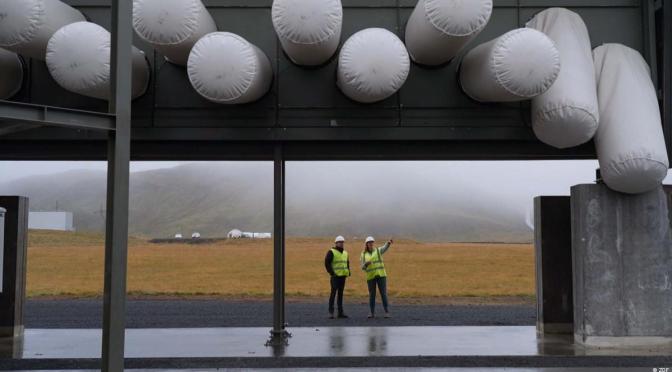
DW Documentary (June 13, 2023) – Can high-tech solutions help protect the climate? What would be the side effects of further human intervention in nature?

Attempts are being made to reduce the CO2 in the atmosphere with technical solutions. For example, new carbon capture technology that can extract CO2 from air and water, even if the amount currently captured is minimal and not enough to prevent the climate crisis and its consequences. Still, there is no shortage of ideas. Adding basalt rock dust to agricultural fields not only binds carbon dioxide but keeps the soil fertile.

Biochar, made from organic waste, has a similar effect. Some ideas are bolder: A protective screen of particles in the upper layers of the atmosphere could filter sunlight, as seen with the eruption of the Pinatubo volcano in the Philippines in 1991. The millions of tons of sulfur dioxide spewed into the stratosphere cooled the earth significantly.

Theoretically, aircraft could be used to deliver the particles. But experts warn that the consequences for humans and the weather would be felt worldwide and could never be fully controlled.

#documentary #dwdocumentary #climatechange

Analysis: How NATO Will Defend The Baltic States

DW Documentary (May 28, 2023) – NATO members are viewing Russia’s war of aggression against Ukraine with grave concern, especially those on the alliance’s eastern flank. They’re joining forces with German troops right on the Russian border.

Germany is the leading or “framework nation” in what is called the NATO Battle Group Lithuania. With its alliance partners, German forces are serving “on the front line” – right on the Russian border. They’re guarding NATO’s northeast flank against any possible incursion and ensuring the Baltic states are supported during times of crisis and, if necessary, conflict.

In the spring of 2023, Germany’s military is in Rukla and Pabrade, among other places, for maneuvers. There it is practicing with NATO partners from Croatia, the Czechia and the Netherlands to handle a Russian attack on the Baltic states. In full agreement with the NATO motto “train as you fight,” practice and training are closely-oriented to a genuine threat.

The leader of the German contingent, Colonel Wolfgang Schmidt, points out the special historic significance and perceived peril in the Baltic. He says, “From historical experience, of course the perception of possible aggression – be it Russian or Belarusian – is far more intense here than in the Federal Republic of Germany.” He adds that not everyone has grasped the defense of “all that we stand for – modernity, freedom of opinion and speech and everything we describe as Western values begins here.” For a year, Schmidt says, the Ukraine has been fighting far more than their Russian attackers – they’re defending “our freedom,” too. This report follows a major exercise called “Griffin Lightning.” A platoon commander with the Dutch Armed Forces emphasizes the importance of maneuvers and cooperation among the multinational forces.

First Lieutenant Bent S. says, “We’re taking part in different exercises. Last week we were with the Norwegians. In a few weeks, the whole Battle Group will come together and we’ll train again with the Norwegians, Germans, Czechs and Croats. Nobody wants war, but if it really comes to it, we’ll be ready.” This documentary provides an exclusive look at NATO maneuvers in Lithuania, which are unfolding closer than ever before to a genuine military threat.

#documentary #dwdocumentary #nato

Sri Lanka Views: The Rise Of Women ‘Tuk-Tuk’ Drivers

DW Documentary (May 25, 2023) – Amidst the traffic chaos of Sri Lanka: the popular auto-rickshaws, or tuk-tuks. They’re traditionally driven by men. But increasingly, you’ll see a woman at the wheel – and this film is about three of them: Anulawathi, Thushari and Jega. Anulawathi, Thushari and Jega all do the same job: they’re auto rickshaw drivers in Sri Lanka, three women in a sector traditionally dominated by men.

Besides being a popular mode of transport, the three-wheeled tuk-tuk also provides these three women with a reliable source of income. All three were left by their husbands and had to find a way to feed themselves and their children. They were forced to challenge societal norms. After all, in Sri Lanka, men are traditioanally seen as the providers. Male tuk-tuk drivers view their female colleagues as rivals. But unsurprisingly, female customers love them. Thushari lives in the capital Colombo. She is a longtime parent and works to support herself and her two daughters.

Anuwalathi works in Kandy. She lived abroad for a few years and saved up enough money to buy her own tuk-tuk. Jega is also a single parent. She lives with her son and niece in the tourist resort of Hikkaduwa. All three women earn a steady income from the tuk-tuk business, which brings them closer to their eventual goal – independence and freedom.

Ecosystems: Biodiversity In The British Isles (2023)

DW Documentary (May 19, 2023) – Human pollution is increasing worldwide. The overexploitation of nature is endangering biodiversity and plastics and chemicals are destroying many of humanity’s nature-based livelihoods.

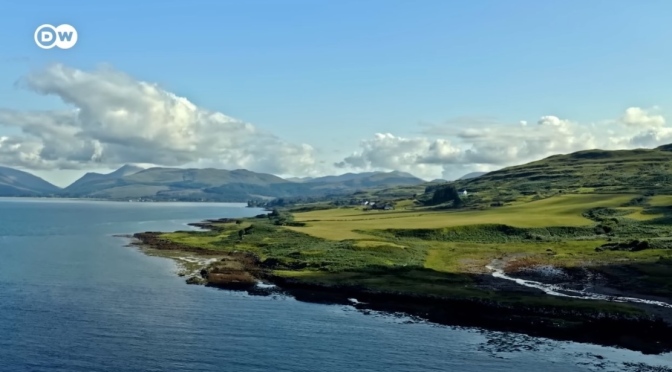
But there is hope. The UK is not exactly known for its stringent environmental policy and following Brexit, many fear that standards are likely to deteriorate. But the UK is also home to coastal regions and islands characterized by wild beauty — and breathtaking diversity. The documentary takes us through some of the most remote landscapes of the country, from the Shetland Islands to Cornwall, the Hebrides and many other areas.

In each location, the film shows the amazing biodiversity of fauna and flora present. The Pembrokeshire Coast National Park in Wales is known for large breeding colonies of many seabird species. Few people live on the Hebrides, located off Scotland. These wild islands are still a natural paradise of rocks, sand and moor. As such, they are biotopes for exotic species such as puffins and guillemots.

In this cinematic journey to the most beautiful natural sites in Britain, viewers meet the people who are trying to protect species threatened by extinction by preserving their habitats. It is a story of hope, one that indicates that a change in people’s thinking is taking place.

Middle East Ecosystems: Can The Dead Sea Be Saved?

DW Documentary (May 1, 2023) – The Dead Sea, shared by Israelis, Jordanians and Palestinians, is drying up. The salt lake, famous for its exceptional geographical location and its healing properties, is the deepest of its kind on earth.

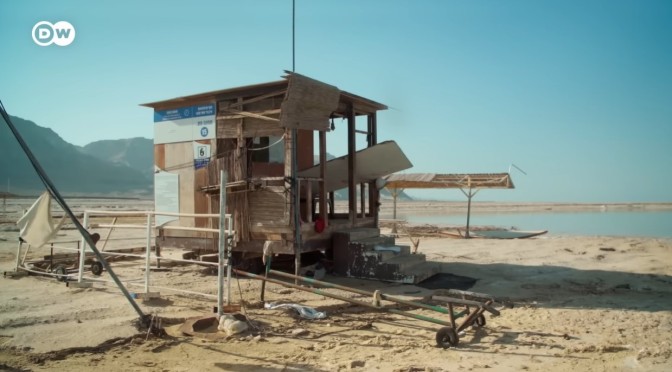
The drying up of the Dead Sea is causing widespread damage, from huge sinkholes to abandoned beaches and collapsed roads. This is not an act of nature. It is the result of overconsumption and poor water management. If something is not done soon, very little of the Dead Sea will remain. In a region marked by ongoing conflict, natural resources are being depleted. To save the Dead Sea, surrounding countries must work together.

Three individuals — a Jordanian, an Israeli and a Palestinian — feel they can’t just sit idly by. They decide to draw the world’s attention to the problem with a heroic act. In an unprecedented and extremely dangerous undertaking, the three decide to swim across the Dead Sea, from Jordan to Israel, to highlight the plight of the dying waters.

Documentaries: What Causes ‘Monster Waves’?

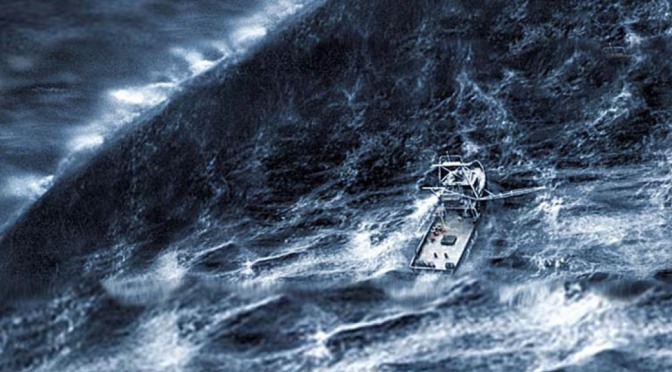
DW Documentary (April 30, 2023) – Statistically, a large ship is lost in the world’s oceans almost once every seven days. One reason for this: monster waves that appear to come from nowhere. Unlike tsunamis, they are completely unpredictable. That means there’s no way to issue any kind of warning.

Scientists still know astonishingly little about these freak waves. For centuries, many people dismissed them as the stuff of legend. The first scientific proof of their existence didn’t come until 1995. A laser on the Draupner oil rig in the North Sea measured a wave almost 26 meters high. Wave models in use at the time deemed this to be an impossibility.

But the data, captured by chance, changed the course of research forever. Scientists have focused on three theories in their bid to explain the emergence of freak waves. The first is the current model: currents flowing in opposite directions reduce the length of the waves, pushing them together to create a monster surge. But freak waves are also a phenomenon in regions where currents aren’t particularly strong.

That’s why researchers came up with a second theory: superposition. In this linear process, faster, longer waves catch up with short, slower waves. They overlap and form monster waves. But in some places, freak waves occur with a frequency that can’t be explained by this linear theory, either.

For several years now, scientists have been considering a third possibility: when non-linear wave trains are unstable, they can develop into monster waves through a highly complex energy “theft”. Research is divided over whether it’s the linear or non-linear effects that form freak waves out at sea – a question that’s crucial for shipping!

Travel & History: The Sindh Region Of Pakistan (DW)

DW Documentary (April 28, 2023) – Pakistan’s Sindh region is one of the cradles of human civilization. It’s seen as the homeland of the Indus Valley Civilization, an advanced Bronze Age civilization. But the events of 1947 brought drastic change to the cultural landscape of the Sindh.

The 1947 partition of the Indian subcontinent into India and Pakistan was devastating for those living in the Sindh region. Most were Hindus and fled to India, as the area was completely assigned to Pakistan. Many Muslims from India then resettled in Sindh and changed the face of this region, whose cultural heritage had been formed over centuries.

Suddenly, the Hindus who remained found themselves in the minority. Many members of the Sindhi community are now scattered across the globe. They’re making every effort to preserve the old stories and traditions and are proud of their legacy as descendants of one of the oldest human civilizations.

Pangolins: The World’s Most Smuggled Animal

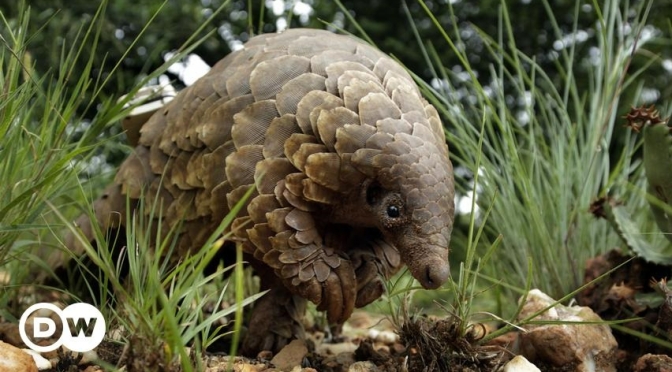
DW Documentary (March 25, 2023) – Pangolins, native to Asia and Africa, are threatened with extinction. Their meat is considered a delicacy in Africa and their scales are sold as a health remedy in Asia. The protected animals are poached and smuggled on a large scale.

Pangolins are the most smuggled animals in the world – and demand is growing. Asian pangolins recently made headlines when they were suspected of being carriers of the COVID-19 coronavirus. On the banks of the Congo River, the pangolin sells for just a few euros.

But in cities like Kinshasa, its meat sells for a hundred times that price and – although illegal – is eaten in the best restaurants. Even more profitable is the sale of pangolin scales, which are highly prized in Asia for their supposed medicinal properties. The native Asian pangolins are already nearly extinct.

The film shows how just a handful of these animals can be rescued during police raids, then reintroduced into the wild by dedicated conservationists. From hunters in the bush of the Democratic Republic of Congo to bushmeat markets to the backrooms of Vietnam, reporters follow pangolin smugglers as they ply their trade.