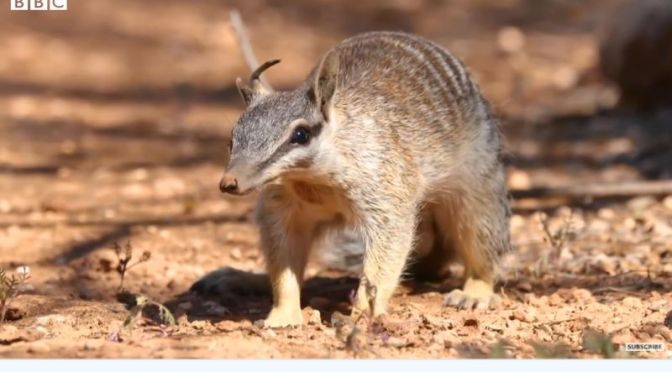
The numbat – a small and little-known Australian marsupial – is one of the world’s most endangered animals. Conservationists are working hard to save them by building vast, predator-free sanctuaries.
The numbat is an insectivorous marsupial. It is diurnal and its diet consists almost exclusively of termites. It was once widespread across southern Australia, but is now restricted to several small colonies in Western Australia. It is therefore considered an endangered species and protected by conservation programs.
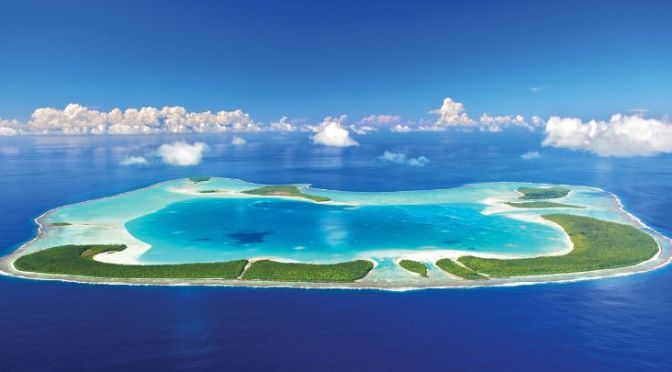
Tetiꞌaroa is an atoll in the Windward group of the Society Islands of French Polynesia, an overseas territorial collectivity of France in the Pacific Ocean. Once the vacation spot for Tahitian royalty, the islets are under a 99-year lease contracted by Marlon Brando.
Marlon Brando
“My mind is always soothed when I imagine myself sitting on my South Sea island at night. If I have my way, Tetiaroa will remain forever a place that reminds Tahitians of what they are and what they were centuries ago.”
Marlon Brando first came to Tetiaroa while filming Mutiny on the Bounty and was immediately enchanted by the island’s rare beauty and the sense it gave him of being closer to paradise. Enthralled by the Polynesian way of life – and the leading lady Tarita, the love of his life – he resolved to find a way to own this piece of paradise and succeeded in his goal in 1967. It was in this natural wonderland that he settled down, and finally found a home.
Brando was passionate about preserving Tetiaroa’s natural beauty, biodiversity and cultural richness and was determined to find a way in which it could be a center for research and education, and a model of sustainability. He was convinced that this small atoll could bring good to the entire world.
In 1999 he asked Richard Bailey, a long-time resident of Tahiti who shared Brando’s passion for the environment and who had created some of the region’s finest resorts, to help him conceive a plan that would help Brando achieve his dream. Together, Brando and Bailey pursued a vision of creating the world’s first and foremost post-carbon resort—an island where innovative new technologies would enable a self-sustaining luxury environment for hotel guests, residents and scientific research. The Brando is the legacy of that shared vision.
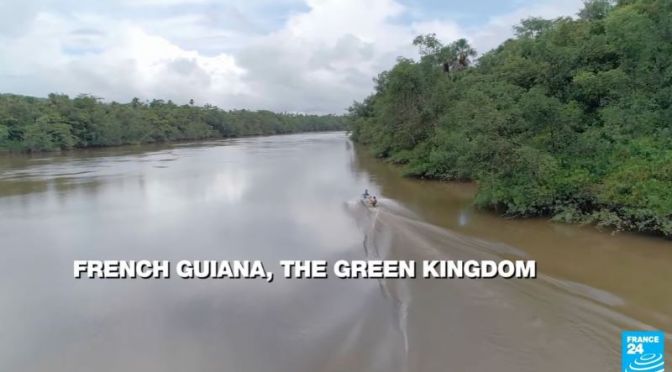
In France’s overseas department of French Guiana, the Amazon rainforest covers 90 percent of land. It’s teeming with wildlife, but this unique biodiversity is in danger. Researchers and locals are doing their best to protect it, like in Favard, where the village healer passes on his knowledge to the younger generations and educates tourists on the need to protect the forest. Meanwhile, entomologists list different species of insects, a titanic job as this knowledge is still in its infancy. Finally, researchers are trying to understand what’s driving the decline in sea turtles.
French Guiana is an overseas department of France on the northeast coast of South America, composed mainly of tropical rainforest. The ruins of 17th-century Fort Cépérou overlook the capital, Cayenne, with its colorful Creole houses and street markets. Shops and cafes surround the palm-filled main square, Place des Palmistes. The Rémire-Montjoly suburb is lined with Atlantic coast beaches.
The Ocean Cleanup, a non-profit organization, is developing advanced technologies to rid the world’s oceans of plastic.
Every year, millions of tons of plastic enter the oceans primarily from rivers. The plastic afloat across the oceans – legacy plastic – isn’t going away by itself. Therefore, solving ocean plastic pollution requires a combination of stemming the inflow and cleaning up what has already accumulated.
FOUNDED 2013
Dutch inventor Boyan Slat founded The Ocean Cleanup at the age of 18 in his hometown of Delft, the Netherlands.
NON-PROFIT FOUNDATION
We are a registered charity as a ‘Stichting’ in the Netherlands, and a 501(c)(3) in the US.
HQ ROTTERDAM
The Ocean Cleanup’s team consists of more than 90 engineers, researchers, scientists and computational modelers working daily to rid the world’s oceans of plastic.
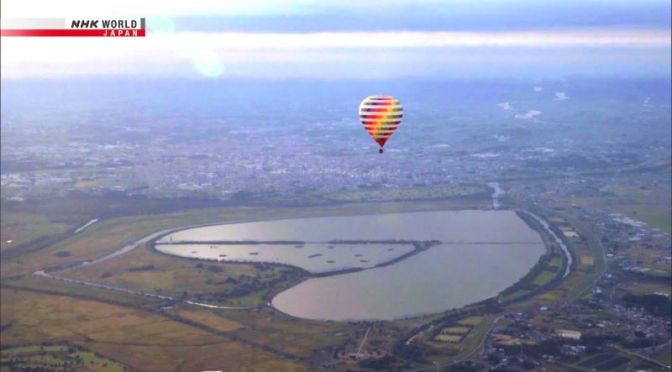
Dig deeper into the story of Ashio, a former mining town in Tochigi Prefecture that’s returning to nature with the passage of time and contributions of hard-working residents.
The Ashio Copper Mine (足尾銅山, Ashio Dōzan) was a copper mine located in the town of Ashio, Tochigi, (now part of the city of Nikkō, Tochigi), in the northern Kantō region of Japan. It was significant as the site of Japan’s first major pollution disaster in the 1880s and the scene of the 1907 miners riots. The pollution disaster led to the birth of the Japanese environmental movement and the 1897 Third Mine Pollution Prevention Order. The pollution incident also triggered changes in the mine’s operations that played a role in the 1907 riots, which became part of a string of mining disputes in 1907. During World War Two the mine was worked by POW forced labour.
The Great Barrier Reef is the world’s largest coral reef system composed of over 2,900 individual reefs and 900 islands stretching for over 2,300 kilometres over an area of approximately 344,400 square kilometres. The reef is located in the Coral Sea, off the coast of Queensland, Australia.
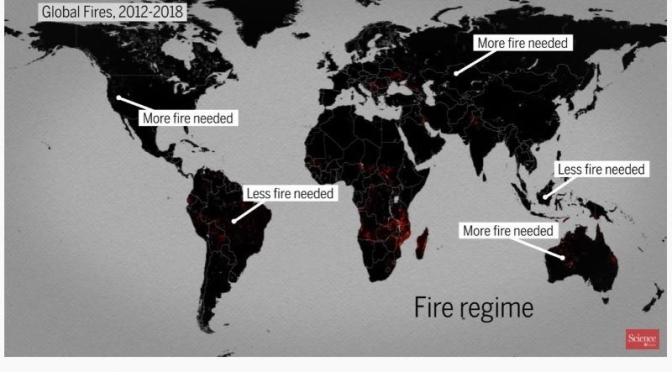
Raging fires throughout the U.S. and Australia over the past year have put vulnerable species at risk. But not all blazes are devastating—in fact, fire can promote biodiversity. In grasslands, fires prevent trees and roots from taking hold. This allows grazing animals the space and vegetation they need to thrive. As the pattern of wildfires changes, a new review in Science outlines effective ways to let natural fires burn, while preventing out-of-control blazes. Watch to learn how a few of these techniques have been applied around the world.
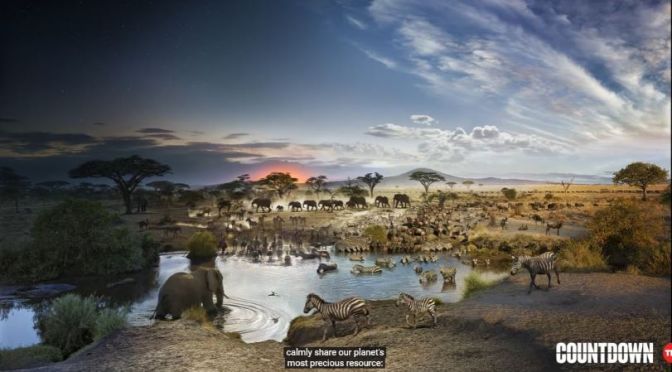
“Nature reveals itself to us in unique ways, if we stop and look at the world through a window of time,” says photographer Stephen Wilkes. Using a special photographic technique that reveals how a scene changes from day to night in a single image,
Wilkes exposes the Earth’s beautiful complexity and the impacts of climate change — from the disruption of flamingo migrations in Africa to the threat of melting ice — with unprecedented force. This performance was part of the Countdown Global Launch on 10.10.2020.
Countdown is TED’s global initiative to accelerate solutions to the climate crisis. The goal: to build a better future by cutting greenhouse gas emissions in half by 2030, in the race to a zero-carbon world.
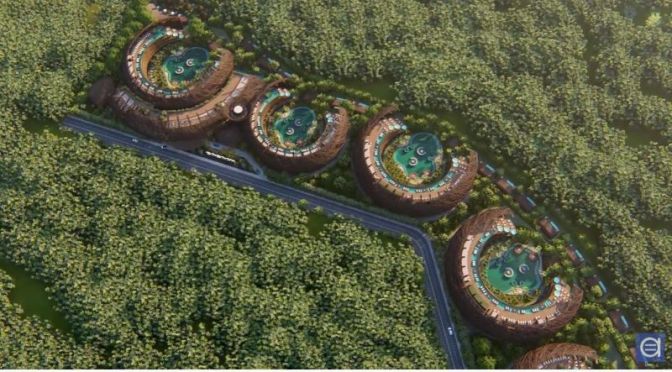
The “Cocoon Hotel & resort”, Tulum, Mexico– a new concept of eco-tourism, and a great opportunity of connection with Nature, Community, Ourselves, inspired by the sea and the exotic forest. The project consists of 46.181 m2 offering 3 residential and 2 hotel buildings “COCOON” with 204 apartments and 167 rooms as well as 16 private villas.Every feature serves to give a unique experience and create a magical place for the guest, at the same time making him identify what is Mexico.
The complex offers luxury community spaces integrated into nature such as jungle gardens, magical outdoor living spaces-villas, multipurpose pavilion, indoor community spaces, leisure areas, restaurant, and a panoramic Nest with unrestricted and breath-taking views. All to achieve a wide vocabulary of visual elements to mutate into designing language, in materials and shapes, for a bio-mimicry architecture.
The idea was to create “Cenotes”- natural freshwater ponds, to which the Mayans gave a sacred use, thus allowing to experience the real Mayan´s rituals. The project makes an emphasis on sustainability concept respecting ecosystem and biodiversity, contributing to the usage of natural materials that minimizes the impact of building and generation of waste. The water collection concept is also respected and represents a recovery of rainwater for sewage treatment. The solar panels are implemented to achieve sustainable electricity.
Finally, the “dry” construction system is used, meaning no wet binders, shorter execution time, and increased safety and sustainability. Source by dna Barcelona.
With a lack of restrictions on water use, owners of some large-scale farms in the United States are drying up underground water tables. All they have to do is buy the land to have access to as much free water as they want. In Arizona, farm owners and ranchers are digging ever deeper to irrigate their land, leaving other residents with low water reserves. Meanwhile, parts of the land have caved in, collapsing as the water is pumped up from beneath. Our France 2 colleagues report, with FRANCE 24’s James Vasina.
News, Views and Reviews For The Intellectually Curious





 Boomers Daily