Tag Archives: Climate Change

Science: Nuclear War Threat, Climate Change, Coronavirus Origins

As the war in Ukraine intensifies, Vladimir Putin raised Russia’s nuclear readiness level. The team discusses what this means about the likelihood of nuclear war. They also explore the unfolding humanitarian crisis in the country.

The latest Intergovernmental Panel on Climate Change report is out, and it focuses on impacts, adaptation and vulnerability. We hear from Swenja Surminski, head of adaptation research at the Grantham Research Institute on Climate Change and the Environment.

New studies into the start of the coronavirus pandemic are confirming what we’ve long suspected – that the virus originated at the Huanan food market in Wuhan. The team discusses the latest findings.

Moles – the animals that make holes in your lawn – are non-binary. Just one of a number of amazing facts to come out of the new book ‘BITCH: A Revolutionary Guide to Sex, Evolution & the Female Animal’. Hear from the author Lucy Cooke, who is challenging the sexist basis of much of the thinking about female animals. 

Stonehenge may have been built as a giant calendar. Though the claim itself isn’t new, the team explores a new theory from the archaeologist Tim Darvill which explains how it would’ve worked.

Science: Extreme Old Age Gene Quest, Gravitational ‘Glint’ Waves, Early Springs

The quest for a longer life continues – raising the question of whether we can escape death. The team discusses a rare gene variant that may explain why centenarians live so long – and how we might be able to use it to create age-defying drugs.

The team explores a theory that suggests gravitational waves may be the thing that finally helps us detect dark matter – we just need to look for the ‘gravitational glint’.

Spring is rolling around earlier and earlier. The team examines a new study which shows that since the 1980s, the warming climate has brought the season forward by a month – which could have major ecological implications. They also discuss a study which looks at the impact of marine heatwaves on things like coral and fish populations.

New Books: ‘Literature For A Changing Planet’ By Martin Puchner (2022)

Ecology: Importance Of Peatlands In CO2 Capture

As more of the world’s forests are destroyed, it makes you wonder: what’s going to absorb CO2 in their place?! In an ironic twist of fate, one of Earth’s “deadest” habitats might be our best hope for an ongoing supply of breathable air.

Called peatlands, these wetland environments are named for their tendency to accumulate decayed plant matter. Unlike most other ecosystems, like forests, where branches and leaves typically decompose in a matter of months… in peatlands, that plant material can stay intact for millenia. You see, peatlands mostly exist in high altitude places where temps are low and there’s not much water flow. This results in their having extremely low oxygen and high acidity levels.

These harsh conditions aren’t very hospitable to microbes and fungi, which are instrumental to the whole decomposition process. So without them around, the plant material sort of… just sits. Over time, that it globs together to form peat, a thick, spongy material that can soak up 20x its weight in water. Peat also soaks up loads of carbon. Through a process known as the Calvin cycle, living plants absorb CO2 from the air and convert it into organic molecules that they can then use as energy to grow.

Through decomposition, the carbon that’s “fixed” in a plant’s structure gets released but since peat doesn’t decompose, that carbon can stay put! It’s estimated that peatlands contain 550 gigatonnes of organic carbon, which is twice as much organic carbon as all the world’s forests combined. That’s absolutely wild, considering that forests cover about 30% of the world’s land area… and peatlands only account for 3%! Like most of the world’s habitats, peatlands aren’t immune to the threats of human development and exploitation.

Peat is also are a very in-demand resource. Its incredible water holding capacity makes it a favorite amongst horticulturists; If you’ve ever picked up a bag of soil amendment, chances are it’s full of the stuff. Since peat is also a fossil fuel with a long burn, it’s used in some parts of the world. Peatlands are also often drained to accommodate other land use activities, like agriculture.

Analysis: Best Ways To Produce Green Energy

Fossil fuels still supply about 80% of the world’s power. How can energy be produced and used more sustainably to meet climate targets? We answer your questions. film supported by @Infosys

Timeline: 00:00 – Why energy needs to become more sustainable 00:33 – How much energy should come from renewables? 01:19 – Why isn’t nuclear power used more widely? 02:19 – How can solar power be made more efficient? 03:34 – Will biofuels become widely used? 04:30 – Do electric vehicles make a difference? 05:10 – How heating and air conditioning can be more sustainable

Habitats: The Destruction Of Paraguay’s Rainforests

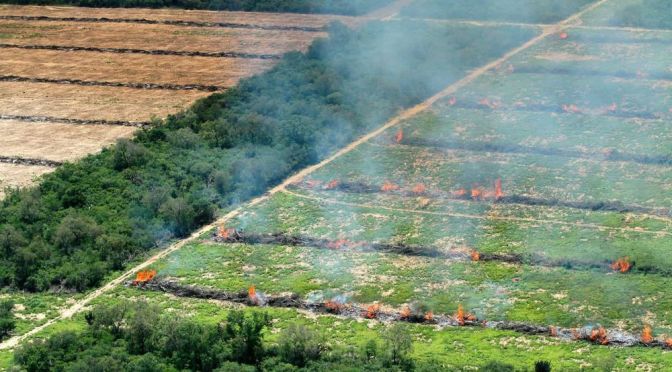
Paraguay might be one of the world’s first countries to lose its rainforest because of a confluence of factors including inequality, corruption, drug trafficking, and climate change. The South American nation offers a stark warning for what the planet stands to lose if it doesn’t act to protect its natural resources.

Paraguay is a landlocked country between Argentina, Brazil and Bolivia, home to large swaths of swampland, subtropical forest and chaco, wildernesses comprising savanna and scrubland. The capital, Asunción, on the banks of the Paraguay River, is home to the grand Government Palace and the Museo del Barro, displaying pre-Columbian ceramics and ñandutí lacework, the latter available in many shops. 

Climate Change: Flooding Rivers Ravage Bangladesh

Bangladesh is struggling just to stay afloat. Literally: By 2050, it’s estimated that climate issues will displace one in seven of the country’s inhabitants.

This film takes the viewer on a journey through Bangladesh, exploring why overflowing rivers flood three-quarters of the country every year. We see how flooding threatens the country’s food security, how soil erosion thrusts thousands into homelessness, and how climate refugees are forced to flee their homes in a desperate act of survival.

Along the way, we meet communities adapting to rising sea climate change by growing food on water. This is a strategy which could prove very useful in the near future, as rising sea levels threaten to inundate 11% of the country’s land in the next 30 years.

This documentary brings us to the front lines of the battle against catastrophic climate change in Bangladesh. It also tells the stories of activists who are bringing the dangers posed by man-made threats to light.

Climate Views: El Salvador Battles Drought & Storms

Central America’s smallest country, El Salvador, is being increasingly battered by the effects of climate change – by drought, floods, and violent storms. The small organization CESTA has long been fighting for more environmental protection in its own country.