
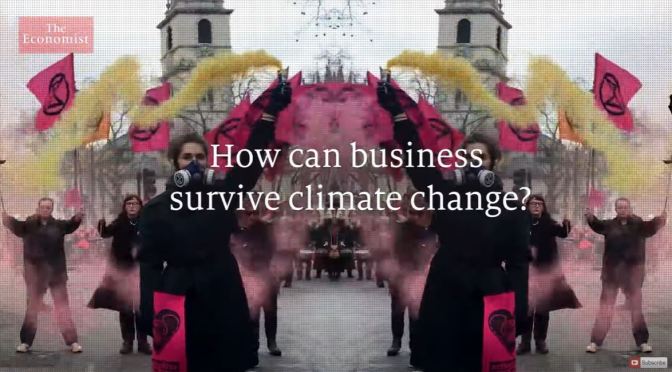
Climate change is about to upend the corporate world through weather-related disasters, regulation and lawsuits. Can businesses react and adapt in time? Read more here: https://econ.st/3slTXIE
Tag Archives: Climate Change
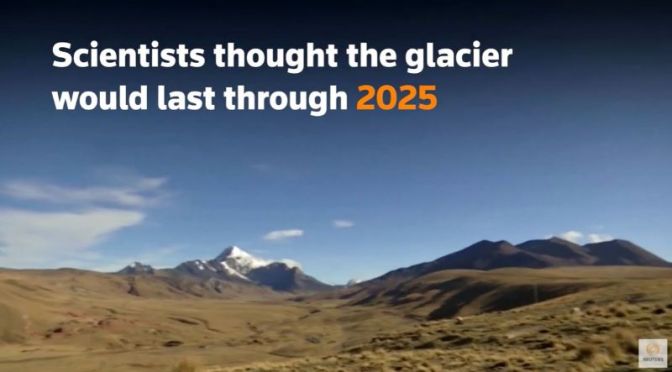
Climate Change: Bolivia’s Tuni Glacier Is Shrinking
Bolivia’s Tuni glacier is disappearing faster than initially anticipated, according to scientists in the Andean nation, a predicament that will likely make worse water shortages already plaguing the capital La Paz
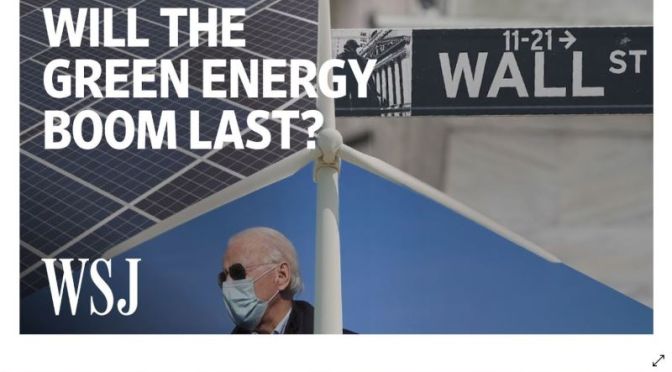
Analysis: ‘Will The Green Energy Boom Last?’ (Video)
Investors have been pouring more money than ever into renewable energies such as solar and wind. WSJ looks at how the pandemic, lower energy costs and global politics have driven the rally–and whether it can last.

Climate Change: What Are Covid-19’s Impacts? (Video)
When Covid-19 sparked lockdowns around the world, emissions of one of the greenhouse gases responsible for climate change, atmospheric carbon dioxide, plummeted. But is this record drop a short-term effect of the 2020 pandemic or a ‘new normal’? BBC Weather’s Ben Rich explores the impact of coronavirus on the global climate.
Motion graphics by Jacqueline Galvin
Produced by Soraya Auer
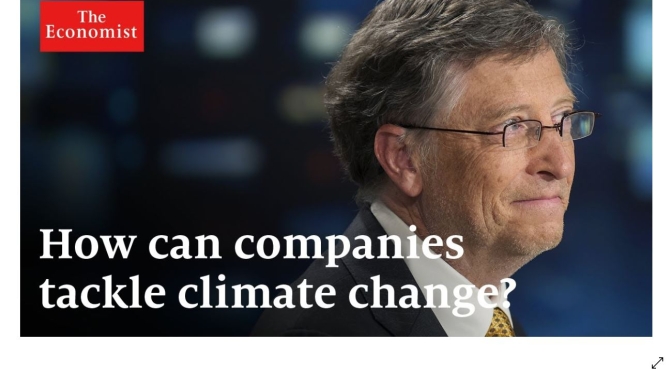
Climate Change: Bill Gates On How Best To Fund The ‘Green Revolution’ (Video)
Bill Gates outlines his vision for a global green revolution. He tells Zanny Minton Beddoes, our editor-in-chief, how renewable energy is merely the first step in combatting climate change.
Video timeline: 00:00 – How to fund a green economy 00:38 – Lessons from the pandemic 01:52 – Behaviour change v innovation in technology 03:36 – Most promising renewable technologies 04:31 – Private sector investment in green technology 06:30 – How essential are carbon prices? 07:50 – Net-zero emissions targets for businesses 09:39 – America’s role in climate-change action 12:40 – What are the odds for success of green innovation?
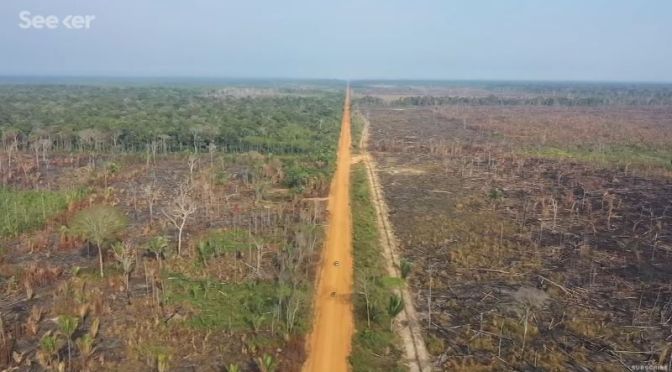
Deforestation: ‘Amazon Rainforest’ – Becoming A Savannah In 15 Yrs? (Video)
New research suggests that if the current rate of deforestation continues, the Amazon rainforest could transform into a savannah within 15 years. Do we have time to stop it?
The Amazon basin spans over 6 million square kilometers, and is home to one-fifth of the world’s land species. In addition, it supports the 30 million people who live and depend on the land as a source of food, medicine, and shelter. That’s not even including the key role it plays in regulating the regional AND global climate.
Trees absorb water through their roots and transport it to their leaves, where it’s released as vapor through small pores in a process called transpiration. As the water vapor rises and condenses, it forms rain clouds over the forest canopy. Basically, the rainforest is making its own weather. For example, one large tree can release 1,000 liters of water into the atmosphere in a single day.
The rainforest recycles this water up to six times before it moves out of the region, but as more trees are cut down, those that remain may not be able to recycle enough water to survive. Less trees means more sunlight will hit the forest floor, exposing the forest to higher temperatures. Since deforestation began accelerating in the 1970’s, 800,000 square kilometers of the Amazon have been lost. And over that same period, the average temperature of the basin has risen by 1 degree Celsius.

2021: Five Major Stories Shaping The World (Video)
The World in 2021 will start to look beyond covid-19: to the launch of an asteroid-smashing space probe, the next step in the fight against climate change and China’s supremacy at the box office. Here are five stories to watch out for.
Video timeline: 00:00 – Top five stories for 2021 00:39 – Democracy under threat 04:17 – The electric revolution revs up 06:55 – A chance to turn a corner on climate change 10:39 – China v Hollywood: battle of the box offices 14:40 – Defending the planet
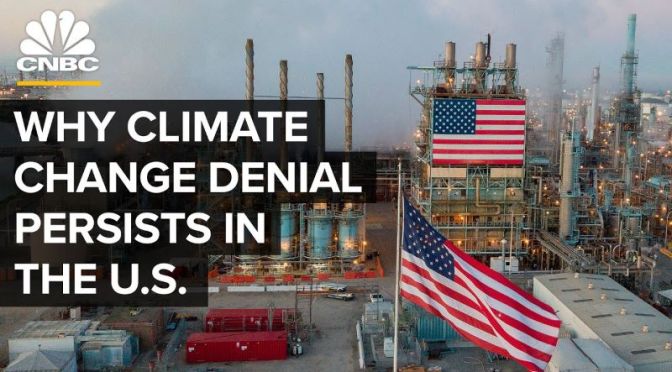
Environment: A Look At ‘Climate Change Denial’ In The U.S. (CNBC Video)
Despite overwhelming scientific evidence, some American politicians continue to deny that climate change exists, while others question the severity of its impact. But public opinion is shifting, and today even oil and gas companies publicly admit that climate change demands action. So why does climate denialism continue to influence U.S. politics? Here’s a look into who is funding the movement, and why denial is mainly a U.S. problem.
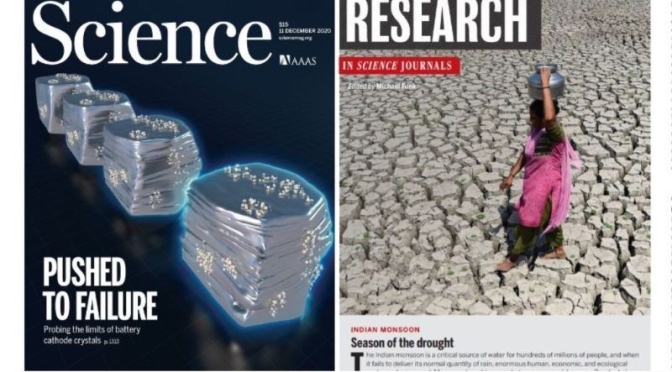
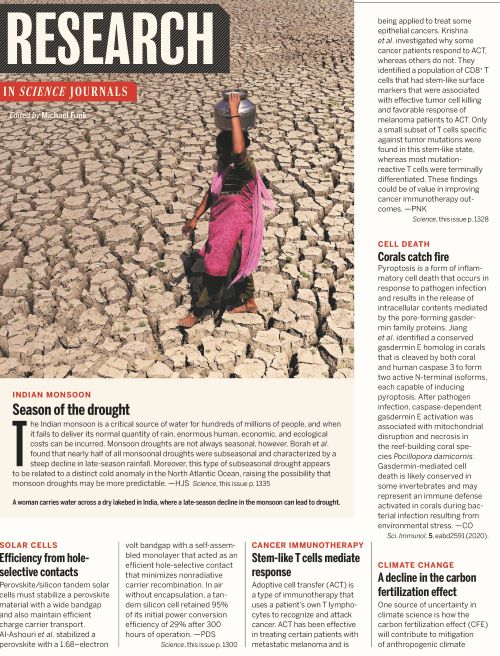
TOP JOURNALS: RESEARCH HIGHLIGHTS FROM SCIENCE MAGAZINE (DEC 11, 2020)

Science Podcast: Shallow Pool Origins For Life On Earth, ‘Covidization’

How water chemistry is shifting researchers’ thoughts on where life might have arisen, and a new model to tackle climate change equitably and economically.
In this episode:
00:46 A shallow start to life on Earth?
It’s long been thought that life on Earth first appeared in the oceans. However, the chemical complexities involved in creating biopolymers in water has led some scientists to speculate that shallow pools on land were actually the most likely location for early life.
News Feature: How the first life on Earth survived its biggest threat — water
07:44 Coronapod
The COVID-19 pandemic has massively shifted the scientific landscape, changing research and funding priorities across the world. While this shift was necessary for the development of things like vaccines, there are concerns that the ‘covidization’ of research could have long-term impacts on other areas of research.
News: Scientists fear that ‘covidization’ is distorting research
20:45 Research Highlights
The Hayabusa2 mission successfully delivers a tiny cargo of asteroid material back to Earth, and a team in China claims to have made the first definitive demonstration of computational ‘quantum advantage’.
Nature News: Physicists in China challenge Google’s ‘quantum advantage’
22:38 Calculating carbon
Limiting carbon emissions is essential to tackling climate change. However, working out how to do this in a way that is fair to nations worldwide is notoriously difficult. Now, researchers have developed a model that gives some surprising insights in how to equitably limit carbon.
Research Article: Bauer et al.
News and Views: Trade-offs for equitable climate policy assessed
29:08 Briefing Chat
We discuss some highlights from the Nature Briefing. This time, bioluminescent Australian animals, and the collapse of the Arecibo telescope.
 Boomers Daily