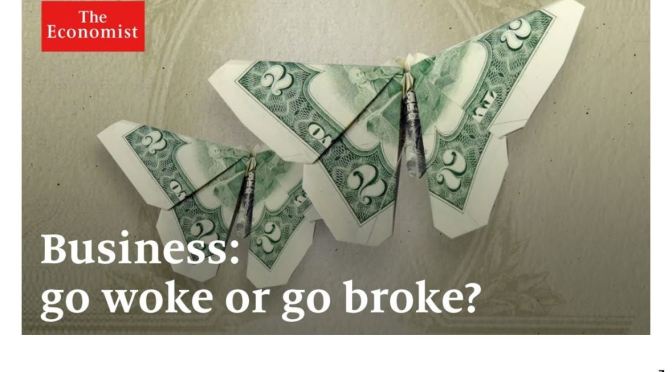
Today consumers want to buy more sustainable products, employees want to work for firms that share their values, and in the investment world, ESG funds are all the rage. How are companies responding to these shifting demands and can businesses really do well by doing good?
00:00 – Can companies do well by doing good? 00:50 – Environment and climate change 06:50 – Employee wellbeing 09:51 – Workforce diversity 15:50 – Ethical supply chains 19:26 – Environmental Social Governance
Prime Minister Justin Trudeau remains in power after Monday’s election, but he emerges without the majority he wanted, and with his soft power damaged. He now faces a fourth wave of the pandemic and an emboldened far-right from a weaker position.
Child labour fell markedly in the 16 years after the turn of the millennium. Now it’s on the rise again. Efforts to prevent children from working can often exacerbate the problem. And we consider one of the more unusual ideas for combating climate change: potty-training cows.
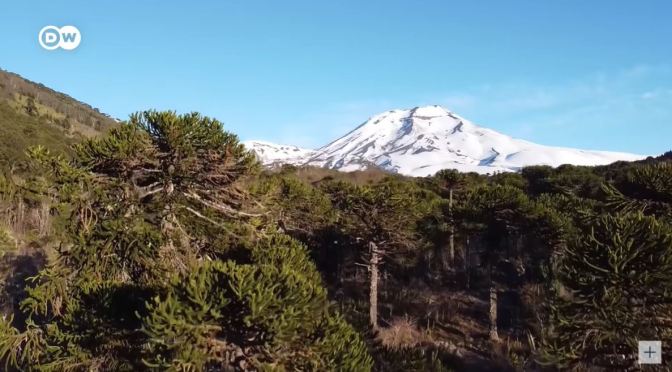
The monkey puzzle tree is one of the oldest tree species in the world, dating back to the dinosaur age. Climate change and deforestation endanger them, but in areas inhabited by indigenous peoples in Chile, their numbers are increasing.
Araucaria araucana is an evergreen tree growing to 1–1.5 m in diameter and 30–40 m in height. It is native to central and southern Chile and western Argentina. Araucaria araucana is the hardiest species in the conifer genus Araucaria.
How insects help release carbon stored in forests, and the upcoming biodiversity summit COP 15.
In this episode:
00:44 Fungi, insects, dead trees and the carbon cycle
Across the world forests play a huge role in the carbon cycle, removing huge amounts of carbon dioxide from the atmosphere. But when those trees die, some of that carbon goes back into the air. A new project studies how fast dead wood breaks down in different conditions, and the important role played by insects.
After several delays, the fifteenth Conference of the Parties (COP 15) to the United Nations Convention on Biological Diversity, is now slated to take place next year. Even communicating the issues surrounding biodiversity loss has been a challenge, and reaching the targets due to be set at the upcoming meeting will be an even bigger one.
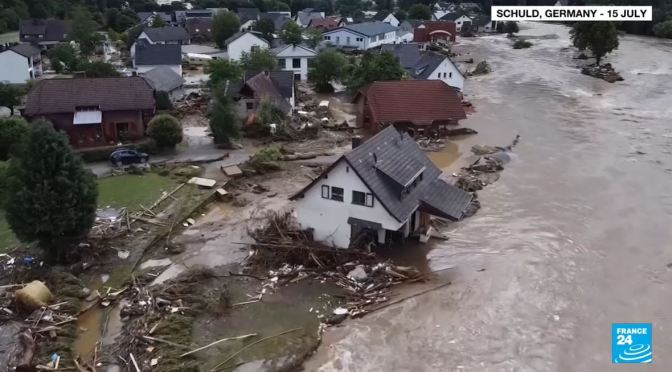
Climate change has made extreme rainfall events of the kind that sent lethal torrents of waterhurtling through parts of Germany and Belgium last month at least 20% more likely to happen in the region, according to an international study published Tuesday (August 24).
Bill Gates’s investment fund will pledge $1.5 billion for climate projects if Congress enacts an infrastructure bill. The Microsoft co-founder and Energy Secretary Jennifer Granholm told the WSJ how public-private partnerships can spur innovation. Photo: Bill Gates via WSJ
Humanity faces major challenges. Could roots hold the answers? It’s possible: Research shows that roots have the potential to provide food for the world’s population, stop climate change and help extract resources in an environmentally friendly way. Plants must withstand periods of drought and heat, as well as flooding, and they use their roots to do this. Roots also help them actively search for nutrients in the soil, while warding off dangers such as pathogens and toxins.
Now, scientists at the research institute Forschungszentrum Jülich are investigating root growth using high-tech methods. The goal is to breed stress-resistant seeds for plants with robust roots. They are not alone: In Sweden, Professor Linda Maria Mårtensson is conducting research on a perennial wheat variety that will ensure higher yields while protecting the soil. Along the world’s coasts, too, roots are a lifesaver.
Coastal ecologist Professor Tjeerd Bouma has discovered that if special grasses are planted in front of dikes, they create a salt marsh that acts as a natural breakwater. Meanwhile, geochemist Dr. Oliver Wiche of the Technical University of Freiberg is researching something known as “phytomining.” He wants to know which plants are best suited for mining metals from the soil. Could this root research give rise to a new, environmentally friendly branch of industry?







 Boomers Daily