

From Wikipedia:
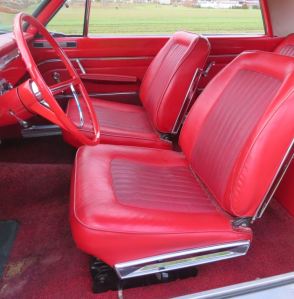 The Plymouth Valiant (first appearing in 1959 as simply the Valiant) is an automobile which was manufactured by the Plymouth division of the Chrysler Corporation in the United States from the model years of 1960 through 1976. It was created to give the company an entry in the compact car market emerging in the late 1950s. The Valiant was also built and marketed, without the Plymouth name, worldwide in countries including Argentina, Australia, Brazil, Canada, Finland, Mexico, New Zealand, South Africa, Sweden and Switzerland, as well as other countries in South America and Western Europe. It became well known for its excellent durability and reliability, and was one of Chrysler’s best-selling automobiles during the 1960s and 1970s, essentially keeping the company afloat during its hard economic times.
 The Valiant was totally reskinned for 1963 with a 0.5 in (13 mm) shorter wheelbase; it had a wide, flat hood and a flat square rear deck. The upper belt feature line ran from the rear body, in a gentle sweep, to the front fender tip. Here it was ‘veed’ back and down to the trailing edge of the front fender. The roofline was flatter and sharpened in profile. The grille was a variation of the inverted trapezoid shape that characterized contemporary Chryslers, with a fine mesh insert. Advances in body structure, many accessories and a new spring-staged choke were promotional highlights. The Valiant was offered as a 2-door hardtop and convertible, a 2- or 4-door sedan, and a 4-door station wagon. The hardtop and the convertible, with manual- or optional power-operated top, were offered only in the high V200 and premium Signet trim levels.
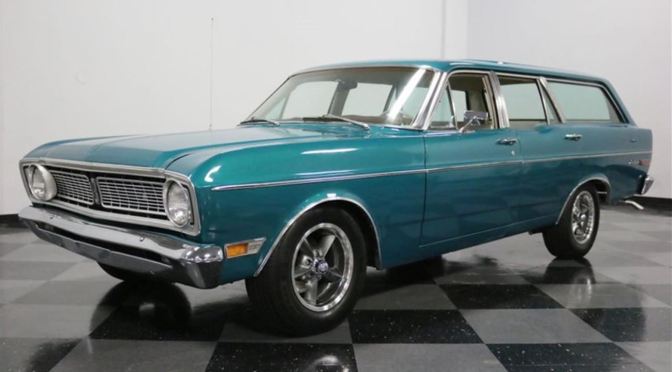
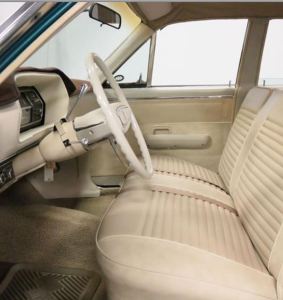 In late 1965, Ford launched the third generation Falcon, based on a shortened Fairlane platform with revised styling. At the top of the line was the highly-trimmed Futura Sports Coupe, which featured chrome side window frames, giving this two-door sedan the look of a hardtop. It also featured a premium all-vinyl interior. Large “Sports Coupe” script on the “C” pillar was borrowed from the 1964–1965 Fairlane Sports Coupe.
  The heater-defroster became standard.
 “Nikas combines extensive research into a previously unavailable and highly detailed archive of Donald Healey’s personal records with the author’s masterful ability to weave together an amazing level of detail while making it an eminently readable story. The result is a book that both seasoned automotive historians and anyone with an interest in the story of a life well lived will enjoy. Until you’ve read this book, you don’t know the true story of Donald Healey and his cars”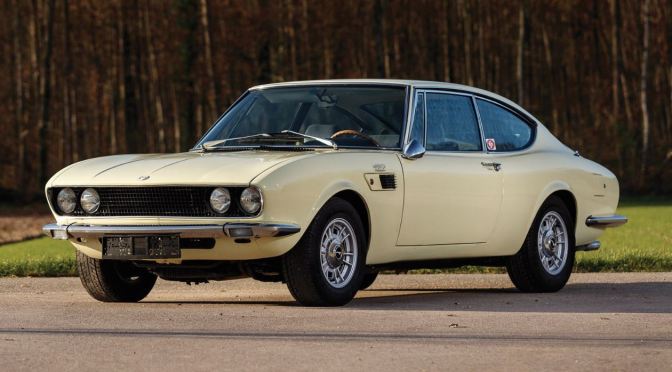
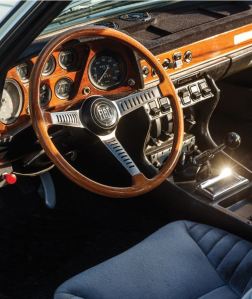 The Fiat Dino (Type 135) was a
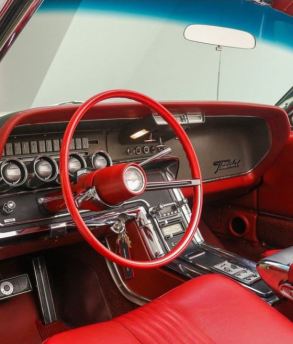 The revised model was initially offered as a hardtop, convertible, Sports Roadster with dealer-installed tonneau cover and wire wheels, and Landau with vinyl roof, simulated landau irons, and wood grain interior appointments. Total 1964 sales were excellent: 92,465, up nearly fifty per cent from the previous year, but with only 50 Sports Roadster kits were sold from the factory. The 1964 Thunderbird was the only car of this generation to have the word ‘Thunderbird’ spelled out on the front hood instead of a chrome Thunderbird emblem. The only transmission available was the Cruise-O-Matic MX 3 speed automatic.
 The fourth generation of the
 The ASA 1000 GT originated in a late 1950s experimental project by Ferrari engineers to create a less expensive, compact alternative to existing Ferrari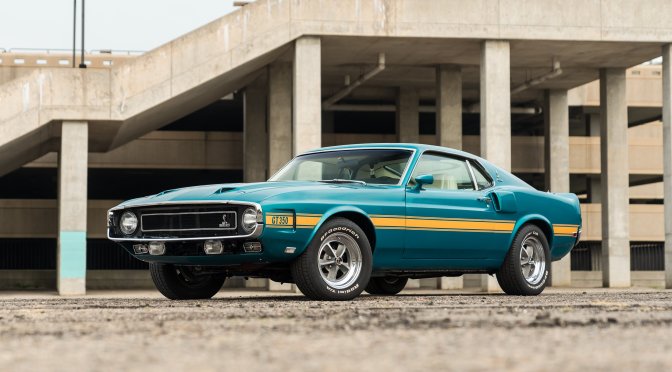
 As the Mustang line grew in size and comfort features, so too did the Shelby branded vehicles on which they are based. Never one to settle for standard, Carroll Shelby decided to take the already aggressive and bold styling of the 1969 Mustang even further. New front fenders, which included functioning brake ducts, were added which terminated in a big, full-width grill and bright chrome bumper set forward of this. Some other interesting design elements were included as well such as NACA ducts on the hood, rather than the traditional raised hood scoops.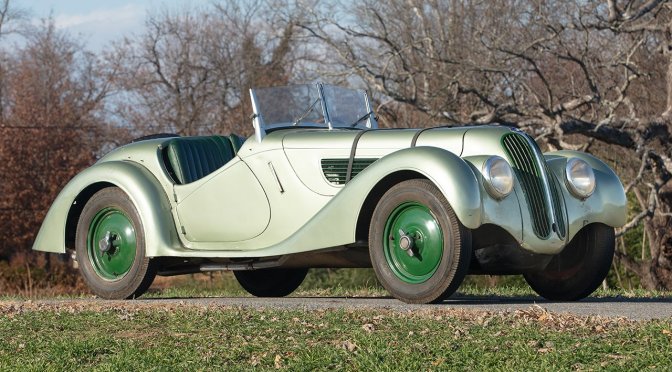
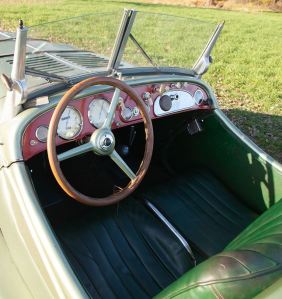 BMW’s 328 is recognized as one of history’s most important sports cars, and examples are proudly displayed in leading museums such as the Revs Institute and the Simeone Foundation Automotive Museum. The model emerged victorious in its debut race at the Nürburgring in 1936, won its class at the 1938 Mille Miglia and the 1939 Le Mans, and won the Mille Miglia outright in 1940. With over 200 victories, 328s were competitive until well into the 1950s.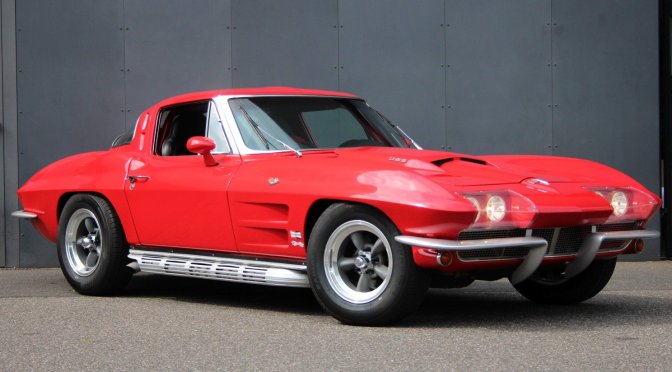
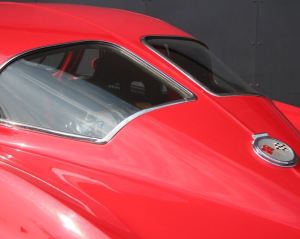 The 1963 Sting Ray production car’s lineage can be traced to two separate GM projects: the Q-Corvette, and perhaps more directly, Mitchell’s racing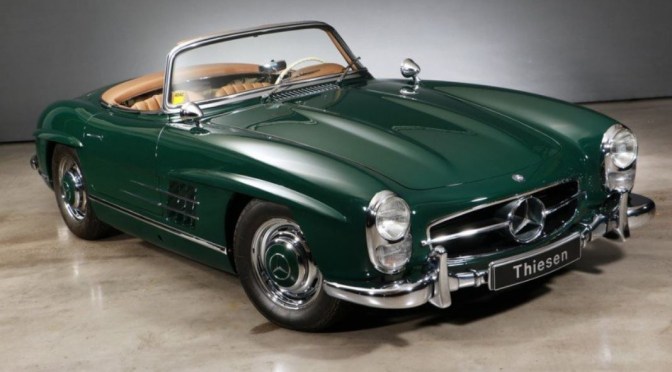
 The 300 SL celebrated its premiere at the? International Motor Sports Show? in New York, which took place from February 6th to 14th, 1954. Mercedes-Benz experienced an enormously positive response from visitors to the 300 SL at the Motor Show, so series production began in August 1954 at the Sindelfingen plant.
 This 300 SL Roadster was delivered in Germany on September 22, 1960. In the mid-1980s, the car came into the possession of an experienced Mercedes specialist. The roadster underwent extensive restoration under his direction. According to the available documentation, the body was separated from the chassis and completely overhauled. Since then, the car has only been moved about 28,000 km and serviced regularly. A few years ago, the vehicle changed hands within Germany to a businessman and classic car enthusiast who used the roadster for nice trips and events.
 Boomers Daily