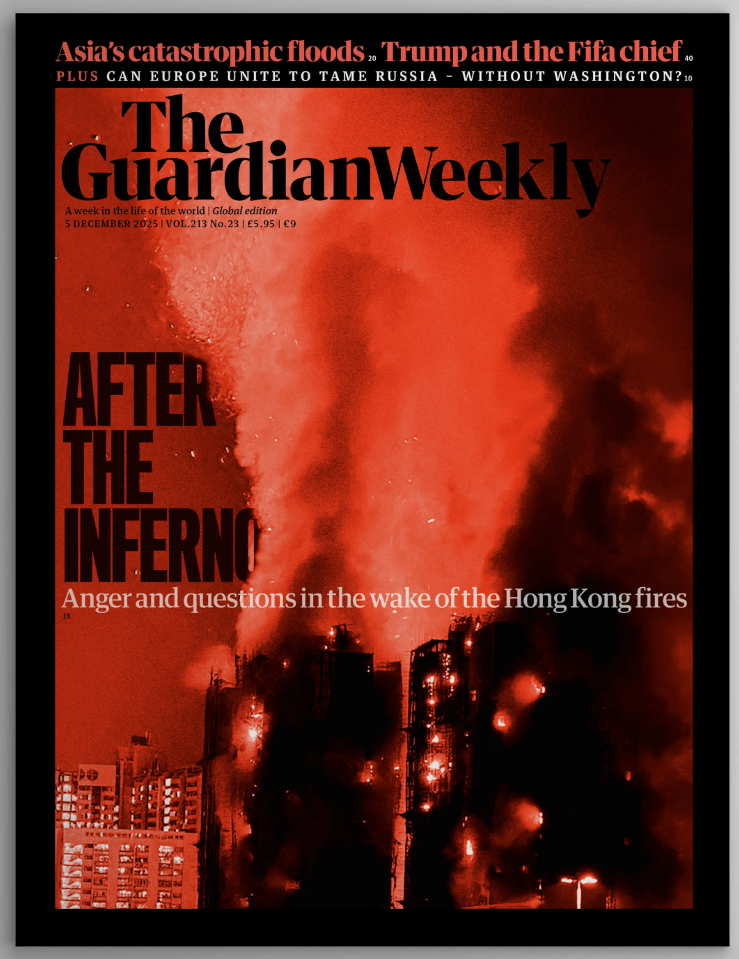
Watching with horror from London last week as flames ripped through seven adjacent apartment blocks in Hong Kong, it was impossible not to think back to the Grenfell Tower fire of 2017, which exposed major systemic failures around UK social housing and eventually led to law changes around safety and accountability for high-rise buildings.
The comparisons with Hong Kong were not just visually obvious but also because the semi-autonomous city’s worst fire in decades appears to have followed months of complaints from residents about shoddy materials used in building works.
Hong Kong is of course a very different place to London, with politicians facing less public accountability in a political climate that makes it much harder for citizens to express dissent. But, as anger rises, hard questions are nevertheless being asked of authorities amid accusations of negligence and corruption.
Five essential reads in this week’s edition
The big story | Can Europe unite to tame Russia – without the US? Washington’s Putin-appeasing plan for peace in Ukraine has failed, but many heard the death knell sound for European reliance on US protection, writes Patrick Wintour
Spotlight | If Rachel Reeves goes, will Keir Starmer fall with her? British prime ministers rarely sack their chancellors – and when they do it almost inevitably leads to their own downfall. After last week’s budget, Starmer knows the same is true of him and Reeves, says Jessica Elgot
Feature | The dangerous rise of extremist Buddhism Buddhism is still largely viewed as a peaceful philosophy – but across much of south-east Asia, the religion has been weaponised to serve nationalist goals. Sonia Faleiroinvestigates
Opinion | From the West Bank to Syria and Lebanon, Israel’s onslaught continues Broken ceasefires, bombing, ground incursions and mounting deaths: Israeli imperialism is now expanding across the region, says Nesrine Malik
Culture | Ethan Hawke and Richard Linklater: two men on the moon As their 11th movie together, Blue Moon, is released, the actor and director tell Xan Brooks about musicals, the legacy of Philip Seymour Hoffman and what being bald and short does to your flirting skills
Bitter rows, implacably opposed delegations, threatened walkouts and then, hours after the planned deadline with fear of failure stalking the delegates, a statement towards which recalcitrant countries have been nudged into agreeing is produced. Cop30, which concluded last Saturday in Belém, Brazil, was little different from its recent predecessors, despite the growing urgency of needing to find a solution to our ever hotter planet. For this week’s big story, environment editor Fiona Harvey details how weak consensus was forged between states on the frontline of climate change and the petrostates that sought a rollback from the need to “transition away from fossil” fuels agreed two years ago in Dubai.
Five essential reads in this week’s edition
Spotlight | Is Ukraine edging closer to a peace deal? A whirl of international diplomacy was sparked by a US-Russian authored ‘peace plan’ to end the Ukraine war. Luke Harding and Pjotr Sauer cast a critical eye over the prospects for an agreement.
Spotlight | Trump, Saudi Arabia and shifting Middle Eastern sands Pageantry and trillion-dollar promises reveal how Washington’s regional loyalties may be tilting away from Israel and towards the Gulf, writes Julian Borger
Feature | Is Alex Karp the world’s scariest CEO? His company, Palantir, is potentially creating the ultimate state surveillance tool. Now, Alex Karp’s biographer reveals what makes him tick. BySteve Rose
Opinion | An improbable new adversary for Trump – the Catholic church Inequality, immigration and civil rights are the battlegrounds on which the church – and some other Christian denominations – are fighting the Trump administration, writes Simon Tisdall
Culture | Edmund de Waal’s loose ends The celebrated ceramicist explains to Charlotte Higgins why he turned his decades-long f ixation with Axel Salto – the maker of unsettling stoneware full of tentacle sproutings and knotty growths – into a new show
The release last week of a tranche of Jeffrey Epstein’s private emails raised more questions about Donald Trump’s links to the disgraced financier.
The US president had spent much of this year trying to bat away questions about Epstein while rejecting pressure to release the bulk of the files. But in an abrupt reversal on Sunday – widely seen as an admission that he cannot control his Maga base on the issue – Trump urged House Republicans to back the release of the files after all.
That was duly passed this week and if the Senate also votes the same way, the justice department will be compelled to release all unclassified materials on Epstein, who died in jail in 2019 while awaiting trial on sex-trafficking charges.
So we may soon find out what Trump has tried for so long to keep buried. As David Smith writes for our big story, last week’s email release pointed less to a grand conspiracy and more to an elite world in which wealthy, powerful and privileged individuals operate above the law.
One thing’s for sure: despite Trump’s wishes, the Epstein scandal isn’t going away just yet.
Spotlight | Can methane cuts avert climate disaster? With temperatures breaching limits set out in the Paris Agreement, designed to mitigate climate change, experts say tackling the powerful gas could buy crucial time as the clean-energy shift stalls. Fiona Harvey reports
Spotlight | The US military’s plans for a divided Gaza A ‘green zone’ will be secured by international and Israeli troops, while almost all Palestinians have been displaced to a ‘red zone’ where no reconstruction is planned, reports Emma Graham-Harrison
Feature | What chance did one boy have to survive on Britain’s streets? When documentary film-maker Pamela Gordon first met Craig in Nottingham, he was 13 and homeless. She still thought his life might turn around, but she was tragically wrong
Opinion | Labour’s asylum plans are cruel, overspun and unachievable There is mounting disquiet among Labour MPs, while the vulnerable refugees at the heart of this story are living with a renewed sense of panic, writes Diane Taylor
Culture | Stranger Things reaches its upside down finale After a decade, the Netflix hit is bowing out. Ahead of its last episodes, the show’s creators and cast talk to Rebecca Nicholson about big 80s hair, recruiting a Terminator killer – and the birds Kate Bush sent them
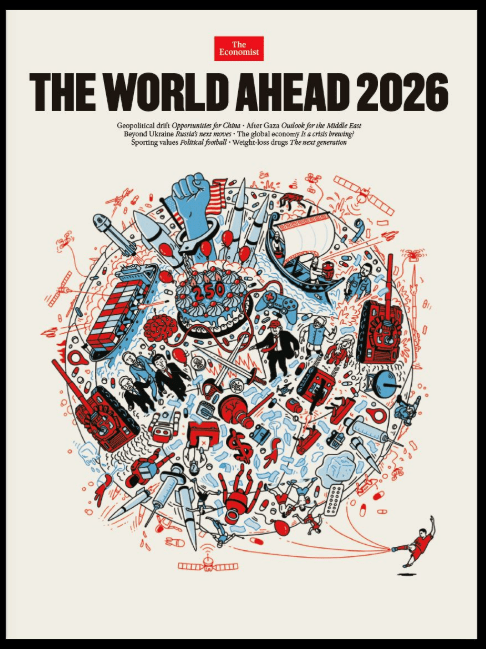
This is Donald Trump’s world—we’re all just living in it. The disruptor-in-chief was the biggest factor shaping global affairs in 2025, and that will be the case for as long as he remains in the White House. His norm-shattering approach has caused turmoil in some areas (as in trade) but has also delivered diplomatic results (as in Gaza) and forced necessary change (as with European defence spending). As the Trumpnado spins on in 2026, here are ten trends and themes to watch in the coming year.
Expect to hear wildly diverging accounts of America’s past, present and future, as Republicans and Democrats describe the same country in irreconcilably different terms to mark the 250th anniversary of its founding. Voters will then give their verdict on America’s future in the midterm elections in November. But even if the Democrats take the House, Mr Trump’s rule by bullying, tariffs and executive orders will go on.
Foreign-policy analysts are divided: is the world in a new cold war, between blocs led by America and China, or will a Trumpian deal divide the planet into American, Russian and Chinese “spheres of influence”, in which each can do as they please? Don’t count on either. Mr Trump prefers a transactional approach based on instinct, not grand geopolitical paradigms. The old global rules-based order will drift and decay further. But “coalitions of the willing” will strike new deals in areas such as defence, trade and climate.
With luck, the fragile peace in Gaza will hold. But conflicts will grind on in Ukraine, Sudan and Myanmar. Russia and China will test America’s commitment to its allies with “grey-zone” provocations in northern Europe and the South China Sea. As the line between war and peace becomes ever more blurred, tensions will rise in the Arctic, in orbit, on the sea floor and in cyberspace.
All this poses a particular test for Europe. It must increase defence spending, keep America on side, boost economic growth and deal with huge deficits, even though austerity risks stoking support for hard-right parties. It also wants to remain a leading advocate for free trade and greenery. It cannot do all of these at once. A splurge on defence spending may lift growth, but only slightly.
China has its own problems, with deflation, slowing growth and an industrial glut, but Mr Trump’s “America First” policy opens up new opportunities for China to boost its global influence. It will present itself as a more reliable partner, particularly in the global south, where it is striking a string of trade agreements. It is happy to do tactical deals with Mr Trump on soyabeans or chips. The trick will be to keep relations with America transactional, not confrontational.With rich countries living beyond their means, the risk of a bond-market crisis is growing
So far America’s economy is proving more resilient than many expected to Mr Trump’s tariffs, but they will dampen global growth. And with rich countries living beyond their means, the risk of a bond-market crisis is growing. Much will depend on the replacement of Jerome Powell as chair of the Federal Reserve in May; politicising the Fed could trigger a market showdown.
Rampant spending on infrastructure for artificial intelligence may also be concealing economic weakness in America. Will the bubble burst? As with railways, electricity and the internet, a crash would not mean that the technology does not have real value. But it could have wide economic impact. Either way, concern about AI’s impact on jobs, particularly those of graduates, will deepen.
Limiting warming to 1.5°C is off the table, and Mr Trump hates renewables. But global emissions have probably peaked, clean tech is booming across the global south and firms will meet or exceed their climate targets—but will keep quiet about it to avoid Mr Trump’s ire. Geothermal energy is worth watching.
Sport can always be relied upon to provide a break from politics, right? Well, maybe not in 2026. The football World Cup is being jointly hosted by America, Canada and Mexico, whose relations are strained. Fans may stay away. But the Enhanced Games, in Las Vegas, may be even more controversial: athletes can use performance-enhancing drugs. Is it cheating—or just different?
Better, cheaper GLP-1 weight-loss drugs are coming, and in pill form, too. That will expand access. But is taking them cheating? GLP-1s extend the debate about the ethics of performance-enhancing drugs to a far wider group than athletes or bodybuilders. Few people compete in the Olympics. But anyone can take part in the Ozempic games.
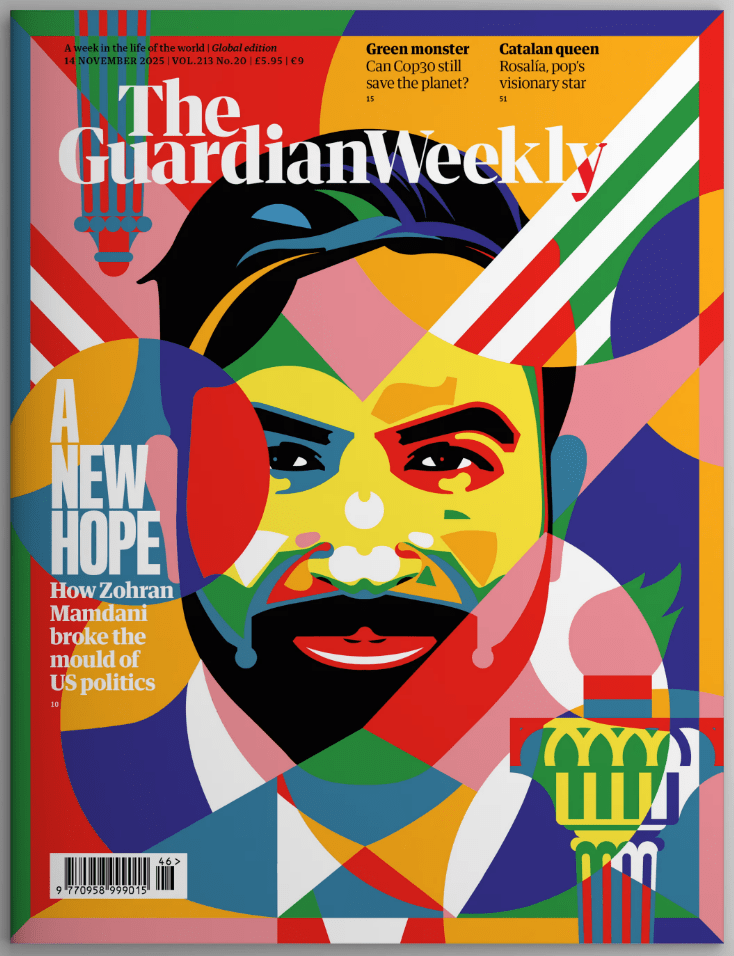
The dust may have settled on Zohran Mamdani’s astounding, against-the-odds victory in the New York mayoral election. But a week on, the scale of his achievement looks no less impressive.
As Ed Pilkington outlines in this week’s big story, Mamdani swept away his establishment-backed heavyweight opponent Andrew Cuomo by mobilising an army of grassroots volunteers and donors, while also connecting deeply with the voters whose support he most needed on the issues that mattered most to them, namely affordability and economic justice.
It’s a ground-up approach to doing things that US Democrats – who also won governorships in Virginia and New Jersey on an encouraging night – can learn from as they reflect on a torrid year since Donald Trump swept to power.
Spotlight | The green monster of Cop30 Amid bombast, strife and competing interests, is the annual climate summit, which opened in Brazil this week, still the forum we need to save the planet? Fiona Harvey reports from the Amazonian city of Bélem
Spotlight | The extraordinary fall of the BBC’s top bosses A whirlwind that began with a report criticising the editing of a speech by Donald Trump is part of a wider political story, some say. Media editor Michael Savage charts the tale
Feature | Why not everyone is sad to see the end of USAID When Donald Trump set about dismantling USAID, many around the world were shocked. But on the ground in Sierra Leone, the latest betrayal was not unexpected. Mara Kardas-Nelson finds out why
Opinion | A president groped? Sadly it isn’t a shock After Claudia Sheinbaum was assaulted last week, her opponents claimed she staged it. From their own experiences, the women Mona Eltahawy met know she didn’t have to
Culture | Rosalía, the Catalan queen of pop With a towering new album about female saints in 13 languages, she’s pop’s boldest star – and one of its most controversial. She tells Laura Snapes why we need forgiveness instead of cancel culture
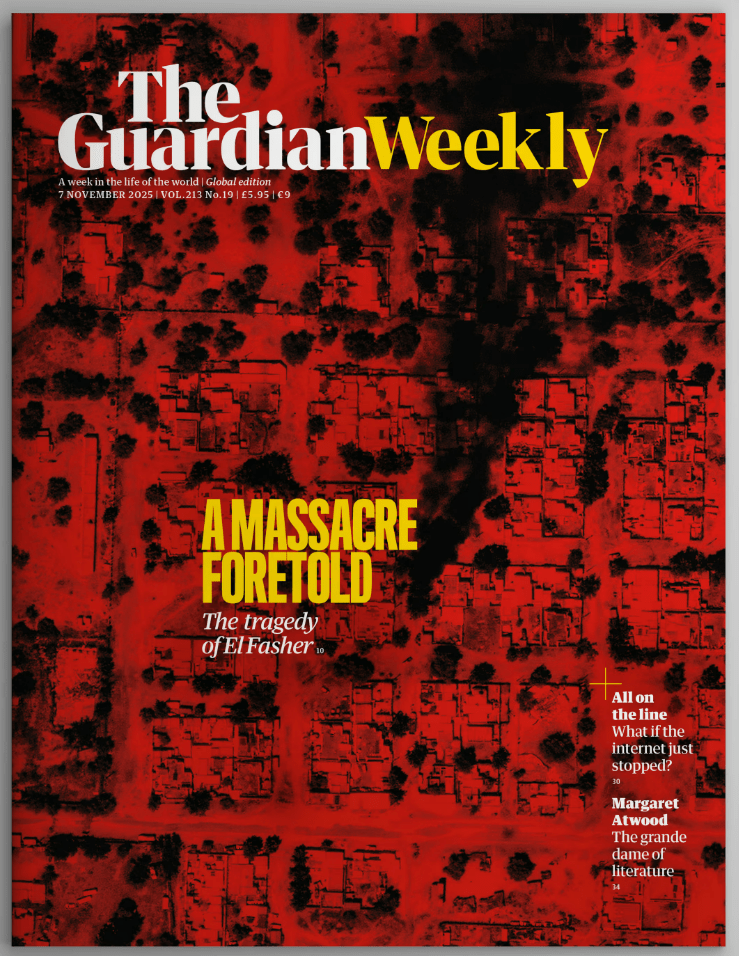
For some time now, El Fasher in Sudan has been a city beyond the reach of journalists. But the haunting satellite image on our cover this week, of smoke billowing from fires near El Fasher’s airport, told its own story as starkly as anything that could be reported from the ground.
Other satellite images showed clusters of burned-out vehicles, and what appeared to be pools of blood beside piles of bodies on the ground. A massacre was under way that could be seen from space.
The last major city in Darfur to fall to the Rapid Support Forces (RSF) was already the scene of catastrophic levels of human suffering, but has “descended into an even darker hell”, senior UN officials warned last week. This key moment in the two-and-a-half-year-long civil war has unfolded in plain sight with minimal intervention from the international community, unless you count the United Arab Emirates, which has been arming the RSF paramilitaries.
Spotlight | The Andrew formerly known as a prince Stupidity and self-entitlement sank King Charles III’s disgraced younger brother – and the royal reckoning may not be over yet, writes Stephen Bates
Technology | What if the internet just … stopped working? Could everything suddenly go offline and if so, how? Aisha Down goes inside the fragile system holding the modern world together
Interview | Margaret Atwood puts the world to rights At 85, she’s a literary seer and saint – and queen of the Canadian resistance. So what does the writer make of our dystopian society? Lisa Allardice finds out
Opinion | World leaders: Cop30 could be your great legacy With the US backing away from the climate crisis, now is the moment when other nations must step up, says former British prime minister Gordon Brown
Culture | Back to black with Lynne Ramsay The Scottish film director burst on to the scene with Ratcatcher and terrified audiences with We Need to Talk About Kevin. Her latest film stars Hollywood darling Jennifer Lawrence, but it doesn’t flinch from the dark side of family life, finds Amy Raphael
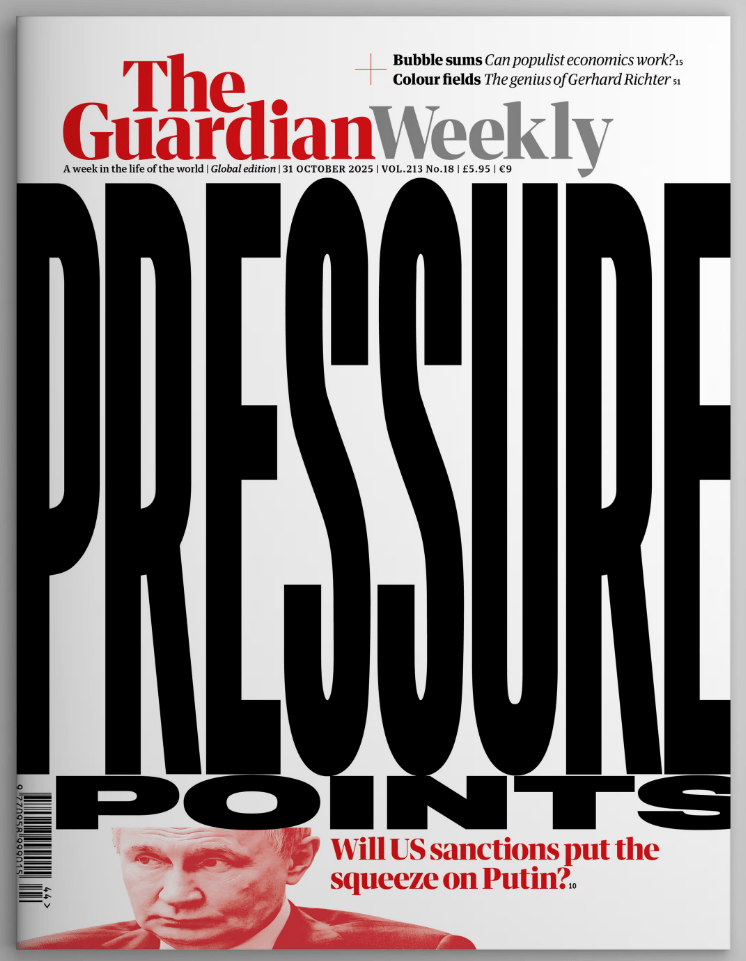
Donald Trump’s sudden decision last week to sanction Russian oil producers suggested the US president has finally lost patience with Vladimir Putin after a series of fruitless talks over ending the war in Ukraine.
Could it break the deadlock? Oil sanctions have the potential to genuinely damage Moscow’s finances, as the Russian president himself admitted last week. It remains to be seen, though, whether economic pressure alone can bend Putin’s arm over a conflict he views as defining to his legacy.
In this week’s big story, Guardian Russia affairs reporter Pjotr Sauer asks whether sanctions could succeed where diplomacy has failed, while Christopher S Chivvis of the Carnegie Endowment for International Peace argues that a negotiated settlement remains the likeliest way to bring nearly four years of fighting to a halt.
In the frontline Ukrainian city of Kupiansk, senior reporter Peter Beaumont finds little hope of a quick resolution, with much of the population having left and the remaining soldiers stuck in a war they believe is “going nowhere for either side”.
Five essential reads in this week’s edition
Spotlight | The populist leaders’ economic playbook From Milei to Meloni,are the economics of populism always doomed to failure? This long read from economics editor Heather Stewart tries to bridge the gaps between populist aspiration and fiscal reality
Environment | The deadly migration routes of elephants Human-wildlife conflict has overtaken poaching as a cause of fatalities among elephants – and is deadly for people too. Now some villages are finding new ways to live alongside the mammals, reports Patrick Greenfield
Interview | Is Jimmy Wales the good guy of the internet? The Wikipedia founder stands out from his contemporaries for being driven by more than money. But can the people’s encyclopedia withstand attacks from AI and Elon Musk? ByDavid Shariatmadari
Opinion | Without genuine truth and justice, the war in Gaza cannot end A fragile ceasefire is in place, but what’s needed is an international tribunal for resolution and reparation.That’s the only route to lasting peace, argues Simon Tisdall
Culture | The electrifying genius of Gerhard Richter He has painted everything from a candle to 9/11, walked his naked wife through photographic mist, and turned Titian into a sacred jumble. A new Paris show reveals the German artist in all his contradictory brilliance, says Adrian Searle
Madagascar rarely makes front page news but the toppling of its president by protesters led by Gen Z Madagascar is part of a phenomenon that stretches from Nepal to Indonesia and the Philippines to Morocco. Leaderless groups, formed online, have learned from one another as they take to the streets to vent their frustration against what they see as corrupt older elites and a lack of economic opportunity for their generation.
Our southern Africa correspondent, Rachel Savage, explains how a tumultuous month unfolded on the Indian Ocean island and explores the deep-seated discontent that led to the military siding with student demonstrators to force President Andry Rajoelina out of power.
Five essential reads in this week’s edition
Spotlight | A far-right fight club on their hands Ben Makuch reports on security service monitoring of ‘active clubs’ as they move across borders to spread extremism, mixing the behaviour of football hooligans with the ideology of the Third Reich
Benin bronzes at the Metropolitan Museum of Art in New York. Photograph: Art2010/Alamy
Spotlight | Nothing to see here? Due to open within weeks,Nigeria’s Museum of West African art is intended to showcase the Benin bronzes and other masterpieces stolen by 19th-century colonisers. But the project has been beset by political rows that mean, as Philip Oltermannand Eromo Egbejule report, visitors will see more replicas than original pieces
Science | Waiting for graphene to explode Two decades after the material was first produced and then much hyped, graphene has dropped from business and general discussion. Julia Kollewe reports on the successes and setbacks of taking it from lab to mainstream use
Opinion | An A-level in English won’t make integration work A government demand that immigrants get a qualification that most British citizens don’t have if they want to earn the right to stay is the latest absurd way to focus on ‘outsiders’ rather than address domestic problems, argues Nesrine Malik
Culture | The hardest part David Harewood reflects on returning to play Othello after almost 20 years and with fellow Black actors looks at how attitudes to Shakespeare’s most difficult tragedy have changed
What else we’ve been reading
The year’s Stirling prize has gone to a social housing complex for older people in south-east London. Catherine Slessor writes with great enthusiasm about how the award-winning architects Witherford Watson Mann have completely reimagined accommodation for later life. Out with disorientating corridors, in with bright, informal, nature filled spaces, described by the Stirling judges as “a provision of pure delight”. Emily El Nusairi, deputy production editor
Kathryn Lewek as the Queen Of The Night in The Magic Flute at the Royal Opera House. Photograph: Tristram Kenton/The Guardian
I saw The Magic Flute in Paris last year, and it was fascinating to see how different opera houses interpret the staging. This review of a London production made me reflect on the way different directors handle staging and sound to bring the story to life. It reminded me of listening to the Queen of the Night’s aria when I was growing up and the experience of seeing opera live. Hyunmu Lee, CRM executive
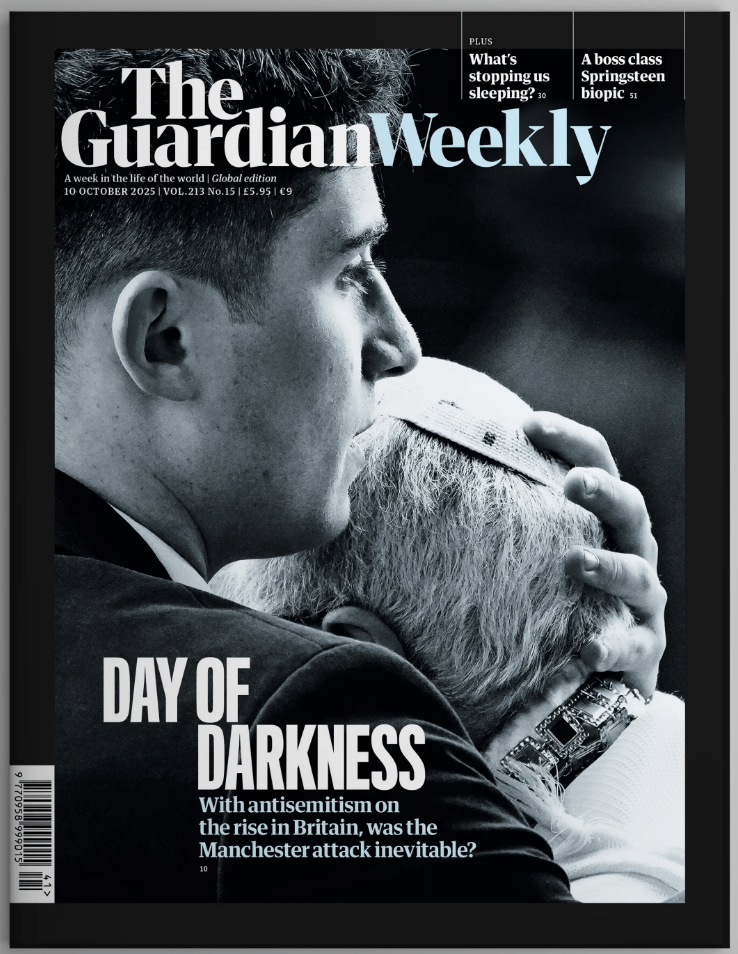
Last week was Yom Kippur, the holiest day in the Jewish calendar. A day of prayer and staying away from news. As people made their way to Heaton Park synagogue in north Manchester, they saw a small car being driven erratically before it crashed into the gates. In seconds, Jihad al-Shamie had jumped from the vehicle and started stabbing those nearby. Within six minutes three people had been killed, including the attacker, who was shot by armed police.
For our cover story, Chris Osuh and Geneva Abdul speak to members of the Jewish community about how they feared such an assault was likely, as well as their hopes for unity in the face of hatred. Our reporting team pieces together what is known about Shamie, and Jonathan Freedland says the terror attack was no surprise amid rising antisemitism, but must be a turning point.
Five essential reads in this week’s edition
Spotlight | A chilling message David Smith reports on how Donald Trump is stepping up attacks on Democratic donors little more than a year before the midterm elections for Congress
Science | Catching Zs If you’ve ever found yourself awake in the small hours, mind whirring, you’re not alone. Jillian Pretzel asks experts about what causes maintenance insomnia – inability to stay asleep – and which treatments can help to tackle it
Feature | Broken connection A volcanic eruption in the South Pacific in 2022 ripped apart the underwater cables that connect Tonga to the world.Samanth Subramanian examines how losing the internet catapulted the archipelago back in time
Opinion | Man without a plan? Latin American governments are fretfully watching a big US military buildup around Venezuela as Donald Trump steps up action against drug cartels. The president’s efforts to act as a neighbourhood policeman, writes Simon Tisdall, are regressive, dangerous and almost certain to backfire
Culture | Boss mode New biopic Springsteen: Deliver Me from Nowhere captures the musician at a pivotal point in his career. Alexis Petridis speaks to the film’s cast and crew about bringing the musical icon to life
The killing of Charlie Kirk last week sent shock waves through America among both supporters and opponents of his views. Yet until last week, the young rightwing activist was relatively unheard of – by older generations anyway – outside the US.
As the ripples and implications of his death continue to spread across the US and beyond, our big story takes a step back. Washington bureau chief David Smith explains how the young activist rose to prominence and gained a place within Donald Trump’s inner circle, his provocative brand of populism and charisma playing an outsize role in the Republicans’ 2024 election victory. As Steve Bannon, the prominent rightwing commentator, told the Guardian, Kirk’s popularity with young voters “changed the ground game” for Trump and the Maga movement.
Spotlight | Why has England become festooned with flags? Chief reporter Daniel Boffey visits a Birmingham suburb to track down the genesis of a movement that wants to see the union jacks or the flag of St George displayed across the country
Special investigation | Boris Johnson’s pursuit of profit A cache of leaked documents show a blurring of lines in the former prime minister’s private business ventures and political role after leaving office, our investigations team reveals
Feature | The porn business stripped bare In Amsterdam, at Europe’s biggest pornography conference, Amelia Gentleman discovers the perils of a booming industry, from burnout to the advent of AI
Opinion | Trump is just a paper tiger While the US president likes to present himself as the biggest, baddest strongman, he crumples in the face of Benjamin Netanyahu or Vladimir Putin’s belligerence, says Simon Tisdall
Culture | The power of pure pop Famous for getting us through lockdowns with her kitchen disco and a stream of catchy hits, Sophie Ellis-Bextor tells Rebecca Nicholson about why the perimenopause is a gift to renewed creativity
News, Views and Reviews For The Intellectually Curious







 Boomers Daily