

Tag Archives: Chemistry
INTERVIEWS: ‘2020 NOBEL LAUREATES IN PHYSIOLOGY, PEACE, PHYSICS, CHEMISTRY AND ECONOMICS’ (VIDEO)
Cecilia Gralde in Stockholm speaks to this year’s Nobel Laureates in Peace, Physics, Chemistry, Physiology or Medicine, and Economic Sciences about the theories, discoveries and research behind their awards, and the value of science in dealing with the global pandemic.SHOW LESS
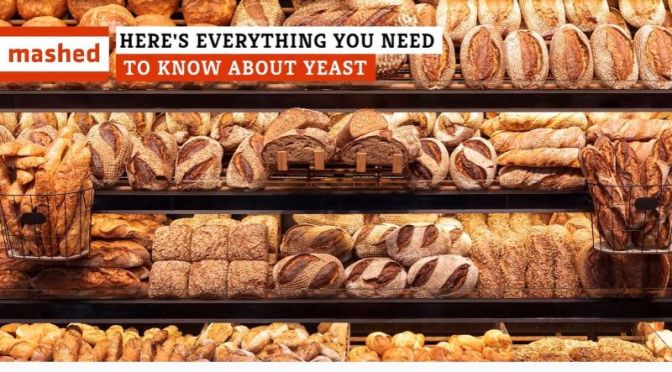
Fermentation: What To Know About ‘Yeast’ (Video)
Whether you’re making a recipe for cinnamon rolls or French bread, yeast factors into the equation. Yeast is a required ingredient for almost all bread recipes. While we typically just buy yeast at the grocery store and toss it in our mixing bowl, yeast has quite an interesting backstory.
Yeast are fungi, living organisms found all around us, floating in the air. According to producer Red Star Yeast, yeast is made up of egg-shaped cells, only visible through a microscope. They’re fungi just like the molds found on blue cheese, mushrooms, or even in antibiotics such as penicillin. However, yeast grows in a different form than other fungi, which are typically composed of tubular chains of cells called hyphae. Yeast is found in small clusters of cells, or as an individual cell. And since it’s alive, yeast can also die.
According to Red Star Yeast, their yeast is stamped with a best by date of two years from when the yeast is packaged. Keeping it in a cool, dry place such as your pantry or refrigerator will ensure it’ll live up to that date. If you’re not sure if your yeast is alive, pour it over warm water with a teaspoon of sugar. If it bubbles, it’s still kicking, The Spruce Eats advises.
Also? Yeast has been around for longer than pretty much any of us. In researching the ancient tomb of the Egyptian ruler Scorpion from around 3100 B.C., archaeologists found 700 jars of resinated wine. According to Scientific American, the resin was used to slow the wine’s natural progression into vinegar. Researchers found evidence of the same species as modern-day brewer’s yeast in the jars. While that isn’t solid evidence the ancient Egyptians knew that the addition of yeast could turn their juice into alcohol, it certainly does show that yeast has been prevalent for a very, very long time.
Timeline: It’s alive, and ancient | 0:00 Hundreds of varieties | 1:52 Commercial production | 2:38 Adult beverages | 3:24 Ooh, that smell | 4:36 The amount makes a difference | 5:30 Yeast-free bread | 6:17 Sourdough starter is DIY yeast | 7:01 2020’s yeast shortage | 7:45
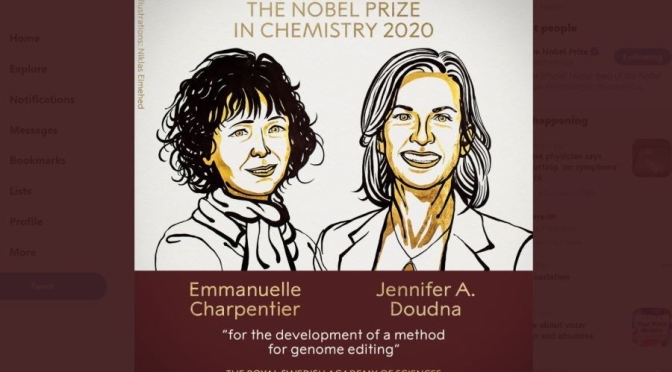
Top Interviews: Jennifer A. Doudna & Emmanuelle Charpentier, 2020 Nobel Prize, Chemistry (Podcast)
“We had a sense that we were onto something big,” says Jennifer Doudna, as she recalls the start of her “curiosity-driven” research into CRISPR and reflects on the pace of the field today, in this short conversation with Adam Smith. Speaking from her patio in the early morning in Palo Alto, Doudna describes how she was woken by a call from a journalist: “I assumed she was calling me to ask me to comment on somebody else winning the Nobel Prize!” The award of the prize to her and Emmanuelle Charpentier will, she hopes, be an encouragement to other women. “Sometimes,” she comments, “there’s a sense that no matter what they do, their work will not be recognised in the way it would be if they were a man.”
In this interview recorded shortly after news broke of her Nobel Prize in Chemistry, Emmanuelle Charpentier tells Adam Smith of her surprise at receiving the call from Stockholm, despite considerable speculation that it might be coming her way. She speaks of the “explosion of knowledge and publications” that the CRISPR field has generated, the motivations behind her “brief but intense” collaboration with her co-Laureate Jennifer Doudna, the need for societal involvement in the conversation about the applications of technology and the importance of studying the microbiological world.
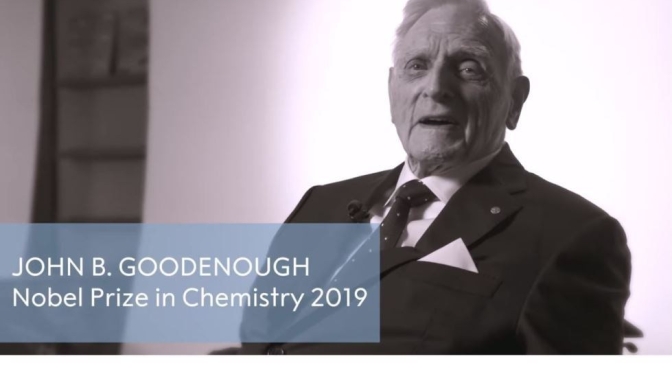
Interviews: 97-Year Old Nobel Prize Chemist John B. Goodenough On Wisdom, Love And Life
Interview with the 2019 Nobel Laureate in Chemistry John B. Goodenough, 6 December 2019
0:07 – What advice would you give to a younger version of yourself? 0:32 – How do you recognise a good teacher? 0:58 – Do you see yourself as a mentor now? 1:33 – What qualities do you think you need to be a successful scientist? 3:04 – How do you cope with failure? 3:16 – How has your dyslexia shaped you? 3:44 – How important has nature been for you? 4:40 – Has music played an important role in your life? 5:06 – How did your interest in poetry start? 6:14 – How did you meet your wife? 7:06 – What life advice can you share? 8:30 – How do you remember so much of your life? 8:47 – How does it feel to be back in Stockholm after 80 years? 9:21 – How has living through World War II influenced you? 10:03 – What is your relationship with your lab colleagues? 11:18 – What are the characteristics of a very good team? 11:55 – What is your relationship with Akira Yoshino? 12:28 – How has the scientific landscape has changed over the years? 13:42 – What environment encourage creative thinking? 14:48 – What research are you working on now? 15:39 – What are your thoughts on sustainability? 16:37 – What future do you see for sustainable batteries?
John Bannister Goodenough born July 25, 1922) is an American materials scientist, a solid-state physicist, and a Nobel laureate in chemistry. He is a professor of mechanical engineering and materials science at the University of Texas at Austin. He is widely credited with the identification and development of the lithium-ion battery, for developing the Goodenough–Kanamori rules in determining the sign of the magnetic superexchange in materials, and for seminal developments in computer random access memory.
Top Science Podcasts: Soles And Calluses, Far Side Of The Moon & Nobel Prize Winner Q&A (Nature)
 The podcast team share some of their highlights from the past 12 months: A sole sensation, The make up of the far side of the Moon, Growth Mindset, ‘Manferences’ and Q&A with Nobel Prize winner John Goodenough.
In this episode:
00:33 A sole sensation
A study of people who do and don’t wear shoes looks into whether calluses make feet less sensitive. Nature Podcast: 26 June 2019; Research article: Holowka et al.; News and Views: Your sensitive sole
08:56 The make up of the far side of the Moon
Initial observations from the first lander to touch down on the far side of the Moon. Nature Podcast: 15 May 2019; Research article: Li et al.
15:43 Growth Mindset
How a one hour course could improve academic achievement. Nature Podcast: 07 August 2019; Research article: Yeager et al.
27:44 ‘Manferences’
Nature investigates the prevalence of conferences where most of the speakers are male. Nature Podcast: 11 September 2019; News Feature: How to banish manels and manferences from scientific meetings
34:02 Q&A with Nobel Prize winner John Goodenough
We talk to John Goodenough, who was jointly awarded the 2019 Nobel Prize in Chemistry for his role in the development of the lithium-ion battery. Podcast Extra: 09 October 2019
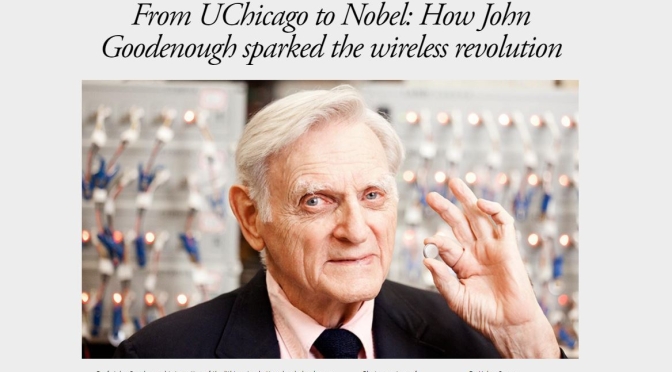
Science Profiles: 97-Year Old Professor John B. Goodenough Becomes Oldest Nobel Prize Winner In Chemistry
From a UChicago News online article:
 Three-quarters of a century later, at age 97, Goodenough will become the oldest person to receive the Nobel Prize in Chemistry. At a Dec. 10 ceremony in Sweden, he will be honored for pioneering breakthroughs that led to the widespread use of the lithium-ion battery—and helping spark the wireless revolution. The descendants of his batteries now power modern smartphones and hold the potential to one day sustainably harvest solar and wind power.
John B. Goodenough can still remember, word for word, what a University of Chicago professor told him when he arrived on campus following World War II: “I don’t understand you veterans,” said John A. Simpson, a new UChicago instructor who had just helped achieve the first nuclear reaction. “Don’t you know that anyone who has ever done anything significant in physics had already done it by the time he was your age—and you want to begin?”
 Boomers Daily