

From a Nature Magazine review:
 He wondered whether lithium could have the same tranquillizing effect on his patients. After trying it out on himself to establish a safe dose, Cade began treating ten people with mania. In September 1949, he reported fast and dramatic improvements in all of them in the Medical Journal of Australia (J. F. J. Cade Med. J. Aus. 2, 349–351; 1949). The majority of these patients had been in and out of Bundoora for years; now, five had improved enough to return to their homes and families.
Lithium: A Doctor, a Drug, and a Breakthrough Walter A. BrownLiveright (2019)
Some 70 years ago, John Cade, an Australian psychiatrist, discovered a medication for bipolar disorder that helped many patients to regain stability swiftly. Lithium is now the standard treatment for the condition, and one of the most consistently effective medicines in psychiatry. But its rise was riddled with obstacles. The intertwined story of Cade and his momentous finding is told in Lithium, a compelling book by US psychiatrist Walter Brown.
Read first part of Chapter 1:


 “Fans of intelligent historical fiction will be enthralled by a story so original and so fully imagined. Meek shows the era as alien, which it is, and doesn’t falsify it by assimilating it to ours. But his characters are recognisably warm and human”
 “Asking even seasoned chefs and truffle-industry insiders to describe what the fungus tastes or smells like,” Jacobs writes, “is a bit like asking a priest why he believes in God.” Readers not familiar with the pungent, one-of-a-kind flavor will come away even more intrigued. Those of us whose most frequent encounter with the fabled fungus is through truffle oil will also be disappointed. As Jacobs discovers, nearly all truffle butter and truffle oil sold in America is manufactured using chemicals rather than the real thing.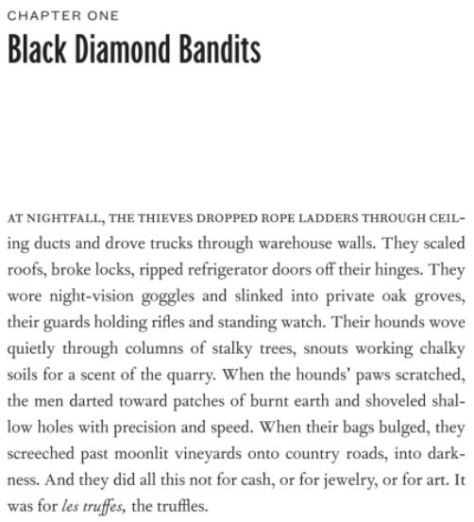



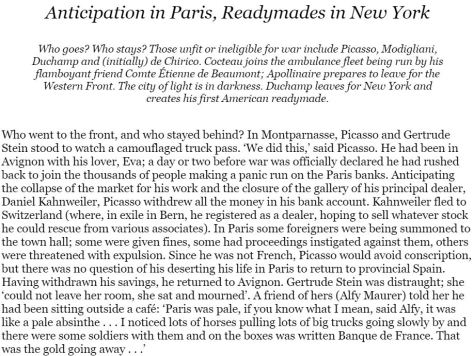
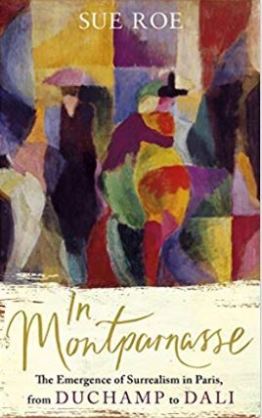 In Montparnasse begins on the eve of the First World War and ends with the 1936 unveiling of Dalí’s Lobster Telephone. As those extraordinary years unfolded, the Surrealists found ever more innovative ways of exploring the interior life, and asking new questions about how to define art. In Montparnasse recounts how this artistic revolution came to be amidst the salons and cafés of that vibrant neighborhood.
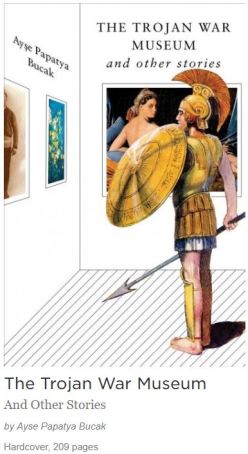 That’s the kind of astonishing illumination you’ll find in The Trojan War Museum, Ayşe Papatya Bucak’s debut story collection. These are stories that reflect the author’s Turkish heritage and a curiosity about our human search for meaning as profound as it is lyrical. The stories are music. They beguile and illuminate with narratives about yearning and desire, circumstance and courage, resilience and discovery. Reading them, while the reading lasts, replaces seeing.
 This definitive companion for cycling enthusiasts showcases 200 of North, Central and South America’s best and most celebrated routes, from epic adventures off the beaten path to shorter urban rides. Go bikepacking in Baja, road riding in Colombia, mountain biking in Canada and gravel riding in Pennsylvania.
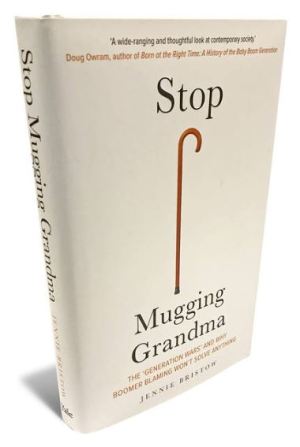 At the center of the attack on those of us born between 1946 and 1964, days when the U.S. birth rate was extraordinarily high, is our supposed radical individualism. Its roots are said to be found in the excesses of the 1960s, a decade for which “boomers have become fall guys.”
 When Diana, Princess of Wales, attended the Met’s Costume Institute Gala in 1996, a black-tie-clad Mr. Barelli was at her side. “I wasn’t nervous, but the pressure!” he said. “You don’t want anything to go wrong.” The princess had one request: that he keep an eye on the black lace shoulder straps of her midnight blue Dior dress and adjust them if they slipped. “I almost told her: ‘Yeah, right, I have to touch your dress.’ That’s all I have to do. I think my wife would be a little upset,” he recalled. There was no wardrobe malfunction and the evening went off without a hitch, although Mr. Barelli remembers security concerns putting a damper on the fun-loving princess. “We couldn’t let her dance,” he said.
 With host Jane Clayson. There’s a whole new world to explore below the surface. Deep sea diver and author of “In Oceans Deep” Bill Streever joins us to tell deep sea tales of wonders, mysteries and dangers that lurk beneath the waves.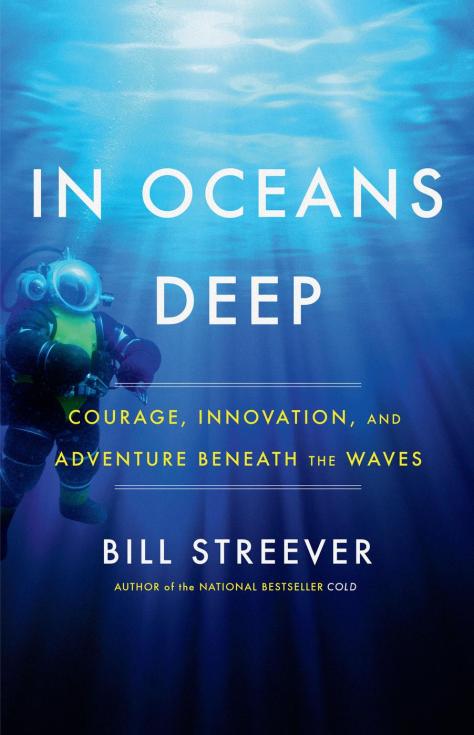
 Boomers Daily