

South Koreas Lantern Festival has won the Unesco Intangible Cultural Heritage status. It’s an annual festival that dates back centuries and it marks the birthday of Buddha. All across the country you’ll find colourful lanterns decorating temples, houses and streets and there also are large parades with elaborate floats. Unesco said the spring festival was “a time of joy” which “in times of difficulties, plays an important role in…helping people overcome the troubles of the day.” Unesco’s Intangible Cultural Heritage status aims to protect traditions, knowledge and skills which are often inherited through generations, so they are not lost or forgotten as time moves on.
Tag Archives: BBC

Arctic Wildlife: ‘Best Of Polar Bears’ (BBC Video)
Enjoy some of the best Polar Bear moments from the BBC Earth library.

Conservation: Mapping ‘The Great Barrier Reef’ To Help It Survive (BBC Video)
The Great Barrier Reef is the world’s largest coral reef system composed of over 2,900 individual reefs and 900 islands stretching for over 2,300 kilometres over an area of approximately 344,400 square kilometres. The reef is located in the Coral Sea, off the coast of Queensland, Australia.
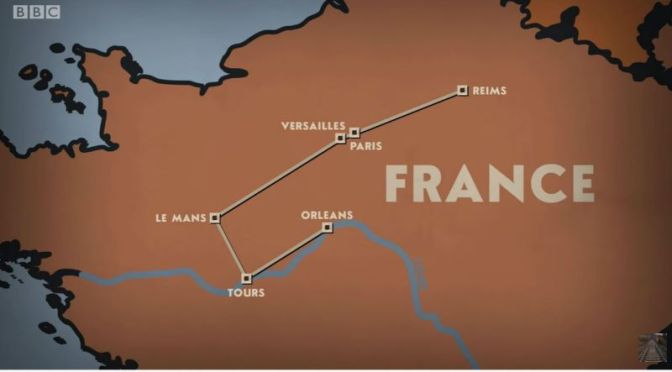
Train Journeys: ‘Orleans To Reims’, France (Video)
Michael Portillo travels from the chateaux of the Loire Valley to the heart of the Champagne region at Reims. Beginning in historic Orleans, Michael follows his Bradshaw’s guide to the magnificent stained-glass windows of the Cathedral of Sainte-Croix, which tell the story of the heroine of France, Joan of Arc. The image of the saintly teenage warrior endures as a symbol of resistance, and her life is celebrated in an annual parade. Michael meets her modern-day incarnation. Among the spectacular Renaissance palaces and fortresses of the River Loire, Michael is intrigued to discover a castle much modernized during the 1930s, which became a refuge for a British royal couple embroiled in scandal. The wedding of the former king, Edward VIII, and the American divorcee Wallis Simpson at Chateau Cande in the summer of 1937 was shunned by the British establishment. Michael takes a spin around the track at Le Mans in a French-built car that won two endurance races during the 1920s. At Versailles, Michael visits the opulent palace and neighbouring Trianon Palace Hotel, where his Bradshaw’s guide describes the signing of the Peace Treaty at the end of the First World War. Arriving in the capital, Paris, Michael heads for Montparnasse, where wildly creative artists and writers of the 1920s and 30s spawned new art movements. Michael joins a life-drawing class at an art school with an impressive legacy. Backstage at the Folies Bergere, Michael asks the ‘enfant terrible’ of fashion Jean Paul Gaultier about his homage to the black American dancer of the 1920s Josephine Baker. East of Paris in champagne country, Michael finishes his journey in style with a tour of the cellars at Domaine Pommery and a glass of fizz with the owner.
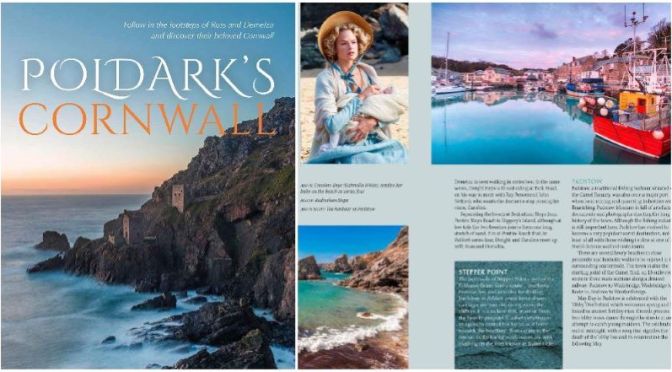
New Travel & Film Books: “Poldark’s Cornwall” By Gill Knappett (Jan 2021)
For those longing to know where their favorite scenes in “Poldark” were filmed, Pitkin’s latest addition to the Film Locations series goes behind the scenes of the hugely popular TV series and follows in the footsteps of Ross and Demelza along windswept cliffs, rugged coastline, and untouched, pristine beaches. From Padstow to the Lizard peninsula, Cornwall takes center stage, providing the breath-taking backdrop that brings the series to life.
The latest awarding-winning adaptation of Winston Graham’s Poldark, produced by the BBC, captured the hearts of millions of viewers worldwide. Over its five seasons, it brought the region’s rich heritage back to life, with tales of smugglers, shipwrecks, and the secrets of the mines gripping viewers’ imaginations. Filled with walks in beautiful places and useful information about the region and the series’ filming locations, this is a perfect introduction to Britain’s best-kept secret.
About The Author
Gill Knappett has worked on many Pitkin books over a 20-year period, specializing in royal titles and Britain’s best-loved places to visit. Her Pitkin titles include Catherine Duchess of Cambridge, The Queen, and Walk London.
Video Trailer: ‘A Perfect Planet – BBC Earth’ With David Attenborough
A Perfect Planet is an awe-inspiring exploration of Earth’s power and fragility.
PERFECT PLANET
Planet Earth is perfect. It orbits at the perfect distance from the sun; it tilts at just the right angle and has a decent sized moon to hold it in place. On top of that, the day-to-day workings of the planet naturally serve to nurture animals and plants.
This five part series will show how the forces of nature – weather, ocean currents, solar energy and volcanoes – drive, shape and support Earth’s great diversity of life. In doing so, it will reveal how animals are perfectly adapted to whatever the environment throws at them.

Political News & Analysis: Judge Amy Coney Barrett Hearing At Senate (Video)
US Supreme Court nominee Amy Coney Barrett has said she is “honoured and humbled” to be President Trump’s pick for a place in the top court during a tense Senate confirmation hearing.
The 48-year-old conservative jurist vowed to judge legal cases impartially. But her selection so close to the 3 November presidential election has sparked a fierce political battle.
The panel’s Republican chairman has predicted a “contentious week” of questioning ahead. Judge Barrett’s approval would cement a 6-3 conservative majority on the nine-member court, altering the ideological balance of the court for potentially decades to come.

Nature & Wildlife Video: “A Message From Sir David Attenborough” (BBC)
“In these extraordinary times, there is one thing that can offer solace to everyone: the wonder of the natural world.” – Sir David Attenborough

New Science Podcasts: Satellite Navigation, World Wide Web & Neolithic Genomics (BBC)
 BBC Radio 4 ‘Inside Science’ talks about satellite navigation in the UK; the science of the World Wide Web and Neolithic genomics.
Is the UK losing its way when it comes to satellite navigation? There’s GPS from the US, but other countries and regions, including Russia, China, India and Japan, either have, or are building, satellite navigation systems of their own. The EU has Galileo, but with Brexit, Britain is no longer involved. The Government has announced that it’s just acquired a satellite technology company called OneWeb. It’s primary role is enhanced broadband, but there’s talk of adding in a navigation function to the constellation of satellites. But how feasible will that be?
In an era of cyber-crime, misinformation, disinformation, state-sponsored attacks on rival countries’ infrastructure, government-imposed internet shutdowns in places like Eritrea and Kashmir, the World Wide Web is an increasingly dark and troubled place. Making sense of how the internet has changed from the democratic, sharing, open platform it was designed to be, and predicting what’s next, are the web scientists. Professor Dame Wendy Hall, Regius Professor of Computer Science at the University of Southampton, and a co-founder of the whole field of web science, is hosting an online, annual conference this week. The theme this year is ‘Making the web human-centric’.
Communal burial sites tend to suggest an egalitarian society, where everyone is considered equal. And this is what we expected the Neolithic societies that spread across Europe with the birth of agriculture around 6000 years ago would be. But DNA evidence from a single human, NG10, buried in 3200 B.C.E in the vast tomb of Newgrange, 25 miles north of Dublin, in Ireland, shows very strong inbreeding. Couple this with the fact the body was buried and not cremated and placed in a highly adorned chamber. Does this indicate an elite ruling class where marrying one’s close kin was the order of the day? Dr. Lara Cassidy, palaeogeneticist at Trinity College Dublin, decoded NG10’s DNA and she tells Adam Rutherford the story.
Presenter – Gareth Mitchell
Producers – Fiona Roberts and Beth Eastwood
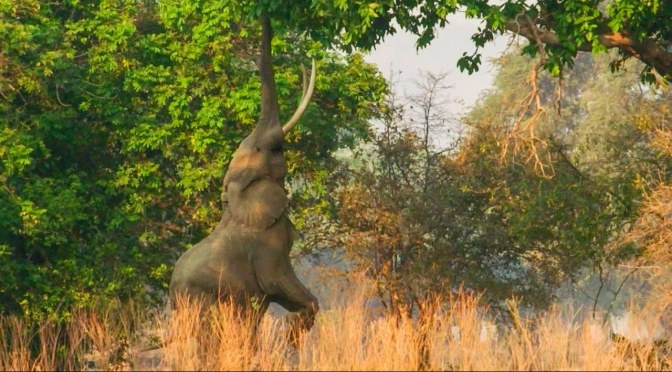
Travel & Wildlife Videos: “The Plains Of Zimbabwe”
Relax with a day in the life of the animals of Mana Pools, Zimbabwe. From dawn until dusk, the park is buzzing with activity in the trees, on the plains and at the watering holes.
 Boomers Daily