

From a Healthcare Finance news article:
 A third of the nurses who took the survey are baby boomers and 20% of survey takers said they planned to retire in the next five years. More than a quarter, 27%, said they were unlikely to be working at their current job in a year.
The shortage threatens to collide with the impending retirement of the baby boomers, all of whom will be 65 years old by 2030, said the survey titled “A Challenging Decade Ahead.” People over 65 are hospitalized three times as often as middle-aged individuals, according to the Center for Disease Control and Prevention.
Amid a nursing shortage, hospitals are struggling to hire and keep nurses, with burnout and workplace violence cited as contributing factors, according to a new survey.
Flexibility and work-life balance had the most influence for 39% of nurses in whether they decided to stick with a job, though 31% say compensation and benefits were the biggest driving factor, according to AMN Healthcare’s 2019 Survey of Registered Nurses.
To read more: https://www.healthcarefinancenews.com/node/139458
 “Senior citizens today are healthier, more engaged, and working longer than past generations,” says Chamberlain. “A ‘gray wave’ of senior citizens will be impacting the workforce in coming years, both in the United States and the United Kingdom.”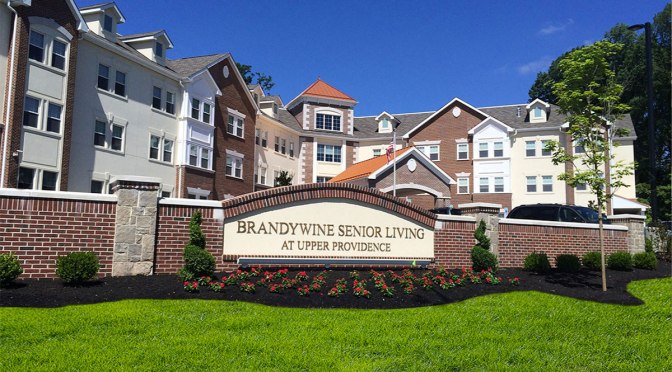
 The rise of technologies that help the elderly stay in their homes threatens to upend one of commercial real estate’s biggest bets: Aging baby boomers will leave their residences in droves for senior housing.
 According to a recent survey of 1,000 U.S. consumers from advertising platform Criteo, 48% of millennial and Gen Z respondents use online grocery delivery services, compared to 37% of Gen X respondents and only 30% of baby boomer respondents.
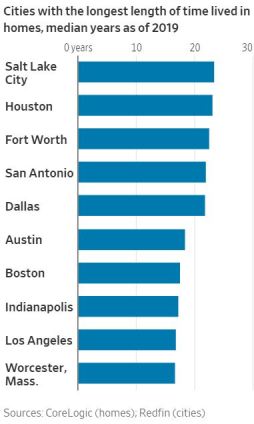 Economists say aging baby boomers are the biggest culprits because many are staying healthier later in life and choosing not to downsize. Some look around at the lack of smaller, less expensive homes and are loath to get into bidding wars with their children’s generation to get one.
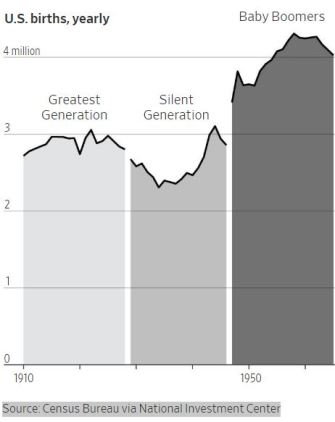
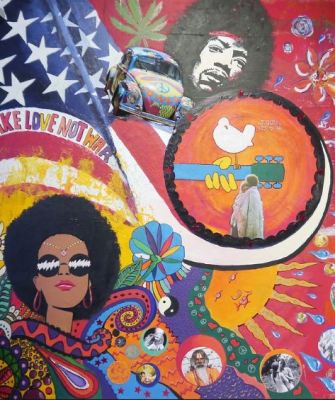 Although the boomers may not have contributed much to the social and cultural changes of the nineteen-sixties, many certainly consumed them, embraced them, and identified with them. Still, the peak year of the boom was 1957, when 4.3 million people were born, and those folks did not go to Woodstock. They were twelve years old. Neither did the rest of the 33.5 million people born between 1957 and 1964. They didn’t start even going to high school until 1971. When the youngest boomer graduated from high school, Ronald Reagan was President and the Vietnam War had been over for seven years.
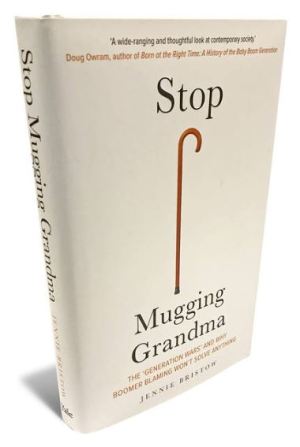 At the center of the attack on those of us born between 1946 and 1964, days when the U.S. birth rate was extraordinarily high, is our supposed radical individualism. Its roots are said to be found in the excesses of the 1960s, a decade for which “boomers have become fall guys.”
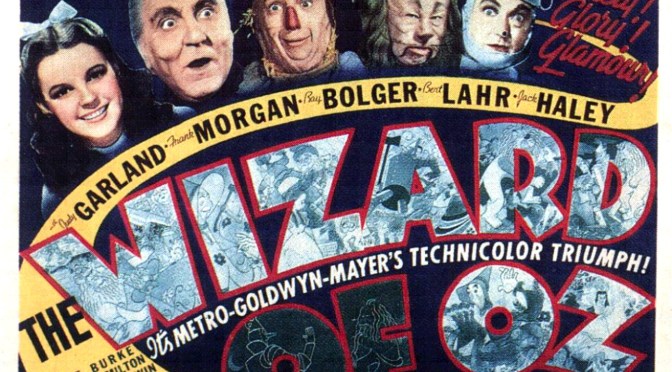
 “…from Elton John’s albumGoodbye Yellow Brick Road to the Coen brothers’ O Brother, Where Art Thou?, which owes as much to Oz as it does to Homer’s Odyssey. Joel Coen once said: “Every movie ever made is an attempt to remake The Wizard of Oz.” In his 1992 essay about Fleming’s film, Salman Rushdie describes it as his “very first literary influence”. It was one of Derek Jarman’s favourite movies, and among the first he ever saw. (This is the key to its influence: the fact that everyone watches it in childhood. It seeps into your unconscious and stays there.) And there are the spin-offs, sequels and prequels – The Wiz, Return to Oz, Oz the Great and Powerful, Wicked.”
 Boomers Daily