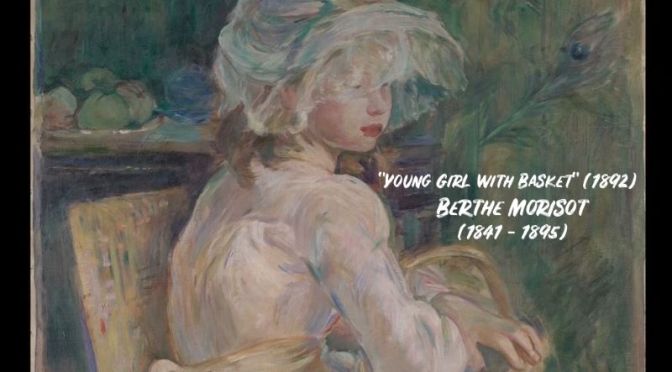

Berthe Marie Pauline Morisot was a French painter and a member of the circle of painters in Paris who became known as the Impressionists. In 1864, Morisot exhibited for the first time in the highly esteemed Salon de Paris.

Berthe Marie Pauline Morisot was a French painter and a member of the circle of painters in Paris who became known as the Impressionists. In 1864, Morisot exhibited for the first time in the highly esteemed Salon de Paris.
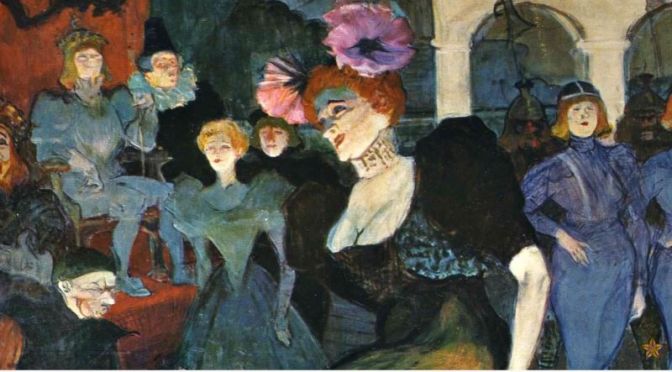
Henri Marie Raymond de Toulouse–Lautrec-Monfa (24 November 1864 – 9 September 1901) was a French painter, printmaker, draughtsman, caricaturist and illustrator whose immersion in the colorful and theatrical life of Paris in the late 19th century allowed him to produce a collection of enticing, elegant, and provocative …
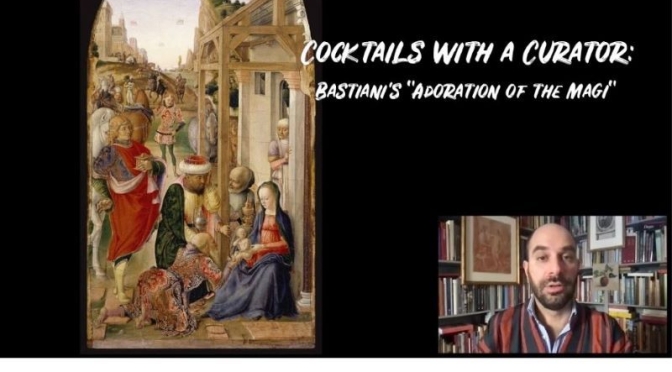
In this week’s episode of “Cocktails with a Curator,” celebrate the Yuletide with Deputy Director and Peter Jay Sharp Chief Curator Xavier F. Salomon as he takes a closer look at Lazzaro Bastiani’s “Adoration of the Magi.” Acquired from Pierpont Morgan’s heirs in 1935—the year The Frick Collection opened to the public—this fascinating picture shows the gift-toting kings on different stages of their journey from Jerusalem to Bethlehem. A contemporary of Giovanni Bellini, Bastiani was considered the artist’s equal at the time and commanded similar prices for his pictures. Explore the work of this magnificent but under-appreciated artist while enjoying a festive Cranberry Bourbon cocktail—Merry Christmas!
Lazzaro Bastiani was an Italian painter of the Renaissance, active mainly in Venice. He was born in Padua. He is first recorded as a painter in Venice by 1460 in a payment for an altarpiece of San Samuele, for the Procuratori di San Marco. In 1462 he was paid at the same rate as Giovanni Bellini.
Spinario (Boy with Thorn), c. 1st century B.C.E., bronze, 73 cm high (Capitoline Museums, Rome), a conversation with Dr. Steven Zucker and Dr. Beth Harris
Sir Cedric Lockwood Morris, 9th Baronet was a British artist, art teacher and plantsman. He was born in Swansea in South Wales, but worked mainly in East Anglia. As an artist he is best known for his portraits, flower paintings and landscapes
In this episode of Expert Voices, Brooke Lampley describes Pablo Picasso’s remarkable love affair with Jacqueline Roque. A classically beautiful portrayal, Picasso married Rocque in 1961 – leading her to be an omnipresent constant in his life.
Painting: Buste de femme assise
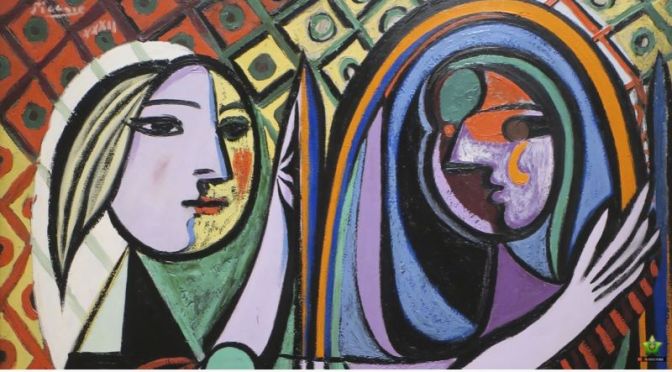
This image of a young woman and her mirror reflection is riotous in color and chockablock with pattern. It is one of the last in a major series of canvases that Picasso created between 1931 and 1932. According to The Museum of Modern Art’s founding director, Alfred H. Barr, Jr., Picasso said he “preferred this painting to any of the others,” which speaks to the painting’s dazzling visual and thematic complexity. Its primary subject is the time-honored artistic theme of a woman before her mirror, reinvented in strikingly modern terms. The girl’s smoothly painted profile, in a delicately blushing pink-lavender, abuts a heavily built-up and garishly colored frontal view in yellow and red. Allusions to youth and old age, sun and moon, light and shadow are compressed into a single multivalent face.
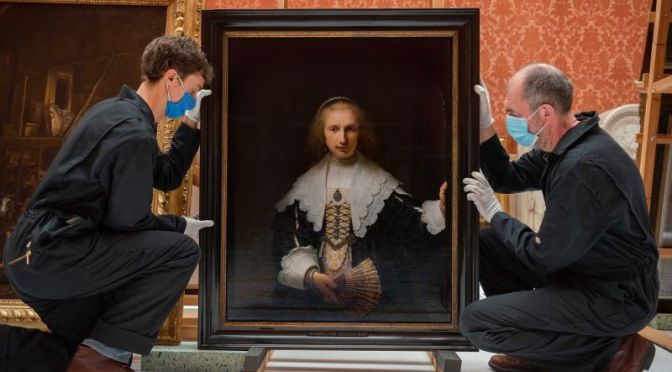
An exhibition called ‘Masterpieces from Buckingham Palace’ is on display at The Queen’s Gallery in London, featuring 65 Old Master paintings from The Royal Collection.
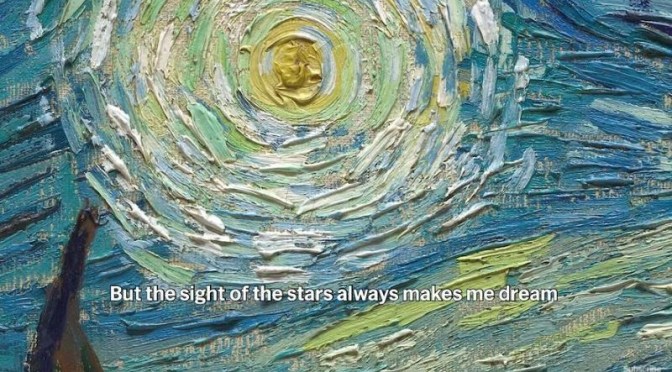
Vincent van Gogh’s “The Starry Night” has been a visitor favorite at MoMA since it first appeared in our Van Gogh retrospective in 1935 and then was acquired in 1939. To become acquainted with the heart and mind of its maker, there is no better source than his letters. Those to his brother Theo, in particular, reveal his deepest aims and convictions, and his pleasures and anxieties, especially during the last year-and-a-half of his life, working in near-isolation from an asylum in St.-Remy.
Learn more at Virtual Views: Vincent van Gogh’s “Starry Night” https://www.moma.org/calendar/exhibit…
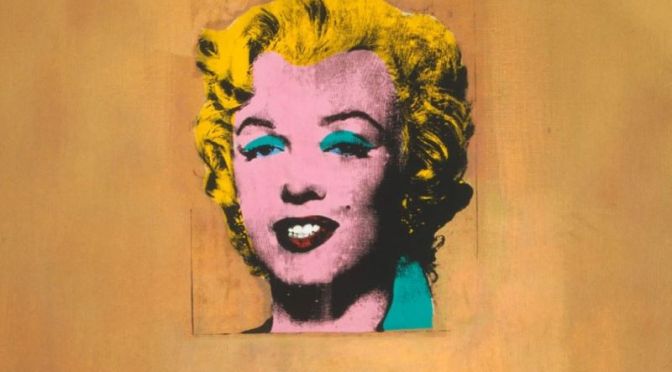
In 1967, Warhol established a print-publishing business, Factory Additions, through which he published a series of screenprint portfolios on his signature subjects. Marilyn Monroe was the first one. He used the same publicity still of the actress that he had previously used for dozens of paintings. Each image here was printed from five screens: one that carried the photographic image and four for different areas of color, sometimes printed off-register. About repetitions Warhol said, “The more you look at the same exact thing, the more the meaning goes away, and the better and emptier you feel.”


 Boomers Daily