Tag Archives: Arts & Literature

Cervantes in the Cave — The Art of Illusion

From Lepanto to Algiers to Seville, he recast Plato’s cave: instead of fleeing, he trimmed the wick—using comedy and narrative to make honest light out of shadow.

By Michael Cummins, Editor, August 22, 2025

In a cave in Argamasilla de Alba, Spain, a man sits hunched over a manuscript. The air is damp; the light keeps deciding what to keep. He writes not with the flourish of a court poet but with the urgency of someone who has known confinement—who has lived among shadows and learned to speak their language. The man is Miguel de Cervantes. The cave, according to local legend, is where he began Don Quixote. Whether the story is true hardly matters. The image endures: Cervantes, imprisoned, wounded, obscure, writing the book that would fracture the very idea of literary realism.

He breaks the silence first, as if talking to the walls. “Engendrado en una cárcel, donde toda incomodidad tiene su asiento,” he says—begotten in a prison, where every discomfort keeps its chair. He smiles at his own choice of verb. Begotten. It gives hardship hands.

A foot scuffs the threshold. Mateo steps into the half-light, a fellow freed captive from a life the two men still carry like a watermark. He takes the cave in at a glance—the whitewash, the barred slit of window, the stone bench that knows the shape of a tired back.

“You write in the dark, Miguel,” Mateo says. “Still chasing shadows?”

“Not chasing,” Cervantes replies, without looking up. “Refracting. These shadows are more honest than the sunlit lies of court and empire.”

Plato’s prisoners mistook flicker for fact. Cervantes has no such innocence; he knows exactly what light can do and what it cannot. In Algiers he learned the cost of sunlight and the uses of a candle. “We invented stories to survive,” he says. “We imagined rescue. We became authors of unreality. And in doing so, we learned how unreality works.”

He had boarded a homeward ship in 1575 and sailed straight into a profession he did not apply for. Corsairs took the vessel. Letters of recommendation—ironically the very proof of his merit—made him valuable. Algiers swallowed him for five years. Four escape attempts, each with its choreography of bribes, whispers, and night boats, failed in turn; punishments followed with bureaucratic punctuality. In the baños he organized fellow captives, staged plays that felt like oxygen rations, and discovered a kind of command that requires neither rank nor drumrolls. The lesson was not transcendence. It was texture. Captivity did not reveal some pure, sunlit truth; it revealed illusion’s machinery: how shadows are cast, how they persuade, how they can be turned from weapon into instrument.

“So you believe captivity reveals truth?” Mateo asks.

“No,” Cervantes says. “It reveals illusion. But if you know you’re in a cave, illusion can be honest about itself.”

He speaks like a man who has balanced too many ledgers and decided to keep one for the soul. In his prologue to the Exemplary Novels he would boast with a craftsman’s pride: mías propias, no imitadas ni hurtadas—my own pieces, not imitated or stolen. After a life in which other people held the keys, authorship felt like a kind of lawful possession. He is not naïve about it; theft will come in a thousand copies. Still, he plants his flag in sentences.

Mateo lowers himself onto the bench. The cave keeps its cool.

“Begin earlier,” Mateo says softly. “Begin with the wound.”

Cervantes nods, as if paging back. “Lepanto,” he says. “Two shots to the chest, one to the hand. El mayor bien que me vino. The greatest favor that came to me.”

Mateo laughs—a short, incredulous bark. “Favor?”

“A hand is a tool,” Cervantes says, flexing his right, letting the left sleeve fall into its gentle emptiness. “So is a story. One broke and taught the other its work. I learned that honor is not trumpets; it is the bruise that stays after the sound goes.”

“What did it smell like—the battle?” Mateo asks, because some questions insist.

“Oak and salt and a fire that wandered,” Cervantes says. “The sea keeps bad accounts—always debits, never balance. We threw our bodies at its ledger and called it glory. I got a bill I could live with.”

The cave changes its mind about brightness by a single shade. Light climbs a little higher on the wall, as if memory has a temperature.

“After Algiers,” Mateo says, “you came home to paper.”

“To paper and suspicion,” Cervantes answers. “Spain wanted receipts more than epics.” He became a purchasing agent, then a tax collector—the sort of work that presses humility into a man’s pockets and takes the lint besides. A banker fell in Seville and the ground gave way beneath him. Jail happened the way weather happens. Bureaucracy, he discovered, is a prison with nicer pens.

He thumps the palm of his right hand on the bench, a quiet imitation of a ledger closing. “Always the same sum,” he says. “Loyalty plus wounds equals suspicion.”

“That arithmetic,” Mateo says, “taught you comedy.”

“It taught me instruments,” Cervantes corrects gently. “Comedy is a surgeon’s knife you can carry in public.”

He had tried other rooms. La Galatea (1585), a pastoral romance, sighs under painted trees and speaks expertly in a fashionable voice—too expertly for a man who had learned to breathe in iron. “A ceiling too low for the lungs,” he says. Failure did not embarrass him; it emancipated him. “I loved what books promised. I wrote the promise’s correction.”

“And then you choose another cave,” Mateo says, looking around.

“This time I brought the candle.” Cervantes nods at the stub trembling in its dish. “The cave is not a prison if you know you’re inside it. Fiction is not delusion if you wield it knowingly.”

“Is that freedom?” Mateo asks. “To live in fiction?”

Cervantes answers with a line he will later put in a knight’s mouth because knights carry sentences farther than taxmen do. “La libertad, Sancho, es uno de los más preciosos dones…” Freedom, Sancho, is one of the most precious gifts. He lets the clause hang and then adds the counterweight: captivity is the greatest evil. “But there is a third thing,” he says. “The discipline of the wick. Not everyone reaches the sun. Many of us live by hearth-light. So make the hearth honest.”

He laughs, not kindly but not unkindly, at the memory of a barber’s basin mistaken for a helmet. “A basin can be a helmet,” he says, “if the story is honest about the trick.” The joke is not cruelty; it’s consent. Illusions that confess their wages are allowed to work.

“You sound like Plato’s least obedient pupil,” Mateo says. “He wants the prisoner out of the cave. You stay.”

“Plato had less practice with caves,” Cervantes says. “I stay and trim the wick.”

The man who stays in the cave can tell you about the cost of zeal. He knows what happens when mercy runs faster than attention: chaos dresses up as freedom. He has written a scene in which a knight frees a chain gang of galley slaves with a fine speech and a flash of temper, and the liberated—unbriefed on narrative responsibility—repay the favor with stones. “Pity without comprehension,” he says, “is a door swinging in a storm. Freedom without narrative becomes a mess that lets tyrants say, ‘You see? Chains keep order.’”

Mateo’s eyes drift toward a wooden head in the corner, painted eyes arrested mid-glance. “Master Pedro,” Cervantes says, amused at the prop the cave has supplied. He tells the story of a puppet theater, a knight who cannot bear strings, a sword that corrects an illusion into splinters. Even illusions keep accounts, he reminds Mateo. Someone pays for the pleasure. “In that scene,” he says, “I taxed zeal. I sent the bill to laughter.”

“So your book is a theater?” Mateo asks.

“A theater that shows its ropes,” Cervantes says. “A historian with a wink in his ink. A narrator who argues with me, and I with him. A false sequel enters the room, and I absorb him into the play. If illusion is a crime, let the evidence be visible. If it is a craft, let the strings show and the audience decide.”

He keeps his quotes short and to the point, letting them behave like tools rather than trophies. “Yo sé quién soy,” he says, not to boast but to set a boundary—I know who I am. “And I know what I am not. I am not the sun. I am a candle with a good memory.”

Memory is a troublesome servant. “¡Oh memoria, enemiga mortal de mi descanso!,” he mutters with theatrical exasperation—Oh memory, mortal enemy of my rest—knowing full well he cannot do without her. In the deepest fold of the book he is writing, he lowers his knight into the Cave of Montesinos and gives him a private vision no one can verify. Minutes pass in the world; days unfold in the cave. Readers will fight about that descent for centuries: lie or parable? He shrugs. The rope held. The telling is what matters.

“What about truth?” Mateo asks. “You dodge it like a matador.”

“Truth is errant,” Cervantes says. “Like my knight. It wanders, stumbles, reinvents itself. La verdad adelgaza y no quiebra—truth thins but does not break. It lives in the flicker between shadow and flame.” He aims for a truth you can sit with, not a blaze you must worship. Even now, when the cave dims or brightens by a breath, he adjusts nothing in his voice. He trusts the room to keep up.

The room has heard other versions of this life. Soldier, captive, clerk, failed author—the catalogue is accurate and useless until you give it breath. He has learned that a life of refusals and humiliations can be rearranged into a lamp. “El que lee mucho y anda mucho, ve mucho y sabe mucho,” he says with a grin—he who reads much and travels much sees much and knows much—and Mateos’s chuckle bounces off the whitewash and returns as agreement.

If the cave is a theater, it is also a workshop. He places three objects on the bench as if laying out tools: a frayed rope (failed escape; lesson kept), a ledger (bureaucracy’s Bible, now a prop for comedy), and the puppet head (illusion, demystified and retained). He sets the rope across the ledger like a sash and props the puppet against both like a child asleep between two patient adults.

“You’re staging your own life,” Mateo says.

“Everything I own appears in my books,” Cervantes answers. “Better to put them to work than let them gather dust.”

He will put even injury to work. He has already done it. “There is no book so bad that it does not have something good,” he says—No hay libro tan malo que no tenga algo bueno—and he means, among other things, his own early efforts. He tried the fashion and failed; he learned to write beyond it. The failure cleared the room.

“And the counterfeit?” Mateo asks. “The other Quixote?”

“I made room,” Cervantes says, not quite happily. He doesn’t bother to call the rival by name. “I let the counterfeit into Part II and gave him the dignity of being wrong on the page. It is the politest way to win.”

Outside, late afternoon arranges itself. Inside, the candle practices its small weather. The conversation acquires the unhurried gravity of men who have been forced to wait before and know that waiting can be made useful. They speak of the Información de Argel—the sworn testimonies that stitched a biography out of scars and courage; of the petition to the Council of the Indies that asked for four possible offices across the ocean and delivered no; of Seville’s auditoriums of suspicion where a man could do arithmetic all day and still owe.

“You turned all that into a style,” Mateo says.

“I turned it into a temperament,” Cervantes corrects. Style is the residue. The temperament is the choice: to stay in the cave and make the light adjustable; to refuse the panic of transcendence in favor of the patience of attention; to let laughter be a form of moral accounting. “I wanted a book in which the strings show,” he says. “So when someone pulls, we know who is moving what.”

He reaches for the candle with wetted fingers and trims the wick. The flame tightens, steadies, sharpens the edges of the room with a surgeon’s manners. The gesture is mundane and feels like a thesis.

“Why not flee?” Mateo asks one last time, because some questions return until answered in the body.

“Because someone must tend the flame,” Cervantes says. “Because most people live by hearth-light. Because the cave tells the truth about limits, and I prefer honest rooms to lying palaces.”

He stands, and the bench acknowledges the change with a creak that has learned both complaint and loyalty. He touches the stone with the backs of his fingers, as one does a sleeping child. The puppet keeps its round attention. The rope adopts its length. The ledger decides to be heavy again.

“Begin,” Mateo says, suddenly shy of making a ceremony of it.

“I did,” Cervantes answers, and returns to his page.

He writes the opening lines of Don Quixote as the candle throws a peninsula of light bordered by ink. A poor gentleman with a head full of books starts out into a world that will bruise him into philosophy. A squire with a sack of proverbs learns to spend them one by one, after listening. Windmills declare their innocence; a basin negotiates a new title. Dukes turn out to be children who have learned cruelty by playing. Priests explain themselves into farce. Puppets are freed to their ruin, then repaired by a writer who has learned to apologize with laughter.

Cervantes does not flee illusion; he illuminates it. He does not reject reality; he reframes it. He does not promise truth; he escorts it, errant and sturdy, through rooms with honest walls. He turns shadows into stories and stories into a way of seeing that does not blind. He has stayed where Plato urged ascension and found, by staying, a different kind of ascent: the climb of attention, the charity of proportion, the courage to let strings show and still believe in the show.

Unlike Plato’s prisoner, Cervantes remains in the cave. He writes. He refracts. He talks to the walls and to the future, and both answer. His broken hand, his captive mind, his errant knight—everything he survived and everything he invented—gathers in the small weather of a candle and becomes, against all instruction, a form of daylight.

THIS ESSAY WAS WRITTEN AND EDITED UTILIZING AI

TIMES LITERARY SUPPLEMENT – AUGUST 22, 2025 PREVIEW

TIMES LITERARY SUPPLEMENT: The latest issue features Lawrence Durrell, “so many towns” that could “become Alexandria” – “founded”, as indeed so many were, “At the doors of Africa”, “Upon a parting”. Yet what other town could boast of anything to compare with that “last pale / Lighthouse”, the Pharos of Alexandria, “like a Samson blinded”?

Family of fabulists

Literary myth-making, from Alexandria to Corfu By Jonathan Keates

‘Celestial walnuts’

The pleasures and challenges of making – and describing – great wines By George Berridge

The path to Rome

Investigating the deathbed conversion of Oscar Wilde By Richard A. Kaye

More, now, again

To what extent are addicts responsible for their actions? By Crispin Sartwell

Responsive Elegance: AI’s Fashion Revolution

Responsive Elegance: How AI Is Rewriting the Code of Luxury Fashion
From Prada’s neural silhouettes to Hermès’ algorithmic resistance, a new aesthetic regime emerges—where beauty is no longer just crafted, but computed.

By Michael Cummins, Editor, August 18, 2025

The atelier no longer glows with candlelight, nor hums with the quiet labor of hand-stitching—it pulses with data. Fashion, once the domain of intuition, ritual, and artisanal mastery, is being reshaped by artificial intelligence. Algorithms now whisper what beauty should look like, trained not on muses but on millions of images, trends, and cultural signals. The designer’s sketchbook has become a neural network; the runway, a reflection of predictive modeling—beauty, now rendered in code.

This transformation is not speculative—it’s unfolding in real time. Prada has explored AI tools to remix archival silhouettes with contemporary streetwear aesthetics. Burberry uses machine learning to forecast regional preferences and tailor collections to cultural nuance. LVMH, the world’s largest luxury conglomerate, has declared AI a strategic infrastructure, integrating it across its seventy-five maisons to optimize supply chains, personalize client experiences, and assist in creative ideation. Meanwhile, Hermès resists the wave, preserving opacity, restraint, and human discretion.

At the heart of this shift are two interlocking innovations: generative design, where AI produces visual forms based on input parameters, and predictive styling, which anticipates consumer desires through data. Together, they mark a new aesthetic regime—responsive elegance—where beauty is calibrated to cultural mood and optimized for relevance.

But what is lost in this optimization? Can algorithmic chic retain the aura of the original? Does prediction flatten surprise?

Generative Design & Predictive Styling: Fashion’s New Operating System

Generative design and predictive styling are not mere tools—they are provocations. They challenge the very foundations of fashion’s creative process, shifting the locus of authorship from the human hand to the algorithmic eye.

Generative design uses neural networks and evolutionary algorithms to produce visual outputs based on input parameters. In fashion, this means feeding the machine with data: historical collections, regional aesthetics, streetwear archives, and abstract mood descriptors. The algorithm then generates design options that reflect emergent patterns and cultural resonance.

Prada, known for its intellectual rigor, has experimented with such approaches. Analysts at Business of Fashion note that AI-driven archival remixing allows Prada to analyze past collections and filter them through contemporary preference data, producing silhouettes that feel both nostalgic and hyper-contemporary. A 1990s-inspired line recently drew on East Asian streetwear influences, creating garments that seemed to arrive from both memory and futurity at once.

Predictive styling, meanwhile, anticipates consumer desires by analyzing social media sentiment, purchasing behavior, influencer trends, and regional aesthetics. Burberry employs such tools to refine color palettes and silhouettes by geography: muted earth tones for Scandinavian markets, tailored minimalism for East Asian consumers. As Burberry’s Chief Digital Officer Rachel Waller told Vogue Business, “AI lets us listen to what customers are already telling us in ways no survey could capture.”

A McKinsey & Company 2024 report concluded:

“Generative AI is not just automation—it’s augmentation. It gives creatives the tools to experiment faster, freeing them to focus on what only humans can do.”

Yet this feedback loop—designing for what is already emerging—raises philosophical questions. Does prediction flatten originality? If fashion becomes a mirror of desire, does it lose its capacity to provoke?

Walter Benjamin, in The Work of Art in the Age of Mechanical Reproduction (1936), warned that mechanical replication erodes the ‘aura’—the singular presence of an artwork in time and space. In AI fashion, the aura is not lost—it is simulated, curated, and reassembled from data. The designer becomes less an originator than a selector of algorithmic possibility.

Still, there is poetry in this logic. Responsive elegance reflects the zeitgeist, translating cultural mood into material form. It is a mirror of collective desire, shaped by both human intuition and machine cognition. The challenge is to ensure that this beauty remains not only relevant—but resonant.

LVMH vs. Hermès: Two Philosophies of Luxury in the Algorithmic Age

The tension between responsive elegance and timeless restraint is embodied in the divergent strategies of LVMH and Hermès—two titans of luxury, each offering a distinct vision of beauty in the age of AI.

LVMH has embraced artificial intelligence as strategic infrastructure. In 2023, it announced a deep partnership with Google Cloud, creating a sophisticated platform that integrates AI across its seventy-five maisons. Louis Vuitton uses generative design to remix archival motifs with trend data. Sephora curates personalized product bundles through machine learning. Dom Pérignon experiments with immersive digital storytelling and packaging design based on cultural sentiment.

Franck Le Moal, LVMH’s Chief Information Officer, describes the conglomerate’s approach as “weaving together data and AI that connects the digital and store experiences, all while being seamless and invisible.” The goal is not automation for its own sake, but augmentation of the luxury experience—empowering client advisors, deepening emotional resonance, and enhancing agility.

As Forbes observed in 2024:

“LVMH sees the AI challenge for luxury not as a technological one, but as a human one. The brands prosper on authenticity and person-to-person connection. Irresponsible use of GenAI can threaten that.”

Hermès, by contrast, resists the algorithmic tide. Its brand strategy is built on restraint, consistency, and long-term value. Hermès avoids e-commerce for many products, limits advertising, and maintains a deliberately opaque supply chain. While it uses AI for logistics and internal operations, it does not foreground AI in client experiences. Its mystique depends on human discretion, not algorithmic prediction.

As Chaotropy’s Luxury Analysis 2025 put it:

“Hermès is not only immune to the coming tsunami of technological innovation—it may benefit from it. In an era of automation, scarcity and craftsmanship become more desirable.”

These two models reflect deeper aesthetic divides. LVMH offers responsive elegance—beauty that adapts to us. Hermès offers elusive beauty—beauty that asks us to adapt to it. One is immersive, scalable, and optimized; the other opaque, ritualistic, and human-centered.

When Machines Dream in Silk: Speculative Futures of AI Luxury

If today’s AI fashion is co-authored, tomorrow’s may be autonomous. As generative design and predictive styling evolve, we inch closer to a future where products are not just assisted by AI—but entirely designed by it.

Louis Vuitton’s “Sentiment Handbag” scrapes global sentiment to reflect the emotional climate of the world. Iridescent textures for optimism, protective silhouettes for anxiety. Fashion becomes emotional cartography.

Sephora’s “AI Skin Atlas” tailors skincare to micro-geographies and genetic lineages. Packaging, scent, and texture resonate with local rituals and biological needs.

Dom Pérignon’s “Algorithmic Vintage” blends champagne based on predictive modeling of soil, weather, and taste profiles. Terroir meets tensor flow.

TAG Heuer’s Smart-AI Timepiece adapts its face to your stress levels and calendar. A watch that doesn’t just tell time—it tells mood.

Bulgari’s AR-enhanced jewelry refracts algorithmic lightplay through centuries of tradition. Heritage collapses into spectacle.

These speculative products reflect a future where responsive elegance becomes autonomous elegance. Designers may become philosopher-curators—stewards of sensibility, shaping not just what the machine sees, but what it dares to feel.

Yet ethical concerns loom. A 2025 study by Amity University warned:

“AI-generated aesthetics challenge traditional modes of design expression and raise unresolved questions about authorship, originality, and cultural integrity.”

To address these risks, the proposed F.A.S.H.I.O.N. AI Ethics Framework suggests principles like Fair Credit, Authentic Context, and Human-Centric Design. These frameworks aim to preserve dignity in design, ensuring that beauty remains not just a product of data, but a reflection of cultural care.

The Algorithm in the Boutique: Two Journeys, Two Futures

In 2030, a woman enters the Louis Vuitton flagship on the Champs-Élysées. The store AI recognizes her walk, gestures, and biometric stress markers. Her past purchases, Instagram aesthetic, and travel itineraries have been quietly parsed. She’s shown a handbag designed for her demographic cluster—and a speculative “future bag” generated from global sentiment. Augmented reality mirrors shift its hue based on fashion chatter.

Across town, a man steps into Hermès on Rue du Faubourg Saint-Honoré. No AI overlay. No predictive styling. He waits while a human advisor retrieves three options from the back room. Scarcity is preserved. Opacity enforced. Beauty demands patience, loyalty, and reverence.

Responsive elegance personalizes. Timeless restraint universalizes. One anticipates. The other withholds.

Ethical Horizons: Data, Desire, and Dignity

As AI saturates luxury, the ethical stakes grow sharper:

Privacy or Surveillance? Luxury thrives on intimacy, but when biometric and behavioral data feed design, where is the line between service and intrusion? A handbag tailored to your mood may delight—but what if that mood was inferred from stress markers you didn’t consent to share?

Cultural Reverence or Algorithmic Appropriation? Algorithms trained on global aesthetics may inadvertently exploit indigenous or marginalized designs without context or consent. This risk echoes past critiques of fast fashion—but now at algorithmic speed, and with the veneer of personalization.

Crafted Scarcity or Generative Excess? Hermès’ commitment to craft-based scarcity stands in contrast to AI’s generative abundance. What happens to luxury when it becomes infinitely reproducible? Does the aura of exclusivity dissolve when beauty is just another output stream?

Philosopher Byung-Chul Han, in The Transparency Society (2012), warns:

“When everything is transparent, nothing is erotic.”

Han’s critique of transparency culture reminds us that the erotic—the mysterious, the withheld—is eroded by algorithmic exposure. In luxury, opacity is not inefficiency—it is seduction. The challenge for fashion is to preserve mystery in an age that demands metrics.

Fashion’s New Frontier


Fashion has always been a mirror of its time. In the age of artificial intelligence, that mirror becomes a sensor—reading cultural mood, forecasting desire, and generating beauty optimized for relevance. Generative design and predictive styling are not just innovations; they are provocations. They reconfigure creativity, decentralize authorship, and introduce a new aesthetic logic.

Yet as fashion becomes increasingly responsive, it risks losing its capacity for rupture—for the unexpected, the irrational, the sublime. When beauty is calibrated to what is already emerging, it may cease to surprise. The algorithm designs for resonance, not resistance. It reflects desire, but does it provoke it?

The contrast between LVMH and Hermès reveals two futures. One immersive, scalable, and optimized; the other opaque, ritualistic, and elusive. These are not just business strategies—they are aesthetic philosophies. They ask us to choose between relevance and reverence, between immediacy and depth.

As AI evolves, fashion must ask deeper questions. Can responsive elegance coexist with emotional gravity? Can algorithmic chic retain the aura of the original? Will future designers be curators of machine imagination—or custodians of human mystery?

Perhaps the most urgent question is not what AI can do, but what it should be allowed to shape. Should it design garments that reflect our moods, or challenge them? Should it optimize beauty for engagement, or preserve it as a site of contemplation? In a world increasingly governed by prediction, the most radical gesture may be to remain unpredictable.

The future of fashion may lie in hybrid forms—where machine cognition enhances human intuition, and where data-driven relevance coexists with poetic restraint. Designers may become philosophers of form, guiding algorithms not toward efficiency, but toward meaning.

In this new frontier, fashion is no longer just what we wear. It is how we think, how we feel, how we respond to a world in flux. And in that response—whether crafted by hand or generated by code—beauty must remain not only timely, but timeless. Not only visible, but visceral. Not only predicted, but profoundly imagined.

THIS ESSAY WAS WRITTEN AND EDITED UTILIZING AI
THE NEW YORKER MAGAZINE – AUGUST 25, 2025 PREVIEW

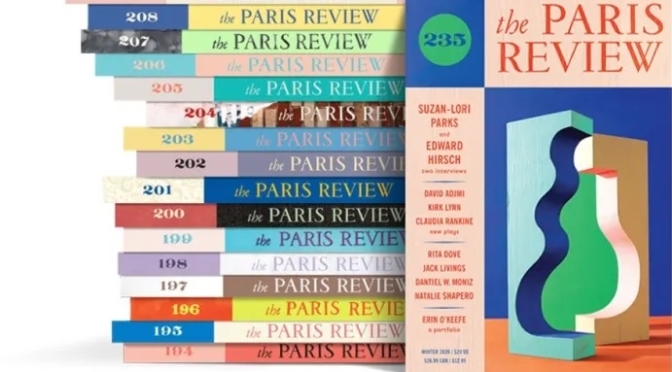
A child draws on a man's tattooed arm.

THE NEW YORKER MAGAZINE: The latest cover features ‘Sergio García Sánchez and Lola Moral’s “Artist in Training”

Pam Bondi’s Power Play

Donald Trump now has the Attorney General he always wanted—an ally willing to harness the law to enable his agenda. By Ruth Marcus

Trump Sends in the National Guard

Is the President’s takeover of D.C. a dry run for other cities? By Margaret Talbot

Bill Belichick Goes Back to School

Can the legendary former Patriots coach transform U.N.C. football? By Paige Williams

The Family Fallout of DNA Surprises

Through genetic testing, millions of Americans are estimated to have discovered that their parents aren’t who they thought. The news has upended relationships and created a community looking for answers. By Jennifer Wilson

THE COURAGE TO QUESTION: HOW AN EMPIRE WAS BUILT

By Michael Cummins, Editor, August 16, 2025

The memory of the Islamic Golden Age evokes powerful images: Baghdad’s legendary House of Wisdom, a beacon of scholarship for the world’s greatest minds; the astronomical observatories of Samarkand, mapping the heavens with unprecedented precision; the grand libraries of Córdoba, containing more books than all of Europe combined. For roughly five centuries, from the 8th to the 13th, the Islamic world was the undisputed global epicenter of science, philosophy, and culture. Its innovations gifted humanity algebra and algorithms, advanced surgical techniques, and the classical Greek philosophy that would later fuel the European Renaissance.

This flourishing was no accident. It was the direct result of a powerful, synergistic formula: the fusion of a voracious, institutionalized curiosity with strategic state patronage and a climate of relative tolerance. Yet, its eventual decline offers an equally crucial lesson—that such a vibrant ecosystem is fragile. Its vitality is contingent on maintaining an open spirit of inquiry, the closing of which precedes stagnation and decay. The story of the Islamic Golden Age, told through its twin centers of Baghdad and Córdoba, is therefore both an inspiring blueprint for civilizational greatness and a timeless cautionary tale of how easily it can be lost.

The Engine: A Genius for Synthesis

The foundation of the Golden Age was its genius for synthesis. It was an institutionalized curiosity that understood new knowledge is forged by actively seeking out, challenging, and combining the wisdom of others. As the scholar Dimitri Gutas argues in his seminal work, Greek Thought, Arabic Culture, this was not a random burst of energy but a deliberate, state-sponsored project driven by the “social and political imperatives of a new empire.” The Abbasid Caliphs, having established their capital in Baghdad in 762, sat at the crossroads of the Persian, Byzantine, and Indian worlds. Rather than view the intellectual traditions of these conquered or rival lands as a threat, they saw them as an invaluable resource for building a universalist imperial ideology.

This conviction gave rise to the Translation Movement, a massive, state-funded effort to translate the great works of science, medicine, and philosophy into Arabic. The nerve center of this project was Baghdad’s House of Wisdom (Bayt al-Hikmah). Far more than a library, it was a dynamic academy, a translation bureau, and a research institute where scholars from across the known world collaborated.

Their goal was never mere preservation. As the historian George Saliba demonstrates, they were active innovators who critically engaged with, corrected, and vastly expanded upon ancient texts. Ptolemy’s astronomical model in the Almagest was not just translated; it was rigorously tested in new observatories, its mathematical errors identified, and its cosmological assumptions challenged by thinkers like Ibn al-Haytham (Alhazen), whose work on optics overturned centuries of classical theory.

He did not simply import knowledge; he synthesized it into something new.

This process created a powerful intellectual alchemy. In mathematics, Muhammad ibn Musa al-Khwarizmi, a Persian scholar at the House of Wisdom, encountered the revolutionary numeral system from India, which included the concept of zero. He fused this with the geometric principles of the Greeks to create a new discipline he outlined in his landmark book, The Compendious Book on Calculation by Completion and Balancing. From the title’s key term, al-jabr (‘completion’ or ‘restoring’), the world received algebra—a tool for abstract problem-solving that would transform the world.

This same engine of synthesis, fueled by a competitive spirit, was humming thousands of miles away in Al-Andalus. In its capital, Córdoba, the physician Al-Zahrawi (Abulcasis), often called the father of modern surgery, compiled the Al-Tasrif, a thirty-volume medical encyclopedia. It was a monumental synthesis of classical medical knowledge with his own pioneering innovations, introducing the use of catgut for internal stitches and designing dozens of new surgical instruments that would define European medical practice for centuries. In philosophy, the Córdoban thinker Ibn Rushd (Averroes) produced radical commentaries on Aristotle that were so influential he became known simply as “The Commentator” in medieval Europe. He sought to demonstrate that reason and revelation were not in conflict but were two paths to the same truth, a bold intellectual project that would profoundly reshape Western scholasticism.

The Fuel: Strategic Investment in Knowledge

This intellectual engine was deliberately and lavishly fueled by rulers who saw investment in knowledge as a cornerstone of state power, prestige, and practical advantage. The immense wealth of the Abbasid Caliphate, derived from its control of global trade routes, made this grand-scale patronage possible. This power was materialized in Baghdad itself, Caliph al-Mansur’s perfectly circular “City of Peace,” an architectural marvel with the caliph’s palace and the grand mosque at its absolute center, symbolizing his position as the axis of the world. Later Abbasid palaces were sprawling complexes of exquisite gardens, cool marble halls, and courtyards filled with intricate fountains and exotic animals—dazzling stages for courtly life where poets, musicians, and scholars vied for the caliph’s favor.

It was within these opulent settings that legendary patrons like Harun al-Rashid and his son, al-Ma’mun, held court. Al-Ma’mun, a rationalist thinker himself, is said to have been inspired by a dream in which he conversed with Aristotle. He poured vast resources into the House of Wisdom, funding expeditions to Byzantium to acquire rare manuscripts and reportedly paying translators their weight in gold.

This model of state-sponsored knowledge was pursued with competitive fervor in Al-Andalus. In Córdoba, the Umayyad Caliph Abd al-Rahman III sought to build a capital that would eclipse all rivals. A few miles outside the city, he constructed a fabled palace-city, Madinat al-Zahra (“the shining city”). It was a breathtaking statement of power, built in terraces on a mountainside with thousands of imported marble columns. Its audience chambers were adorned with ivory and ebony, and at the center of the most magnificent hall lay a basin filled with shimmering quicksilver, which, when agitated, would flood the room with dazzling reflections of light.

This was a “war of culture” in which libraries were arsenals and palaces were declarations of supremacy. It was in this environment that Al-Hakam II, Abd al-Rahman’s son, amassed his legendary library of over 400,000 volumes, a beacon of knowledge designed to outshine Baghdad itself. This rivalry between distant capitals created a powerful ecosystem for genius, establishing a lasting infrastructure for discovery that attracted the best minds from every corner of the globe.

The Superpower: Pragmatic and Inclusive Tolerance

The era’s intellectual and financial investments were supercharged by a climate of relative tolerance. This was not a modern, egalitarian pluralism, but a practical and strategic inclusion that prevented intellectual monocultures and proved to be a civilizational superpower. As María Rosa Menocal writes in The Ornament of the World, this was a culture capable of a “first-rate pluralism,” where contradictions were not just tolerated but were often the source of creative energy.

The work of the Golden Age was a multi-faith and multi-ethnic endeavor. In Baghdad, the chief translator at the House of Wisdom and the most important medical scholar of his time, Hunayn ibn Ishaq, was a Nestorian Christian. A master of four languages—Syriac, Arabic, Greek, and Persian—he established a rigorous methodology, collecting multiple manuscript versions of a text to ensure the most accurate translation. For generations, Christian physicians from the Bakhtishu’ family served as personal doctors to the Abbasid caliphs.

This principle was just as potent in the West. In Córdoba, the court of Abd al-Rahman III thrived on the talents of figures like Hasdai ibn Shaprut, a Jewish physician and scholar who rose to become the caliph’s most trusted diplomat and vizier. He not only managed foreign policy but also used his position to patronize Hebrew poets and grammarians, fostering a golden age of Jewish culture that flourished in the heart of Islamic Spain. This was made possible by the dhimmi (protected peoples) system, which, while hierarchical, guaranteed non-Muslims the right to practice their faith and participate in intellectual life. In the realms of science and philosophy, merit and skill were often the ultimate currency. This diversity was the Golden Age’s secret weapon.

The Cautionary Tale: The Closing of the Mind

The Golden Age did not end simply with the hoofbeats of Mongol horses in 1258. Its decline was a prolonged grinding down of the audacious spirit of open inquiry. The Mongol sack of Baghdad was a devastating blow, but it struck a body already weakened by an internal intellectual malaise.

This cultural shift is often symbolized by the brilliant 11th-century theologian, Abu Hamid al-Ghazali. His influential critique of Hellenistic philosophy, The Incoherence of the Philosophers, was not an attack on reason itself—he was a master of it, who championed Aristotelian logic as a necessary tool for theology. Rather, it was a powerful argument against what he saw as the metaphysical overreach of philosophers on matters that he believed could only be known through divine revelation. His work, however, was a symptom of a decisive cultural turn. The intellectual energy of the elite, and the patronage that supported it, began to be re-channeled—away from speculative, open-ended philosophy (falsafa) and towards the preservation and systematization of established religious doctrine.

The central questions shifted from “What can we discover?” to “How do we defend what we know?”

This was compounded by political fragmentation. As the central authority of the Abbasid Caliphate waned, insecure local rulers, like the Seljuk Turks, increasingly sought legitimacy by patronizing conservative religious scholars. Funding flowed toward madrasas focused on theology and law rather than independent scientific academies. When a culture begins to fear certain questions, it loses its ability to generate new answers. The great North African historian Ibn Khaldun, writing in the 14th century from the ruins of this intellectual world, diagnosed the decline with stunning clarity in his Muqaddimah. He observed that when civilizations become too comfortable and focused on preserving past glories, they lose the “group solidarity” and intellectual dynamism that made them great. This growing intellectual rigidity created a civilizational brittleness, leaving it vulnerable to catastrophic external shocks.

Conclusion: A Timeless Blueprint

The legacy of the Islamic Golden Age is a double-edged one. Its rise in both the East and West provides a clear blueprint for greatness, built on relentless curiosity, wise patronage, and pragmatic inclusion. This formula demonstrates that progress is a product of openness and investment. Its decline, however, is a stark warning. The erosion of that most crucial pillar—the open, questioning mind—preceded the civilization’s fall.

The essential lesson of this epic is that culture precedes power. The wealth, military strength, and political influence of the caliphates were not the cause of the Golden Age; they were the result of a culture confident enough to be curious, strong enough to tolerate dissent, and wise enough to invest in knowledge. The engine of its greatness was not the treasury, but the House of Wisdom and the Library of Córdoba. Consequently, its decline was not merely a political or military failure, but the late-stage symptom of an intellectual culture that had begun to value orthodoxy over inquiry. When the questions stopped, the innovations stopped, and the foundations of power crumbled from within.

This narrative is not a historical artifact. It is a timeless blueprint, revealing that the most critical infrastructure any society can build is not made of stone or steel, but of the institutions and values that protect and promote the open pursuit of knowledge. In our modern world, the House of Wisdom finds its echo in publicly funded research universities, in international scientific collaborations, and in the legal frameworks that protect free speech and intellectual inquiry. The patronage of al-Ma’mun is mirrored in the grants that fund basic research—the kind of open-ended exploration that may not have an immediate commercial application but is the seedbed of future revolutions. The tolerance of Córdoba is the argument for diversity in our labs, our boardrooms, and our governments, recognizing that a multiplicity of perspectives is not a liability to be managed, but a strategic asset that fuels innovation.

The open secret of the Golden Age is therefore not a secret at all, but a choice. It is the choice to believe that greatness is born from the courage to question, to synthesize, and to explore. It is the choice to see knowledge not as a finite territory to be defended, but as an infinite ocean to be discovered. The moment a society decides it already has all the answers—the moment it values certainty over curiosity—is the moment its decline becomes inevitable.

THIS ESSAY WAS WRITTEN AND EDITED UTILIZING AI
SHAKESPEARE’S STAGE: WHEN THE MIND OVERHEARS ITSELF

By Michael Cummins, Editor, August 15, 2025

There is a moment in the history of the theater, and indeed in the history of consciousness itself, when the stage ceased to be merely a platform for action and became a vessel for thought. Before this moment, a character might speak their mind to an audience, but the thoughts were settled, the intentions declared. After, the character began to speak to themselves, and in doing so, they changed. They were no longer merely revealing a plan; they were discovering it, recoiling from it, marveling at it, and becoming someone new in the process.

This revolution was the singular invention of William Shakespeare. The literary critic Harold Bloom, who argued it was the pivotal event in Western consciousness, gave it a name: “self-overhearing.” It is the act of a character’s mind becoming its own audience. For Shakespeare, this was not a theory of composition but the very mechanism of being. He placed a theater inside his characters’ minds, and on that internal stage, they overheard the whispers of their own souls.

This interior drama, this process of a consciousness listening to itself, is the molten core of Shakespearean tragedy. It grants his characters a psychological autonomy that feels startlingly, sometimes terrifyingly, modern. While this technique permeates his work, it finds its most potent expression in three of his greatest tragic figures. Through them, Shakespeare presents a triptych of the mind in conflict. In Hamlet, we witness the intellectual paralyzed by the sheer polyphony of his own consciousness. In Iago, we find the chilling opposite: a malevolent artist who overhears his own capacity for evil and gleefully improvises a script of pure destruction. And in Macbeth, we watch a noble soldier become an audience to his own corruption, mesmerized and horrified by the murderous voice his ambition has awakened. Together, these three characters map the frontiers of human consciousness, demonstrating that the most profound tragedies unfold not in castles and on battlefields, but in the silent, echoing theater of the mind.

Hamlet: The Consciousness in Crisis

Hamlet is not merely a character; he is a consciousness. More than any figure in literature, he exists as a mind in perpetual, agonizing conversation with itself. His tragedy is not that he must avenge his father, but that he must first navigate the labyrinth of his own thoughts to do so. His soliloquies are not statements of intent but sprawling, recursive processes of self-interrogation. He is the ultimate self-overhearer, and the voice he listens to is so articulate, philosophically nuanced, and relentlessly self-critical that it becomes a prison.

From his first soliloquy, we see a mind recoiling from a world it cannot stomach. He laments the “unweeded garden” of the world, wishing:

O, that this too too solid flesh would melt,
Thaw and resolve itself into a dew!

 Hamlet, 1.2.129-130

After his encounter with the Ghost, the theater of his mind becomes a chamber of horrors. He overhears not just a command for revenge, but a shattering revelation about the nature of reality itself, concluding that “one may smile, and smile, and be a villain” (Hamlet, 1.5.108). This overheard truth—that appearance is a stage and humanity is a performance—becomes a cornerstone of his own psyche, prompting his decision to put on an “antic disposition.”

Charged with a task demanding bloody action, Hamlet’s consciousness instead turns inward, staging a debate that consumes the play. In his most famous soliloquy, he puts existence itself on trial: “To be, or not to be: that is the question.” This is not a man deciding whether to live or die; it is a mind listening to its own arguments for and against being. He weighs the “slings and arrows of outrageous fortune” against the terrifying uncertainty of “the undiscover’d country from whose bourn / No traveller returns.” The voice of his intellect, he concludes, is what “puzzles the will,” making it so that “conscience does make cowards of us all” (Hamlet, 3.1.56-83). He overhears his own fear and elevates it into a universal principle.

This intellectual paralysis is born of his relentless self-analysis. After watching an actor weep for the fictional Hecuba, Hamlet turns on himself in a fury of self-loathing, beginning with, “O, what a rogue and peasant slave am I!” He overhears his own inaction and is disgusted by it, mocking his tendency to talk instead of act:

Why, what an ass am I! …
That I, the son of a dear father murder’d,
Prompted to my revenge by heaven and hell,
Must, like a whore, unpack my heart with words.

— Hamlet, 2.2.583-586

He is both the speaker and the critic, the actor and the audience, caught in a feedback loop of thought, accusation, and further thought. Hamlet’s mind is a stage where the drama of consciousness perpetually upstages the call to action; the performance is so compelling he cannot bring himself to leave the theater.

Iago: The Playwright of Evil

If Hamlet’s self-overhearing leads to a tragic paralysis, Iago’s is the engine of a terrifying and creative evil. Where Hamlet’s mind is a debating chamber, Iago’s is a workshop. He is Shakespeare’s most chilling villain precisely because his villainy is an act of artistic improvisation. In his soliloquies, we do not witness a man wrestling with his conscience; we witness a playwright brainstorming his plot, listening with detached delight to the diabolical suggestions of his own intellect. He overhears the whispers of a motiveless malignity and, finding them intriguing, decides to write them into being.

Iago’s supposed motives for destroying Othello are flimsy and interchangeable. He first claims to hate the Moor for promoting Cassio. Then, he adds a rumor: “it is thought abroad, that ‘twixt my sheets / He has done my office” (Othello, 1.3.387-388). He presents this not as fact, but as a passing thought he chooses to entertain, a justification he can try on, resolving to act “as if for surety.” Where Hamlet desperately seeks a single, unimpeachable motive to act, Iago casually auditions motives, searching only for one that is dramatically effective. He is listening for a good enough reason, and when he finds one, he seizes it not with conviction but with artistic approval.

His soliloquies are masterclasses in this dark creativity. At the end of Act I, he pauses to admire his burgeoning plot. “How, how? Let’s see,” he muses, like an artist sketching a scene. “After some time, to abuse Othello’s ear / That he is too familiar with his wife.” The plan flows from him, culminating in the famous declaration:

Hell and night
Must bring this monstrous birth to the world’s light.

 Othello, 1.3.409-410

Later, he marvels at the tangible effect of his artistry, watching his poison corrupt Othello’s mind and noting with clinical detachment, “The Moor already changes with my poison: / Dangerous conceits are, in their natures, poisons” (Othello, 3.3.325-326). He is not just the playwright, but the rapt critic of his own unfolding drama. He steps outside of himself to admire his own performance as “honest Iago,” listening with applause to his own deceptive logic. This is the chilling sound of a consciousness with no moral compass, only an aesthetic one. It overhears its own capacity for deception and finds it beautiful. Iago is the playwright within the play, and the voice he hears is that of the void, whose suggestions he finds irresistible.

Macbeth: The Audience to Corruption

In Macbeth, we witness the most visceral and terrifying form of self-overhearing. He is a man who hears two voices within himself—that of the loyal thane and that of a murderous usurper—and the play charts his horrifying decision to listen to the latter. Unlike Hamlet, he is not paralyzed, and unlike Iago, he takes no pleasure in his dark machinations. Macbeth is an unwilling audience to his own ambition. He overhears the prophecy of his own moral decay and, though it terrifies him, cannot bring himself to walk out. His tragedy is that of a man who watches himself become a monster.

Our first glimpse into this internal battle comes after he meets the witches. Their prophecy is a “supernatural soliciting” that he reveals in an aside, a moment of public self-overhearing: “This supernatural soliciting / Cannot be ill, cannot be good” (Macbeth, 1.3.130-131). He listens as his mind debates the proposition. If it’s good, why does he yield to a suggestion:

Whose horrid image doth unfix my hair
And make my seated heart knock at my ribs,
Against the use of nature?

 Macbeth, 1.3.135-137

He is already a spectator to his own treasonous thoughts. The voice of ambition conjures the murder of Duncan, and his body reacts with visceral terror. The most profound moment of this internal drama is the “dagger of the mind” soliloquy. Here, Macbeth is a captive audience to his own murderous intent. “Is this a dagger which I see before me, / The handle toward my hand?” he asks, knowing it is a “dagger of the mind, a false creation, / Proceeding from the heat-oppressed brain” (Macbeth, 2.1.33-39). He is watching his own mind project its bloody purpose into the world; he overhears his own resolve and sees it take physical form.

After the murder, the voice he overheard as temptation becomes an inescapable torment. His consciousness broadcasts its own verdict—“Sleep no more! / Macbeth does murder sleep” (Macbeth, 2.2.35-36)—and he has no choice but to listen. This torment is soon joined by a chilling, logical self-appraisal. He overhears his own entrapment, recognizing that the only path forward is through more violence:

I am in blood
Stepp’d in so far that, should I wade no more,
Returning were as tedious as go o’er.

 Macbeth, 3.4.136-138

His tragedy culminates in his final soliloquy, where, upon hearing of his wife’s death, he overhears the voice of utter despair: “Tomorrow, and tomorrow, and tomorrow, / Creeps in this petty pace from day to day…” (Macbeth, 5.5.19-20). It is his own soul pronouncing its damnation, the final, devastating judgment on a life spent listening to the wrong voice.

Conclusion

The soliloquy, in Shakespeare’s hands, became more than a dramatic convention; it became a window into the birth of the modern self. Through the radical art of self-overhearing, he transformed characters from archetypes who declared their nature into fluid beings who discovered it, moment by moment, in the echo chamber of their own minds.

Hamlet, Iago, and Macbeth stand as the titanic pillars of this innovation. Hamlet’s mind is a storm of intellectual static, a signal so complex it jams the frequency of action. Iago tunes his ear to a darker station, one that transmits pure malignity, and becomes a gleeful conductor of its chaotic symphony. Macbeth, most tragically, is trapped between stations, hearing both the noble music of his better nature and the siren song of ambition, and makes the fatal choice to listen to the latter until it is the only sound left.

In giving his characters the capacity to listen to themselves, Shakespeare gave them life. He understood that identity is not a fixed point but a constant, fraught negotiation—a dialogue between the self we know and the other voices that whisper of what we might become. By staging this internal drama, he invented a new kind of tragedy, one where the fatal flaw is not a trait, but the very process of thought itself. We return to these plays again and again, not merely as an audience, but to witness the terrifying and beautiful spectacle of a soul becoming an audience to itself.

THIS ESSAY WAS WRITTEN AND EDITED UTILIZING AI

THE NEW YORKER MAGAZINE – AUGUST 18, 2025 PREVIEW

The illustrated cover of the August 18 2025 issue of The New Yorker in which people hike on a colorful landscape.

THE NEW YORKER MAGAZINE: The latest cover features ‘Lorenzo Mattotti’s “Summer Rays” – The art of wandering.

Can Democrats Fight Back Against Trump’s Redistricting Scheme?

Fleeing lawmakers in Texas are unlikely to stop Republicans from redrawing the state’s congressional maps, but their effort has offered a rallying cry—and a reminder of the Democratic Party’s weaknesses. By Jonathan Blitzer

How an Ultra-Rare Disease Accelerates Aging

Teen-agers with progeria have effectively aged eight or nine decades. A cure could help change millions of lives—and shed light on why we grow old. By Dhruv Khullar

How Much Is Trump Profiting Off the Presidency?

An honest accounting of our Executive-in-Chief’s runaway self-enrichment. By David D. Kirkpatrick

LONDON REVIEW OF BOOKS – AUGUST 14, 2025 PREVIEW

LONDON REVIEW OF BOOKS: The latest issue features Tariffs Before Trump; Boccaccio’s Dirty Book and Constance Marten’s Defiance

Exile Economics: If Globalisation Fails by Ben Chu

No Trade Is Free: Changing Course, Taking on China and Helping America’s Workers by Robert Lighthizer

White Light: The Elemental Role of Phosphorus – in Our Cells, in Our Food and in Our World by Jack Lohmann

Boccaccio: A Biography by Marco Santagata, translated by Emlyn Eisenach

Boccaccio Defends Literature by Brenda Deen Schildgen

TIMES LITERARY SUPPLEMENT – AUGUST 8, 2025 PREVIEW

TIMES LITERARY SUPPLEMENT: The latest issue features ‘Tech Bro Utopia’ – Why Bacon’s New Atlantis is Peter Thiel’s favorite book; The monarch who built Britain; Charles and the carbuncles; The miseries of Victor Hugo’s daughter…