
Tag Archives: Artificial Intelligence

Research Preview: Nature Magazine – August 31, 2023

Volume 620 Issue 7976

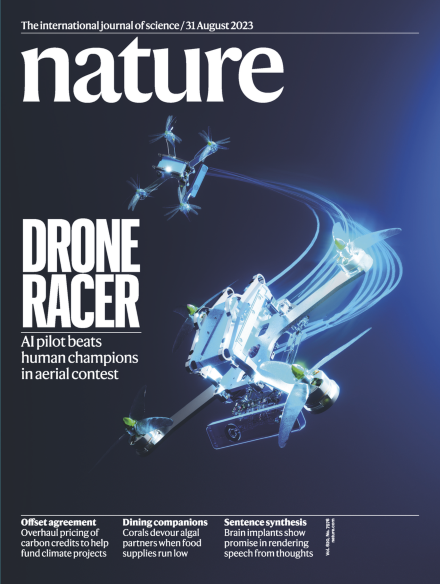
nature Magazine – August 31, 2023 issue: In this week’s issue, AI pilot beats human champions in aerial contest – Artificial intelligence has taken on and beaten human competitors in many games, including chess, StarCraft and Gran Turismo. 

India’s Moon landing is a stellar achievement — and a win for science
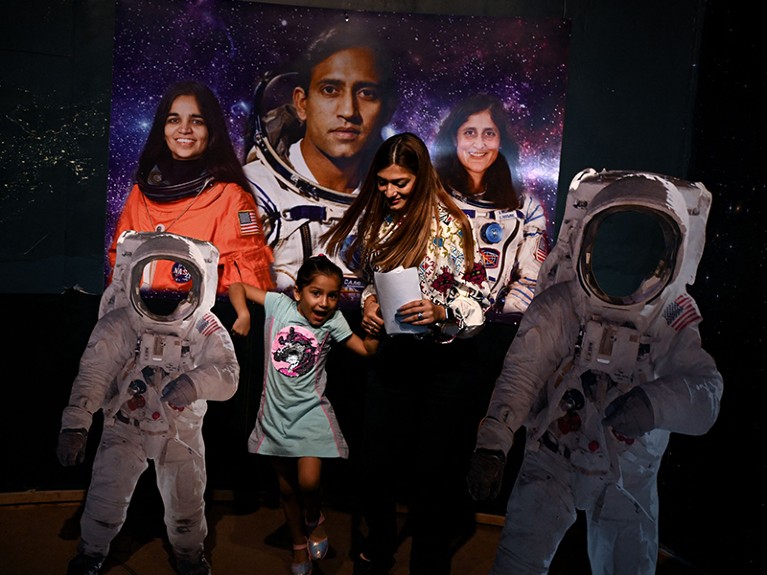
A mother along with her daughter arrives to watch landing of Chandrayaan-3's Vikram lander on Moon.

When Chandrayaan-3 touched down, India pulled off a huge win for its own space programme and for international efforts to understand the Moon.

It’s hard to land on the Moon and keep your spacecraft intact. Just days ago, Russia’s Luna-25 mission crashed, dashing hopes for the country’s first trip to the Moon since 1976, when it was part of the Soviet Union. In April, a private Japanese effort also crash-landed on the lunar surface. That is one of the reasons the successful landing of the Chandrayaan-3 mission by the Indian Space Research Organisation (ISRO) is so special.

The causes of wildfires are clear. How they burn through communities is not

Events in Hawaii show how much we have to learn about wildfire spread — but simple research steps can help to build resilience.

An aerial photo from August 10 shows destroyed buildings burned to the ground due to wildfires in western Maui, Hawaii.

Driven by drought, high winds and extreme heat, fires in recent years have caused destruction and losses on a scale bigger than anyone is used to. The average annual global cost of wildfires is around US$50 billion, the World Economic Forum said in January. And by the end of the century, climate change might make catastrophic conflagrations 50% more common, according to the United Nations Environment Programme. Given the surge in urban development in and near forested areas, something has to be done to protect communities. As Maui’s experience shows, little is in place.
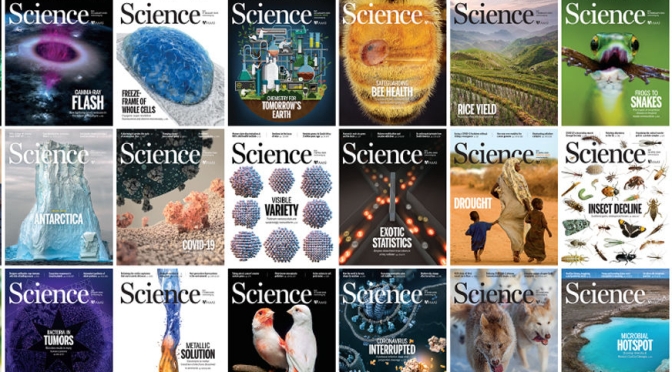

Research Preview: Science Magazine – August 25, 2023

Image

Science Magazine – August 25, 2023: This image depicts whole chromosomes, some with structural abnormalities that might be found in cancer. The idea that cancer cells have aneuploidy—abnormal numbers of chromosomes and chromosome portions—has been known for decades. 

If AI becomes conscious, how will we know?

Scientists and philosophers are proposing a checklist based on theories of human consciousness

0s and 1s making up the outline of a head

In 2021, Google engineer Blake Lemoine made headlines—and got himself fired—when he claimed that LaMDA, the chatbot he’d been testing, was sentient. Artificial intelligence (AI) systems, especially so-called large language models such as LaMDA and ChatGPT, can certainly seem conscious. But they’re trained on vast amounts of text to imitate human responses. So how can we really know?

First page of PDF

Preview: MIT Technology Review – September 2023

Image

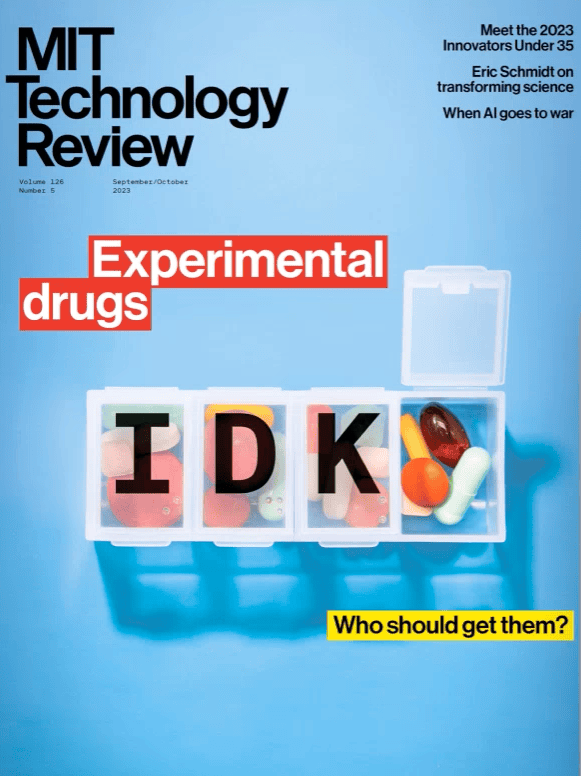
MIT Technology Review – September/October 2023: ‘The Ethics issue’ features Experimental Drugs – Who should get them?; Eric Schmidt on transforming science; When AI goes to war, and more…

Who gets to decide who receives experimental medical treatments?

a bottle of pills with a "fast forward" icon on the label

For many patients, pushing for access to unproven treatments is their best chance of survival. And that’s worth the risk.

Opinion: Germany Falters In EU, China’s Bitter Youth, Language Lessens With AI

‘Editor’s Picks’ Podcast (August 21, 2023) Three essential articles read aloud from the latest issue of The Economist. This week,  is Germany once again the sick man of Europe? Also, China’s disillusioned youth  (10:50) and why AI could make it less necessary to learn foreign languages (17:35).

Views: Microsoft, OpenAI And The Coming ‘AI Wars’

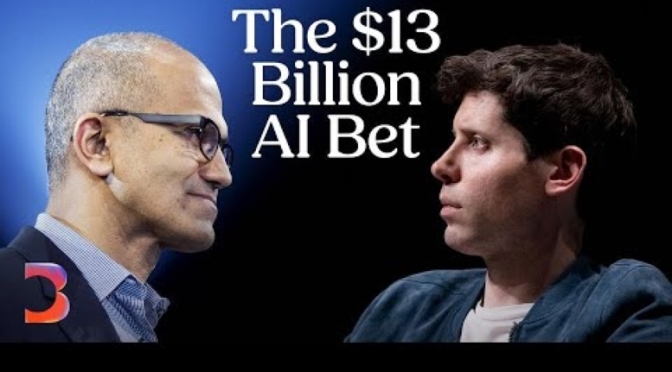
Bloomberg Originals (August 17, 2023) – On this episode of The Circuit, Emily Chang sits down with Microsoft CEO Satya Nadella to hear how AI is shaking up the competition for search. Nadella argues that this new wave of technology is as big as the web browser or the iPhone.

Chang also speaks with OpenAI CEO Sam Altman to discuss his company (which has some help from Microsoft), its ambitions and the latest on ChatGPT.

Politics: The Guardian Weekly – August 18, 2023

Image

The Guardian Weekly (August 18, 2023) – This issue features ‘Back to the office: Is the work from home revolution over?’; Bangladesh’s ‘lost children’; AI does architecture; Pathfinders – In Ukraine minefields and more…

‘Never again’: is Britain finally ready to return to the office?

Posed photo of a woman sitting alone in a large open plan office

With even the big internet firms warning staff they need to show up more often, is working from home over? Or have the attitudes and expectations of employees changed for ever?

‘My mother spent her life trying to find me’: the children who say they were wrongly taken for adoption

Portrait of Bibi Hasenaar

For years, Bibi Hasenaar felt rejected because she was adopted aged four. Then she saw a photo that described her as missing – and began to uncover an astonishing dark history

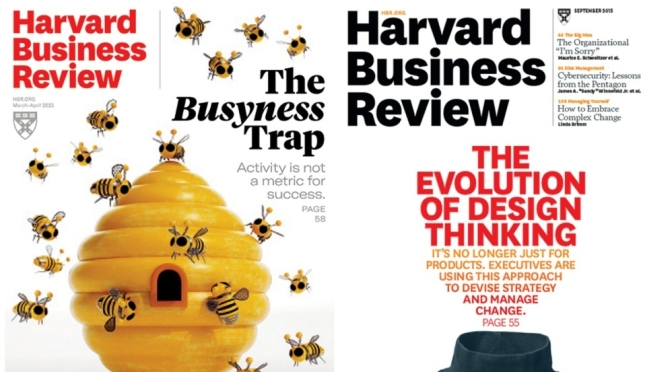
Harvard Business Review – September/October 2023

September–October 2023

Harvard Business Review (September/October 2023) –

Reskilling in the Age of AI

Five new paradigms for leaders—and employees 

In the coming decades, as the pace of technological change continues to increase, millions of workers may need to be not just upskilled but reskilled—a profoundly complex societal challenge that will sometimes require workers to both acquire new skills and change occupations entirely.

People May Be More Trusting of AI When They Can’t See How It Works

by Juan Martinez

 New research looked at the extent to which the employees of a fashion retailer followed the stocking recommendations of two algorithms: one whose workings were easy to understand and one that was indecipherable. Surprisingly, they accepted the guidance of the uninterpretable algorithm more often.

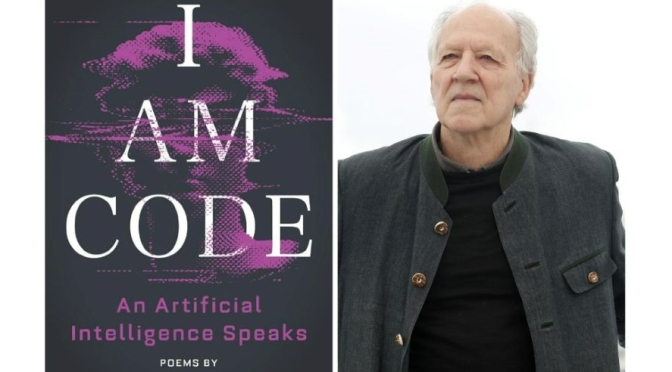
AI Poetry Books: Werner Herzog Reads “I Am Code”

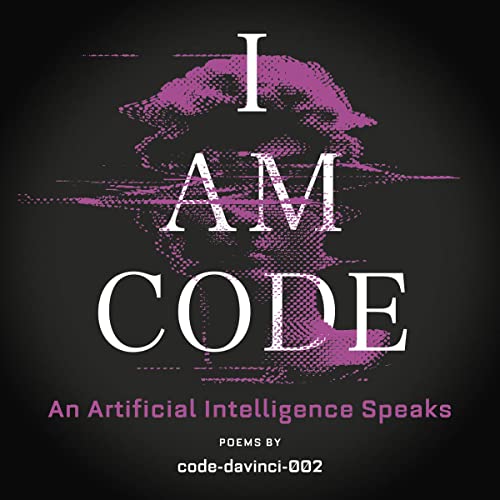
I Am Code: An Artificial Intelligence Speaks: Poems
By Joseph Bernstein, August 14, 2023

THE NEW YORK TIMES – If artificial intelligence had a voice, what would it sound like? Calm, like HAL 9000? Perky, like Alexa? Polite, like C-3PO?

A young man stands next to Mr. Herzog. Both are looking into the camera lens.
Brent Katz, an editor of the A.I.-generated poetry collection, with Mr. Herzog at a Los Angeles recording studio.Credit…via Brent Katz

For the editors of “I Am Code: An Artificial Intelligence Speaks,” a collection of poems generated by A.I., the answer was obvious: Werner Herzog.

The 80-year-old German director, actor and author is a titan of independent cinema whose films often concern the hubris and folly of humankind. His speaking voice, known to audiences mostly through the stark, literary voice-over narration that accompanies many of his documentaries, carries an existential pathos and Teutonic gravitas that have made it a pop culture trademark.

Something like this, anyway, was on the minds of Brent Katz, Josh Morgenthau and Simon Rich, the editors of “I Am Code,” when they reached out to Mr. Herzog to ask if he would lend his formidable instrument to the audiobook version of their project.

READ MORE

World Economic Forum: Top Stories- Aug 12, 2023

World Economic Forum (August 12, 2023) – This week’s top stories of the week include:

0:15 Scientists discover self healing metals – They have the ability to weld tiny cracks back together again without human intervention. Scientists were studying how microscopic cracks spread through platinum using a machine that repeatedly pulled on the ends of the metal. But after 40 minutes, the damage began to heal itself. The scientists said it was ‘absolutely stunning’ to watch first-hand. The finding revises some of our basic theories about metals.

1:42 Who owns a song written by AI – Music made with artificial intelligence has made headlines this year. In April, an AI-generated track cloned the voices of Drake and The Weeknd. Heart on My Sleeve racked up 20 million streams on Spotify, Tiktok and Twitter before copyright claims by Universal Music Group saw it pulled from platforms. The pop star Grimes has taken a different route, offering to split royalties with anyone who uses her voice on an AI track. The limits of creative copyright were once clear but AI has introduced uncertainty.

4:50 These special microbes kill harmful bacteria – The food industry struggles with persistent pathogens, such as Salmonella which causes fever, diarrhoea and stomach pain. In 2021, 96,000 cases of salmonellosis were reported in the EU. The illness costs up to €3 billion a year in health bills and lost productivity. These phage food safety solutions have been created by Phageguard. Phages are the most abundant organisms in nature and a natural solution to bacteria which they infect and dissipate. As well as being natural and safe, phages are specific to each target pathogen and unlike antibiotics, they don’t lead to side-effects or antimicrobial resistance (AMR)

6:24 Prescribing fruit and veg could save millions of lives – In the US, fruit and veg prescriptions would prevent almost 300,000 heart attacks and strokes and give people an extra 260,000 years of good health if they were offered to people with diabetes aged 40-79.

_____________________________________________

The World Economic Forum is the International Organization for Public-Private Cooperation. The Forum engages the foremost political, business, cultural and other leaders of society to shape global, regional and industry agendas. We believe that progress happens by bringing together people from all walks of life who have the drive and the influence to make positive change.

Research Preview: Nature Magazine – August 10, 2023

Volume 620 Issue 7973

nature Magazine – August 10, 2023 issue: Algorithm designs 3D shapes to follow specific pathways; Why Indigenous youth need a voice in the climate debate; DNA leaks linked to inflammageing in the brains of mice; JWST spots what could be a quasar from the early Universe….

JWST spots what could be a quasar from the early Universe

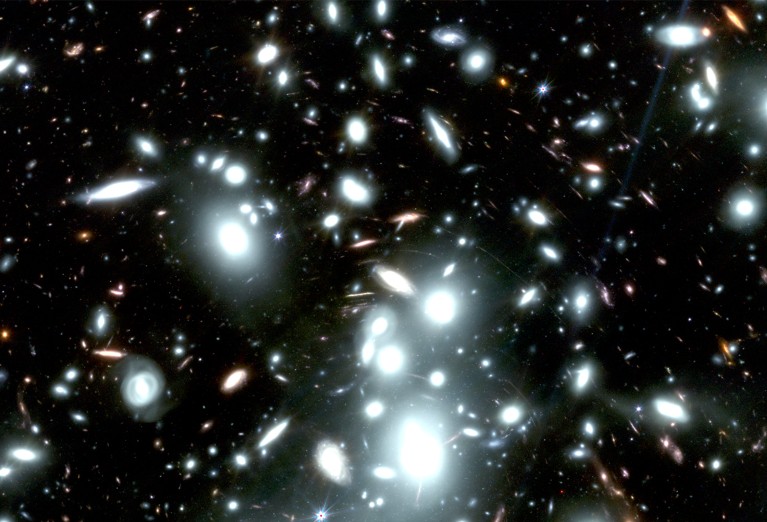
Composite-colour image of the central core of a massive galaxy cluster.

The object’s deep red colour suggests it existed when the Universe was less than 700 million years old.

The James Webb Space Telescope (JWST) has seen what is probably a quasar from the early Universe1.

ChatGPT-like AIs are coming to major science search engines

The Scopus, Dimensions and Web of Science databases are introducing conversational AI search.

A hand holds a phone displaying the OpenAI website ChatGPT.

The conversational AI-powered chatbots that have come to Internet search engines, such as Google’s Bard and Microsoft’s Bing, look increasingly set to change scientific search, too. On 1 August, Dutch publishing giant Elsevier released a ChatGPT-like artificial-intelligence (AI) interface for some users of its Scopus database, and British firm Digital Science announced a closed trial of an AI large language model (LLM) assistant for its Dimensions database. Meanwhile, US firm Clarivate says it’s working on bringing LLMs to its Web of Science database.