
Feom a Wall Street Journal Arts & Entertainment article:
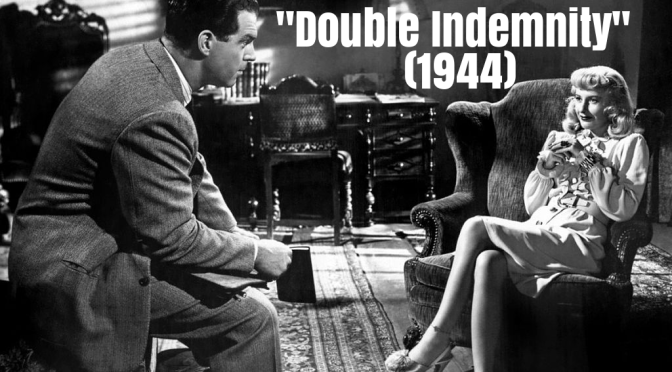
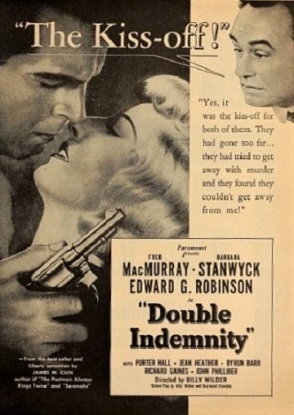 Seventy-five years ago, “Double Indemnity” opened in theaters across America. It was an instant hit, and remains to this day a staple offering of revival houses and on cable TV and streaming video. Yet little journalistic notice has been taken of the birthday of Billy Wilder’s first great screen drama, a homicidal thriller that nonetheless had—and has—something truly unsettling to say about the dark crosscurrents of middle-class American life.
Directed by Wilder and co-written by him and Raymond Chandler, the celebrated mystery novelist, “Double Indemnity” is the story of a restless insurance salesman who helps a sexy, frustrated housewife murder her husband for profit. Though neither Wilder nor Chandler realized it at the time, it would later be acknowledged by critics and scholars as the first fully developed example of film noir, in which a flawed but basically innocent protagonist is presented with a moral choice, makes the wrong call, and is plunged into a violent after-hours world of passion and crime.
To read more click on following link: https://www.wsj.com/articles/a-film-noir-icon-turns-75-11565637941

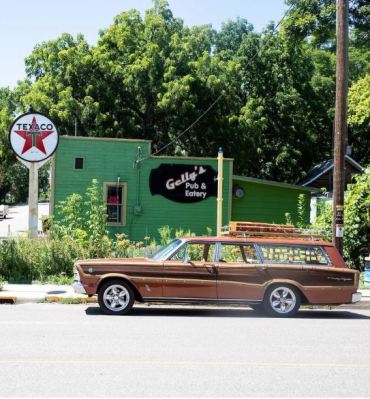 Choosing a landscape for a car is like choosing a wine for a meal. The Country Squire—which, I discovered, handled with all the nimbleness of a riverboat—felt like a natural pairing for the Mississippi River valley south of the Twin Cities. The curves would be gentle, and the views sweeping: high bluffs on one side of the car, water on the other. My family and I would pick up Highway 61 in St. Paul, hopscotching between it and Wisconsin’s fantastically scenic Great River Road, exploring the small waterfront towns along the way. We’d stop for the first night in Red Wing, Minn., and the next in Alma, Wis., 98 miles downriver. The car came with a 150-mile-a-day allowance, and a request that we not venture farther than 100 miles from Minneapolis, should anything happen.




 When Diana, Princess of Wales, attended the Met’s Costume Institute Gala in 1996, a black-tie-clad Mr. Barelli was at her side. “I wasn’t nervous, but the pressure!” he said. “You don’t want anything to go wrong.” The princess had one request: that he keep an eye on the black lace shoulder straps of her midnight blue Dior dress and adjust them if they slipped. “I almost told her: ‘Yeah, right, I have to touch your dress.’ That’s all I have to do. I think my wife would be a little upset,” he recalled. There was no wardrobe malfunction and the evening went off without a hitch, although Mr. Barelli remembers security concerns putting a damper on the fun-loving princess. “We couldn’t let her dance,” he said.
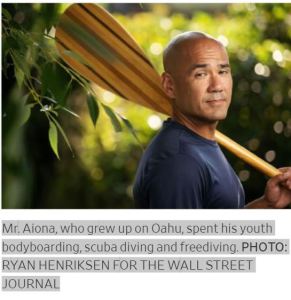 Mr. Aiona paddles with his club on Tuesday and Thursday nights and Saturday mornings for 90 minutes to two hours.They alternate between sprints and endurance paddles of up to eight miles in a six-man outrigger canoe. They also work on paddle technique and do huli drills. “Huli is Hawaiian for turn over,” he explains. “If you flip your canoe there is a very precise process for getting everyone safely and efficiently back in. We call out positions to make sure no one is underneath.
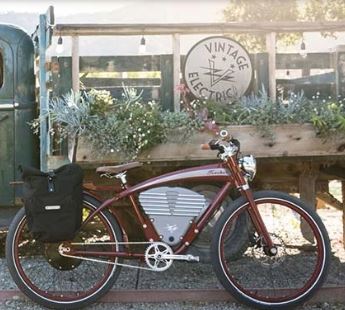 designed in the grand tradition of open-air sportscars, the brand new
 Antibiotic resistance is a global threat for public health. It is widely acknowledged that antibiotics at sub-inhibitory concentrations are important in disseminating antibiotic resistance via horizontal gene transfer. While there is high use of non-antibiotic human-targeted pharmaceuticals in our societies, the potential contribution of these on the spread of antibiotic resistance has been overlooked so far. Here, we report that commonly consumed non-antibiotic pharmaceuticals, including nonsteroidal anti-inflammatories (ibuprofen, naproxen, diclofenac), a lipid-lowering drug (gemfibrozil), and a β-blocker (propanolol), at clinically and environmentally relevant concentrations, significantly accelerated the conjugation of plasmid-borne antibiotic resistance genes.
 That’s why Kamber created
 New York Times columnist David Brooks and Washington Post columnist Jonathan Capehart join Amna Nawaz to discuss the week’s political news, including whether there will be real momentum in Congress to enact stronger gun legislation, how President Trump conducted himself visiting shooting victims in El Paso and Dayton and what white supremacy means for our American national identity.

 Boomers Daily