Transylvania is a region in central Romania. It’s known for medieval towns, mountainous borders and castles like Bran Castle, a Gothic fortress associated with the legend of Dracula. The city of Brașov features Saxon walls and bastions, as well as expansive Council Square, ringed by colorful baroque buildings, the towering Gothic Black Church and cafes. Nearby Poiana Brașov is a popular ski resort.
Video timeline: 00:23 – The Ciucas Mountains 01:25 – Herd of sheep 03:10 – Ruins of a medieval fortress 05:29 – Transfagaras mountain road 06:50 – Colibita lake 11:28 – Aerial of autumn forest 14:06 – Apuseni Mountains 16:01 – Corvin Castle 17:23 – Bran Castle (Dracula’s Castle)
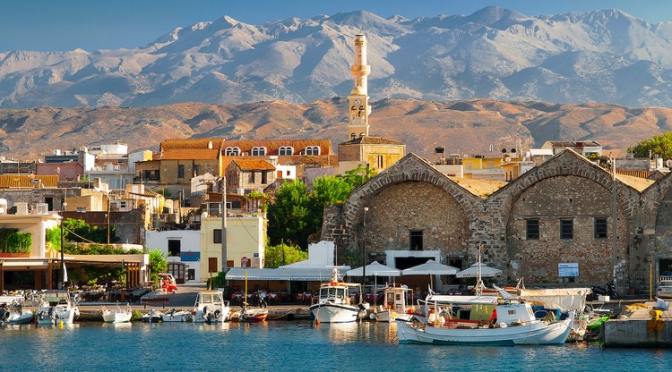
Chania is a city on the northwest coast of the Greek island of Crete. It’s known for its 14th-century Venetian harbor, narrow streets and waterfront restaurants. At the harbor entrance is a 16th-century lighthouse with Venetian, Egyptian and Ottoman influences. Opposite, the Nautical Museum has model ships, naval objects and photographs. The former monastery of St. Francis houses the Archaeological Museum of Chania.
n this week’s episode of “Cocktails with a Curator,” Curator Aimee Ng explores the turbulent history behind Édouard Manet’s “Bullfight,” once part of a larger work that the artist exhibited at the Salon of 1864. The original canvas was derided and caricatured by critics, prompting Manet to cut it into pieces. The two surviving fragments were brought together for the first and only time during a 1999 exhibition at the Frick. This week’s complementary cocktail is, fittingly enough, the Toreador.
In this episode, Getty curator Davide Gasparotto discusses early accounts of Leonardo’s life and how they shaped our understanding of the artist. Passages from these biographies were recently collected in the Getty Publications book Lives of Leonardo da Vinci.
“He was a great artistic personality, crucial for the development, in some way, of what we think as the modern science. But he was not alone.”
Leonardo da Vinci died more than 500 years ago, but he is still revered as a genius polymath who painted beguiling compositions like the Mona Lisa, avidly studied the natural sciences, and created designs and inventions in thousands of journal pages. Even during Leonardo’s lifetime, contemporaries marveled at the artist’s great skill and wide-ranging pursuits, but many also noted his perfectionism and difficulty completing projects. Since his death, the legends surrounding his life and personality have continued to grow. Today Leonardo’s story inspires novels and his work brings record-breaking prices, demonstrating his enduring relevance and mystique.
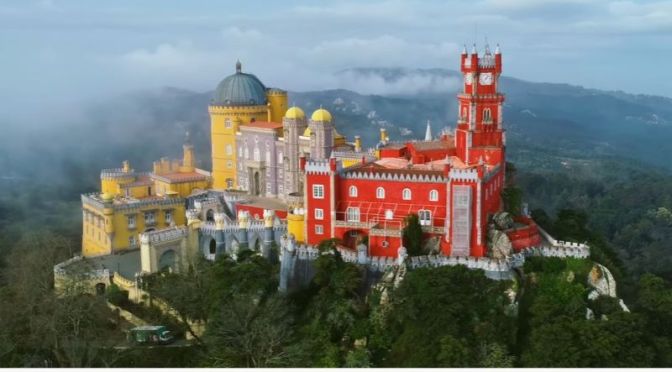
Portugal is one of the world’s most beautiful countries! From boating on the Algarve Coast to exploring the castles of Sintra, Portugal offers so much variety to experience and witness!
Portugal is a southern European country on the Iberian Peninsula, bordering Spain. Its location on the Atlantic Ocean has influenced many aspects of its culture: salt cod and grilled sardines are national dishes, the Algarve’s beaches are a major destination and much of the nation’s architecture dates to the 1500s–1800s, when Portugal had a powerful maritime empire.
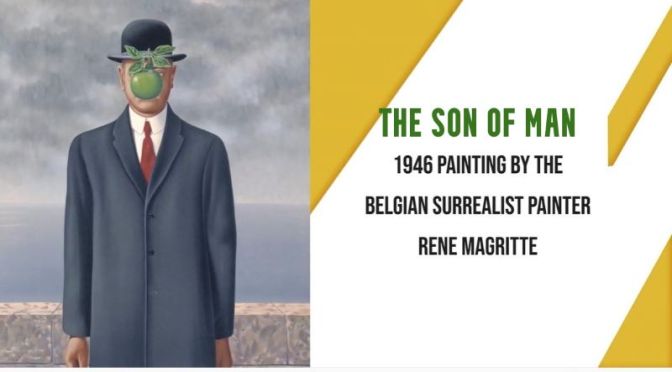
The “Son of Man” is an iconic painting by Belgian Surrealist artist Rene Magritte.
Rene Magritte was an internationally acclaimed surrealist artist of all time, yet it was not until his 50s, when he was finally able to reach some form of fame and recognition for his work. Rene Magritte described his paintings saying, “My painting is visible images which conceal nothing; they evoke mystery and, indeed, when one sees one of my pictures, one asks oneself this simple question, ‘What does that mean?’ It does not mean anything, because mystery means nothing, it is unknowable.”
Magritte was born in 1898, to a wealthy manufacturer father. In 1912, his mom was found drowned in the River Sambre. She had committed suicide, and the family was publicly humiliated because of it. From 1916 to 1918, Rene decided to study at the Academie des Beaux-Art, which was located in Brussels. He left the school, because he thought that it was a waste of time. All his paintings afterward reflect cubism, the movements which were introduced by Pablo Picass and was very popular at the time. In 1922 he married Georgette, and took a number of small jobs, including painting cabbage roses for a wallpaper company, in order to be able to pay the bills.
During the early period of his career, shortly following his marriage, Rene Magritte would spend the free time that he had, creating art forms and worked on a number of pieces; it was during this time period that he realized surrealism was the art form which he most enjoyed. The Menaced Assassin was one of his earliest pieces in 1926, which showcased the surrealist style which he had been working on; The Lost Jockey was another piece that he introduced in 1925, which also showcased this art form. Over the course of his career, he produced a number of variants on this piece, and changed the format to recreate what the viewer was experiencing.
In December of 2020 the cybersecurity company FireEye discovered a massive hack that affected over 18,000 customers of SolarWinds. As hundreds of companies and government agencies scrambled to unravel the extent of the intrusion, the U.S. government vowed to respond to the hack.
Bora Bora is a small South Pacific island northwest of Tahiti in French Polynesia. Surrounded by sand-fringed motus (islets) and a turquoise lagoon protected by a coral reef, it’s known for its scuba diving. It’s also a popular luxury resort destination where some guest bungalows are perched over the water on stilts. At the island’s center rises Mt. Otemanu, a 727m dormant volcano.
Big Tech’s deplatforming of former President Donald Trump has sparked a debate about the future of content moderation on social media. WSJ speaks with a disinformation and moderation expert about what comes next.
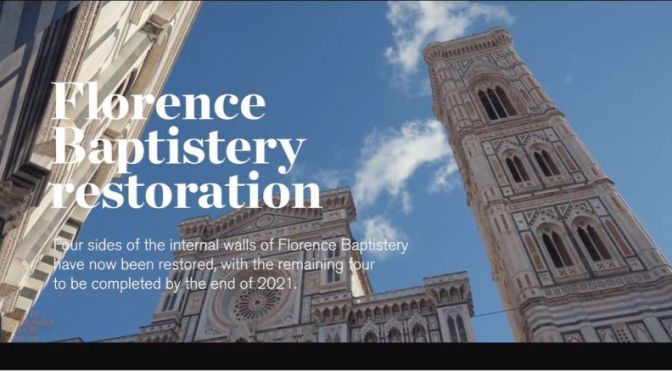
Four sides of the internal walls of Florence Baptistery have been restored, with the remaining four to go by the end of 2021. “Here come all those who wish to see admirable things” is the English translation of the words set in the marble inlay of the floor of Florence’s baptistery, as visitors enter through the Gates of Paradise.
These worthy items include the fourteenth-century mosaics depicting prophets, bishops and cherubs, which are enjoying renewed vigour after the restoration of four of the eight sides of Florence’s oldest monument. The internal walls of the baptistery began to be restored towards the end of 2017 following a restoration campaign on the external walls and roof.
Many discoveries emerged from the diagnostics, the first of their kind to be conducted on the monument, including the original technique used in the parietal mosaics; the presence of a pigmented wax on the green Prato marble, used to cover the white limestone that had formed due to water coming in through the roof, now removed to reveal the stone’s natural hue; and traces of gold leaf on one of the capitals of the matroneum, which could form evidence that the capitals were all originally covered in gold leaf.
In the first couple of decades of the fourteenth century, having completed the colossal feat of the mosaics inside the baptistery’s dome, the decision was made to extend the technique to the parietal sides, something that wasn’t part of the original plans.
It was a solution that allowed the mosaics to be superimposed over the marble covering and solve the issue of the monument’s static nature. Made-to-measure hollow terracotta tiles were used, cut and fixed to the marble on the baptistery’s walls with central iron linchpins driven back and welded in a straight line.
“A hurried sinopia was then conducted on the tiles and later the mosaic with a direct method and over days, which can still be identified and interpreted today,” explained Beatrice Agostini, planner and head of the restoration campaign of Opera di Santa Maria del Fiore. “Even the mixture used to apply the mosaic tiles is absolutely unique. Ordinary mortar wasn’t used. Instead it was more of a glue, and it’s the decline of this compound that has caused the most problems in this restoration.”
News, Views and Reviews For The Intellectually Curious







 Boomers Daily