Category Archives: Wildlife

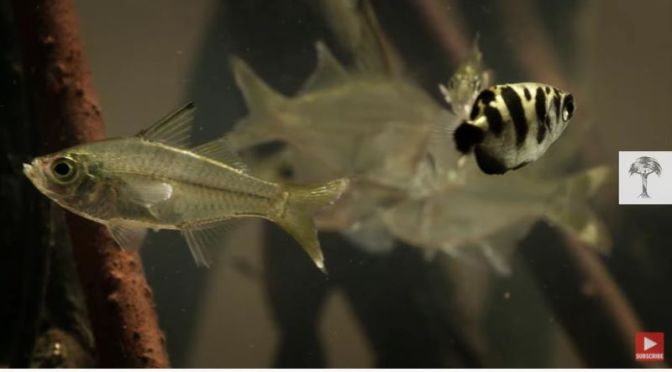
Wildlife Insider: ‘The Archerfish – A Master Hunter With Physics’

The mangroves of Sri Lanka are home to a very special resident. The archerfish might not look that powerful, but it can fire watery arrows to take down its prey from up to two meters away. In this video, we’ll show you the archerfish’s unique hunting strategy, which also involves an astonishing grasp of physics and math. Behind those dual-action eyes, complex calculations are going on…

Wildlife: The Hutia & Red Crabs Of Cuba (BBC Video)

Away from the burning glare of the Caribbean sun live some unusual animals. Cuba is home to the Hutia, a small dog sized rodent as well as plenty of marauding crabs!

Hutias are moderately large cavy-like rodents of the family Capromyidae that inhabit the Caribbean Islands. Twenty species of hutia have been identified but at least a third are extinct. 

Gecarcinus ruricola is a species of terrestrial crab. It is the most terrestrial of the Caribbean land crabs, and is found from western Cuba across the Antilles as far east as Barbados. Common names for G. ruricola include the purple land crab, black land crabred land crab, and zombie crab.

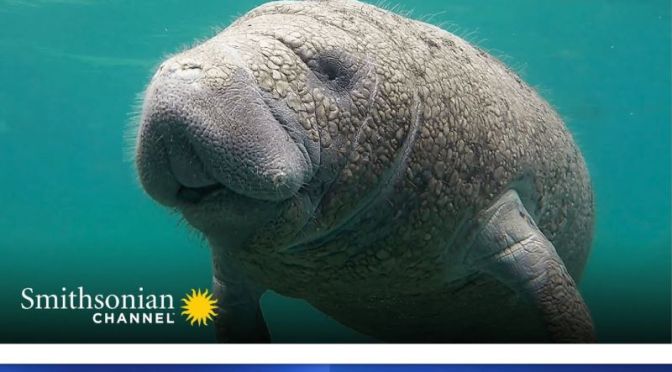
Ocean Wildlife: A Manatee Migrates To Warm Water

Despite weighing upward of 1200 pounds, manatee bodies have relatively little fat to protect them from the cold. Anything below 68 degrees is a death sentence. The solution: an annual inland migration, to the warm waters of Florida’s natural springs at Silver Springs State Park.

Manatees are large, fully aquatic, mostly herbivorous marine mammals sometimes known as sea cows. There are three accepted living species of Trichechidae, representing three of the four living species in the order Sirenia: the Amazonian manatee, the West Indian manatee, and the West African manatee.

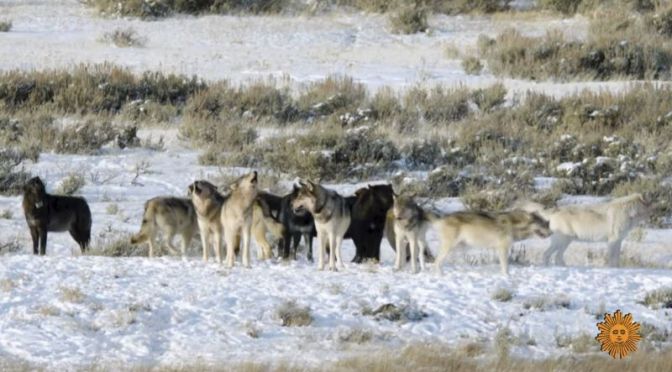
Wildlife: The ‘Gray Wolves’ Of Yellowstone (Video)

Watch the majestic wolves of Yellowstone National Park. Videographer: Justin Grubb.

Gray wolves were reintroduced into Yellowstone National Park in 1995, resulting in a trophic cascade through the entire ecosystem. After the wolves were driven extinct in the region nearly 100 years ago, scientists began to fully understand their role in the food web as a keystone species.

Winter Wildlife: A River Otter Survives In Upper Peninsula Of Michigan

It takes a special breed of animal to handle the Michigan winter–and the river otter is better prepared than most. But preparation is half the battle–and it starts with a roll in the snow to keep its fur coat insulated. The waters in the Upper Peninsula of Michigan freeze over fast in winter–and river otters need to work just as fast to keep holes open in the ice. If they close, the otters lose access to fish. From America’s Wild Seasons: https://bit.ly/3pikNyY

The Upper Peninsula is a forested region in Michigan bordering 3 of the Great Lakes and extending outward from Wisconsin. It’s connected to Michigan’s Lower Peninsula by the roughly 5-miles-long Mackinac Bridge, which spans the Straits of Mackinac. Sandwiched between the 2 peninsulas is Mackinac Island, a car-free vacation destination with the iconic 1887 Grand Hotel and the Victorian-era Fort Mackinac. 

Nature: ‘Fort Niobrara National Wildlife Refuge’, Valentine, Nebraska

Fort Niobrara National Wildlife Refuge is located in the U.S. state of Nebraska and includes 19,131 acres. The refuge borders the Niobrara National Scenic River on the west and is managed by the U.S. Fish and Wildlife Service.

Oceans: The Great White Shark Decline Off Cape Town, South Africa (BBC)

For years, one of South Africa’s great tourist attractions has been the opportunity to see great white sharks up close. But barely any great white sharks have been spotted off the coast of Cape Town, South Africa for two years now – where there used to be hundreds.

Wildlife: Saving ‘Numbats’ In Australia (BBC Video)

The numbat – a small and little-known Australian marsupial – is one of the world’s most endangered animals. Conservationists are working hard to save them by building vast, predator-free sanctuaries.

The numbat is an insectivorous marsupial. It is diurnal and its diet consists almost exclusively of termites. It was once widespread across southern Australia, but is now restricted to several small colonies in Western Australia. It is therefore considered an endangered species and protected by conservation programs.