

From a Stanford Engineering article (April 8, 2020):
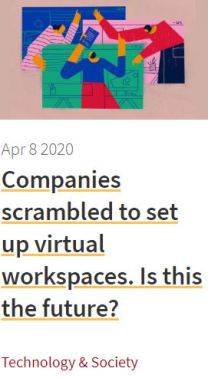 Companies that structure themselves as location-independent have developed norms and practices that bridge the emotional and logistical distances. The same is true for their workers. For such companies, remote-only work can reduce costs, expand the talent pool and boost productivity. By contrast, being forced by a crisis to work remotely is likely to be disruptive and frustrating. It may be better than shutting down, but it will likely lead to a big drop in productivity.
In the span of a single month, the COVID-19 pandemic has forced companies and organizations of all types to have almost all of their employees work remotely from home.
Has the future of work, the all-remote workforce and even the virtual organization, arrived in full force? Though online technologies have made remote work increasingly common, most companies and organizations are still run out of brick-and-mortar facilities. Now they are scrambling to stand up virtual workspaces overnight.



 Rupert Beale talks again to Thomas Jones about his work at the Francis Crick Institute, where he’s helping to set up a testing lab for Covid-19.




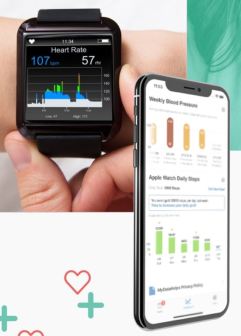 When your heart beats faster than usual, it can mean that you’re coming down with a cold, flu, coronavirus, or other viral infection. That’s the conclusion of recent medical
 Researchers have developed an ultra-fast electrical switch that they hope can be used in communication and imaging applications.

 Boomers Daily