Category Archives: Technology

Preview: MIT Technology Review – November 2024

MIT Technology Review

MIT Technology Review (October 23, 2024): The Food issue November/December 2024 – Is technology helping—or harming—our food supply? Featuring: The ominous rise of superweeds, the quest to grow food on Mars, and the surprising ways your refrigerator may be making your food less nutritious. Plus robots that do experiments, jumping spiders, digital forestry, and The AI Hype Index.

The quest to figure out farming on Mars

white line drawing of an agricultural scene with orchard, barn, crops and farm animals drawn over a photo of the Martian landscape

If we’re going to live on Mars we’ll need a way to grow food in its arid dirt. Researchers think they know a way.

These companies are creating food out of thin air

Exploded view of a burger bun with lettuce, tomato, onion and a cloud floating in a blue sky

A new crop of biotech startups are working on an alternative to alternative protein.

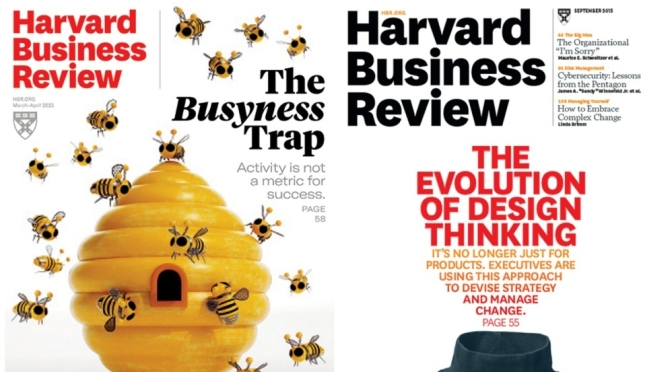
Harvard Business Review – November/December 2024

November–December 2024

Harvard Business Review (October 22, 2024) – The latest issue features:

Why Employees Quit

New research points to some surprising answers. 

Summary.   

The so-called war for talent is still raging. But in that fight, employers continue to rely on the same hiring and retention strategies they’ve been using for decades. Why? Because they’ve been so focused on challenges such as poaching by industry rivals, competing in tight labor markets, and responding to relentless cost-cutting pressures that they haven’t addressed a more fundamental problem: the widespread failure to provide sustainable work experiences. To stick around and give their best, people need meaningful work, managers and colleagues who value and trust them, and opportunities to advance in their careers, the authors say. By supporting employees in their individual quests for progress while also meeting the organization’s needs, managers can create employee experiences that are mutually beneficial and sustaining.

Personalization Done Right

The five dimensions to consider—and how AI can help

Summary.   

More than 80% of respondents in a BCG survey of 5,000 global consumers say they want and expect personalized experiences. But two-thirds have experienced personalization that is inappropriate, inaccurate, or invasive. That’s because most companies lack a clear guidepost for what great personalization should look like.

Authors Mark Abraham and David C. Edelman remedy that in this article, which is adapted from Personalized: Customer Strategy in the Age of AI (Harvard Business Review Press, 2024). Drawing on decades of work consulting on the personalization efforts of hundreds of large companies, they have built the defining metric to quantify personalization maturity: the Personalization Index. It is a single score from 0 to 100 that measures how well companies deliver on the five promises they implicitly make to customers when they personalize an interaction.

The authors argue that personalization will be the most exciting and most profitable outcome of the emerging AI boom. They describe how companies can use AI to create and continually refine personalized experiences at scale—empowering customers to get what they want faster, cheaper, or more easily. And they show readers how to assess their own business’s index score.

Design Products That Won’t Become Obsolete

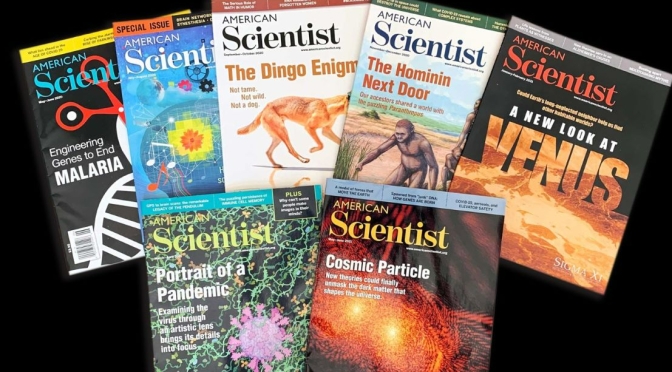
The “American Scientist” Magazine – November 2024

Current Issue

American Scientist (, 2024): The latest issue features ‘Slime Mold Beauty’ – A single-celled organism takes on a dazzling variety of glittering, jewlike forms…

The Myxomycetes: Nature’s Quick-Change Artists

Slime molds thrive in a range of environments, displaying an unexpected beauty in a variety of forms and life cycle stages.

Gliflozins for Diabetes: From Bark to Bench to Bedside

Drugs targeting the kidneys for diabetes treatment stem from almost two centuries of research that began with an uprooted apple orchard.

Baby Talk

Infants are born with the ability to babble and cry in the accents of their mothers through a combination of neurological, physical, and environmental responses.

Military: U.S. Army Unveils Laser That Melts Drones

The Wall Street Journal (October 15, 2024): In Ukraine and the Red Sea, low-tech drones are changing the way wars are fought. The U.S. and other countries are investing in a new and inexpensive way to retaliate: lasers.

Chapters: 0:00 Laser weapon systems 1:03 The LOCUST 2:57 Targets 3:40 Weaknesses 4:56 Future challenges and deployment

Compared with traditional weapons, lasers present some key challenges: they have a shorter range, limited power and can be harder to fix when issues arise. WSJ explains how the BlueHalo LOCUST laser weapon system works and why the tech is so difficult to perfect.

#Russia #Ukraine #WSJ #Military #Laser

WSJ: “Killer Drones” On Ukraine’s Front Lines

The Wall Street Journal (October 14, 2024): “Darwin” is one of Ukraine’s deadliest drone pilots in its war against Russia.

Chapters: 0:00 A race to adapt 1:38 “Darwin” 2:48 Artillery strikes 4:01 Personal evolution 6:37 In the bunker 8:32 Drone strike 12:20 Just the beginning

But the 20-year-old must contend with his own personal evolution after hundreds of successful missions in a modern survival of the fittest.

#Russia #Ukraine #WSJ

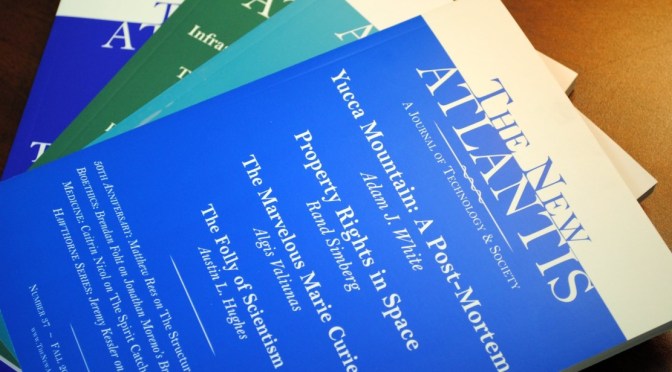
Preview: The New Atlantis Magazine – Fall 2024

Image

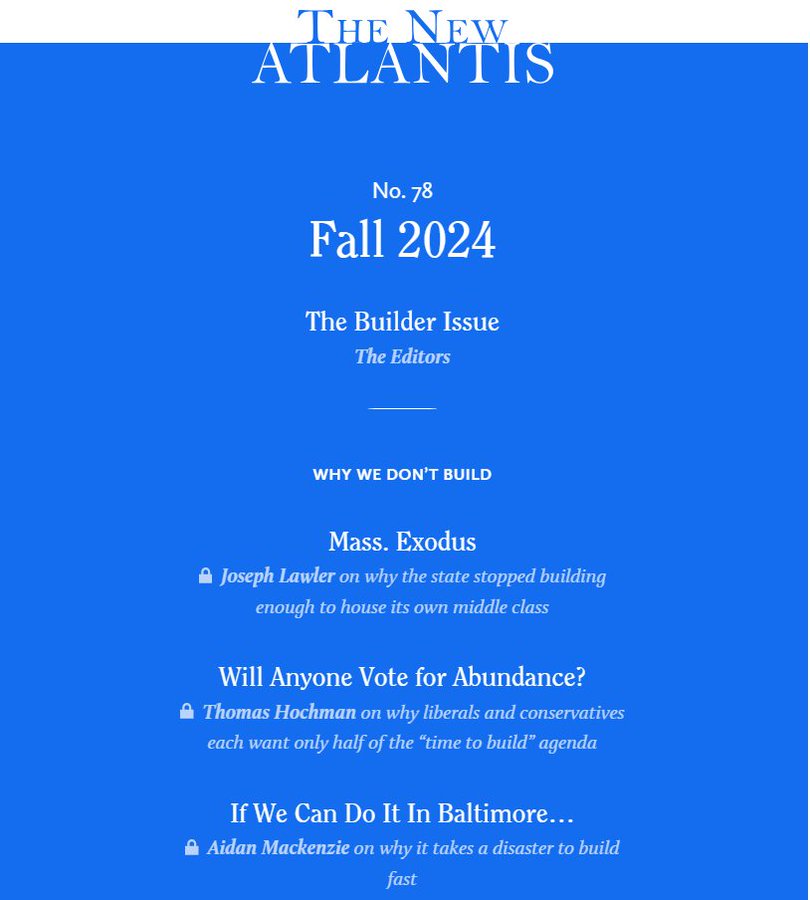
The New Atlantis Magazine (October 10, 2024) : The latest issue features ‘The Builder Issue’ – Why we don’t build…

Mass. Exodus

Massachusetts is one of the richest states in the country — because it’s pricing out its own middle class. Why did the state stop building enough to house them?

Will Anyone Vote for Abundance?

“Time to build” is a great idea. But it’s not clear that liberals or conservatives really want it.

If We Can Do It In Baltimore…

Why it takes a disaster to build fast

We Don’t Need This Much Permitting

What matters is whether building projects actually follow the law, not whether they promise to in advance.

World Economic Forum: Top Stories – Oct. 5, 2024

World Economic Forum (October 5, 2024) – The top stories of the week include:

0:15 What’s next for urgent climate action? – At the Sustainable Development Impact Meetings in New York, leaders discussed how to curb carbon emissions while building an inclusive economy. Regulations can be a lever for systemic change but local innovation is crucial, too.

3:09 Solar stoves reduce air pollution deaths – It cooks food while emitting hardly any smoke. It uses a hybrid system, powered by energy from solar panels and from fuel such as small sticks or crop waste. The ACE One was created by African Clean Energy which is a part of the World Economic Forum’s Equitable Transition Initiative.

5:08 Chief economists’ outlook for the rest of 2024 – Many chief economists polled by the World Economic Forum are optimistic about 2025. In the United States, nearly nine in ten chief economists anticipate moderate or strong growth in the coming year. Similarly, in South Asia, 71% predict strong or very strong growth.

9:33 Earth exceeds 6 of 9 planetary boundaries – In 2009, a team of scientists identified the 9 natural processes that regulate Earth’s biosphere and keep it stable. These include climate change, biodiversity, ocean acidification and freshwater. The team also defined the safe planetary boundary for each process. A safe and sustainable future for humanity lies within these boundaries.

AI Technology: Are Tesla Robotaxis Ready To Roll?

CNBC (October 2, 2024): For a decade, Elon Musk has championed the idea that one day Tesla cars will drive themselves as robotaxis. On October 10, the company plans to reveal a “dedicated robotaxi” design at an invitation-only event in Los Angeles.

Chapters: 3:18 Ch 1 – Tesla’s vision for autonomy 6:33 Ch 2 – Full self-driving 10:13 Ch 3 – Realizing the robotaxi 15:34 Ch 4 – Sizing up the robotaxi competition

Despite years of bold predictions and missed deadlines, fans of the company are holding out hope that Musk will finally deliver. Regardless of what the company showcases at its robotaxi day, experts are skeptical of the company’s strategy, citing its Auotpilot and Full Self-Driving technology as a barometer for Tesla’s progress, or lack thereof.

While Tesla has been developing its autonomous vehicles, competitors like Google-owned Waymo and Chinese companies like Pony.ai and Baidu have already launched commercial robotaxi services. With U.S. EV sales growth slowing, there’s a lot riding on Tesla’s potential pivot to autonomy. CNBC explores whether the company is ready for robotaxis and if Musk’s vision for driverless Teslas will become a reality anytime soon.

World Economic Forum: Top Stories – Sept. 28, 2024

World Economic Forum (September 28, 2024) – The top stories of the week include:

0:15 How investment advice is changing – ‘The film is a rollercoaster ride into the last few years of how technology is changing our relationship to money’, says Chris Temple, director of This Is Not Financial Advice, a documentary that follows four online investors, including one who made – and lost – millions in crypto.

5:56 New tech reveals the impacts of climate change – Using AI, we can process Earth Observation (EO) data faster. Helping us monitor disaster impact in hours, not days. AI is also improving climate and weather forecast models. Through AR and VR, engineers are transforming these complex datasets into interactive, intuitive experiences that can help leaders make climate decisions.

7:39 This debt plan can save coral reefs – The deal reduces Indonesia’s debt repayments to the US by $35 million over the next 9 years and redirects those payments towards reef conservation instead. Indonesia is home to 16% of the world’s coral reefs and around 60% of the world’s coral species. Its reefs generate around $1.6 billion in value every year through fisheries, coastline protection and tourism. But Indonesia’s reefs face a range of threats.

9:21 Ray Dalio on funding climate action – By 2050, climate damage could cost between $1.7 trillion and $3.1 trillion per year. However, the costs of inaction could be even greater, says Ray Dalio, the founder of the world’s largest hedge fund, Bridgewater Associates. Right now, climate action is hugely under-financed.

Technology Quarterly: ‘Chipmaking & AI’ (Fall 2024)

Technology Quarterly: Silicon returns to Silicon Valley

The Economist (September 19, 2024): The latest issue of TECHNOLOGY QUARTERLY is focused on:

Silicon returns to Silicon Valley

AI has returned chipmaking to the heart of computer technology, says Shailesh Chitnis

The semiconductor industry faces its biggest technical challenge yet

Node names do not reflect actual transistor sizes

How to build more powerful chips without frying the data centre

AI has propelled chip architecture towards a tighter bond with software

Researchers are looking beyond digital computing

The end of Moore’s law will not slow the pace of change