Contributing Correspondent Cathleen O’Grady joins host Sarah Crespi to talk about a company that stores renewable energy by hoisting large objects in massive “gravity batteries.”
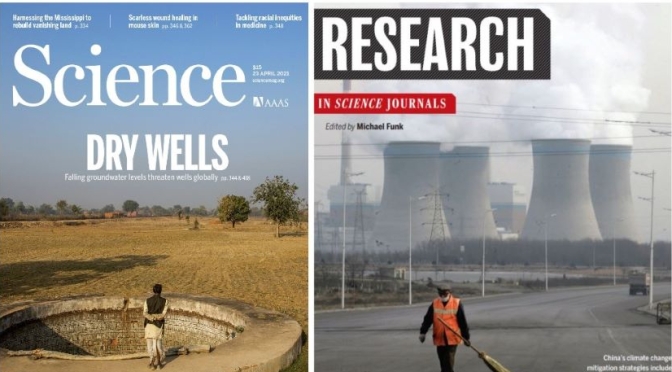
Also on this week’s show, Erick Lundgren, a postdoctoral researcher at Aarhus University, talks about how water from wells dug by wild horses and feral donkeys provides a buffer to all different kinds of animals and plants during the driest times in the Sonora and Mojave deserts.
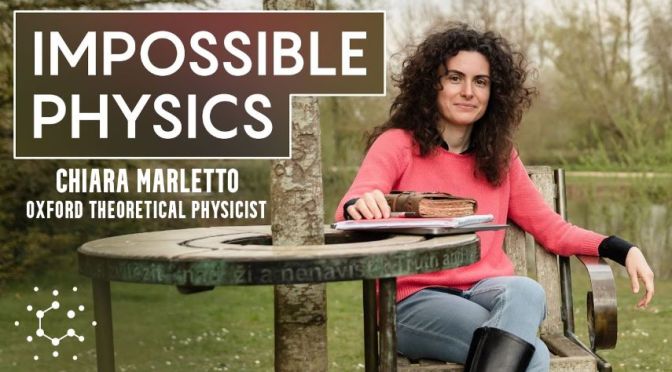
“Declaring something impossible leads to more things being possible,” writes the physicist Chiara Marletto. “Bizarre as it may seem, it is commonplace in quantum physics.”
Chiara Marletto is trying to build a master theory — a set of ideas so fundamental that all other theories would spring from it. Her first step: Invoke the impossible.
Constructor Theory is a new approach to formulating fundamental laws in physics. Instead of describing the world in terms of trajectories, initial conditions and dynamical laws, in constructor theory laws are about which physical transformations are possible and which are impossible, and why. This powerful switch has the potential to bring all sorts of interesting fields, currently regarded as inherently approximative, into fundamental physics. These include the theories of information, knowledge, thermodynamics, and life.
Vaccines are medicines that train the body to defend itself against future disease, and they have been saving human lives for hundreds of years. Vaccines are medicines that train the body to defend itself against future disease.
Ultra-precise measurements connect brain activity and energy use in individual fruit-fly neurons.
In this episode:
00:45 How brain cells use energy
A team of researchers have looked in individual fruit-fly neurons to better understand how energy use and information processing are linked – which may have important implications for future fMRI studies in humans.
We discuss some highlights from the Nature Briefing. This time, early results for a new malaria vaccine look positive, and researchers unearth the latest chapter in a long-running plant experiment.
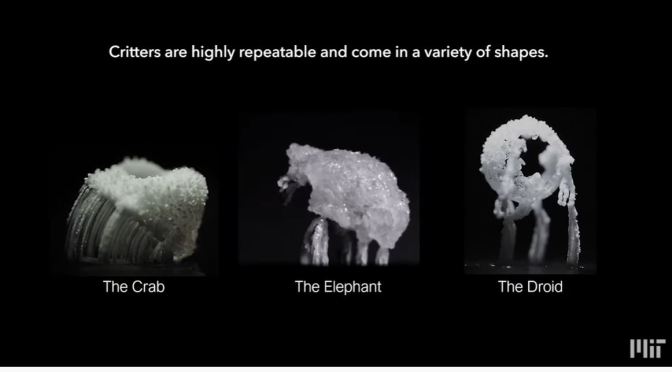
A team of MIT researchers have observed that when salty water evaporates from a heated, superhydrophobic surface the crystal structures that form can easily be removed or roll away on their own.
This phenomenon could make it possible to use brackish or salty water, without any pretreatment, rather than relying on freshwater sources, for cooling systems in power plants.
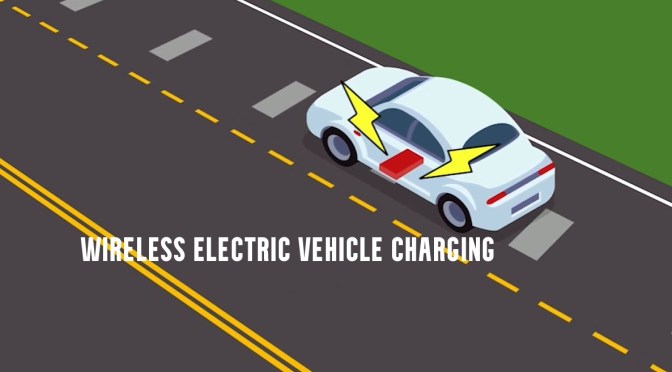
Cornell is pioneering an innovative approach for the wireless charging of electric vehicles, forklifts and other mobile machines, while they remain in motion.
Smartphones, computers, gaming consoles or digital tablets are now givens in our daily lives. The electronic intrusion is causing controversy and collective hysteria. This documentary asks: Are we damaging our brains with all these screens? How will unprecedented exposure to screens impact humanity?
To find out, the filmmakers examine how science has been applied to distinguish between truth and falsehoods, and explore the suspected side-effects of screen exposure. The documentary travels through the US and Europe to meet and speak to researchers who are leaders in this field.
The self-supporting structures that snap into place, and how a ban on fossil-fuel funding could entrench poverty in sub-Saharan Africa.
In this episode:
00:45 Self-supporting, foldable structures
Drawing inspiration from the art of origami, a team of researchers have demonstrated a way to design self-supporting structures that lock into place after being inflated. The team hope that this technique could be used to create arches and emergency shelters that can be quickly unfolded from flat with minimal input.
Nocturnal fluctuations cause scientists to underestimate rivers’ carbon emissions, and the ‘island rule’ of animal size-change is seen around the world.
09:55 Banning fossil-fuel funding will not alleviate poverty
A ban by wealthy nations on the funding of overseas fossil-fuel projects would do little to reduce the world’s climate emissions and much to entrench poverty in sub-Saharan Africa, argues economist Vijaya Ramachandran.
We discuss some highlights from the Nature Briefing. This time, the first powered flight on another world, and estimating how many Tyrannosaurus rex ever lived.






 Boomers Daily