

Category Archives: Profiles

Culinary Profile: Norway Chef Mikael Svensson

Nestled in the city’s former industrial district, they pride themselves on sourcing wild, line-caught fish, organic or wild meats, and locally produced organic ingredients.
Collaborating with a company making fermented condiments, they recycle food waste into garum, vinegar powder, oil, and compost, and their wines are sustainably produced.
The roof garden blooms with bee-friendly flowers, and even the staff uniforms are made from organic cotton. Every detail at Kontrast reflects a commitment to sustainability, as envisioned by chef Mikael Svensson.
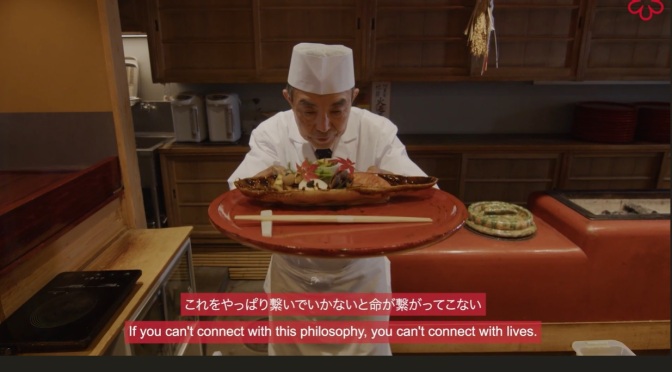
Culinary Profile: Kyoto Chef Hisao Nakahigashi
With the credo of “eat all of what is edible”, this restaurant embraces the concept of fully-use all the parts of ingredients. True advocate of the local producers he works with, chef Nakahigashi’s philosophy transpire in the hassun he plates every day, expressing the rustic beauty of the country through all five senses.
In this Green Star in action episode, we dive into the world of chef Hisao NAKAHIGASHI whose restaurant Sojiki Nakahigashi (草喰なかひがし) – literally ‘herbivorous cuisine’ – is awarded a Green Star and Two Stars in the MICHELIN Guide Kyoto & Osaka 2023. Dining here means reconnecting with the environment, fostering a commitment to an eco-conscious life. It offers not only flavorful dishes but also culinary creations that embody mindfulness and a profound respect for nature.
#MICHELINGreenStar #TwoMICHELINStars #MICHELINrestaurants #restaurant #chef #portrait #MICHELINGuideKYOS
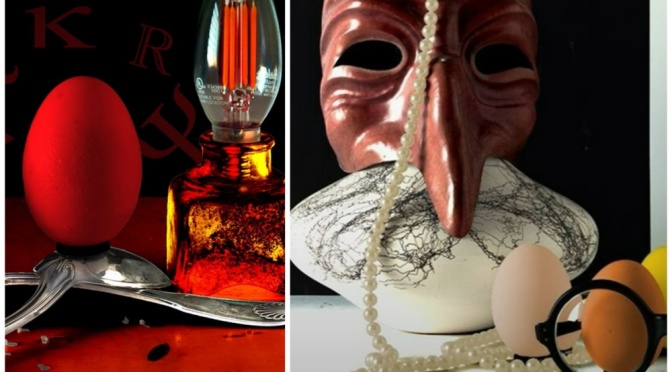
Art: Photographer Wayne Parsons’ “Imagined Images”

He was a late-comer to photography, buying his first camera when he turned forty and studying black-and-white technique at the International Center of Photography. His interests expanded to color imagery when he adopted digital photography in 2001.
He also reviews photography exhibitions for the New York Photo Review. He is a long-time member and past president of Soho Photo Gallery.
Explore more of Wayne’s work on his website at https://www.rwayneparsons.com/.
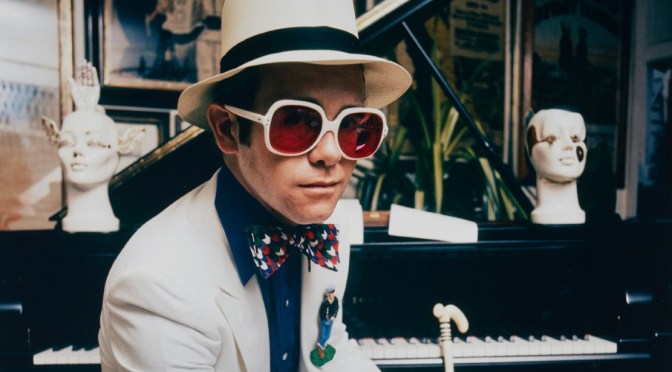
Elton John’s ‘Exuberant Art’ Collection In Atlanta

In 1991 when Sir Elton John bought a duplex-apartment at Park Place on Peachtree Road in Atlanta’s coveted Buckhead neighbourhood, he couldn’t have imagined the extent to which the city would transform him personally and professionally.
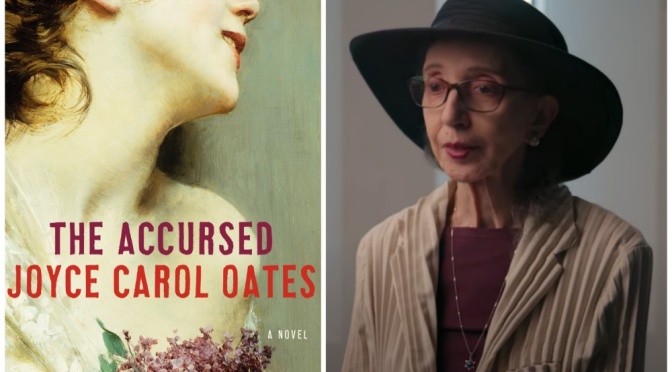
Interviews: Novelist Joyce Carol Oates ‘Storytelling’

Video timeline: 0:00 On preferred subjects for writing 3:20 On Karen Blixen /Isak Dinesen 4:24 On families 6:54 On the mother figure 9:00 On the novel ‘Babysitter’ 17:27 On the novel ‘Night. Sleep. Death. And the Stars’ 22:48 How traveling resembles writing 28:47 On Donald Trump
“What is so exciting about the novel is that it mimics life and that you end up doing something you never thought you would do,” says Joyce Carol Oates, one of America’s greatest living novelists, when looking back on a life of writing.
It might be a violent event or something politically relevant, or it could be a racist experience that sets off a novel. In her storytelling, Oates finds it interesting to focus on girls at the beginning of puberty: “There’s a kind of wonderful neutrality of childhood that gets conditioned out when girls get to be 12 – 14 years old. And then, from that point on, when they’re so shaped by what we call the male gaze and the expectations of others that they grow into being someone who is this female image.”
But today, the family is very different and there are all kinds of families: “There are families of same-sex couples who got married and they may adopt a child or they may have a child of their own, but then there may be families that are like communes where people are living, sharing a house, but they are a family and they may have dogs and cats who know who they are. […] The so-called nuclear family – which is just a father, mother, and children – still exists, of course, but it’s not the only example of any longer, which is wonderful. It all begins with the emancipation of women”, Joyce Carol Oates concludes.
Oates feels attracted to writing because writing is storytelling and “what’s interesting about storytelling is that you have to have revelations. That you start off with a situation, and a little bit of a mystery evolves, and then you have to follow the tendrils and the roots of that mystery, like an investigator. And then there has to be a revelation.” This means that Oates focuses a lot in her writing on the pacing and the suspense and the movement, like “how long is a paragraph, how short is the dialogue, and how much dialogue is there in proportion to the exposition, and the craftsman side of writing is actually where many people write.“
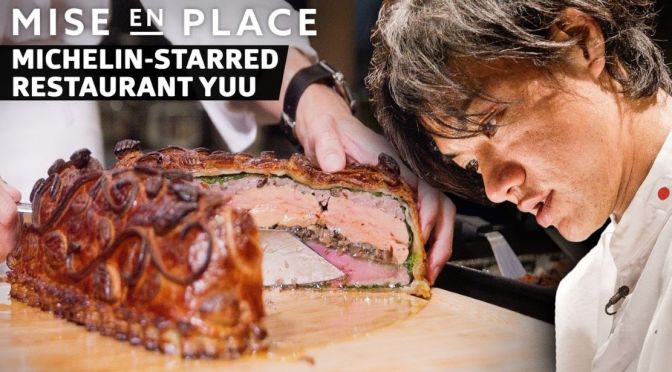
Culinary Arts: Michelin-Starred ‘Yuu’ In Brooklyn

Shimano and his team use theatricality and precision to serve a tasting menu that includes amuse-bouche, wagyu, salade de homarde, and more.

Historical: Saving John Steinbeck’s ‘Western Flyer’
Since then, the boat has inspired adventurers and scientists for generations, but the original ship was nearly lost. CBS News’ Jeff Glor reports on the person determined to give it new life.
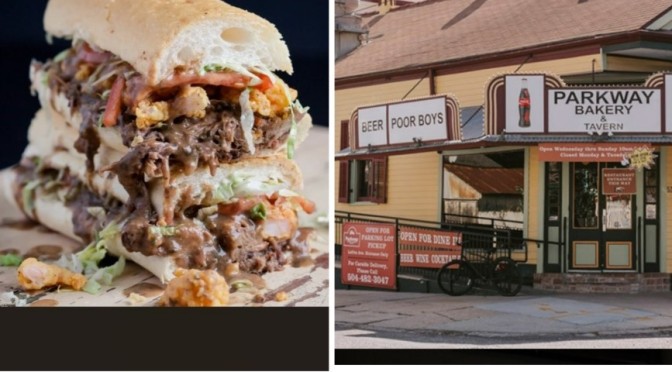
Restaurant Tour: Making “Po’Boy’s” In New Orleans

Today Bon Appétit spends the day with Justin Kennedy, general manager of Parkway Bakery and Tavern in New Orleans, preparing to serve the city’s famous poor boy (po’boy) sandwiches.
Filmed on Location at Parkway Bakery & Tavern | 538 Hagan Ave, New Orleans, LA 70119
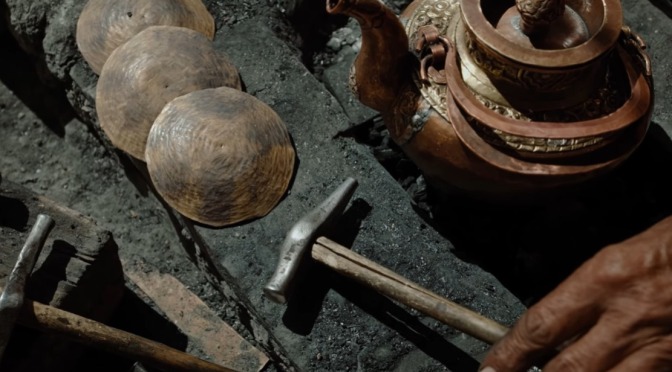
Artisans: Metalwork In Ladakh, Northern India

Deeply entwined with its cultural heritage, the mountainous territory carries a historic tradition of craft metalwork – as a center for the production of hand-crafted ornaments, teapots and spiritual artefacts, destined for temples, and held in high regard by India’s king dynasties.
But the craft has entered a point of decline, continued by just a handful of artisanal metalworkers who fight for its preservation.…
 Boomers Daily