Plus: victories for gay rights in Singapore and Vietnam, the global impact of a strike at the UK’s biggest container port, and a check-in from the Formex interior design event in Sweden.
Known as a symbol of freedom to its admirers and an assault weapon to its detractors, the AR-15 is one of the most controversial weapons in America. Lightweight and easily customizable AR-15-style weapons have skyrocketed in popularity in recent years taking center stage at gun ranges and shooting competitions across the country.
According to the most recent national figures, there are an estimated 393 million civilian-owned firearms in the U.S. And there are about 20 million AR-15-style weapons in the country. Firearm manufacturers have seen revenue surge taking in about $1 billion from the sale of AR-15-style weapons in the past decade.
But the weapons have also been involved in a number of mass shootings. AR-15-style weapons were used at shootings in an elementary school in Uvalde, Texas, a Fourth of July parade in suburban Chicago and a grocery store in upstate New York. Critics argue the weapons are also aggressively marketed by gun companies targeting at-risk young males.
So what is behind the popularity of the AR-15 and what responsibility do gun makers have when their products are used in mass shootings? Watch the video to learn more.
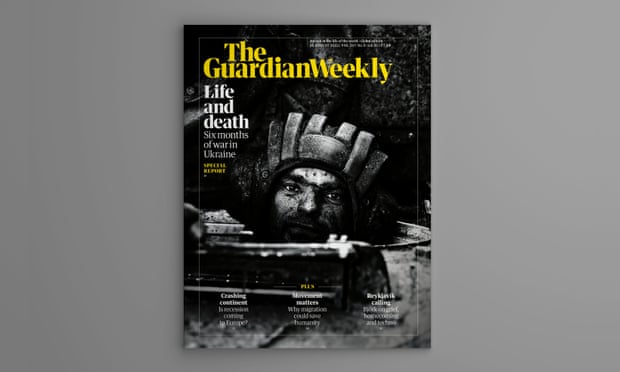
Six months of hell in Ukraine. Plus: recession stalks Europe.
The troop buildups, the belligerent speeches, the excruciatingly staged Kremlin policy meetings … for months, the signs had been there in plain sight. Nonetheless, the order in the early hours of 24 February from Vladimir Putin to invade Ukraine came as a lightning bolt, one that would change Europe for years to come.
A.M. Edition for Aug. 24. After six months of war in Ukraine, battlefield momentum is tilting against Russia even as the conflict shows few signs of slowing.
WSJ reporter Marcus Walker and Moscow bureau chief Ann Simmons explain how officials in Kyiv and Moscow view the current state of war and their respective paths to victory. Luke Vargas hosts.
A selection of three essential articles read aloud from the latest issue of The Economist. This week, will Donald Trump run again? Also, the future of the Visa-Mastercard payments duopoly (9:35) and, what kind of prime minister will Britain get? (21:45).
Tensions are rising at Europe’s largest nuclear-power station, which Russian forces are using as a military base. We ask what the risks are, and whether they can be headed off.
Britain’s summer heatwave was deadly—but figuring out how deadly was no easy task. And discovering the real value of the “social capital” outside family and work relationships.
Monocle 24’s Georgina Godwin, Quentin Peel and Alex von Tunzelmann unpack the weekend’s biggest talking points. Plus: our editorial director, Tyler Brûlé, joins us live from Stockholm.
The UN secretary general met with the presidents’ of Ukraine and Turkey in Lviv, Ukraine. A wave of violence in Mexico kept Tijuana residents at home after a cartel allegedly called for a curfew.
News, Views and Reviews For The Intellectually Curious







 Boomers Daily