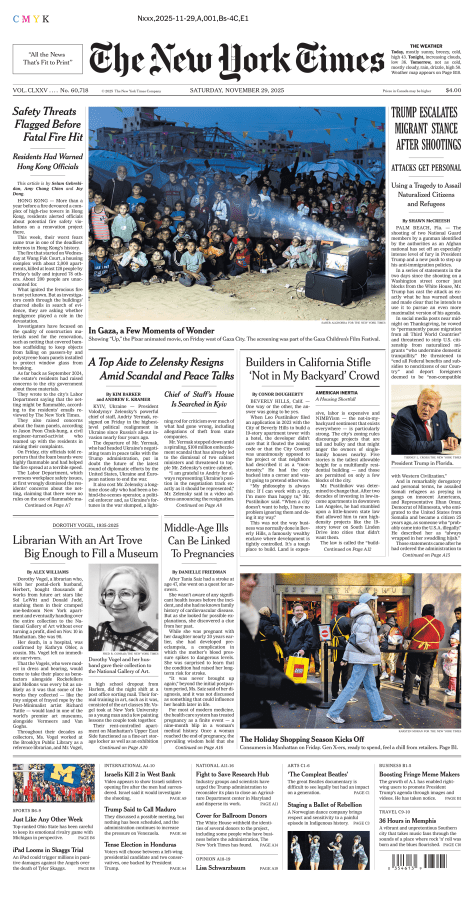
Andriy Yermak had ensured internal discipline in Ukraine’s politics for President Volodymyr Zelensky. He also led peace negotiations, which must go on without him.
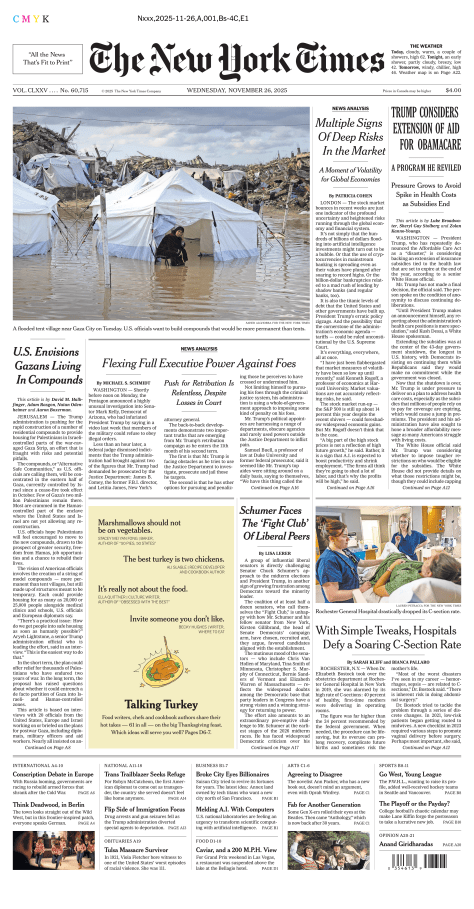
President Trump’s ever-growing vision has caused tension with contractors. His architect has taken a step back as the president personally manages the project.
The pardon for Juan Orlando Hernández, who prosecutors said had taken bribes from a drug kingpin, would come amid U.S. strikes on alleged cartel vessels in the Caribbean.
How Fraud Swamped Minnesota’s Social Services System on Tim Walz’s Watch
Prosecutors say fraud took root in pockets of the state’s Somali diaspora. President Trump has called attention to the scandal amid his crackdown on immigration.
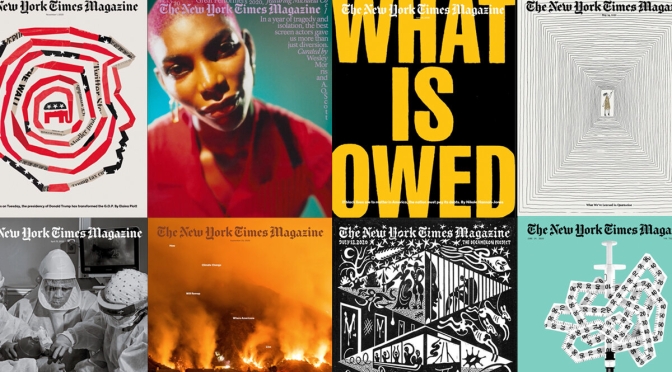
THE NEW YORK TIMES MAGAZINE:The 11.30.25 Issue features Emily Bazelon and Rachel Poser on sixty former staff members of the Justice Department; Dennis Zhou on the novelist Solvej Balle; Linda Kinstler on neural implant technology; and more.
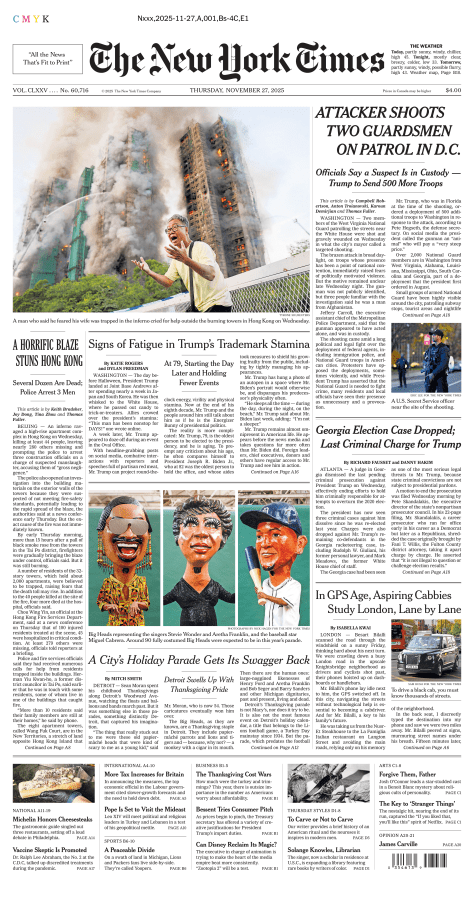
Firefighters were trying to fully extinguish the blaze more than 24 hours after it engulfed several towers in the complex. Dozens of people were still missing.
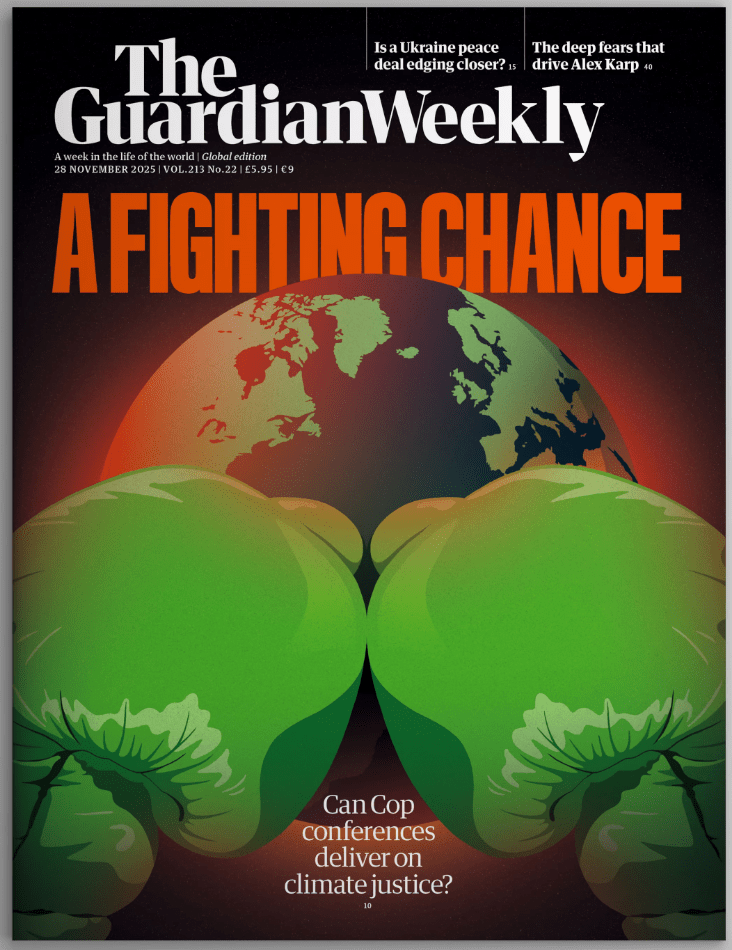
Bitter rows, implacably opposed delegations, threatened walkouts and then, hours after the planned deadline with fear of failure stalking the delegates, a statement towards which recalcitrant countries have been nudged into agreeing is produced. Cop30, which concluded last Saturday in Belém, Brazil, was little different from its recent predecessors, despite the growing urgency of needing to find a solution to our ever hotter planet. For this week’s big story, environment editor Fiona Harvey details how weak consensus was forged between states on the frontline of climate change and the petrostates that sought a rollback from the need to “transition away from fossil” fuels agreed two years ago in Dubai.
Five essential reads in this week’s edition
Spotlight | Is Ukraine edging closer to a peace deal? A whirl of international diplomacy was sparked by a US-Russian authored ‘peace plan’ to end the Ukraine war. Luke Harding and Pjotr Sauer cast a critical eye over the prospects for an agreement.
Spotlight | Trump, Saudi Arabia and shifting Middle Eastern sands Pageantry and trillion-dollar promises reveal how Washington’s regional loyalties may be tilting away from Israel and towards the Gulf, writes Julian Borger
Feature | Is Alex Karp the world’s scariest CEO? His company, Palantir, is potentially creating the ultimate state surveillance tool. Now, Alex Karp’s biographer reveals what makes him tick. BySteve Rose
Opinion | An improbable new adversary for Trump – the Catholic church Inequality, immigration and civil rights are the battlegrounds on which the church – and some other Christian denominations – are fighting the Trump administration, writes Simon Tisdall
Culture | Edmund de Waal’s loose ends The celebrated ceramicist explains to Charlotte Higgins why he turned his decades-long f ixation with Axel Salto – the maker of unsettling stoneware full of tentacle sproutings and knotty growths – into a new show
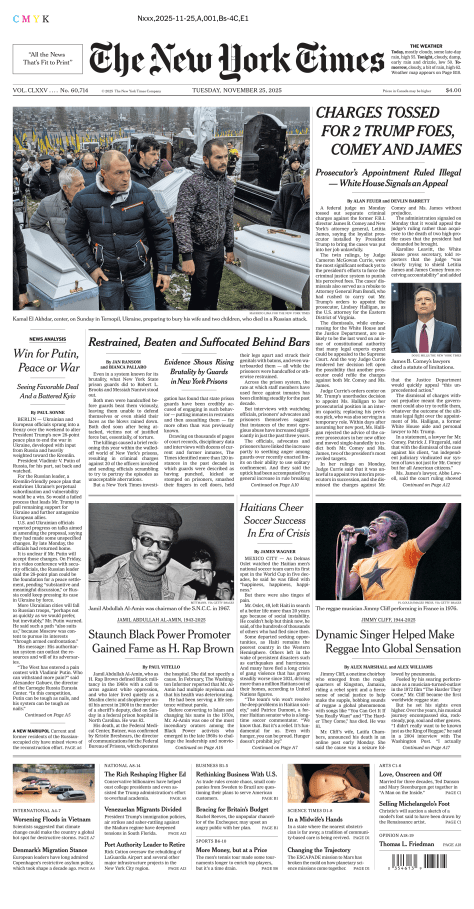
A judge dismissed indictments against two of the president’s foes, but an inquiry shows how he is using a whole-of-government approach to punish those who cross him.
A U.S. proposal appears to cross a number of red lines for the Russian leader, who sees little to lose and much to potentially gain from continuing to fight.
Maria Corina Machado faces criticism that she is exaggerating threats posed by Venezuela’s leader, Nicolás Maduro, to justify U.S. force to overthrow him.
The decision to toss out the charges against James Comey and Letitia James is a setback to President Trump’s efforts to wield the criminal justice against his perceived foes.
The Trump administration is trading billions of dollars of taxpayer money for ownership stakes in companies. The unusual practice shows no sign of slowing.
While President Trump attacked the Ukrainians, Secretary of State Marco Rubio flew to Geneva to seize control of negotiations that were going off the rails.
Initially cut out of development of the 28-point peace plan, European leaders are now trying to recast its pro-Russian slant. So far, it seems to be working.
U.S. Plans Compounds to House Palestinians in Israeli-Held Half of Gaza
The project could offer relief for tens of thousands of Palestinians, but has raised questions about whether it could entrench the partition of Gaza.
THE NEW YORKER MAGAZINE: The latest cover features Malika Favre’s and Rea Irvin’s Eustace Tilley – The covers for the fourth and final centenary special issue.
Not only is the department’s behavior not normal; it is also, as is becoming increasingly clear, self-defeating. By Ruth Marcus
Disappeared to a Foreign Prison
The Trump Administration is deporting people to countries they have no ties to, where many are being detained indefinitely or forcibly returned to the places they fled. By Sarah Stillman
The Airport-Lounge Wars
When you’re waiting for a flight, what’s the difference between out there and in here? By Zach Helfand
News, Views and Reviews For The Intellectually Curious






 Boomers Daily