
Monocle on Sunday, February 25, 2024: To celebrate the best of Nomad, join Monocle’s editorial director, Tyler Brûlé, and guests to explore the dialogue between art, architecture and design.
This special edition of the programme is broadcast live from the Hotel Eden in St Moritz.
Monocle on Sunday, February 24, 2024: Emma Nelson, Tina Fordham and David Schlesinger on the weekend’s biggest talking points. We also speak to Monocle’s editorial director, Tyler Brûlé, in Zürich, before he flies to Porto and Gwen Robinson, Monocle’s correspondent in Sri Lanka.
Plus: Andrew Mueller joins us from the Munich Security Conference.
THE NEW YORK TIMES MAGAZINE (February 23, 2024): The new issue features ‘Enemy of the People’ – Tom Sandoval turned last year’s season of ‘Vanderpump Rules’ into the best in reality TV’s history – and ruined his life in the process..
The Globalist (February 23, 2024):As the war in Ukraine enters its third year, we look ahead to who might replace Jens Stoltenberg as the secretary general of Nato later this year.
Then: the latest on Israel’s bombardment of Rafah and Andrew Mueller’s ‘What We Learned’. Plus: is rebranding always a good idea?
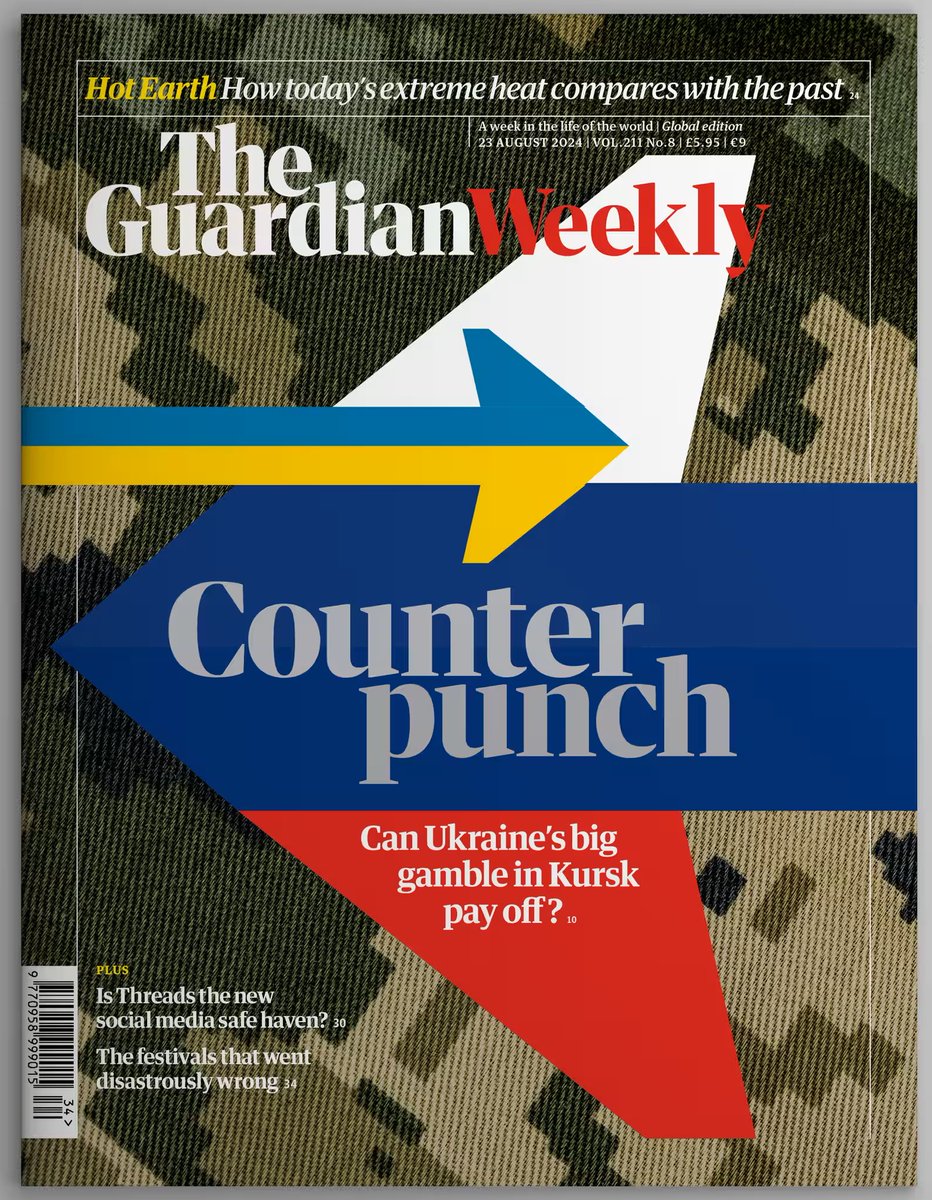
The Guardian Weekly (February 22, 2024) – The new issue features ‘Ukraine’s Lonely Road’ – After two years, is there a way out of Putin’s war?…
Shaun Walker reports on this week’s big story, the fall of the strategic town of Avdiivka to Russian troops has come at a grim time for Ukraine’s president, Volodymyr Zelenskiy. While the army is struggling to hold ground, war fatigue is setting in among parts of the population and disagreements among the leadership have been spilling into the open.
At the same time, the death of the jailed Russian critic Alexei Navalny last week – widely seen as another political assassination – appears to emphasise the strengthening hand of Vladimir Putin, who is expected to secure another six-year term as Russia’s president in tightly controlled elections next month. Amid a familiar wave of international outrage, our Russia affairs reporter Pjotr Sauer asks what Putin might do next.
Coupled with the possibility of a Donald Trump victory in the US elections later this year, it all makes for a deeply worrying outlook for Ukraine, reflected in the Kyiv-based illustrator Sergiy Maidukov’s haunting cover artwork for the magazine this week.
“This war is the hardest test of my life, similar to an endless ultramarathon,” writes Sergiy. “It is good to try to not think about the finish when running long distance. This is important knowledge to endure.”
Russian aggression and American wavering reveal just how ill-equipped the continent is
Russia is becoming more dangerous, America is less reliable and Europe remains unprepared. The problem is simply put, but the scale of its solution is hard to comprehend. The security arrangements based on nato that emerged from the second world war—and have prevented a third—are so much part of Europe’s fabric that remaking them will be an immense task. European leaders urgently need to jettison their post-Soviet complacency. That means raising defence spending to a level not seen in decades, restoring Europe’s neglected military traditions, restructuring its arms industries and preparing for a possible war. The work has barely begun.
The Globalist (February 22, 2024):Broadcast live from the Polish capital to assess the state of the fast-changing nation. We discuss the role that Poland has played in the diplomatic arena, take a look at Warsaw’s green ambitions with architect Marlena Happach and talk about the future of the media industry with voices from Polityka Insight and ‘Gazeta Wyborcza’.
The Globalist (February 21, 2024):G20 foreign ministers gather in Rio de Janeiro as a diplomatic spat engulfs Brazil and Israel. Then: Burkina Faso, Mali and Niger juntas confirm their commitment to form a new tri-state confederation, the Philippines conducts joint air patrols with the US and we hear from Portugal’s foreign minister, João Cravinho on Ukraine and Israel.
Plus: the commercial airport set to open on Italy’s Amalfi Coast this summer.
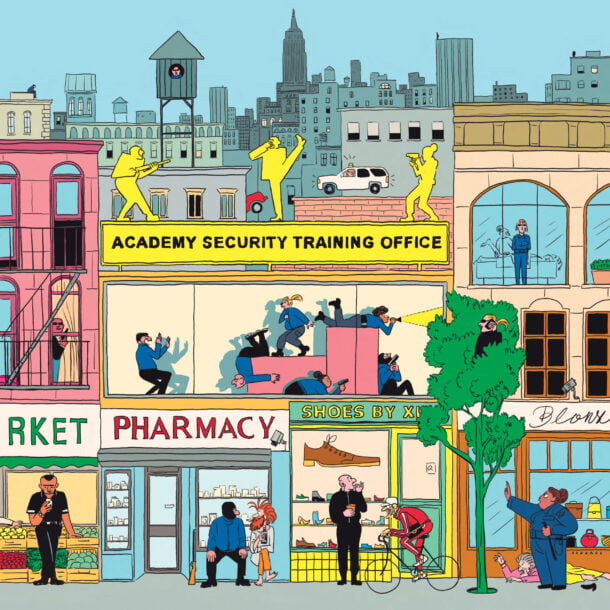
“Artificial intelligence may indeed affect the way our military operates. But the notion that bright-eyed visionaries from the tech industry are revolutionizing our military machine promotes a myth that this relationship is not only new, but will fundamentally improve our defense system—one notorious for its insatiable appetite for money, poorly performing weapons, and lost wars. In reality, the change flows in the other direction, as new recruits enter the warm embrace of the imperishable military-industrial complex, eager to learn its ways.”
“People would rather be enthusiastic collaborators in a global project than be skeptics of its fundamental integrity. Antinatalism implies or counts on our eventual extinction, and thinking this way is painful.”
News, Views and Reviews For The Intellectually Curious