The New Yorker (January 29, 2024): The new issue‘s cover featuresSarula Bao’s “Lunar New Year” – The artist depicts the joys of gathering with loved ones, around a table of good food
As the general manager of the Jay Peak ski resort, Bill Stenger rose most days around 6 a.m. and arrived at the slopes before seven. He’d check in with his head snowmaker and the ski-patrol staff, visit the two hotels on the property, and chat with the maintenance workers, the lift operators, the food-and-beverage manager, and the ski-school instructors—a kind of management through constant motion. Stenger is seventy-five, with white hair, wire-rimmed reading glasses, and a sturdy physique that makes him look built for fuzzy sweaters.
The Perverse Policies That Fuel Wildfires
We thought we could master nature, but we were playing with fire.
With elections postponed and no end to the war with Russia in sight, Volodymyr Zelensky and his political allies are becoming like the officials they once promised to root out: entrenched.
The Globalist Podcast (January 29, 2024) – Will the director of the CIA, William Burns, be able to negotiate a truce and hostage deal when he meets his Egyptian and Israeli counterparts, as well as Qatar’s prime minister, Mohammed bin Abdulrahman bin Jassim Al Thani?
Following Finland’s presidential election on Sunday, we look at the future of the country. And with layoffs and strikes across the country, we examine what’s happening in the US media. Plus: why Guggenheim Bilbao is halting its expansion into a Basque nature reserve.
Monocle on Sunday, January 28, 2024– Florian Egli and Marcus Schögel join Monocle’s editorial director, Tyler Brûlé, to discuss the weekend’s hottest topics.
We also speak to Monocle’s Helsinki correspondent, Petri Burtsoff, about Finland’s presidential election and Guy De Launey gives us the latest news from the Balkans. Plus: we’re joined by our senior news editor in London, Chris Cermak, and Isabella Smith, owner and founder of Books and Company.
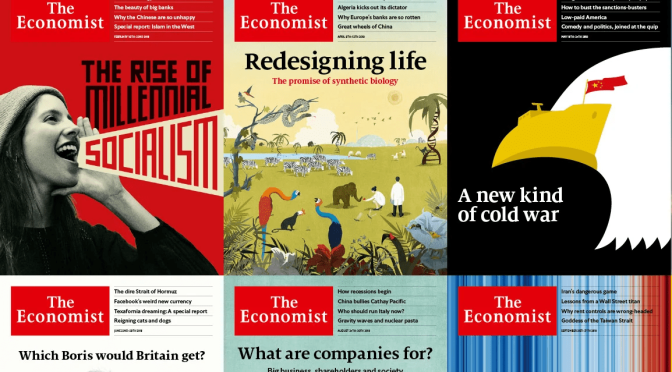
The Economist (January 27, 2024) – In 2023, bestseller lists continued to be populated by medical tomes in the wake of the pandemic and by scientists sounding the alarm about climate change. In 2024 there will be a distinct change of tack, as other topics take the lead.
Artificial intelligence (ai) is one of them. Several books will look at how it might reshape the world: “ai Needs You”, a “humanist manifesto for the age of ai” by Verity Harding, formerly of Google DeepMind; “The Heart and the Chip: Our Bright Future with Robots” by Daniela Rus, director of the ai laboratory at mit; and “Literary Theory for Robots”, an examination of how machine intelligence will influence the way we read, write and think, by Dennis Yi Tenen, a professor of English at Columbia University.
Geopolitics will also dominate publishers’ frontlists. Dale Copeland, a professor of international relations, will chronicle how commerce has shaped America’s foreign policy; Jim Sciutto of cnn will explore “The Return of Great Powers: Russia, China and the Next World War”. Several authors will focus on the war in Europe. Eugene Finkel, who was born in Ukraine, will offer a “deeper history of Russian violence against civilians” in the country; in “Putin and the Return of History” Martin Sixsmith will look back over a thousand years to put the Russian president’s aggression in context. Peter Pomerantsev’s “How to Win an Information War” will apply the perspective of a propagandist during the second world war to the conflict.
For those hoping for a few hours of diversion, there will be plenty of novels to look forward to. Bestselling authors including Percival Everett, Yann Martel, David Nicholls, Kiley Reid, Colm Toibin and Amor Towles will return with new stories in 2024. James Patterson will be completing an unfinished manuscript left behind by Michael Crichton, the author of “Jurassic Park”.
An unseen work by Gabriel Garcia Marquez, who died in 2014, will also be released. In “En Agosto Nos Vemos” (“Until August”), a novella of fewer than 150 pages, the late Nobel laureate told the tale of a middle-aged woman’s affair. His children opposed its publication but now say it has the author’s trademark “capacity for invention, his poetic language [and] his captivating storytelling”. True or not, García Marquez will probably enjoy a resurgence, as an adaptation of his most celebrated work, “One Hundred Years of Solitude”, is also in production at Netflix. If you want a fantastical tale, who better to turn to than the Colombian master of magical realism?
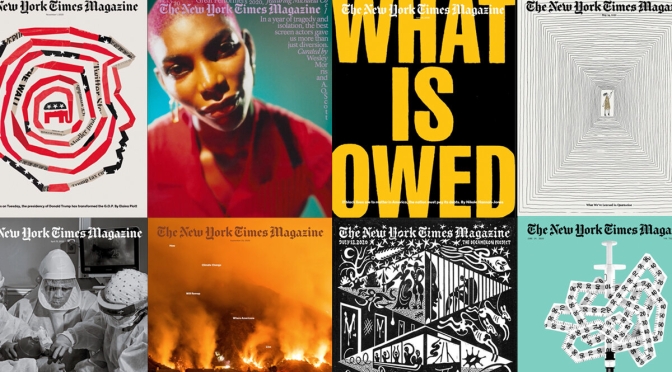
THE NEW YORK TIMES MAGAZINE (January 26, 2024): The new issue features ‘America’s 21st-Century E-Commerce Economy Has Stoked A 19th-Century Form of Crime: The Train Robbery’….
The Globalist Podcast (January 26, 2024) – As Israel considers a buffer zone inside Gaza and criticises Qatar, is it at risk of pushing away allies?
Also in the programme: the US says that it’s ready to send Turkey a shipment of F-16 fighter jets and we look ahead to the Finnish elections. Plus: why 2024 is set to be a good year for champagne.
Prospect Magazine (March 2024) – The latest issue features ‘How The Government Captured The BBC’ – A faceless fixer – and a broadcaster in a state of ‘permanent cringe’…
We do not choose where we are born. That creates rights—and obligations—that we should all seek to honour
Conflict, human rights abuses and climate change have led to a doubling of the global refugee population in the last seven years, and yet the response of many wealthy countries has become increasingly insular and myopic. Constant demands to slash international aid, along with punitive immigration policies and hateful rhetoric, mark a shift away from humanitarian values. The UK’s Rwanda scheme epitomises this trend: it would normalise the mass deportation of asylum seekers and undermine prohibitions on returning refugees to dangerous countries. At the same time, citizens of wealthy countries appear increasingly indifferent to the plight of those who perish in the Mediterranean or along other perilous routes.
The Guardian Weekly (January 25, 2024) – The new issue features ‘True Colours’ – What the AFD really wants for Germany; The fading hopes for Middle East Peace; Trump’s victory and DeSantis’s doomed campaign…
Events in the Middle East continue to unfold at a bewildering pace, with pockets of conflict opening up across the region. Diplomatic editor Patrick Wintour rounds up a week of flashpoints and assesses increasingly slim hopes for controlling the situation. And Oliver Holmes provides a revealing profile of Yemen, one of the most unchanging and least visited countries in the Middle East.
The Weekly went to press before news of Donald Trump’s victory in the New Hampshire Republican primary on Tuesday night, but you can catch up with all the latest Guardian coverage and reaction here. In the magazine, David Smith delivers a postmortem on Ron DeSantis’s doomed campaign, while Jonathan Freedland argues that Trump’s march to the White House can still be stopped.
Our long-read features take somewhat divergent paths this week. First, Charlotte Edwardes meets Gary Lineker, the former England footballer turned TV presenter whose penchant for regularly airing his liberal worldviews has made him public enemy No 1 for Britain’s anti-woke brigade.
Then, Chananya Groner unearths a remarkable story of factionalism and messianic fervour within New York’s Hasidic Jewish community, stretching back 30 years, which led to secret tunnels recently being discovered beneath a Brooklyn synagogue.
And in Culture, Charlotte Higgins meets the classical musicians Dalia Stasevska and Joshua Bell, who are resurrecting a long-forgotten Ukrainian concerto as a gesture of defiance to Russia.
Finally, we’re on the lookout for your best photographs of the world around us. For a chance for your picture to feature in the magazine, send us your best shot, telling us where you were in the world when you took it and why the scene resonated with you at that particular time.
News, Views and Reviews For The Intellectually Curious