
 Probing the superconducting properties of graphene and a bacteria that can use manganese to grow. If you sandwich two sheets of graphene together and twist one in just the right way, it can gain some superconducting properties. Now, physicists have added another material to this sandwich which stabilises that superconductivity, a result that may complicate physicists’ understanding of magic angles.
08:22 Coronapod
With evidence mounting that SARS-CoV2 can spread in tiny aerosolized droplets, researchers have called on the WHO to change their guidance for disease prevention. News: Mounting evidence suggests coronavirus is airborne — but health advice has not caught up; Research article: Morwaska et al.; WHO: Transmission of SARS-CoV-2: implications for infection prevention precautions
19:27 Research Highlights
Repairing human lungs by hooking them up to pigs, and a new form of carbon. Research Highlight: How to use a live pig to revitalize a human lung; Research Highlight: This material is almost as hard as diamond — but as light as graphite
21:46 Manganese munchers
For decades it’s been thought that microbes that use manganese as an energy source must exist. Now, for the first time, researchers have found evidence that they do. Research Article: Yu and Leadbetter
29:12 Briefing Chat
We take a look at some highlights from the Nature Briefing. This time we discuss DNA evidence of contact between ancient Native Americans and Polynesians, reintroduction of bison to the UK, and the first extinction of a modern marine fish. Nature News: Ancient voyage carried Native Americans’ DNA to remote Pacific islands; The Guardian: Wild bison to return to UK for first time in 6,000 years; Scientific American:

 Buildings are getting tested for coronavirus, too. Research teams in Oregon are conducting real-time coronavirus tests on ventilation systems in buildings that could be essential for returning to the office or school.
 The first lemur I ever met was a female, and she tried to bite me, which was fair, because I was trying to touch her, and humans have done nothing to recommend themselves to lemurs. She was an indri lemur, living in a wildlife sanctuary outside Antananarivo; she had an infant, which was riding not on her front, like a baby monkey, but on her back, like a miniature Lester Piggott. She had wide yellow eyes. William Burroughs, in his lemur-centric eco-surrealist novella Ghost of Chance, described the eyes of a lemur as ‘changing colour with shifts of the light: obsidian, emerald, ruby, opal, amethyst, diamond’. The stare of this indri resembled that of a young man at a nightclub who urgently wishes to tell you about his belief system, but her fur was the softest thing I have ever touched. I was a child, and the indri, which is the largest extant species of lemur, came up to my ribs when standing on her hind legs. She looked, as lemurs do, like a cross between a monkey, a cat, a rat and a human.
 The Economist Morning Briefing, July 14th, 2020: Coronavirus cases surpass 13m and China and America trade insults.

 A selection of three essential articles read aloud from the latest issue of The Economist. This week, how
 Live from Zürich: Tyler Brûlé and his guests discuss the weekend’s news, the Swiss design world and the best recipes for a Sunday dinner.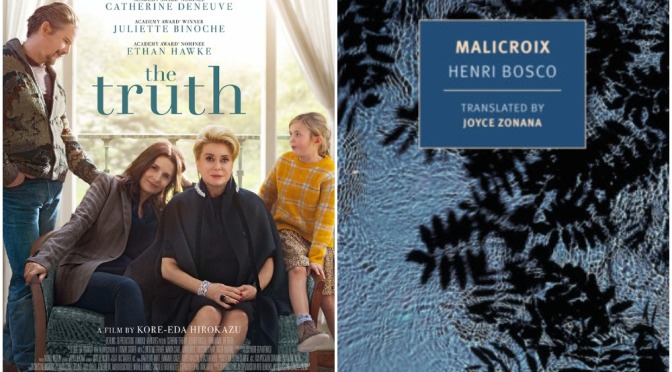
 This week, Medaya speaks with acclaimed filmmaker Hirokazu Kore-eda about his new film, The Truth (La Vérité), starring French film screen legends Catherine Deneuve and Juliette Binoche. Kore-eda discusses complicated family dynamics, the relationship between art and truth-telling and what brought him to France.
  Boomers Daily