

Supreme Court nominee hearings set up partisan battle ahead of election, White House seeks limited coronavirus relief bill, and Minnesota community comes together to build a disabled Navy vet a ramp.

Supreme Court nominee hearings set up partisan battle ahead of election, White House seeks limited coronavirus relief bill, and Minnesota community comes together to build a disabled Navy vet a ramp.
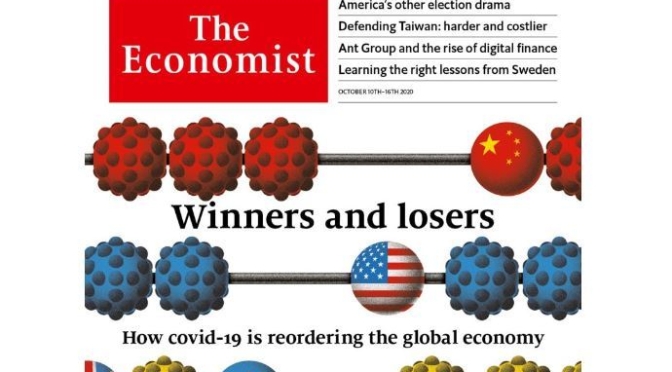
A selection of three essential articles read aloud from the latest issue of The Economist. This week: Ant group and fintech come of age, economic disparities after covid-19 (09:30) the US election in miniature (17:00).

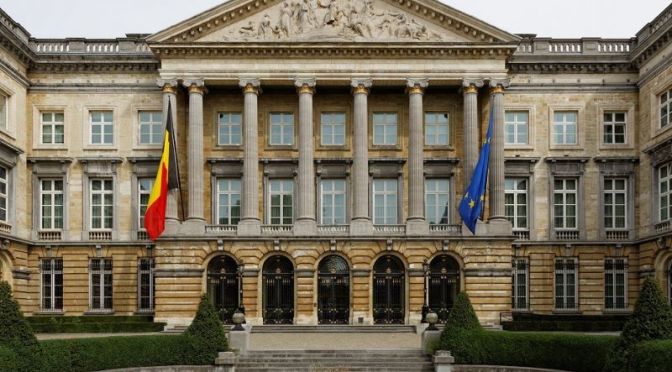
After nearly 500 days of negotiations, Belgium finally has a national government. It consists of seven parties but excludes the two biggest – both Flemish nationalist parties. Is Belgium’s complex political system workable in the long term?
And can the country hold together? Andrew Mueller asks Régis Dandoy, Carl Devos and Barbara Moens.

NPR News Now reports: President Trump to host White House event, Hurricane Delta, cease fire talks in Azerbaijan-Armenia fighting and more top news.

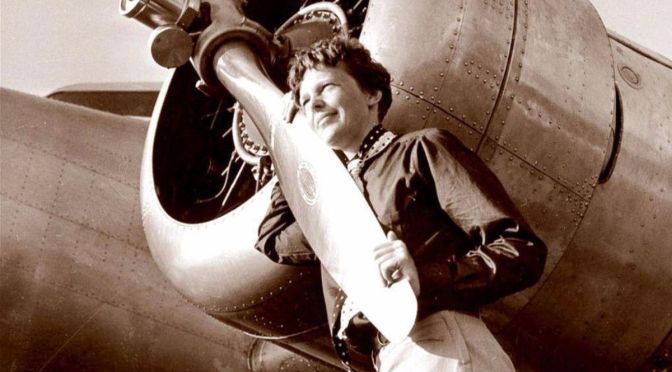
In this new series we profile some of the fearless record-breaking aviators who flew to dizzying heights and were pioneers in their field. We begin with the first woman to fly solo across the Atlantic, Amelia Earhart, who paved the way for women in aviation.
The alleged plot by militia members to kidnap Michigan governor Gretchen Whitmer shines a light on domestic extremists in the state. Presidential debate organizers offered up a revised plan for upcoming debates, setting off a harsh exchange between the campaigns.
And Washington DC authorities are urging White House staff to contact trace following that Rose Garden event for Supreme Court nominee Amy Coney Barrett.
Kamala Harris and Mike Pence hit the debate floor last night, Hurricane Delta restrengthens to Category 2, and family’s cat found 23 months after Camp Fire disappearance.

A conversation about the US election and the possible fallout for science, Covid-19, black hole mergers and are maternal behaviours learned or innate?
In this episode:
00:46 US election
In the United States the presidential race is underway, and Nature is closely watching to see what might happen for science. We speak to two of our US based reporters to get their insight on the election and what to look out for. News Feature: A four-year timeline of Trump’s impact on science; News Feature: How Trump damaged science — and why it could take decades to recover; News: What a Joe Biden presidency would mean for five key science issues
12:36 Coronapod
With news of the US President Donald Trump contracting coronavirus, the Coronapod team discuss the treatments he has received and what this might mean for the US government. News: Contact tracing Trump’s travels would require ‘massive’ effort
25:33 Research Highlights
How binary stars could become black hole mergers, and a prehistoric massacre. Research Highlight: The odd couple: how a pair of mismatched black holes formed; Research Highlight: A bustling town’s annihilation is frozen in time
27:36 Are parental behaviours innate?
Nature versus nurture is a debate as old as science itself,and in a new paper maternal behaviours are innate or learned, by looking at the neurological responses of adult mice to distress calls from mice pups. Research Article: Schiavo et al.
33:03 Briefing Chat
This week sees the announcement of the Nobel Prizes, so we chat about the winners and their accomplishments. Nature News: Physicists who unravelled mysteries of black holes win Nobel prize; Nature News: Virologists who discovered hepatitis C win medicine Nobel
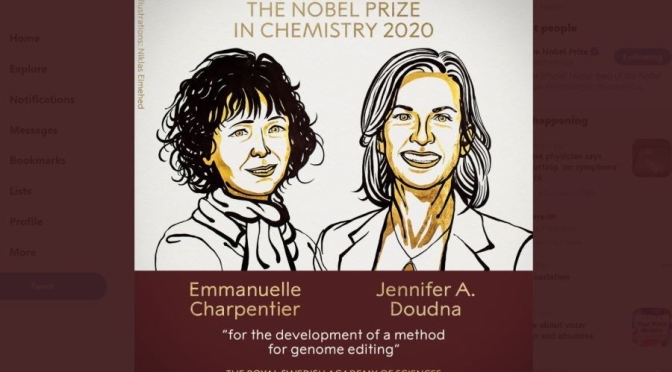
“We had a sense that we were onto something big,” says Jennifer Doudna, as she recalls the start of her “curiosity-driven” research into CRISPR and reflects on the pace of the field today, in this short conversation with Adam Smith. Speaking from her patio in the early morning in Palo Alto, Doudna describes how she was woken by a call from a journalist: “I assumed she was calling me to ask me to comment on somebody else winning the Nobel Prize!” The award of the prize to her and Emmanuelle Charpentier will, she hopes, be an encouragement to other women. “Sometimes,” she comments, “there’s a sense that no matter what they do, their work will not be recognised in the way it would be if they were a man.”
In this interview recorded shortly after news broke of her Nobel Prize in Chemistry, Emmanuelle Charpentier tells Adam Smith of her surprise at receiving the call from Stockholm, despite considerable speculation that it might be coming her way. She speaks of the “explosion of knowledge and publications” that the CRISPR field has generated, the motivations behind her “brief but intense” collaboration with her co-Laureate Jennifer Doudna, the need for societal involvement in the conversation about the applications of technology and the importance of studying the microbiological world.

NPR News Now reports: Vice President Debate tonight, Stimulus Bill update, health care needs in rural America, and other top news.
 Boomers Daily