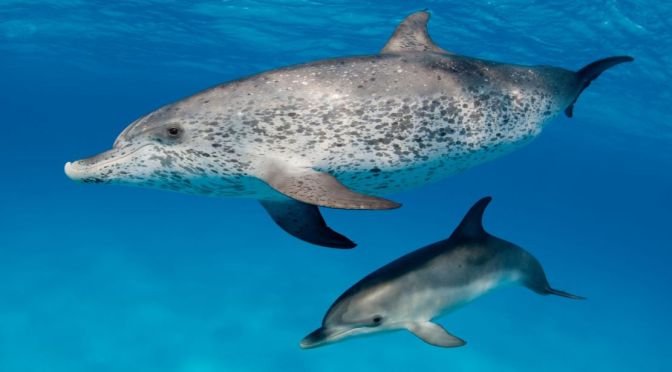
“Sunday Morning” takes us among some spotted dolphins in the blue waters off the Bahamas. Videographer: Mauricio Handler.
Atlantic spotted dolphins are found in warm temperate and tropical waters of the Atlantic Ocean. They usually form groups of five to 50 individuals but sometimes travel in groups of up to 200. They are fast swimmers and often “surf” in the waves created by vessels.
Young Atlantic spotted dolphins do not have spots. As a result, they can look like slender bottlenose dolphins. Their distinctive spotted pattern starts to appear all over their bodies as they get older.
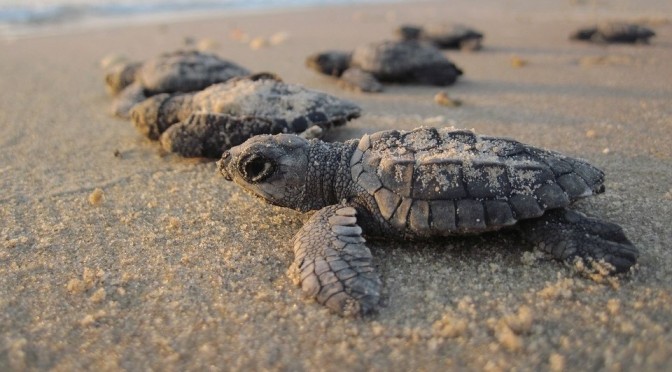
On the beaches of the Great Barrier Reef, the first turtle hatchlings emerge from their shells and make a run for the ocean. Almost immediately, aerial and aquatic predators appear, hoping for an easy meal. 🎥David Attenborough's Great Barrier Reef pic.twitter.com/jciI1E3wsa
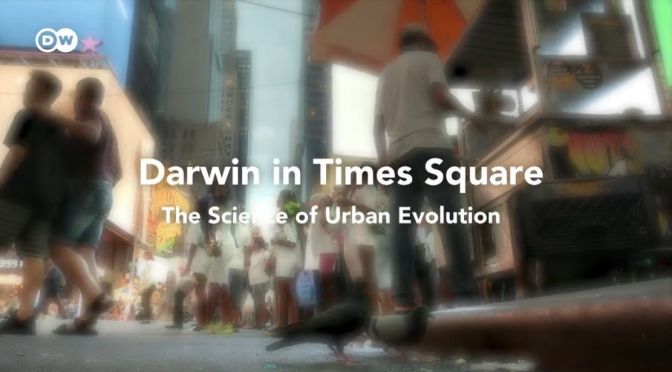
It’s a new and surprising chapter in the theory of evolution. According to recent studies, it’s in our cities, of all places, that animals and plants adapt particularly quickly to changing living conditions.
Nature’s response to the spread of cities is astonishing: Why do catfish in the river of a French city systematically prey on urban pigeons on the banks? Why do female birds on a university campus in California suddenly change their mating behavior? How do mice in New York’s Central Park cope with an altered diet of human food waste? How have killifish in the Atlantic built up resistance to deadly chemical waste?
And, is it possible for moths to adapt to nighttime light pollution? New research provides surprising new insights into Darwin’s theory of evolution. Nowhere else do animals and plants adapt so quickly to new living conditions as in cities. Biologists have long known that animals and plants occupy new habitats in the vicinity of humans.
But now, new genetic analyses show that these adaptations are accompanied by significant changes in DNA. Even more surprising: these evolutionary changes have not occurred over periods of millennia, but within just a few decades. The process has amazed scientists, who watch as nature transforms even our most hostile man-made interventions — pollution, light pollution, noise, garbage and dense development — into creative energy for new adaptations. Some researchers believe that our cities may soon develop their own, brand-new life forms. What are the implications of these developments for the balance between humans and nature on our planet?
Heat, drought and wildfires are ravaging western wildlife while conservationists try to help ecosystems adapt
By Brianna Randall – Conservation, Aug 02, 2022
Dead mussels lie along the Pacific shore of Vancouver, British Columbia, during 2021’s summer heat wave. Scientists estimate that the record-breaking heat killed more than 1 billion marine animals off the coasts of British Columbia and Washington state. (Photo by Christopher Harley/University of British Columbia)
GASPING SALMON WITH INFECTED LESIONS. Emaciated deer searching sagebrush flats for water. Clams and mussels boiled to death in their shells. Last summer, temperatures in the Northwest soared to record highs in the triple digits, killing more than 1 billion marine animals in the Salish Sea and stressing wildlife from the Pacific to the Rocky Mountains. Simultaneously, ongoing drought in the Southwest—which began in 2000 and is the region’s driest 22-year period in 1,200 years—is causing plants to wither, springs to dry up and wildfires to engulf entire landscapes.
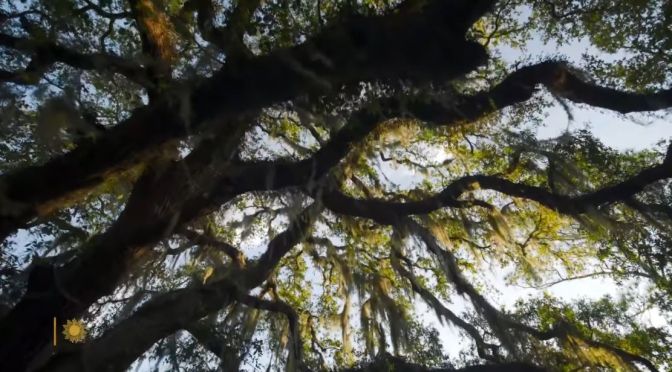
“Sunday Morning” takes us to the stately live oaks of Jekyll Island, Georgia. Videographer: Alex Goetz.
Jekyll Island is located off the coast of the U.S. state of Georgia, in Glynn County. It is one of the Sea Islands and one of the Golden Isles of Georgia barrier islands. The island is owned by the State of Georgia and run by a self-sustaining, self-governing body.
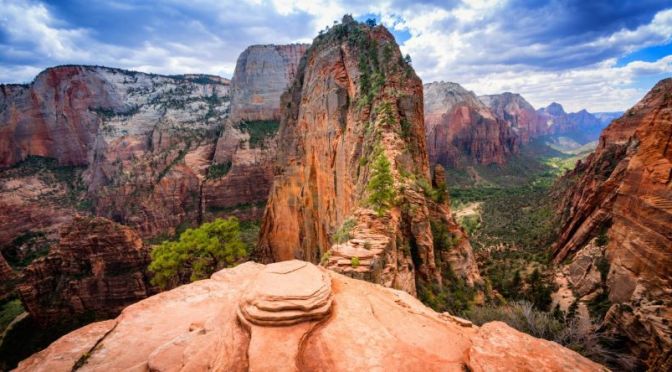
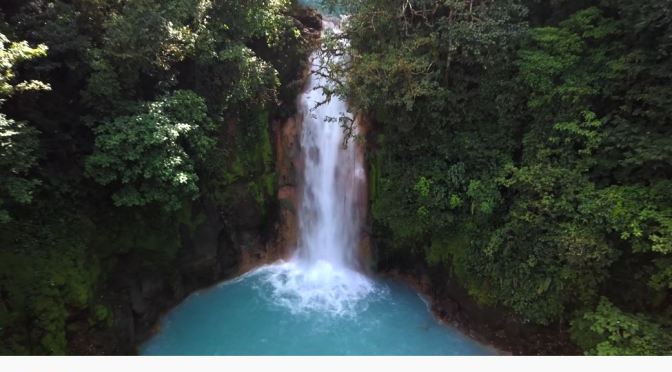
“Sunday Morning” takes us to Zion National Park in Utah. Videographer: Brad Markel.
Zion National Park is a southwest Utah nature preserve distinguished by Zion Canyon’s steep red cliffs. Zion Canyon Scenic Drive cuts through its main section, leading to forest trails along the Virgin River. The river flows to the Emerald Pools, which have waterfalls and a hanging garden. Also along the river, partly through deep chasms, is Zion Narrows wading hike.
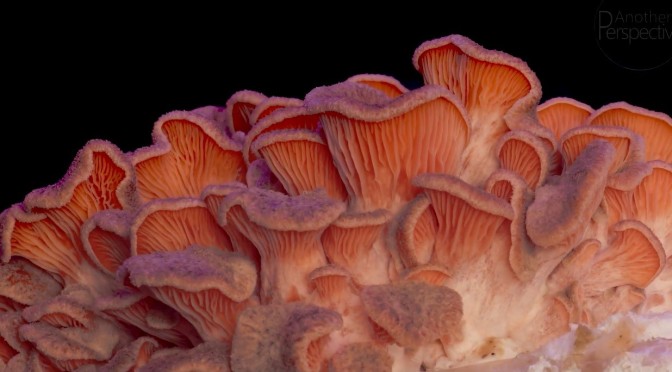
Time Lapse in Macro | Growing Pink Oyster Mushrooms with Laowa 60mm 2X Macro Lens.
Pleurotus djamor, commonly known as the pink oyster mushroom, is a species of fungus in the family Pleurotaceae. It was originally named Agaricus djamor by the German-born botanist Georg Eberhard Rumphius and sanctioned under that name by Elias Magnus Fries in 1821.
In February 2022, the British Isles were hit by three consecutive storms, some of the strongest seen in decades. In the days before the storms arrived, we decided to change the plan for our canoeing expedition whilst we were already on our way to Scotland. Instead of paddling the exposed lochs along the west coast, we opted for a more sheltered location. A glen tucked away right in the heart of the highlands. This film showcases the highlights of our journey.
When Charles Darwin’s cousin, Francis Galton, coined the word eugenics in 1883, he called it the study of the conditions under which “men of a high type are produced”. This gross idea led to the gates of Auschwitz, reminds broadcaster Adam Rutherford (an alumnus of the Galton Laboratory, former name of University College London’s human‑genetics centre). It hasn’t gone away, he explains in his timely salvo on the politics and history of notions that dog genetics, events up to and after the ‘CRISPR twins’ and the resurgence of white supremacy.
Dark and Magical Places
Christopher Kemp Profile/Wellcome Collection (2022)
“I have no sense of direction,” confesses molecular biologist Christopher Kemp — unlike his wife, “an effortless and intuitive navigator”. Once, in a mirror maze, he was transfixed with alarm, and had to be pulled out by his seven-year-old son. Many others experience similar disorientation, sometimes with disastrous results, as when hikers get lost. Their stories vitalize this compelling study of the brain, memory and navigation, in which one psychologist compares our understanding of parts of the brain with knowledge of black holes.
When the World Runs Dry
Nancy F. Castaldo Algonquin (2022)
Globally, millions of people must walk up to 6 kilometres daily to get clean water, says environmental writer Nancy Castaldo. Moreover, each year, more children die as a result of water contamination than from violence, including war, said the United Nations in 2019. Castaldo’s alarming book discusses many examples of shortages and tainting, ranging from drought in Cape Town, South Africa, to lead pollution in Flint, Michigan. She concludes with realistic steps to reduce domestic consumption and contamination.
Making Numbers Count
Chip Heath and Karla Starr Avid Reader (2022)
Business scholar Chip Heath and science journalist Karla Starr are familiar with the need to “translate numbers into instinctive human experience”, informatively and memorably. Unable to find a book on the subject, they decided to write their own. Their diverse guide bubbles with translated statistics. For example, there are about 400 million civilian-owned firearms in the United States — that translates into one for every adult and child, with around 70 million left over.
Genetically Modified Democracy
Aniket Aga Yale Univ. Press (2021)
India’s 1960s Green Revolution began without much deliberation. The government promoted high-yielding varieties of wheat and rice, and guaranteed purchase prices. This helped “already well-off, landed farmers”, notes environmentalist Aniket Aga, but led to huge debts for the struggling majority. When genetically modified crops reached India in 2002, they cultivated much more scrutiny, involving scientists, seed companies, farmers, consumers and the state. Aga describes the debate, without claiming to provid