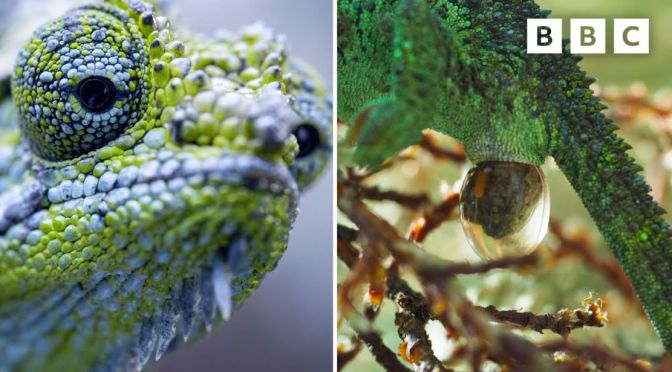
In these frozen peaks, a chameleon gives birth to live young as it is too cold to lay eggs out in the open.
In East Africa, during the day, on the high slopes of Mount Kenya the tropical sun keeps the cold at bay – but at night the frost descends. During this cycle of freeze and thaw, a pregnant high casqued chameleon must choose the right time to give birth, if her new-borns are to escape the deadly night freeze.
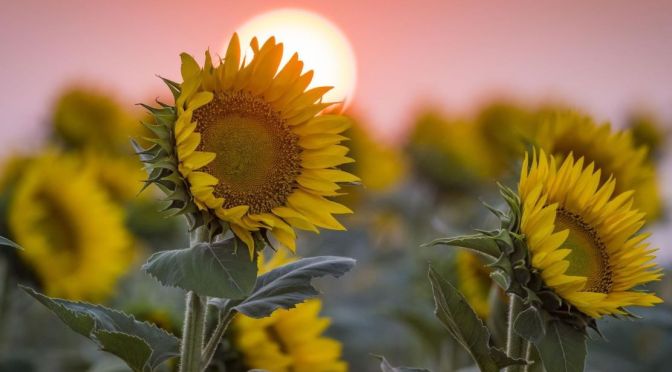
“Sunday Morning” takes us to field aglow in central South Dakota. Videographer: Kevin Kjergaard.
South Dakota consistently ranks as one of the world’s top sunflower producers. This makes late summer an amazing time to experience gorgeous yellow fields that seem to stretch forever.
Depending on the growing season, sunflowers begin to bloom sometime in late July or early August and stay brilliant for approximately 30 days. Young pre-bloom plants track the sun throughout the day and turn back to the east overnight, putting them in position to catch the morning sunlight. As they bloom and the heads become heavier, the flowers stay facing the east.
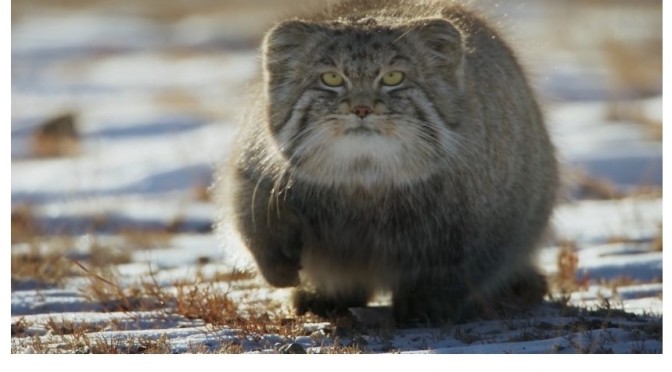
Dinnertime is a gamble for Pallas’s cats, and this one’s hangry. Relative to their body size, they have the shortest legs of any cat, which makes attacking prey in a timely fashion somewhat tricky…
The Pallas’s cat, also known as the manul, is a small wild cat with long and dense light grey fur. Its rounded ears are set low on the sides of the head. Its head-and-body length ranges from 46 to 65 cm with a 21 to 31 cm long bushy tail.
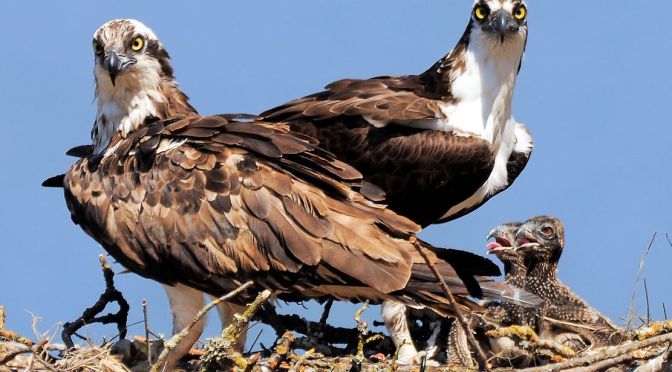
“Sunday Morning” takes us among ospreys feathering their nests at the Delaware Bay estuary, near Morristown, New Jersey. Videographer: Jeff Reisly.
Unique among North American raptors for its diet of live fish and ability to dive into water to catch them, Ospreys are common sights soaring over shorelines, patrolling waterways, and standing on their huge stick nests, white heads gleaming. These large, rangy hawks do well around humans and have rebounded in numbers following the ban on the pesticide DDT. Hunting Ospreys are a picture of concentration, diving with feet outstretched and yellow eyes sighting straight along their talons.
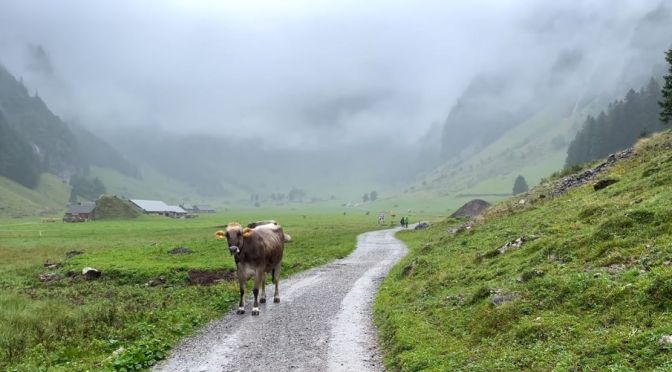
Appenzell is a town in northeastern Switzerland, at the foot of the Alpstein mountains. Trails and cableways connect various summits, including towering Säntis peak. On the steep cliffs of the Ebenalp, the Wildkirchli cave complex houses a 17th-century chapel and hermitage. Nearby is the old Aescher inn, tucked into the side of a sheer cliff. Appenzell’s car-free center features wooden houses with colorful facades.
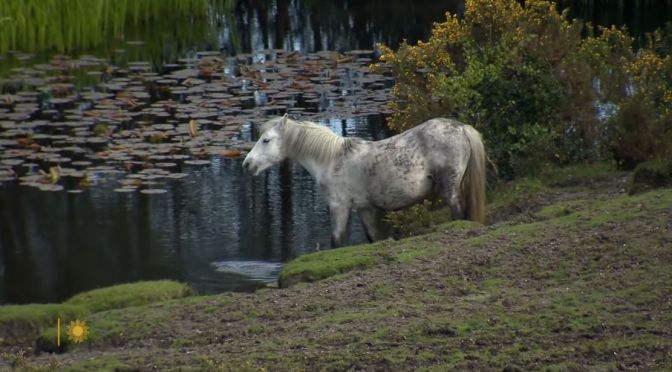
“Sunday Morning” takes us to New Forest National Park, the site of England’s first royal hunting ground established in the year 1079. Videographer: Henry Bautista.
The New Forest is an area of southern England that includes New Forest National Park. The region is known for its heathland, forest trails and native ponies. In the southeast, the National Motor Museum houses F1 race cars and vintage motorbikes. Exbury Gardens & Steam Railway is home to exotic trees, plus colourful rhododendrons and azaleas. Owls, otters and wolves are among the residents of New Forest Wildlife Park.
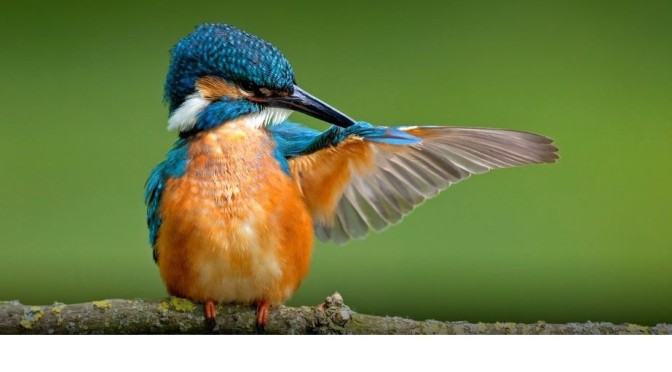
Kingfishers or Alcedinidae are a family of small to medium-sized, brightly colored birds in the order Coraciiformes. They have a cosmopolitan distribution, with most species found in the tropical regions of Africa, Asia, and Oceania but also can be seen in Europe.
Kingfishers are known for their stocky body, long, thick bill and striking colors and markings. Many kingfishers are decked out in feathers of bright blue, green, turquoise, red, or gold. Some have splotches, dashes, stripes, or speckles. The dagger-shaped bill often seems too long or too big for the rest of the bird, but it is well designed for capturing food. Most kingfishers have short legs and strong feet, since they spend most of their time perched on a stalk, twig, or branch while keeping an eye out for a meal. Even though they are chunky birds, kingfishers are fast flyers. Some, like pied kingfishers, can even flap their wings fast enough to hover over water.
Kingfishers like to keep clean and bathe by diving into water and then perching in the sun to dry and preen their feathers. Some use their wings to scrub and scratch the top of their head. They also keep that impressive bill clean by scraping it against a branch until they are satisfied that the bill is in good condition.
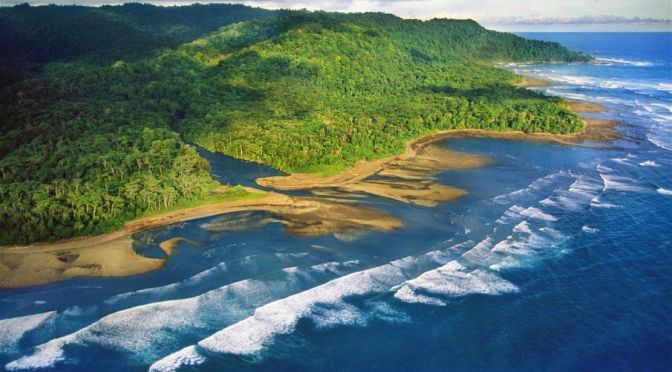
Corcovado National Park in Costa Rica is the backpacking experience of a lifetime. It encompasses the only remaining old growth wet forests on the Pacific coast of Central America, and 13 major ecosystems including lowland rain forest, highland cloud forest, jolillo palm forest, and mangrove swamps, as well as coastal marine and beach habitats.
There is a good chance of spotting some of Costa Rica’s shyest and most endangered inhabitants here; Baird’s Tapirs, Jaguars, Scarlet Macaws, Harpy Eagles, Red-backed squirrel monkeys and White-lipped Peccaries. It is wet, remote and rugged, but the trails are relatively good, and the camping areas near the ranger stations are grassy and well drained.
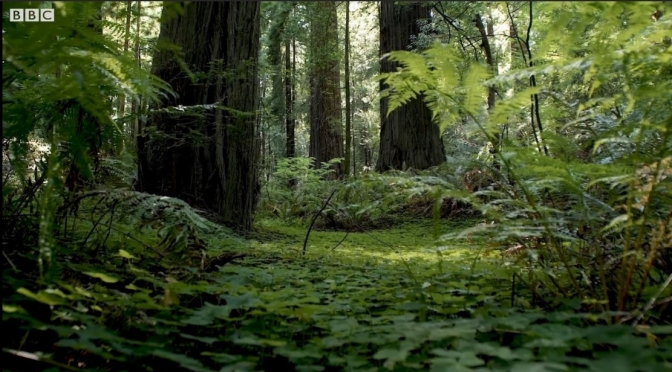
Redwood National and State Parks are a string of protected forests, beaches and grasslands along Northern California’s coast. Jedediah Smith Redwoods State Park has trails through dense old-growth woods. Prairie Creek Redwoods State Park is home to Fern Canyon, with its high, plant-covered walls. Roosevelt elk frequent nearby Elk Prairie. Giant redwood clusters include Redwood National Park’s Lady Bird Johnson Grove.
An #OurGreenPlanet co-production with The Listening Planet, in association with The Moondance Foundation.
News, Views and Reviews For The Intellectually Curious



 Boomers Daily