Category Archives: Home Design

Design Tour: Morris Cove House, Long Island, NY

The Local Project (February 28, 2024) – Located on a narrow peninsula in Sag Harbor, with access to water on all sides, Morris Cove by Bates Masi + Architects is a peaceful lake home.

Video timeline: 00:00 – Introduction to the Peaceful Lake Home 00:50 – Designing for the Landscape 02:19 – Accomodating for the Weather 02:44 – The Layout of the Home 03:51 – A Character Filled Material Palette 05:00 – An Extension of the Architecture 05:28 – Favourite Aspects of the Home

The architects, Paul Masi and Aaron Weil, whose personal affinity for this part of the world and appreciation for the site’s heritage enhanced the architecture and interior design of this peaceful lake home, have crafted a family house that will, over time, ameliorate the site’s natural conditions and deepen the residents’ connection to the landscape. Bates Masi + Architects were approached by the clients – a large family “whose love of this special place makes them stewards of the site more than just owners of it,” notes Paul – to conceive a peaceful lake home. “Previously, there was a home here and, frankly, it was contributing to the erosion of the property, so one of our goals was to look at a new design that would be beneficial to the property.”

Therefore, Bates Masi + Architects decided against a renovation or refurbishment, opting instead for a family house that takes cues from Arts and Crafts style architecture and contemporary design ideals. The result is a family house that pays deference to the landscape while responding to the clients’ patterns of living and briefing requirements. Stretching along the peninsula and oriented towards the water, the architecture encompasses five pavilions beneath an overarching roof structure, including a kitchen, dining and living area as well as bedrooms and bathrooms.
Home Tours: Mygunya By The Circus In Australia

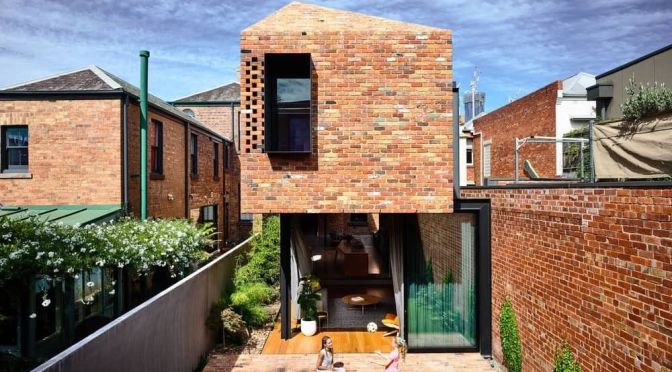
The Local Project (February 20, 2024) – Located in Fitzroy, Victoria, Mygunya by The Circus by Matt Gibson Architecture + Design is an innovative home filled with character and texture. One of the great characteristics of the family house is how it is split into three separate pavilions and finished with a soft connection of glass between them.

Video timeline: 00:00 – Introduction to the Innovative Home 00:55 – The Original Integrated Brief and the Inspiration 01:44 – Behind the Brick Selection 02:34 – A Focus on the Landscaping 02:58 – The Material Palette and Key Features 04:07 – The Layout of the Home 05:19 – A Great Collaboration

The built connections bring in a wealth of natural light while also playing off the textures of the external materials, which are also used inside the house to add extra detail and idiosyncrasy that makes the family house what it is. Situated just across the road from Edinburgh Gardens, Mygunya by The Circus is in a heritage area that features a lot of Victorian and Edwardian buildings. After being approached by the clients, who had just bought the house, the team was given a brief that requested a contemporary home for a large family.

In answer to this, they increased the bedroom sizes and opened the architecture of the home to better integrate the interior spaces with the garden. In the conceptualization of the residence, Matt Gibson Architecture + Design revised three distinct pavilions that would come together as one innovative structure. The first pavilion is the original heritage Victorian-era home, while the second is the new contemporary building in cream brick by Brickworks and the third pavilion – to the west side – holds a north-facing family room and a series of individual gardens.

Architecture: Cliffside House In New South Wales

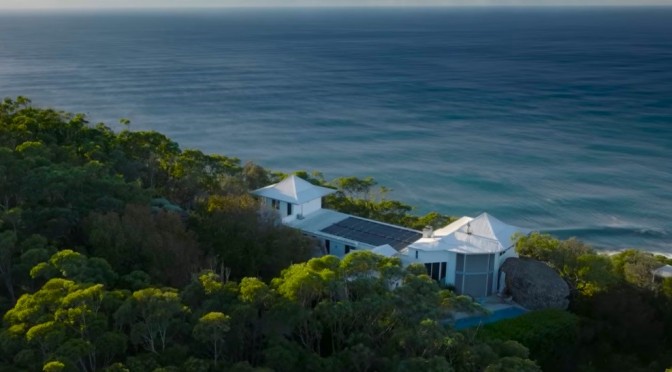
The Local Project (February 16, 2024) – Cliffside by Thomas Hamel & Associates is an interior designers own home located on the South Coast of NSW, with an enchanting character and scenic setting that captures immediate attention.

Video timeline: 00:00 – Introduction to An Interior Designers Own Home 00:41 – A Magical Site 01:35 – The Evolution of the Style and Mood 02:13 – Robust Materials and Textures 03:53 – Blending the Old and New 04:33 – A New Passion for Gardening 04:52 – Favourite Aspects

Nestled amid boulders, Cliffside emerges as a dream home that caters to every need. Located an hour south of Sydney within the Royal National Park, the home boasts a layout that closely aligns with the owners’ preferences, yet it lacked a personalised touch to truly make it their own. To address this during the design process, Thomas Hamel of Thomas Hamel & Associates – who is also the client – focused on fulfilling his and his partner’s needs and desires for a residence that would serve as their forever home.

As seen in the house tour of an interior designers own home, the style and mood of the interior have evolved organically, shaped by the owners’ cherished collections of treasures and souvenirs. Drawing inspiration from the boulders and the coastal location of the beach house, Thomas Hamel & Associates curated a palette for the interior of Cliffside that harmonised with its environment. This led to the incorporation of cohesive materials throughout the home, such as custom-designed wallpaper from Los Angeles, imparting a natural plaster texture. Complementing this, the furnishings exhibit a similar sense of harmony, featuring rough-hewn timbers reminiscent of forest elements turned into sculptural pieces.

Architecture: A Cliffside Home Tour In Sydney

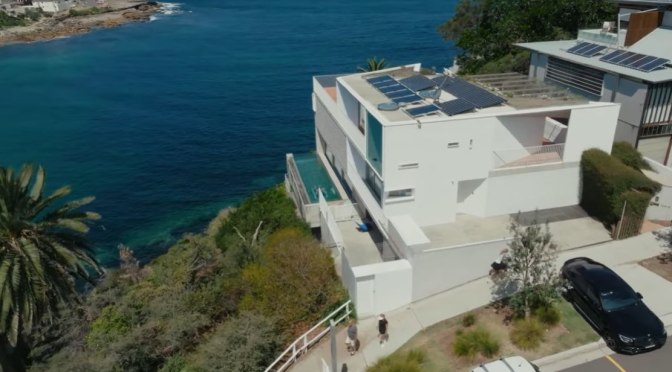
The Local Project (February 9, 2024) – Grounded in simplicity, GB House’s proximity to Sydney’s Gordons Bay and the nearby precipitous cliffs means the surrounding nature is celebrated as an interior design feature.

00:00 – Introduction to the Cliffside Home 00:55 – An Exciting and Historical Brief 02:13 – The Layout and Walkthrough of the Home 04:28 – Key Materials and Special Aspects 05:21 – Incorporating the Rich Natural World 06:53 – Favourite Aspects

Inside a cliffside home, Renato D’Ettorre Architects creates a minimalist beach house with a strong sensorial and emotional experience through materials and spatial composition. The initial brief focused on bringing this bay inside the architecture of the home and creating an open family home with almost no walls, so you could glimpse the water and cliff faces at every turn. “It is the outside that we wanted to create the magic, not what we’re doing inside – the inside is a frame almost, to frame the view,” says Renato D’Ettorre, lead architect for GB House.

“The entry sequence is one of my favourite parts of the house,” says Renato. The path is deliberately placed to the south to make the entry elongated so that one is encouraged to slow down. “It is a sensorial experience – you can see the end of the pathway, the horizon, but before you get there, you have to navigate this pathway where you have a watercourse and perforated red terracotta breeze blocks on either side of you, before arriving at the front door,” says Renato. The perforations brighten inside a cliffside home with patterns of light, moderate the summer sunlight and enable airflow. In this way, lighting works in harmony alongside the materiality of the dream home.

Architecture Tour: ‘OG House’ In Halifax, Canada

The Local Project (January 23, 2024) – OG House by Omar Gandhi is an architects own home in Halifax, the capital of the Canadian province of Nova Scotia. Defined by a deft understanding of light and form, it is a deeply personal home and a compelling piece of architecture, as seen in The Local Project’s house tour.

Video timeline: 00:00 – Introduction to the Architects Own Home 00:55 – The Family Centred Brief 01:58 – The Layout and Walkthrough of the Home 03:42 – A Focus on the Light and Sculpted Areas 04:28 – The Neutral Material Palette 04:59 – Customised Furniture Pieces 05:57 – Proud Moments and Favourite Aspects

As the project’s architect, Omar, says, the brief for this home was to create a house for his family as well as a new studio space for his budding practice. As it happens, his architecture studio grew rapidly over the course of the build, and as such, the ground floor studio space is now an extension of his original waterfront studio and a place to work on community projects with his team. This project illustrates a seamless understanding of how domestic and non-domestic principles can coexist within an architects own home.

The footprint of this house was heavily defined by the site and its setbacks from abutting properties and to the street. Cleverly, Omar has used these parameters to gently guide the architecture and ensuing build. In the house tour of an architects own home, Omar highlights the site’s various constraints, which have been reinterpreted as opportunities in designing a compelling piece of architecture. As Omar says, “the volume was resolved from the outset, so it became a process of articulation and sculpting, and in some cases, sacrificing overall square footage for moments of joy, delight and surprise.”

Residential Design: The Onze22 Towers In Brazil

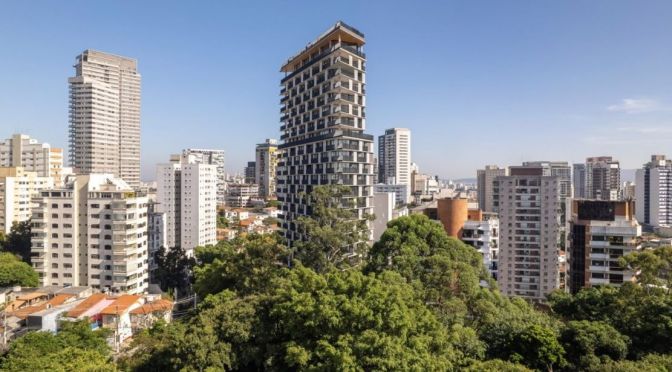
Dezeen (January 24, 2024) – French-Brazilian studio Triptyque has completed an 85-metre-high residential development in São Paulo that offers its occupants indoor-outdoor living.

Onze22 consists of two towers, with the largest containing 24 storeys. Balconies wrap the building on three sides, allowing apartments to extend outdoors.

Read more on Dezeen: https://www.dezeen.com/?p=2022497

San Francisco Design: A Tour Of Redwood House

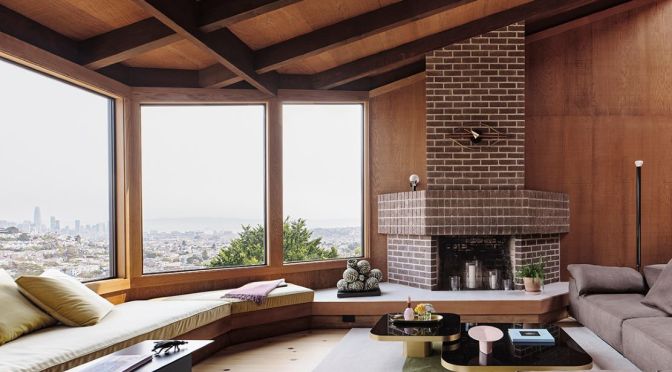
The Local Project (January 23, 2024) – Redwood House sits on a hillside in San Francisco’s charming Noe Valley. Originally designed in the 1970s by prominent local architect Albert Lanier, the house has undergone an extensive yet sympathetic renovation by Studio Terpeluk, ushering the home into a new epoch with integrity and vigour.

Video timeline: 00:00 – Introduction to the Art-Filled Oasis 00:46 – The History of the Home 01:43 – A Unique Layout 03:36 – The Textured Material Palette 04:25 – Favourite Moments 05:06 – The Sustainability Practices

“When I first walked into the space several years ago, I was completely enamoured with the scale, geometry and volume of it,” says architect Brett Terpeluk in this house tour. “There was something so peaceful, calming and embracing about the space that I felt immediately connected to the architecture.” Retaining this essence was essential to Brett and the clients, and, as such, the scope focused on “leaning up” the decor and interior design, enhancing the existing volumes and increasing the square footage, as documented in this house tour. As the architect says, the home’s unusual footprint and layout provided intriguing foundations from which to work.

“This house is very unique in that instead of having a monolithic house with a street presence and large backyard, it’s broken down into a series of courtyards and volumes.” This stacked approach to architecture results in a combination of moments enlivened by views of the cityscape and landscaping at the house’s edges. As well as sightlines, texture plays an important role in animating the architecture and interior design, which was an intentional move from the architect. The redwood remains a prominent feature and the staircase, which is profiled in the house tour, is one of Brett’s favourite moments for the “haptic feedback” it provides upon touching the handrail. The clients’ love of colour can be seen in the furniture and art, as well as in the tones throughout, notably the kitchen cabinetry.

sertions but also to original architect Albert Lanier’s design.

Australian Architecture: ‘Lee House’ Tour In Sydney

The Local Project (January 19, 2024) – A beautiful dance of soft curves and geometric lines, Lee House is a study in balance and restraint where the architect redesigns a 200 year old home. Angelo Candalepas, director of Candalepas Associates and the architect of Lee House, assumes a very conceptual approach to architecture – evident in the house he has crafted.

Video timeline: 00:00 – Introduction to the 200 Year Old Home 01:02 – The Original Concept 02:13 – Seeking Perfection Through Form 03:00 – Behind The Material Palette 04:30 – The Relationship Between Builder and Architect 05:26 – Experiencing the Intimacy of the Home 06:50 – Favourite Aspects

“What we have tried to do is seek aspects of perfection in form that enable us to encourage something in the human condition which isn’t able to be seen, but is perhaps only able to be felt,” reflects Angelo. Here, the architect redesigns a 200 year old home in Sydney’s Watsons Bay. The front façade appears as a humble, one-storey traditional cottage that sits in contrast to the two-storey, modern, geometric façade at the rear. The way the architect redesigns a 200 year old home was a step away from the client’s original brief – removing the existing cottage and creating a large home.

After many discussions, the client developed a modesty about their brief. “It meant we could work with an incredibly quiet house… something that is purely an interior design,” says Angelo. The architect redesigns a 200 year old home with a material palette that is simultaneously robust, raw and refined. Timber flooring and ceilings make the space feel spacious yet cosy and is also used in the kitchen for joinery, the dining table and the base of the island bench. This is complemented by the heavy use of concrete for walls, stairs and detailing, softened by round curves. Styling is dominated by minimalist furniture and neutral tones.

Architecture: Tour Of Frank Lloyd Wright Home ‘Tirranna’ In Connecticut

Architectural Digest (January 16, 2024) – Today AD travels to Connecticut to tour Tirranna, one of legendary architect Frank Lloyd Wright’s final designs. The Rayward–Shepherd House, also known as Tirranna and as the John L. Rayward House, is a home in New Canaan, Connecticut originally built in 1955 to an design of renowned architect Frank Lloyd Wright.

Considered one of the greatest architects of all time, Frank Lloyd Wright produced over 1000 designs in a career spanning 70 years, revolutionizing architecture in the United States.

A pioneer of organic architecture, Wright believed any building should exist in harmony with its inhabitants and surroundings–a concept that runs through the veins of Tirranna. Join Stuart Graff, president and CEO of the Frank Lloyd Wright Foundation, as he walks you through one of the final designs of Wright’s career.

California Cabin Design: Sea Ranch Forest Retreat

The Local Project (January 16, 2024) – The Local Project’s latest house tour takes viewers inside an architect’s own cabin at Sea Ranch, a planned Californian community founded in the 1960s by architect and developer Alan Boeke.

Video timeline: 00:00 – Introduction to the Architect’s Own Cabin 01:50 – The History of The Sea Ranch Community 02:19 – Unique and Special Aspects 02:35 – A Walkthrough of the Cabin 03:37 – Aligning with The Original Footprint 05:40 – The Sea Ranch Design Rules 06:50 – A Natural Material Palette 07:50 – Proud Moments

Originally designed in the 1970s by William Turnbull Jr. – one of Sea Ranch’s pioneering architects – the cabin now belongs to Berkeley-based architect Joanne Koch, who has renovated the cabin with humility and respect. Pleasingly, it still exhibits many of Sea Ranch’s defining tenets surrounding quiet and environmentally sustainable architecture, reimagined through a contemporary lens. Joanne considers herself to be a “steward and caretaker” of this historic house at Sea Ranch. Stepping inside an architect’s own cabin, it is easy to see how she has respected the original design intent by gently reimagining the architecture and interior design.

The house tour highlights various spaces inside an architect’s own cabin, such as the kitchen, bedrooms, garden, courtyard and balconies, illustrating a blend of contemporary and heritage ideals through the interior design, furniture and décor. The materials echo the cabin’s 1970s sensibility with a subtle contemporary edge, and a palette of moss green, blue and grey not only reflects the hues of the surrounding forest but complements the amber tones of the sugar pine throughout the home. The kitchen features new cabinetry and refined yet elemental fixtures to reflect the rudimentary nature of the cabin. The presence of the surrounding landscape inside an architect’s own cabin is significant. “You just have this feeling that you need to look up into the trees,” Joanne says.

Sea Ranch Forest Retreat illustrates the importance of taking an informed and intuitive approach to architecture of heritage significance. With thanks to Joanne’s sensitive response, this cabin will prevail as an important piece of modernist American architecture.