Our latest Big Money poll of professional investors finds many bearish about stocks in the near term, but bullish about the market’s longer-term outlook.
The S&P 500 indexrefuses to fall into a bear market—but that doesn’t mean it’s found a bottom just yet.
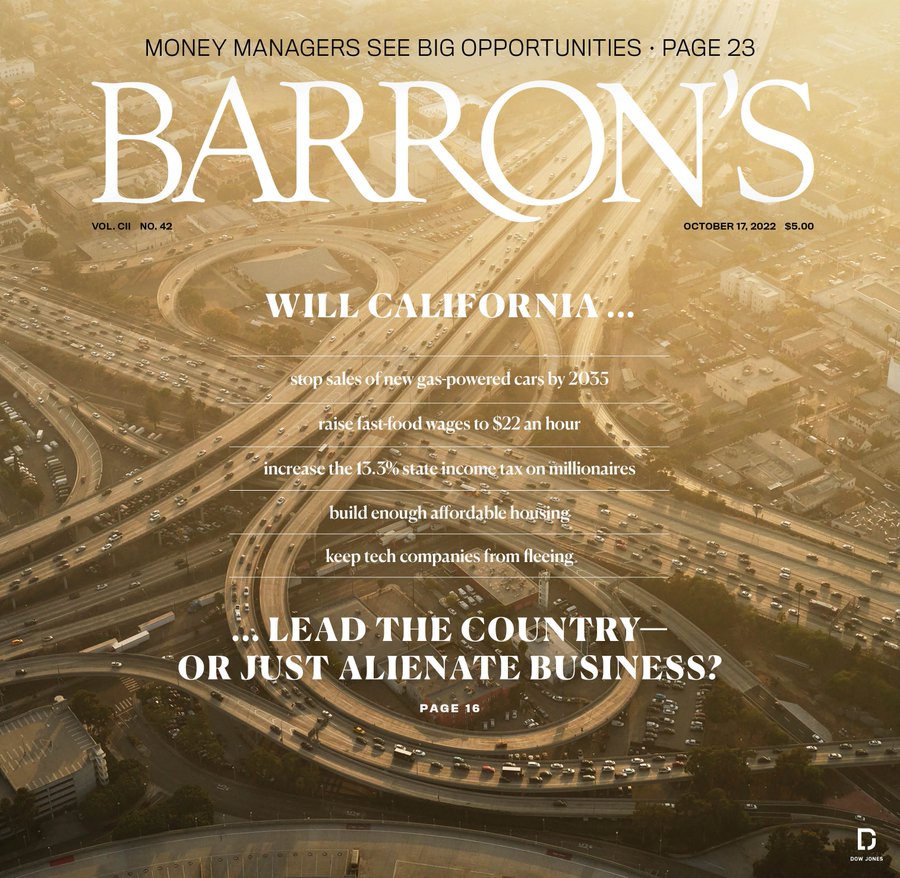
Not that it wasn’t a painful week. The S&P 500 dropped 3% and has now fallen 18.7% from its Jan. 3 all-time high. A slide of 20%, which it touched Friday before bouncing back, signifies a bear market. The Dow Jones Industrial Average declined 2.9%, its eighth consecutive week of losses, matching its longest losing streak since 1932. The Nasdaq Composite, already in a bear market, slid another 3.8%, and is down 28.2% from…
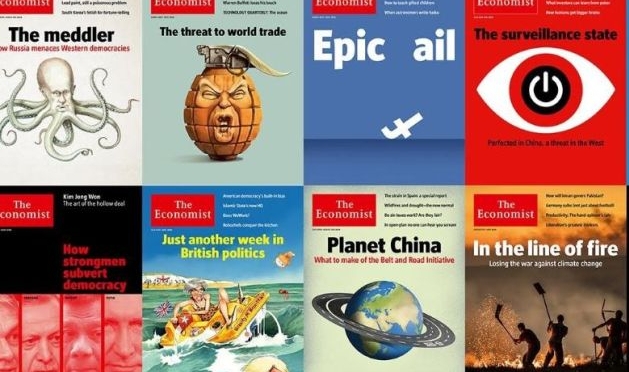
Vladimir Putin is isolated and morally dead. He is turning himself into a 21st-century Stalin, resorting as never before to lies, violence and paranoia at home. Our cover this week https://t.co/hjbSofY2U4pic.twitter.com/dhqEnX2ZLq
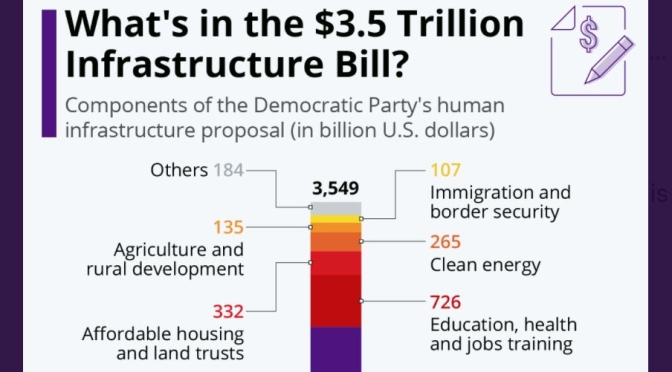
#US: The #Democrats’ massive $3.5 trillion USD proposal, also dubbed the human #infrastructure bill has been making headlines, but, do you know what this bill entails?
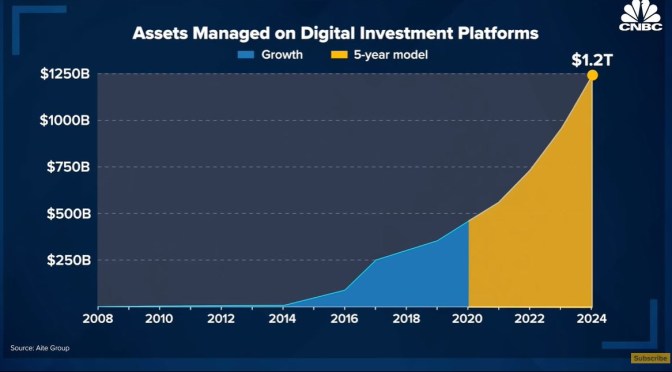
Robo-advisors have had a meteoric rise in popularity since their debut in 2008 thanks to the support from millennials and Gen Z. Today, Robo-advisors manage $460 billion, with some analysts predicting it will become a $1.2 trillion industry by 2024. Watch the video to find out why some investors believe it will never replace traditional human financial.
Since their debut in 2008, robo-advisors have had a meteoric rise in popularity. In 2020, they managed $460 billion, a 30% increase compared with 2019. Some analysts predict robo-advising will become a $1.2 trillion industry by 2024. “Investors historically have had two options when it comes to managing their investments. They could do it themselves through something like an online broker or you can work with a financial advisor,” explained Brian Concannon, head of Digital Advisor at Vanguard.
“Now, with the advent of robo-advisors, there’s a third option, and that’s to merge the benefits of professional money management and advice with the convenience of an all-digital application.” Robo-advisors’ sudden rise to prominence was made possible due to massive interest and support from millennials and Gen Z. According to a recent survey by Vanguard, millennials were twice as likely as young baby boomers to consider using a robo-advisor for investments.
“I believe that there are things that technology or algorithms can do better than humans can,” said Taylor Crane, a robo-advisor customer. “And I have no problem trusting a software to do that.” Skeptics do not expect robo-advisors to replace human advisors entirely in the near future. “Clearly, there’s always going to be a human element that’s missing,” said Jason Snipe, chief investment officer at Odyssey Capital Advisors. “My problem always will be the emotional response. Take a situation like last year when we’re going through Covid-19 and markets are moving a lot, dramatically. …
You can’t talk to the technology, right?” To combat this, many robo-advisor companies including Betterment and Vanguard began providing the option of hybrid services that combine both human and digital advice. “[Some] investors we see crave validation from a financial advisor,” said Concannon. “So for those investors, being able to pick up the phone and have a video conference with a financial advisor, have a discussion about their needs and wants goes an incredibly long way to providing them the peace of mind that they so desperately need.”
Time is on the side of the robo-advisory industry as the technology continues to improve and the younger generations accrue more wealth. “I think some combination of the two probably is where we are headed for in the future,” said Snipe. “I think the robo space has room to grow. I think it will obviously modify and change and become even more sophisticated.”
As China moves closer to rolling out its new digital cash, there are concerns the government will track every transaction––not just of citizens but of foreign companies in the country. WSJ travels to Chengdu to see this money revolution in action. Photo: Lorenz Huber for The Wall Street Journal
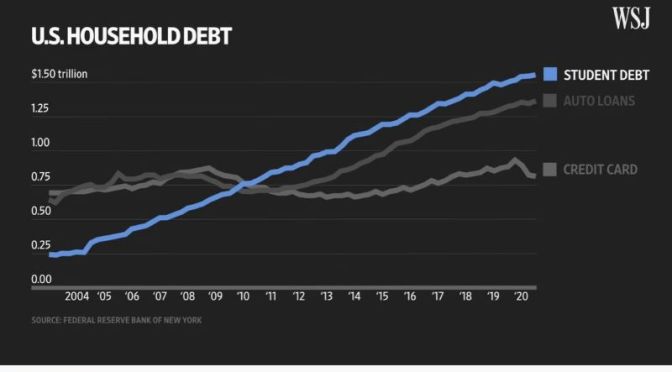
More than 43 million Americans owe a collective $1.6 trillion in federal student loans. WSJ’s Josh Mitchell explains how President-elect Joe Biden plans to help borrowers tackle that debt. Photo illustration: Carlos Waters
News, Views and Reviews For The Intellectually Curious



 Boomers Daily