Category Archives: Ecosystems

Ecosystems: Plastic Waste Spoils Galapagos Islands

The Galapagos Islands are home to some of the most unspoiled nature in the world. But even here plastic waste is a problem, and biodiversity is under threat. Marine biologists and conservationists are campaigning for the expansion of protected zones. The fauna and flora of the Galapagos Islands in the Pacific Ocean is a treasure trove for marine biologists.

They still know very little about many of the fish, rays and sea turtles that can be found here. But these days, their work is focused primarily on conservation, because many of these species are endangered due to threats such as overfishing and boat strikes. Efforts to protect local wildlife include attaching tracking devices to juvenile hammerhead sharks to determine their migration routes, which can then be designated as protected areas.

Other research teams are focused on the problem of plastic waste in the Pacific – identifying where it comes from and exploring its impact on marine life. Meanwhile, local fishermen are under pressure: Large fishing fleets from China and elsewhere ply the waters near the Galapagos Islands, severely depleting fish stocks. As a result, local fishing boats are forced to move into designated conservation zones. If the delicate marine environment surrounding the Galapagos Islands is to survive, fishing needs to become more sustainable.
Scotland Views: The Beltie Burn – A River Restored

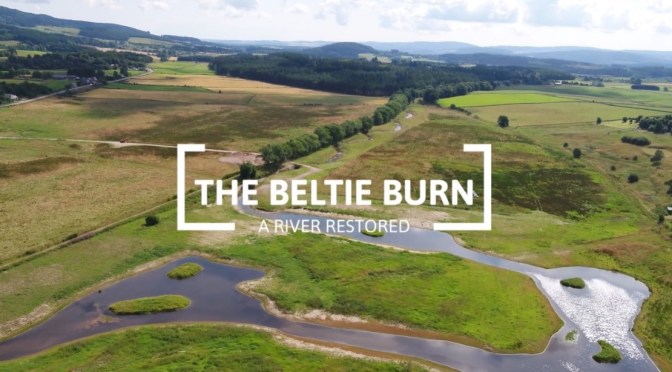
The Easter Beltie Restoration project returned a straightened agricultural stream to a natural meandering course, to improve habitats for nature and boost climate resilience.

The project was the only one of its kind in the north east of Scotland, and has created a new, two-kilometre stretch of meandering river corridor flowing through ten hectares of floodplain, rich in habitats where nature can thrive.

The Beltie Burn is a burn in Aberdeenshire, Scotland, which below Torphins and Glassel is known as the Burn of Canny. It begins in the hill of Benaquhallie, and flows for 25 km south-east through Torphins before joining the River Dee about 4 kilometres west of Banchory.

Costa Rica Views: Hiking In Corcovado National Park

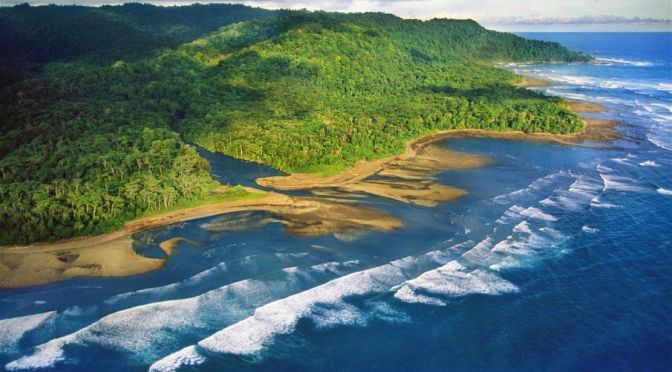
Corcovado National Park in Costa Rica is the backpacking experience of a lifetime. It encompasses the only remaining old growth wet forests on the Pacific coast of Central America, and 13 major ecosystems including lowland rain forest, highland cloud forest, jolillo palm forest, and mangrove swamps, as well as coastal marine and beach habitats.

There is a good chance of spotting some of Costa Rica’s shyest and most endangered inhabitants here; Baird’s Tapirs, Jaguars, Scarlet Macaws, Harpy Eagles, Red-backed squirrel monkeys and White-lipped Peccaries. It is wet, remote and rugged, but the trails are relatively good, and the camping areas near the ranger stations are grassy and well drained.

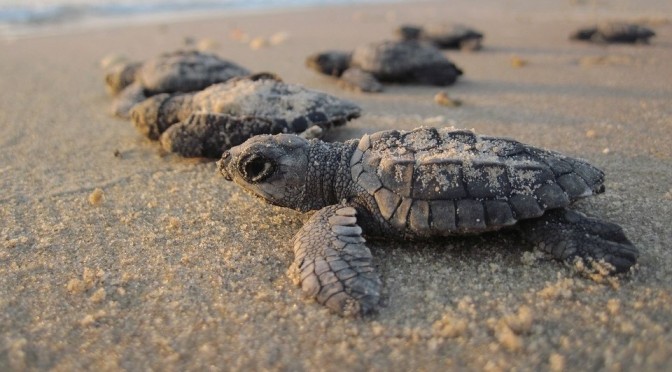
Views: Turtle Hatchlings Great Barrier Reef Beach

Evolution: How Nature Is Adapting To Urban Sprawl

It’s a new and surprising chapter in the theory of evolution. According to recent studies, it’s in our cities, of all places, that animals and plants adapt particularly quickly to changing living conditions.

Nature’s response to the spread of cities is astonishing: Why do catfish in the river of a French city systematically prey on urban pigeons on the banks? Why do female birds on a university campus in California suddenly change their mating behavior? How do mice in New York’s Central Park cope with an altered diet of human food waste? How have killifish in the Atlantic built up resistance to deadly chemical waste?

And, is it possible for moths to adapt to nighttime light pollution? New research provides surprising new insights into Darwin’s theory of evolution. Nowhere else do animals and plants adapt so quickly to new living conditions as in cities. Biologists have long known that animals and plants occupy new habitats in the vicinity of humans.

But now, new genetic analyses show that these adaptations are accompanied by significant changes in DNA. Even more surprising: these evolutionary changes have not occurred over periods of millennia, but within just a few decades. The process has amazed scientists, who watch as nature transforms even our most hostile man-made interventions — pollution, light pollution, noise, garbage and dense development — into creative energy for new adaptations. Some researchers believe that our cities may soon develop their own, brand-new life forms. What are the implications of these developments for the balance between humans and nature on our planet?

Droughts: Competing With Nature For Water

Climate change is causing rising temperatures, extreme weather events and more and more drought. And, in this changing reality, everyone needs more water. Humans are competing with the natural world for water. What does this mean for biodiversity? Fewer and fewer countries still have an abundance of water. The climate crisis, overpopulation and overexploitation are the root of this global problem. And, in a warming world, everyone is using more water: people, agriculture and industry. In Germany, streams and ponds are disappearing, forests and soils are drying out. What does this mean for biodiversity? And how do people cope with drought in countries that have even less water — for example, in the USA or Mexico? What happens when our water dries up?

Ecosystems: Rewilding Property In Great Britain

The word rewilding can conjure up images of going back in time to a landscape of wild animals and deep forest. Its popularity is growing in the UK, but how exactly do you go about rewilding, and why is it being linked, in some cases, to greenwashing? The FT’s Leslie Hook visits two properties at different stages of the rewilding process to discover more.

Rewilding, or re-wilding, activities are conservation efforts aimed at restoring and protecting natural processes and wilderness areas. Rewilding is a form of ecological restoration with an emphasis on recreating an area’s “natural uncultivated state”. This may require active human intervention to achieve.

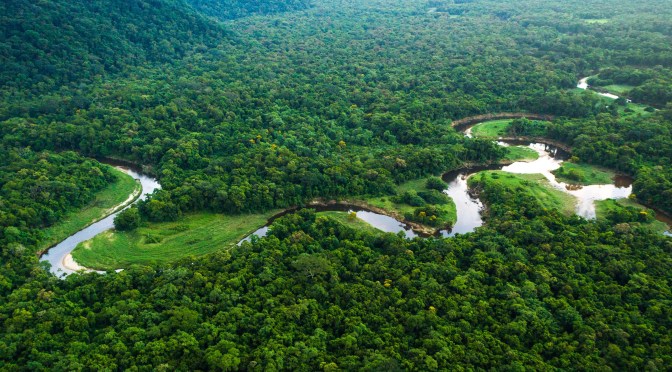
Research: How Africa Keeps The Amazon Green

Jet streams sprinkle North African dust over the Amazon, providing the rain forest with much needed nutrients. Changing wind patterns and increasing smoke may shift the system.

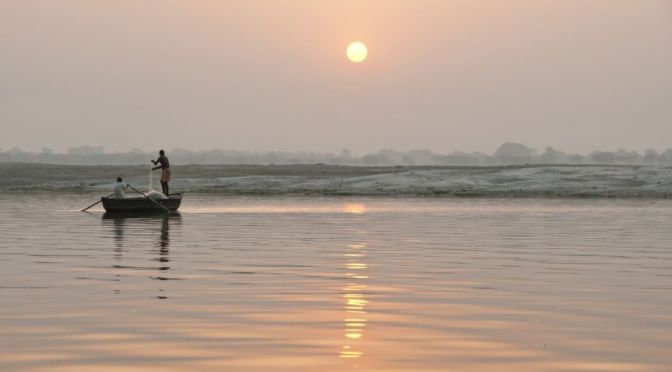
Ecosystems: Plastic Nets On The Ganges River, India

Follow a local fisherman as he navigates his community’s dependency of plastic nets and the effects this has on the river. The National Geographic Society, committed to illuminating and protecting the wonder of our world, funded the Sea to Source: Ganges expedition.

Rainforests: Indigenous People Struggle In Brazil

“They used to kill us with guns, now they kill us with deforestation and dams.” The Brazilian government’s failure to protect the Amazon forest is forcing the Munduruku indigenous people to take action against land grabs and illegal logging – and try to save the rain forest on their own.

In an unprecedented movement led by Chief Juarez Saw Munduruku, for the last six years indigenous people have been fighting the theft and destruction of their forest home. Since 1970, 20% of the Brazilian Amazon has been deforested. Logging and forest fires are threatening a further 20%. Scientists say that at 40% deforestation, we will reach the point of no return. The forest will be lost forever, replaced by savannahs – and the environmental consequences will be catastrophic.

The Amazon is often known as ‘the lungs of the planet,’ producing 6% of the world’s oxygen. It is no secret that the rainforest has been losing a dramatic fight against an array of threats, encouraged by capitalism, consumerism and greed – both legal and illegal.

In today‘s Brazil, some 600,000 square kilometers of land – an area about the size of France — are farmed by farmers who don’t officially own it. The military dictatorship (1964-1985) encouraged them to settle on state-owned land, but the farmers never became legal owners. As a result, speculators now seize the areas, clear the forests, then resell the plots with forged title deeds. This land grab, known as “grilagem” in Portuguese, has led to uncontrolled forest clearing and fierce conflicts.

The documentary was shot from 2014 to 2020, under three different Brazilian governments. It provides deep insights into the drama of the illegal occupation of state land and forest areas by organized crime groups. Several indigenous peoples have united under Juarez Saw Munduruku, leader of the Munduruku people, in a last-ditch bid to save the planet’s most important forest.